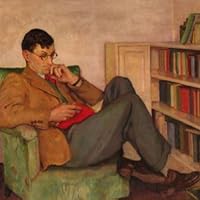
Der Band umfasst die wichtigsten erzählerischen Werke, Gedichte und andere Schriften des großen Dichters und Erzählers Novalis (Friedrich v. Hardenberg)
Heinrich von Ofterdingen Die Lehrlinge zu Sais Die Erwartung Die Erfüllung Das Kloster, oder der Vorhof Astralis Giasar und Azora Aphorismen Blütenstaub Glauben und Liebe oder Der König und die Königin Politische Aphorismen Teplitzer Fragmente Ergänzungen Aphorismen und Fragmente Magischer 'Alles kann am Ende zur Philosophie werden,.' Romantische 'Die Welt muß romantisiert werden.' 'Der Tod ist das romantisierende Prinzip.' Romantische 'Der echte Dichter ist allwissend.' Tagebuchaufzeichnungen Der Lehrling Die Natur Geistliche Lieder Hymnen an die Nacht Sehnsucht nach dem Tode
Novalis was the pseudonym of Georg Philipp Friedrich Freiherr von Hardenberg, an author and philosopher of early German Romanticism.
His poetry and writings were an influence on Hermann Hesse. Novalis was also a huge influence on George MacDonald, and so indirectly on C.S. Lewis, the Inklings, and the whole modern fantasy genre.
Through Andrea Wulf and her Magnificent Rebels: The First Romantics and the Invention of the Self I was reminded once again of the fury that Friedrich von Hardenberg (1772-1801) caused in Germany during his short life, and later also in other Romantic circles in Europe. Hence the reading of this Collected Works. It is a renewed acquaintance with the main features of Romanticism: the exalted emotions, the veneration of animated nature, the nostalgia for the heroic age of Christian Europe, etc. Personally, I do not have much in common with those hyper-sensitivities. Novalis’ poems could only appeal to me moderately, although that was more the case for his ‘Lieder’/Songs. But he also wrote a lot of prose. I found the essay “Europe or Christianity” (1799) worthwhile: not for the opinions expressed in it (nostalgia for the heroes of medieval Christianity), but as a historical document (which, by the way, reminded me very much of François-René de Chateaubriand; did the Frenchman get his ideas from Novalis or vice versa?).
it was natural for him to regard the visible and the invisible world as one; and to distinguish Life and Death only by his longing for the latter. At the same time too, Life became for him a glorified Life; and his whole being melted away as into a bright, conscious vision of a higher Existence.
It is the morality of a man, to whom the Earth and all its glories are in truth a vapor and a Dream, and the Beauty of Goodness the out y real possession. Poetry, Virtue, Religion, which for other men have but, as it were, a traditionary and imagined existence, are for him the everlasting basis of the Universe; and all earthly acquirements, all with which Ambition, Hope, Fear, can tempt us to toil and sin, are in very deed but a picture of the brain, some reflex shadowed on the mirror of the Infinite, but in themselves air and nothingness. Thus, to live in that Light of Reason, to have, even while here and encircled with this Vision of Existence, our abode in that Eternal City, is the highest and sole duty of man. These things Novalis figures to himself under various images: sometimes he seems to represent the Primeval essence of Being as Love; at other times, he speaks in emblems, of which it would be still more difficult to give a just account; which, therefore, at present, we shall not farther notice.
"Philosophy can bake no bread; but she can procure for us God, Freedom, Immortality. Which, then, is more practical, Philosophy or Economy? — "Philosophy is properly Homesickness; the wish to be everywhere at home. — "We are near awakening when we dream that we dream. — "The true philosophical Act is annihilation of self (Selbsttödtung); this is the real beginning of all Philosophy; all requisites for being a Disciple of Philosophy point hither. This Act alone corresponds to all the conditions and characteristics of transcendental conduct. — "To become properly acquainted with a truth, we must first have disbelieved it, and disputed against it. —
"There is but one Temple in the World; and that is the Body of Man. Nothing is holier than this high form. Bending before men is a reverence done to this Revelation in the Flesh. We touch Heaven, when we lay our hand on a human body. —
"Man consists in Truth. If he exposes Truth, he exposes himself. If he betrays Truth, he betrays himself. We speak not here of Lies, but of acting against Conviction.
Long and weariful was my pilgrimage to the holy grave, and crushing was the cross. The crystal wave, which, imperceptible to the ordinary sense, springs in the dark bosom of the hillock against whoose foot breaks the flood of the world, he who has tasted it, he who has stood on the mountain frontier of the world, and looked across into the new land, into the abode of the Night, verily he turns not again into the tumult of the world, into the land where dwells the Light in ceaseless unrest.