

What do you think?

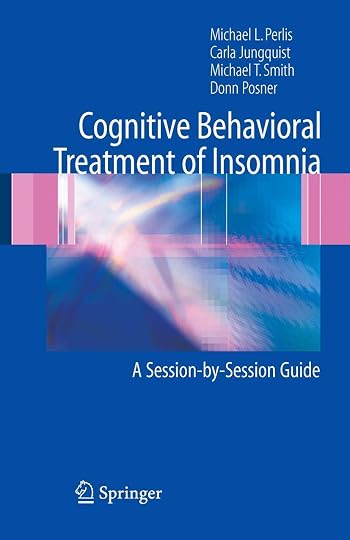
Cognitive Behavioral Treatment of Insomnia: A Session-by-Session Guide
• CBT is a new, increasingly popular method of treatment that provides measurable results and is therefore reimbursed by insurance companies • Title is ahead of the curve, there's no competition • Concise, practical manual • Contains reader-friendly, role-playing exercises to apply to daily practice
- GenresPsychologyNonfiction
200 pages, Paperback
First published January 1, 2005
Ratings & Reviews
Friends & Following
Create a free account to discover what your friends think of this book!
Community Reviews
Displaying 1 - 6 of 6 reviews

June 15, 2026
I came to this book as a talk therapist working in telehealth — not a sleep specialist, not a clinician in a sleep disorders center — who wanted to incorporate Cognitive Behavioral Therapy for Insomnia (CBT-I) into my existing practice with patients I have known for months. I want to be direct about what this book is and what it is not, because that distinction matters for who picks it up.
This is not a self-help book. It is a clinical manual, written in the technical register of behavioral sleep medicine, and it assumes the reader has a background in psychological assessment, case conceptualization, and evidence-based practice. Patients curious about CBT-I would be better served by Colleen Carney and Rachel Manber's patient-facing workbook Quiet Your Mind and Get to Sleep (2009), which covers the same protocol in accessible language. What Perlis, Jungquist, Smith, and Posner offer here is something different and considerably more valuable for the practicing clinician: a precise, well-structured, evidence-grounded guide to delivering CBT-I as a multi-component treatment, complete with sample therapist-patient dialogues, intake questionnaires, sleep diary templates, and a full session-by-session road map.
Despite being published twenty-one years ago, the book holds up remarkably well. The core protocol — Sleep Restriction Therapy, Stimulus Control Therapy, Sleep Hygiene Education, and Cognitive Therapy, deployed across four to eight weekly sessions — remains the standard of care, supported by a substantial evidence base that has only grown since 2005. The conceptual framework, rooted in Spielman's three-factor diathesis-stress model of insomnia, is as clinically useful now as it was then. Nothing essential has been superseded.
My one genuine criticism is that the cognitive therapy component, delivered in Session 5 of the protocol, receives comparatively less attention than the behavioral interventions that precede it. The quantitative mismatch technique the authors describe — having patients compare their catastrophic probability estimates to their actual historical frequency of feared outcomes — is elegant and clinically powerful. I would have welcomed a deeper exploration of it, including more extended dialogue examples and guidance for the cases where the technique requires more nuance, such as when a patient's feared outcome has genuinely occurred. The behavioral scaffolding of the book is built with considerable care and detail; the cognitive work, by comparison, feels somewhat compressed. Readers interested in expanding the cognitive component would benefit from supplementing with Charles Morin's work, particularly his development of the Dysfunctional Beliefs and Attitudes about Sleep Scale, which maps the specific cognitions the therapy targets.
That said, this is a minor criticism of an otherwise excellent manual. The authors' therapist-patient dialogues are among the best features of the book — not scripts to memorize but natural, well-calibrated examples of how to introduce a counterintuitive protocol, anticipate resistance, work through noncompliance without shame, and maintain the therapeutic alliance across a treatment that asks patients to endure short-term sleep loss in service of long-term consolidation. The foreword, co-written by Richard Bootzin (who developed Stimulus Control Therapy) and Arthur Spielman (whose three-factor model anchors the entire conceptual framework), situates the manual precisely within the field's history and signals its authority.
For readers interested in my broader engagement with evidence-based frameworks in clinical practice, including critical perspectives on approaches that lack this kind of empirical grounding, see my review of Cynical Therapies . For the existential and phenomenological dimensions of the therapeutic relationship that CBT-I's structured protocol necessarily brackets — questions of meaning, mortality, and the texture of suffering that insomnia often carries — see my review of Irvin Yalom's Existential Psychotherapy .
Summary for Clinicians: The CBT-I Protocol as Described in This Book
What follows is a clinician-oriented summary of the protocol, adapted for community practice outside a sleep clinic setting. The book is written with a sleep disorders center as its assumed context, but the protocol translates well to telehealth and general outpatient therapy, with some thoughtful adaptation.
The Conceptual Foundation
The book's theoretical backbone is Spielman's three-factor model, which organizes insomnia along three dimensions. Predisposing factors are stable traits that raise vulnerability: biological hyperarousal, ruminative cognitive style, or circadian pressures. Precipitating factors are acute stressors — medical illness, psychological crisis, life disruption — that trigger the initial sleep disturbance. Perpetuating factors are the maladaptive coping behaviors patients adopt in response to the original insomnia that end up locking it in chronically. The two primary perpetuating behaviors are extending time in bed (going to bed earlier, sleeping in later, napping) and using the bed or bedroom for non-sleep activities, which erodes its association with sleep.
The clinical implication is significant: even when the precipitating factor is long gone, the perpetuating behaviors keep the insomnia going. This is why CBT-I can be effective even when insomnia is comorbid with depression, anxiety, or other psychiatric conditions — the behavioral layer is relatively autonomous. The book is explicit that the distinction between primary and secondary insomnia is less clinically meaningful than it might appear, and that patients with stable comorbid conditions are often good CBT-I candidates.
The authors add a fourth factor not in Spielman's original model: conditioned arousal. Over time, the bed and bedroom themselves become classically conditioned stimuli for wakefulness. This explains why patients report being suddenly wide awake the moment they get into bed, or sleeping better in hotels. It also explains why CBT-I typically produces about 50% symptom reduction during treatment, with continued improvement for up to a year afterward — the counter-conditioning of the bedroom-arousal association takes time to fully extinguish.
The Components of Treatment
The first-line interventions are Stimulus Control Therapy and Sleep Restriction Therapy, delivered together. Sleep Hygiene Education accompanies them. Cognitive Therapy and Relaxation Training are second-line, adjunctive components deployed as needed in the latter half of treatment.
Stimulus Control Therapy (SCT) re-associates the bed and bedroom exclusively with sleepiness and sleep. Instructions: go to bed only when genuinely sleepy; use the bed only for sleep and sex; leave the bedroom if awake for more than approximately fifteen minutes; return only when sleepy; maintain a fixed wake time every day, seven days a week, regardless of how much sleep was obtained. The fixed wake time is the non-negotiable anchor. It regulates the circadian system and prevents compensatory sleeping in.
Sleep Restriction Therapy (SRT) matches Time in Bed (TIB) to the patient's actual average Total Sleep Time (TST), creating mild, controlled sleep deprivation that builds homeostatic sleep pressure and consolidates fragmented sleep. The steps: establish baseline average TST from one to two weeks of sleep diary data; set TIB equal to average TST, with a floor of no less than 4.5 hours; implement by delaying bedtime rather than advancing wake time; titrate TIB upward in 15-minute increments when Sleep Efficiency (SE%) reaches 90% or above for a full week; hold TIB constant when SE% is 85–89%; decrease TIB by 15 minutes when SE% falls below 85%.
Sleep Efficiency is calculated as: SE% = (Total Sleep Time ÷ Time in Bed) × 100
Cognitive Therapy, delivered formally in Session 5, targets catastrophic beliefs about the consequences of sleep loss using a quantitative mismatch technique. The steps: identify the specific catastrophic automatic thought; have the patient estimate the probability the feared outcome will occur; calculate how many nights of poor sleep the patient has experienced since the insomnia began; ask how many times the feared outcome has actually occurred; surface the mismatch between estimated probability and actual historical frequency; construct a brief, patient-generated countering mantra. This mantra becomes the patient's tool for the 3 AM moment when catastrophic thinking arises.
The Session-by-Session Protocol
The standard course is four to eight weekly sessions. The book describes a six-session model.
Pre-Treatment / Intake Session (60–90 minutes): Conduct clinical history; administer intake questionnaires; screen for contraindications; introduce sleep diaries; assign one to two weeks of baseline diary-keeping. No intervention is delivered yet.
Session 1 (60 minutes): Review diary data and calculate baseline SE%; introduce the 3P model; explain the TIB/TST mismatch using the patient's own numbers; present treatment options; prescribe Sleep Restriction and Stimulus Control; confirm patient understanding of the week's instructions.
Sessions 2–4 (30–60 minutes each): Review prior week's diary data; calculate SE%; apply the titration decision rule; troubleshoot noncompliance; reinforce SCT. Session 3 introduces Sleep Hygiene Education, tailored to the patient's specific behaviors. Session 4 addresses sleep state misperception if present and may introduce Relaxation Training.
Session 5 (30–60 minutes): Formal Cognitive Therapy using the five-step mismatch protocol described above.
Session 6 (30–60 minutes): Review full treatment trajectory; identify ongoing risk factors; construct relapse prevention plan; discuss medication tapering if applicable. The key relapse prevention message: one or two bad nights after treatment is not a recurrence. A recurrence means the patient has drifted back to the perpetuating behaviors, and the response is to restart the protocol briefly.
Contraindication Screening
Both SRT and SCT are contraindicated or require modification for patients with bipolar disorder or history of mania (sleep deprivation can trigger mania), seizure disorder (sleep deprivation lowers seizure threshold), obstructive sleep apnea (sleep restriction worsens apneic events; this is the contraindication most likely to be undiagnosed in community practice), parasomnias such as sleepwalking or sleep terrors, and significant fall risk. The Epworth Sleepiness Scale, freely available online, is a practical telehealth screening tool: scores above 10 in an insomnia patient warrant consideration of sleep apnea evaluation before proceeding.
Suggested Pre-Treatment Packet for Clinicians Adapting This Protocol to Community Practice
The following instruments constitute a practical pre-treatment packet. Items marked with page numbers are in the book's appendices and may be photocopied from a personal copy for clinical use. The remaining items are freely available online.
The Consensus Sleep Diary, developed by an international panel of CBT-I researchers and freely available for clinical use, is the current field standard and captures all five variables needed for SE% calculation. The CBT-I Coach app (free, developed by the U.S. Department of Veterans Affairs and Stanford) is a useful between-session tool for patients, reinforcing the behavioral prescriptions and diary habit in a mobile format designed specifically to accompany therapist-delivered CBT-I.
This is a book I read in a day and a half and expect to return to repeatedly. For clinicians willing to move carefully through its technical register, it repays the effort substantially.
[Image: Book Cover]
Citations:
Perlis, M. L., Jungquist, C., Smith, M. T., & Posner, D. A. (2005). Cognitive behavioral treatment of insomnia: A session-by-session guide. Springer. https://doi.org/10.1007/978-0-387-278...
Perlis, M. L., Jungquist, C., Smith, M. T., & Posner, D. A. (2021). Cognitive behavioral treatment of insomnia: A session-by-session guide [audiobook]. Cacophony Innovation, LLC. https://www.amazon.com/Cognitive-Beha.... (Original work published 2005).
Title: Cognitive Behavioral Treatment of Insomnia: A Session-by-Session Guide
Author(s): Michael L. Perlis, Carla Jungquist, Michael T. Smith, Donn Posner
Year: 2005
Genre: Nonfiction - Psychology, Psychotherapy
Page count: 200 pages
Date(s) read: 6/14/26 - 6/15/26
Book 115 in 2026
This is not a self-help book. It is a clinical manual, written in the technical register of behavioral sleep medicine, and it assumes the reader has a background in psychological assessment, case conceptualization, and evidence-based practice. Patients curious about CBT-I would be better served by Colleen Carney and Rachel Manber's patient-facing workbook Quiet Your Mind and Get to Sleep (2009), which covers the same protocol in accessible language. What Perlis, Jungquist, Smith, and Posner offer here is something different and considerably more valuable for the practicing clinician: a precise, well-structured, evidence-grounded guide to delivering CBT-I as a multi-component treatment, complete with sample therapist-patient dialogues, intake questionnaires, sleep diary templates, and a full session-by-session road map.
Despite being published twenty-one years ago, the book holds up remarkably well. The core protocol — Sleep Restriction Therapy, Stimulus Control Therapy, Sleep Hygiene Education, and Cognitive Therapy, deployed across four to eight weekly sessions — remains the standard of care, supported by a substantial evidence base that has only grown since 2005. The conceptual framework, rooted in Spielman's three-factor diathesis-stress model of insomnia, is as clinically useful now as it was then. Nothing essential has been superseded.
My one genuine criticism is that the cognitive therapy component, delivered in Session 5 of the protocol, receives comparatively less attention than the behavioral interventions that precede it. The quantitative mismatch technique the authors describe — having patients compare their catastrophic probability estimates to their actual historical frequency of feared outcomes — is elegant and clinically powerful. I would have welcomed a deeper exploration of it, including more extended dialogue examples and guidance for the cases where the technique requires more nuance, such as when a patient's feared outcome has genuinely occurred. The behavioral scaffolding of the book is built with considerable care and detail; the cognitive work, by comparison, feels somewhat compressed. Readers interested in expanding the cognitive component would benefit from supplementing with Charles Morin's work, particularly his development of the Dysfunctional Beliefs and Attitudes about Sleep Scale, which maps the specific cognitions the therapy targets.
That said, this is a minor criticism of an otherwise excellent manual. The authors' therapist-patient dialogues are among the best features of the book — not scripts to memorize but natural, well-calibrated examples of how to introduce a counterintuitive protocol, anticipate resistance, work through noncompliance without shame, and maintain the therapeutic alliance across a treatment that asks patients to endure short-term sleep loss in service of long-term consolidation. The foreword, co-written by Richard Bootzin (who developed Stimulus Control Therapy) and Arthur Spielman (whose three-factor model anchors the entire conceptual framework), situates the manual precisely within the field's history and signals its authority.
For readers interested in my broader engagement with evidence-based frameworks in clinical practice, including critical perspectives on approaches that lack this kind of empirical grounding, see my review of Cynical Therapies . For the existential and phenomenological dimensions of the therapeutic relationship that CBT-I's structured protocol necessarily brackets — questions of meaning, mortality, and the texture of suffering that insomnia often carries — see my review of Irvin Yalom's Existential Psychotherapy .
Summary for Clinicians: The CBT-I Protocol as Described in This Book
What follows is a clinician-oriented summary of the protocol, adapted for community practice outside a sleep clinic setting. The book is written with a sleep disorders center as its assumed context, but the protocol translates well to telehealth and general outpatient therapy, with some thoughtful adaptation.
The Conceptual Foundation
The book's theoretical backbone is Spielman's three-factor model, which organizes insomnia along three dimensions. Predisposing factors are stable traits that raise vulnerability: biological hyperarousal, ruminative cognitive style, or circadian pressures. Precipitating factors are acute stressors — medical illness, psychological crisis, life disruption — that trigger the initial sleep disturbance. Perpetuating factors are the maladaptive coping behaviors patients adopt in response to the original insomnia that end up locking it in chronically. The two primary perpetuating behaviors are extending time in bed (going to bed earlier, sleeping in later, napping) and using the bed or bedroom for non-sleep activities, which erodes its association with sleep.
The clinical implication is significant: even when the precipitating factor is long gone, the perpetuating behaviors keep the insomnia going. This is why CBT-I can be effective even when insomnia is comorbid with depression, anxiety, or other psychiatric conditions — the behavioral layer is relatively autonomous. The book is explicit that the distinction between primary and secondary insomnia is less clinically meaningful than it might appear, and that patients with stable comorbid conditions are often good CBT-I candidates.
The authors add a fourth factor not in Spielman's original model: conditioned arousal. Over time, the bed and bedroom themselves become classically conditioned stimuli for wakefulness. This explains why patients report being suddenly wide awake the moment they get into bed, or sleeping better in hotels. It also explains why CBT-I typically produces about 50% symptom reduction during treatment, with continued improvement for up to a year afterward — the counter-conditioning of the bedroom-arousal association takes time to fully extinguish.
The Components of Treatment
The first-line interventions are Stimulus Control Therapy and Sleep Restriction Therapy, delivered together. Sleep Hygiene Education accompanies them. Cognitive Therapy and Relaxation Training are second-line, adjunctive components deployed as needed in the latter half of treatment.
Stimulus Control Therapy (SCT) re-associates the bed and bedroom exclusively with sleepiness and sleep. Instructions: go to bed only when genuinely sleepy; use the bed only for sleep and sex; leave the bedroom if awake for more than approximately fifteen minutes; return only when sleepy; maintain a fixed wake time every day, seven days a week, regardless of how much sleep was obtained. The fixed wake time is the non-negotiable anchor. It regulates the circadian system and prevents compensatory sleeping in.
Sleep Restriction Therapy (SRT) matches Time in Bed (TIB) to the patient's actual average Total Sleep Time (TST), creating mild, controlled sleep deprivation that builds homeostatic sleep pressure and consolidates fragmented sleep. The steps: establish baseline average TST from one to two weeks of sleep diary data; set TIB equal to average TST, with a floor of no less than 4.5 hours; implement by delaying bedtime rather than advancing wake time; titrate TIB upward in 15-minute increments when Sleep Efficiency (SE%) reaches 90% or above for a full week; hold TIB constant when SE% is 85–89%; decrease TIB by 15 minutes when SE% falls below 85%.
Sleep Efficiency is calculated as: SE% = (Total Sleep Time ÷ Time in Bed) × 100
Cognitive Therapy, delivered formally in Session 5, targets catastrophic beliefs about the consequences of sleep loss using a quantitative mismatch technique. The steps: identify the specific catastrophic automatic thought; have the patient estimate the probability the feared outcome will occur; calculate how many nights of poor sleep the patient has experienced since the insomnia began; ask how many times the feared outcome has actually occurred; surface the mismatch between estimated probability and actual historical frequency; construct a brief, patient-generated countering mantra. This mantra becomes the patient's tool for the 3 AM moment when catastrophic thinking arises.
The Session-by-Session Protocol
The standard course is four to eight weekly sessions. The book describes a six-session model.
Pre-Treatment / Intake Session (60–90 minutes): Conduct clinical history; administer intake questionnaires; screen for contraindications; introduce sleep diaries; assign one to two weeks of baseline diary-keeping. No intervention is delivered yet.
Session 1 (60 minutes): Review diary data and calculate baseline SE%; introduce the 3P model; explain the TIB/TST mismatch using the patient's own numbers; present treatment options; prescribe Sleep Restriction and Stimulus Control; confirm patient understanding of the week's instructions.
Sessions 2–4 (30–60 minutes each): Review prior week's diary data; calculate SE%; apply the titration decision rule; troubleshoot noncompliance; reinforce SCT. Session 3 introduces Sleep Hygiene Education, tailored to the patient's specific behaviors. Session 4 addresses sleep state misperception if present and may introduce Relaxation Training.
Session 5 (30–60 minutes): Formal Cognitive Therapy using the five-step mismatch protocol described above.
Session 6 (30–60 minutes): Review full treatment trajectory; identify ongoing risk factors; construct relapse prevention plan; discuss medication tapering if applicable. The key relapse prevention message: one or two bad nights after treatment is not a recurrence. A recurrence means the patient has drifted back to the perpetuating behaviors, and the response is to restart the protocol briefly.
Contraindication Screening
Both SRT and SCT are contraindicated or require modification for patients with bipolar disorder or history of mania (sleep deprivation can trigger mania), seizure disorder (sleep deprivation lowers seizure threshold), obstructive sleep apnea (sleep restriction worsens apneic events; this is the contraindication most likely to be undiagnosed in community practice), parasomnias such as sleepwalking or sleep terrors, and significant fall risk. The Epworth Sleepiness Scale, freely available online, is a practical telehealth screening tool: scores above 10 in an insomnia patient warrant consideration of sleep apnea evaluation before proceeding.
Suggested Pre-Treatment Packet for Clinicians Adapting This Protocol to Community Practice
The following instruments constitute a practical pre-treatment packet. Items marked with page numbers are in the book's appendices and may be photocopied from a personal copy for clinical use. The remaining items are freely available online.
1. Brief cover note explaining what each form is for and when to complete it — the diary begins immediately; questionnaires can be completed in one sitting
2. Insomnia Severity Index (free download; search "Insomnia Severity Index Morin fillable PDF")
3. Epworth Sleepiness Scale (free download; search "Epworth Sleepiness Scale free PDF")
4. Medical History Checklist — p. 166
5. Medical Symptom Checklist — p. 167
6. Sleep Disorders Symptom Checklist — p. 168
7. Sleep Environment Checklist — p. 170
8. Motivation for Change Index — p. 171
9. Consensus Sleep Diary (free at consensussleepdiary.com) or the book's "Week at a Glance" diary — p. 174, with instructions to begin the night the packet is received
The Consensus Sleep Diary, developed by an international panel of CBT-I researchers and freely available for clinical use, is the current field standard and captures all five variables needed for SE% calculation. The CBT-I Coach app (free, developed by the U.S. Department of Veterans Affairs and Stanford) is a useful between-session tool for patients, reinforcing the behavioral prescriptions and diary habit in a mobile format designed specifically to accompany therapist-delivered CBT-I.
This is a book I read in a day and a half and expect to return to repeatedly. For clinicians willing to move carefully through its technical register, it repays the effort substantially.
[Image: Book Cover]
Citations:
Perlis, M. L., Jungquist, C., Smith, M. T., & Posner, D. A. (2005). Cognitive behavioral treatment of insomnia: A session-by-session guide. Springer. https://doi.org/10.1007/978-0-387-278...
Perlis, M. L., Jungquist, C., Smith, M. T., & Posner, D. A. (2021). Cognitive behavioral treatment of insomnia: A session-by-session guide [audiobook]. Cacophony Innovation, LLC. https://www.amazon.com/Cognitive-Beha.... (Original work published 2005).
Title: Cognitive Behavioral Treatment of Insomnia: A Session-by-Session Guide
Author(s): Michael L. Perlis, Carla Jungquist, Michael T. Smith, Donn Posner
Year: 2005
Genre: Nonfiction - Psychology, Psychotherapy
Page count: 200 pages
Date(s) read: 6/14/26 - 6/15/26
Book 115 in 2026
August 7, 2021
I sincerely appreciate that I have a therapist that recognized my education and self-awareness enough to entrust me enough to read this myself and then self-report back vs spending months of sessions focused on just my insomnia.
That being said, this is extremely clinical and not for the layperson.
That being said, this is extremely clinical and not for the layperson.

October 5, 2026
This is a great handbook for anyone wanting to learn more about CBT-I. The session breakdown made the concept easy to digest and understand enough to apply in the field.

October 14, 2010
Treatment guide for clinicians who want to do Cognitive Behavioral Therapy to treat insomnia. CBT for insomnia involves sleep logging, and changing actions and behaviors related to sleep. It can involve changing sleep and wake times as well as cutting back on the amount of sleep. It can be difficult to bear, but the idea is to reassociate the bed with sleep, to only try to sleep when you're sleepy, and to minimize the anxiety that comes with insomnia so that you don't sabotage your efforts. The book goes through session by session and details treatment and outlines possible discussions between the patient and clinician. There are also references, a case study, and a glossary. You should note that I am very self motivated and was referred to cognitive behavioral therapy by a sleep specialist after having a sleep study and a poor response to sleep medication. I had people to call on if I needed help. That being said, I found CBT pretty straightforward and the book was EXTREMELY HELPFUL in my quest to improve my sleep.
I am not a clinician, and can't answer for how well the book will prepare you for a range of patients, nor can I answer for anyone else's attempt to self-treat.
I am not a clinician, and can't answer for how well the book will prepare you for a range of patients, nor can I answer for anyone else's attempt to self-treat.
July 26, 2012
Good guide for therapists if you're comfortable with CBT and want to add insomnia treatment to your repertoire.

have-skimmed
April 12, 2019Intended for clinicians, not lay people, but useable if you're willing to make some effort.
Displaying 1 - 6 of 6 reviews