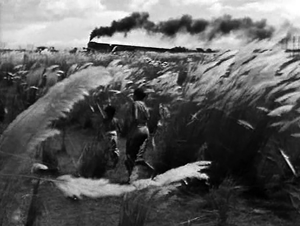
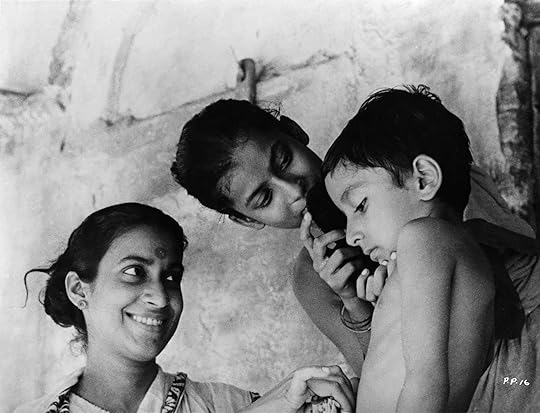
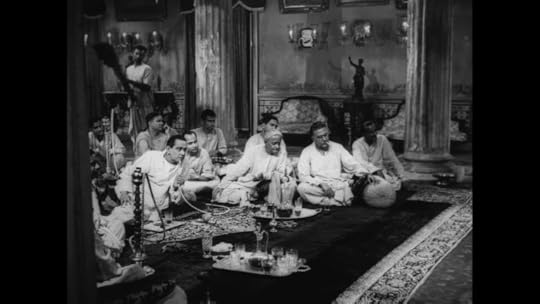
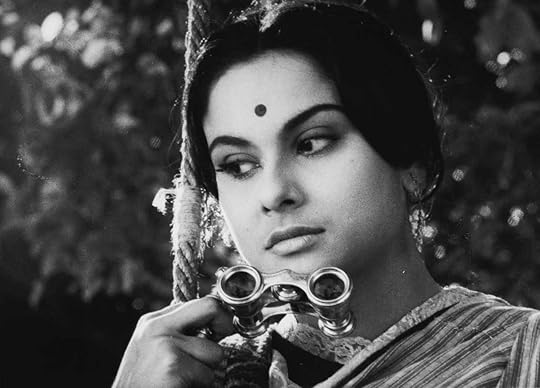
Satyjit Ray's films include the Apu Trilogy, The Music Room, Charulata, Days and Nights in the Forest, The Chess Players, and The Stranger. He also made comedies, musical fantasies, detective films, and documentaries. He was an exceptionally versatile artist who won almost every major prize in cinema, including a lifetime achievement Oscar in 1992. This is the best-known biography of the film giant, based on extensive interviews with Ray himself, his actors, collaborators, and a deep knowledge of Bengali culture. This second edition contains extensive new material covering Ray's final three films made in 1989-1991, a discussion of his artistic legacy, and the most comprehensive bibliography of Ray's own writings.
(William) Andrew Coulthard Robinson is a British author and former newspaper editor.
Andrew Robinson was educated at the Dragon School, Eton College where he was a King's Scholar, University College, Oxford where he read Chemistry and finally the School of Oriental and African Studies in London. He is the son of Neville Robinson, an Oxford physicist.
Robinson first visited India in 1975 and has been a devotee of the country's culture ever since, in particular the Bengali poet and philosopher Rabindranath Tagore and the Bengali film director Satyajit Ray. He has authored many books and articles. Until 2006, he was the Literary Editor of the Times Higher Education Supplement<?em>. He has also been a Visiting Fellow at Wolfson College, Cambridge.
He is based in London and is now a full-time writer.
Librarian Note: There is more than one author by this name in the Goodreads data base.
Satyajit Ray, along with Ingmar Bergman, was my first taste of serious cinema. They taught me that movies not only entertain, but also enchant and edify.
This book is a detailed exploration of Ray and his work - a fantastic journey into the mind of an auteur. Most of his movies are discussed in detail, embellished with beautiful photographs and interviews with the great film-maker himself.
The Inner Eye by Andrew Robinson, (I.B.Tauris 2004) is an attempt to deal with an unusual problem: a writer, composer, artist and film maker, of world stature, who created in a relatively obscure language and whose works risk misrepresentation and oblivion without some sort of interpreter, both of the works and the culture which gave them birth. Before looking at the book we have to look a little at the problem.
Satyajit Ray is a name to mention when compiling lists of great film directors, but when you ask around, not that many people have actually seen his films. The early Apu trilogy of films are well known, but Ray made 37 films and most of these are unknown, in India and in the West. The reasons are not far to seek. Ray was a Bengali, a Calcutta man to his core, and he preferred to, needed to, make his films in Bengal, spoken in Bengali. He thus missed out on the millions to be earned in the Bollywood film industry: Bengali is a minority language, and few Indians understand it. On the other hand Ray's films were influenced by Western cinema, and his films have been shown there, but nuances, allusions and references obvious to Bengalis pass unnoticed or puzzle the Western viewer and cannot be conveyed in subtitles.
Another way to consider this situation is to look at Ray as a Bengali might. This is not my viewpoint: both Western and Bengali cultures are alien ones to me. I am merely using my imagination. In Calcutta, one finds, there is not one Satyajit Ray but many.
Ray is a best selling and enormously popular author who excelled at detective, science fiction and children's literature, and made his living by writing it. His stories and characters are not just popular, but are known, in a way only possible where an oral culture lingers on. Western influence was strong on Ray, who admired the great British writer Arthur Conan Doyle enormously. It is said one can find fans of the stories who don't even know Ray made films. Ray was also a critic, whose writings on cinema, including his own cinema, is as perceptive as his films.
Ray had an earlier career as a graphic designer. His typefaces are still used, his book jackets are famous. As well, many of his stories are accompanied by his own illustrations, which are loved in their own right. He was an excellent calligrapher and many viewers are familiar with his work through the titles of Ray's films. Each one of his films was first created in a storyboard format with each scene sketched in: each book a work of art.
Ray is a prominent composer fluent in both Western and Indian modes and self taught. He composed the scores of most of his films and is one of the major artists in that genre. Ray was also a song writer of genius, something he could have turned into a fortune by writing for the Bollywood market, but didn't. Song is something hard to classify: the place of song, filmi song, in Indian culture is quite unique. Ray's songs are sung in the streets by those not swamped by Western rock music.
Ray was a man of two cultures and his art is the product of their meeting and at times their conflict. Like the Anglo-Indian of Kipling's time he fell between two cultures, not Indian enough for the Indians, too Indian for the Westerner. To the isolation of genius was added the breadth of cultural interests that few could share with him. To the lovers of the all singing, all dancing Indian film and the Western action film alike, Ray's films are too slow: not enough songs or fantasy for one, not enough car chases or exploding buildings for the other.
Robinson's book tackles the job of interpretation as well, and as badly, as one might expect. It is a very difficult job he has set himself. It has the advantage of including many personal interviews with Ray and his actors, and includes the usual scholarly appendages: notes, bibliography, glossary and filmography.
The bulk of the book is devoted to the Ray most Westerners know, the film maker. Robinson looks at all 37 films chronologically, though some are grouped thematically: comedies, musicals, detective and documentaries. We also learn about some unmade films, including the film that became E.T., the script of which was stolen from Ray and ended up, several years later, on Spielberg's table (Spielberg didn't feel the guilt that Lucas felt for appropriating Kurosawa's Hidden Fortress and denied any connection between his and Ray's film: not cultural imperialism but agressive business practice).
Half a dozen pages outlining each film's action, while hardly redundant, seemed unsatisfactory to me. The impact of Ray's films is not primarily made by the events that are depicted but by delineation of character and the exploration of each character's reaction to events and other people. Of course these precis are not intended to substitute for viewing the film but they'll be forgotten long before you see it. What they try to do is give a verbal picture of each film's ambiance and provenance, something that viewing a single frame could do more powerfully and evocatively. Other facts, such as the novel or story from which Ray's script evolved, how the actors were cast, who financed each film, how certain scenes were shot, all this is fascinating for the films you've seen and loved, not so much for ones you haven't seen. My overall feeling about this section of the book is that reading about films is a poor substitute for seeing them. I found most valuable those comments that explain cultural contexts that aren't familiar in the West, such as the expected relationship between wife and husband's 'brother' or close male relative who becomes something like the wife's own brother, overcoming conventions of purdah where appropriate. This adds a dimension to what happens between Charu and Amal in Charulata for example. I would have liked to read more of this kind of thing. But I realise summing up an entire culture in an aside in a chapter of a book is not possible. Best go there and live there for a while: you'd learn a lot more a lot more quickly. I began to realise a lot of my dissatisfaction was inherent in the actual written form. There was nothing more Robinson could do having decided to write a book (rather than, say, film a documentary).
One thing that did emerge was the extraordinary stature Ray had in the culture. Despite his achievements he was very much the junior member of a very highly esteemed family; his father and grandfather are still household names in Bengal. The second thing emerging from the details Robinson gave was that Ray's was an uncommercial cinema, meaning there was rarely a big budget. When Ray wanted a big star, like Uttam Kumar in Nayak, he got one (Kumar apparently accepted 10% of his usual fee for the chance to work with Ray) but usually he didn't want a big star. Stars became big by working with Ray. Ray's films in certain respects (including production) can be compared to Bergman's or Woody Allen's. Because of his stature Ray was given autonomy over how the films were made, but at the same time he wasn't risking millions of dollars either. The third point to emerge was Ray's amazing range of talents. He had autonomy because he could script, compose, design sets and publicity material (including titles), cast, direct, photograph, edit footage and act ' and do all of these as well or better than anyone else on the project. It made sense to give him autonomy. And lastly one can see that Ray needed autonomy because the films were personal. They expressed his views, philosophy, culture and knowledge of human nature. Not many artists have explored human nature so deeply (a fact totally irrelevant to the folk who go to the cinema to see what it's like when a machine gun bullet goes through someone's eyeball and out the back of their head: the depiction of which Ray would consider a time wasting non-event. But there you go; different strokes for different folks).
The remaining third of Robinson's book is partly biographical, partly a critical summing up. His early life, relationship to his mother, early career, relationship to Tagore, personal hobbies (collecting books and Western classical records, reading scores). There is a chapter on Ray as writer (some of his books are now available in English translation). And one on Ray as film maker.
Overall the book is as comprehensive as it needs to be. I would have liked more detail of Bengali cultural mores and more on Ray's books and less on Ray's films, which really need to be seen to be appreciated. But I realise you have to start somewhere. Perhaps Robinson's book will alert readers that Ray made more than the Apu films (though leaving them with the frustration of finding copies in good condition with readable subtitles). Summing up a genius offers poor rewards. Robinson's book is a starting point, an observation I have a feeling would please him, but Ray needs to be seen and read through his own works. He can himself teach you most of what you need to know to appreciate his achievement.
Personal cinema is not unusual (though always unlikely given the form). Bergman's psychodramas, Fellini's trips to the subconscious, Ozu's vignettes of social interactions that offer unbelievable subtleties of nuances of behaviour ' and Ray's films, with the most complete depiction of human emotions ever attempted in cinema: not the yelling and screaming that others see as profound, but emotions like dismay, trust, indecision, veiled contempt, the stuff that drives our day.
Most of us are interested in the rest of us; people watching is fun. And Ray's films are entertaining, once you realise that they're about real people, not cardboard cutouts (which are entertaining too of course). They say that when Ray died, Calcutta almost came to a standstill. That's a big thing, this is Calcutta we're talking about. Let's hope the rest of the world realises what a good thing it's lost.
An amazing exploration into the many works of Ray, and the why-hows behind them. I understand that the author grappled with explaining the many talents and sides of Satyajit. A little less eulogy and a little more into the impression of artists and contemporary directors (especially from India) regarding the subject would have enriched the reading experience. If you are a Satyajit admirer, do give it a read.
It's not much of a book about Satyajit Ray, but about his films. I hunted for 'Behind the Scenes' trivia and background, carefully avoiding the parts where it reads like a summary of the film's story. The book doesn't do justice at all to the persona of Ray, who boldly put his opinions (and there were so many of them) in the public just as eloquently with words, as he did with motion pictures. My hunt for a good biography on Ray would have to continue.
An excellent overview of the life and films of the great Indian filmmaker Satyajit Ray. I feel that Andrew Robinson has done a marvelous job in capturing the ethos and nuances of Ray's films. The book begins by covering Ray's early life and education and then delves quickly into a film-by-film analysis, complete with interesting backgrounds notes, in the subsequent chapters.
In the later chapters, Robinson goes into Ray's work as an illustrator and writer and expounds on his view of cinema in general, which are in themselves very interesting to read. The author misses some of his later works as he mentions Shakha Proshakha being a "planned" film and doesn't mention Aguntuk (his last film) at all, but these can be forgiven as the book itself was written in 1989 and the films mentioned were made later. Also, I believe that the book will be more enjoyable to those who have seen the majority of the films mentioned in the respective chapters, although the author goes into the plot details considerably (a bit too much in my opinion).
Personally, I have seen about 90% of Ray's work (sans Sadgati and his documentaries) so I was able to derive great pleasure from reading the book. I am unaware of any other extensive biographies of Ray, and he continues to be an "overlooked" filmmaker in general, so this book fills a void regarding the subject . For those who have never heard of Satyajit Ray I would urge them to check out Ray's Apu Trilogy, Charulata, Jana Aranya and a few of his other classics before reading the book. For Rayphiles like myself, this book proved to be a joy to read.
This book is less a biography and more a masterclass in how to look at an artist through multiple lenses at once: filmmaker, writer, illustrator, musician, and thinker. Robinson doesn’t just catalogue Ray’s achievements; he actually opens a window into the workings of a mind that was both rigorously disciplined and endlessly imaginative.
The phrase “inner eye” is perfect here, because what the book captures is Ray’s ability to visualise worlds before they were ever framed by a camera. Robinson teases out that alchemy between Ray’s visual training (his background in art, advertising, and design) and his narrative instincts (his literary sensibility, honed through Tagore, Western literature, and his own Feluda and Professor Shonku creations). You get to see why Pather Panchali was never just a film, but an experience that redefined how cinema could speak without being loud and how silence could hold as much weight as dialogue.
What makes this book feel like a masterclass is its method. Robinson doesn’t drown the reader in academic jargon. He’s accessible but not simplistic, weaving interviews, anecdotes, production notes, and critical insights. The reader comes away not just knowing about Ray but also seeing how he thought, how he problem-solved, and how he insisted on control yet left space for spontaneity.
And beyond film, Robinson reminds us of Ray’s polymathic energy: his design of book covers, his children’s stories, and his grasp of music.
That’s crucial, because it situates Ray as not merely a filmmaker of international renown but as a quintessential Bengali Renaissance figure, bridging East and West, modernity and tradition, and austerity and lyricism.
If cinema is often accused of being fleeting, Robinson’s book insists on the permanence of Ray’s vision. It becomes less a biography and more a course in aesthetics — a masterclass indeed — where each chapter pushes you to see not only Ray but also the world with a sharper, quieter, more compassionate eye.
بیوگرافی بی عیب و نقص: عارفانه، کامل و ژرف، کار بی تکلفی از رابینسون که دانش و عشق به موضوع کتاب را میتوان در جای جای کتاب احساس کرد، بدون هیچ گونه افراط و تفریطی.
The definitive book on Ray and his oeuvre. The author is privy to truly amazing access which not simply informs, but illuminates, the viewing of Ray's films. In portions, its chapters are more Cliffs-Note sketches than insightful (a perhaps necessary casualty of its completist aims), in contrast to the depth displayed particularly regarding his 'Apu Trilogy.'
Nevertheless, the sections on Ray's formative years in Santiniketan and Ray's creative familial inheritance; the thrilling backstory to 'Pather Panchali''s complicated gestation and delivery from page to screen (a film-worthy tale in its own right); and the evocative description of Ray's unmade 'E.T.' ('The Alien') and its very possible pillage by Hollywood; are for me its highlights.
A must (among English-language references) for any serious student of Ray and his films.
I've been working my way through the Ray films released thus far on Hulu's Criterion channel and this book provides some good context for those like me who are more familiar with Hindi cinema and don't pick up up on all of the nuances of Bengali society, politics and literature in Ray's films.
One of the best biographies that I ever read. Concentrates on the movies of Ray and less on his personal life. Such a prolific creator has not been suitably recognised till now. I intend watching all his movies next year.
Contains some interesting biographical information, but altogether too much of the author stressing that western audiences will never truly understand Ray's films (while at the same time lauding them as "universal"). A little too much of a panegyric to be a well-rounded autobiography.
I own the Apu trilogy and love the cinematography and the characters. I'm thrilled to learn of a biography and that he has several other films for me to check out.