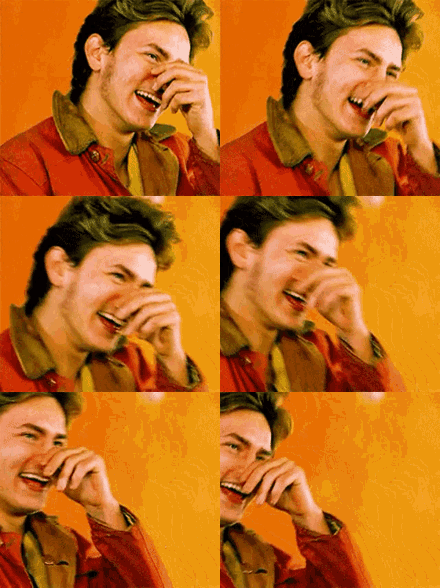
Gus Van Sant is an American filmmaker and multidisciplinary artist whose work has long explored the edges of American life, with a particular sensitivity to characters who exist outside the cultural mainstream. His career began with television commercials in the Pacific Northwest, but his creative focus quickly shifted toward personal, formally inventive films that examined marginalized communities, especially within gay culture. His debut feature Mala Noche established many of the themes that would return throughout his work, including unfulfilled longing, a dry sense of humor, and an insistence on portraying same-sex relationships without moralizing. He followed it with a string of acclaimed independent films, most notably Drugstore Cowboy, a raw portrait of addiction, and My Own Private Idaho, a poetic story of drifting young men that became one of the touchstone films of early 1990s American independent cinema. To Die For revealed his talent for sharp, satirical storytelling, while Good Will Hunting brought him into the mainstream, earning broad critical praise and multiple Academy Award nominations. Van Sant's career has remained restlessly varied. He experimented with form in Gerry, Elephant, and Last Days, a trio of films known for their long takes and meditative rhythms. Elephant, inspired by the Columbine High School attack, won both the Palme d'Or and the Best Director Award at Cannes, drawing international attention to his unique blend of realism and abstraction. His work has ranged from major studio productions such as Finding Forrester to bold misfires like his shot for shot remake of Psycho, and he has continued to move between intimate character studies, biographical dramas, and genre defying experiments. Milk, his portrait of San Francisco politician Harvey Milk, earned eight Academy Award nominations and remains one of his most widely acclaimed films. Beyond directing, Van Sant has written screenplays, published fiction and photography, released music, and worked extensively in television, contributing to series such as Boss, When We Rise, and Feud: Capote vs. The Swans. His artistic interests extend across media, but his filmmaking is united by a fascination with outsiders, a lyrical visual style, and a willingness to take creative risks. Throughout decades of shifting critical and commercial fortunes, Van Sant has remained one of the most distinctive voices in American cinema.
My Own Private Idaho is one of my favorite films of all time and I can't really explain why. To some people might be boring or without interest but to me, it is all kinds of amazing. I was really excited to read the script, I'm not sure if there's more versions, but I enjoyed the fact that in many ways, it was so different from the film. Sincerely I prefer the film version, I think has more depth and the characters are more intriguing. However there are some parts that I wish were in the film, especially this ending because it would have been the perfect ending to the film.
When I think about My Own Private Idaho, I think about the campfire scene and the ending. What's interesting about this draft is that those two moments are so different from the way the movie stages them. I don't think it's unconnected. Scott and Mike's falling-out in the film is tied to Scott's fear of Mike's feelings. In this version, it's far less personal and it seems much more likely that Scott would pick Mike up. Reading this really cemented how important River Phoenix was to the humanization of Mike, through his performance and influence on the script. But for all of the first-draft flaws, it's nice to see a version where Mike has a happy ending.
Sometimes I forget why I love this movie so much--it's in my top five--and I've landed on its genuine and universal sense of melancholy. Just a distilled mixture of sadness and mundanity and overwhelming helplessness. The Shakespearean scenes result in a timelessness to the storytelling, but River and Keanu really do make the film, so I wouldn't necessarily recommend it as a good read.
العهر ببساطة هو فى السائد الدلالى بيع الجسد مقابل المال بينما فى رأي فى الحقيقي الدلالى هو بيع شىء فى الذات مقابل المال ، المصطلح للانثي فقط فى مجتمعاتنا العربية فهو لا يٌطلق على الرجل الذى يبيع جسده سواء كان عاديا فى الجنس أو مثليا ، ترتبط العهرية ببيع شيئا فى الذات وتم تأويلها طوال تاريخها بالجسد فقط وهذا غريب لأن الإنسان يبيع نفسه لكل السلطات ، يبيع جسده فى العمل المرغم عليه للعيش ويبيع أفكاره وإنسانيته للخوف وأفعاله للعادات والتقاليد المجتمعية والأديان المسيطرة عليها ويبيع حريته الذاتية والخيالية ، اليس كل خوف عهر ، بيع من الإنسان لسلطة ما ، أليس جميعنا عاهرين وعاهرات ؟ . أليس من يمارس الجنس بدون رغبة الوجدان ، مع من لا يحبه يكون عاهرا ؟ إن العهرية هى الفعل مع عدم الرغبة لصالح منفعة مادية أو غير مادية ، هى ما يٌفعل ضد إرادة الوجدان . لفظ عاهر غائب تماما عندنا بسبب سيطرة الذكورية حتى على اللغة التى لا تُشينه . هل الجسد هو اكثر خصوصية من الباطن والأفكار وإنسانية الشخص لكى يطلق على من يبيع جسده أو جسدها عاهر او عاهرة ولا يٌطلق على من يبيع إنسانيته ؟ يتحدث الفيلم عن شابين يعملون كعاهرين وهذا المصطلح " male prostitution " لا يُعدوا أنفسهم مثليين ولا ازدواجيين الرغبة الجنسية ، الاول لديه مرض يسمى " نوب انتيابي " يدخل فى سبات وهو مستيقظ مع التخيل وممكن تدوم هذه النوبة لثوانى أو لدقائق ، يبحث عن والدته وفى أثناء هذه النوبة يقوم بالحلم بها ، والآخر من الأثرياء ينتظر وراثة أبيه بعد أسبوع واحد ، يحيون فى الشارع منذ سنين . فقدان شعور البيت والدفء يسيطر عليهم رغم أنهم مستمتعين جدا فى حياتهم فى الشارع وخلقوا عائلة مع ممارسي المحرم بشتى أنواعه وحميمية توازي حميمية الفقد للبيت ، حياة كاملة من اللاقانون تم تصويرها وحياة الحرية فى الشارع مع عدم امتلاك أى شىء لمدة طويلة ولا حتى أجسادهم تجعل الانسان يطفر منه شعورا بالخفة والتلاشي . يذهب دوما المثليين أو العاهرين وأى نوع من المحرم القديم إلى الشوارع والنبذ الكامل لفكرة البيت وهذا يُطور فى الذات مرحلة عليا من النشوة ومرحلة عليا من الالم ، مرحلة عليا من النشوة بعدم امتلاك أى شىء ينكرها عليهم المتأملين العذريين وأن الجسد واستنزافه يؤدى إلى شعور بالنشوة المطلقة ويظهر ذلك فى جملة سكوت " حينما تبدأ بفعل تلك الامور بدون مقابل تنمو أجنحتك وقتها " . الخلاء إلى الذات ربما مع أحد وربما ليس مع أحد لهؤلاء اللاقانونيين ،يجعلهم يبوحوا بكل شىء يضغط ويتكدس فى دواخلهم التى تسأل كما قال مايك " لو حظيت بحياة طبيعية وتربية طيبة ، كنت حينها سأصبح إنسانا مستقيما " ولكنه لا يعلم ما مفهوم كلمة "طبيعية " وفى لحظة أخرى مع سكوت يعترف مايك له بأنه يحبه وهذا الشعور فى اللاقانونيين يكون صادق ومتطرف جدا لانهم شفافين وجدانيا وهذا ما جعلهم ينبذوا القانون فالقانون صارم لا يصدق ولا يغفر ويتعامل باطلاق مع الجميع مع عدم فهم نوازعهم وحياتهم وسردها الماضي .
interesting read i think my review is somewhere between 3-4 stars. this is one of my favorite movies of all time so i had to read the script. whenever i show this movie to others the part that gets lost on them the most usually actually comes from the dialogue in certain points, i think a bit understandably. so, i will say reading this made me a lot more appreciative of the parts that river phoenix improvd. but, also helped to understand van sant’s vision more completely.
DAMNN- my own private idaho is one of my favorite movies and this script (while obviously lacking in bits) gave me more insight and closure on the movie itself. also showed me MR RIVER PHOENIX’S IMPROV made this movie SOOOO fucking amazing. and idk if my script was faulty but whoever wrote Scott was driving the car in the end 🤪you deserve your pillow cold on both sides🤪
Every time I see the film it destroys me, the script is interesting and generates a great contrast compared to the script later changed by the director and the actors, the scene that undoubtedly improved is the scene of the campfire but the end of the script is better.
Cada vez que veo la película esta me destruye, el guión es interesante y genera un gran contraste de comparación con el guion cambiado después por el director y los actores, la escena que sin lugar a duda mejoraron es la escena de la fogata pero el final del guión es mejor.
I absolutley love this movie. It's one of my favourite movies. The plot, the cinematography, the characters and the acting (especially by River Phoenix) and directing is amazing. I took one star off because I prefer the changes they made to the screenplay when making the movie, although . I also have to say that River Phoenix truly made that campfire scene so beautiful, raw and meaningful by changing the script. I honestly don't think the movie would be nearly as impactful if he hadn't played Mike and influenced the script.
That being said though I loved this screenplay. I also liked that we got to see inside of Mike's head more. I wish they had indicated more in the movie how Mike saw Scott as a protector. It makes it even more heartbreaking. The screenplay did a good job of conveying that. It was also interesting to read and see how scenes were rearrenged and changed for the movie. It's a bit rough in some parts but the changes made to it for the final product resulted in an unforgettable movie.
One of my favourite films, and I’m pleased a film cover to this book (bought online and it didn’t show the cover). It’s an interview with GVS them the screenplay. The original screenplay, before it was changed by the actors and director on set.
It’s a good read. The Shakespeare comes through, and Mike and Scott are well drawn even in screenplay form.
When reading, I could see the scenes in the film so clearly. I’m pleased that the screenplay cleared up the end scene... and confirmed what I had suspected.
Filmi izledim. Sanırım ilk defa bir Gus van Sant filmi izledim. Çeşitli sahnelerin belli imgelerle anlatılması ilginç olmuş. River Phoenix müthiş sade ama vurucu bir oyunculuk sergilemis. Mike karakterine üzülmemek işten değil. Keanu Reeves ise fena değildi: Scott'in kendinden ve ne istediğinden emin olamamış bir yanı var gibi geldi. Filmin genelde çok iyi yansıtılmadigini düşünüyorum. Daha iyi olabilirmiş sanki. 3 Yıldız.
I loved this. I love the contrast between the original script (which is what is printed in the book) compared to the movie. A good read, albeit a light one.