As friends began "going back to the land" at the same time that a health issue emerged, Kathleen Alcala set out to re-examine her relationship with food at the most local level. Remembering her parents, Mexican immigrants who grew up during the Depression, and the memory of planting, growing, and harvesting fresh food with them as a child, she decided to explore the history of the Pacific Northwest island she calls home.
In The Deepest Roots, Alcala walks, wades, picks, pokes, digs, cooks, and cans, getting to know her neighbors on a much deeper level. Wanting to better understand how we once fed ourselves, and acknowledging that there may be a future in which we could need to do so again, she meets those who experienced the Japanese American internment during World War II, and learns the unique histories of the blended Filipino and Native American community, the fishing practices of the descendants of Croatian immigrants, and the Suquamish elder who shares with her the food legacy of the island itself.
Combining memoir, historical records, and a blueprint for sustainability, The Deepest Roots shows us how an island population can mature into responsible food stewards, and reminds us that innovation, adaptation, diversity, and common sense will help us make wise decisions about our future. And along the way, we learn how food is intertwined with our present but offers a path to a better understanding of the future.
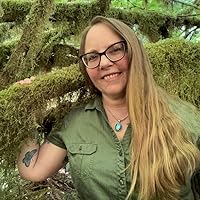
Kathleen Alcalá's most recent book is a republication of Spirits of the Ordinary: A Tale of Casas Grandes by Raven Chronicles Press (see book giveaway!) The Deepest Roots: Finding Food and Community on a Pacific Northwest Island, is now in paper from University of Washington Press. Combining memoir, historical records, and a blueprint for sustainability, Alcalá explores our relationship with food at the local level, delving into our common pasts and cultures to prepare for the future.
With degrees from Stanford, the University of Washington, and the University of New Orleans, Kathleen is also a graduate and one-time instructor of the Clarion West Science Fiction and Fantasy Workshop. Kathleen Alcalá has received a Western States Book Award, the Governors Writers Award and two Artist Trust Fellowships. She is a recent Whitely Fellow, a previous Hugo House Writer in Residence, and teaches at Hugo House and the Bainbridge Artisan Resource Network. Her sixth book, The Deepest Roots: Finding Food and Community on a Pacific Northwest Island, explores our relationship with geography, food, history, and ethnicity.
“Not one tale is like another, yet all together they form a beautiful whole, a world where one would like to stay forever.” Ursula K. Le Guin on Mrs. Vargas and the Dead Naturalist.
“Alcalá’s life work has been an ongoing act of translation… She has been building prismatic bridges not just between the Mexican and American cultures, but also across divides of gender, generation, religion, and ethnicity.” —Seattle Times
There was one paragraph of this otherwise glorious book that almost lost it a star: When the slim and beautiful author expressed her distaste for "overweight people buying pallets of food at Costco". I attended a reading by her at Time Enough Books in Ilwaco and gently suggested she read Body of Truth by Harriet Brown.
However, the rest of the book, especially the first chapter and the last couple of chapters, restored it to five stars (or 20 if I could).
I found this in a used bookstore a few days ago and bought it for Will but ended up reading it first. What I enjoyed most was the stories of different people and their relationships to the forests and food of Bainbridge Island across the sound from Seattle. Having spent some time on the island (and Will having lived there for just short of a year), this book broadened my understanding of the island’s history and culture. Particularly of interest to me was the relationship between Filipino (and Indipino) and Japanese islanders before, during and after internment. I wasn’t totally interested in the central premise of the book’s research — could the island of Bainbridge grow all of its own food and sustain itself? And I felt it could’ve used some editing to smooth over repetitive sentences and interweave some of the fragments more. However, I think, particularly for those who have a relationship with Bainbridge, this book provides an incredibly dense look into the webs of connection between people and food on the island.
This is an amazing book full of so much rich history and wise local (to me as the setting is Bainbridge Island, Wa) food knowledge. It's lessons apply more broadly than just the PNW, especially as we face the global crises of man-made climate change.
In The Deepest Roots, Kathleen Alcala examines the Bainbridge Island foodshed in the most comprehensive, holistic manner I’ve experienced in one book, tackling so much more than just the complex issues of food sustainability in our changing world. Drawing from extensive research and in-person interviews, she looks to indigenous and immigrant histories, local natural history, her own history with place and food, and a broad range of current trends and future predictions regarding the entire Bainbridge ecosystem.
You don’t have to know anything about the island to enjoy this book, though I guarantee you will know a lot about it when you’re done. Intimate details that immerse you in the place with all your senses, so that you might start to feel you are one of the neighbors, digging in to a community garden plot to brush the rich soil off of fresh carrots for a potluck dinner. As a wanderer who has connected deeply with the earth but never one particular place on it, I am in awe of this sort of rooting, and even inspired to one day create that for myself. For those of us without our own historical ties to one place or our food, this book provides a map to earning your belonging.
BAINBRIDGE ISLAND EXPLORES IF AND HOW ISLAND COULD BE SELF SUFFICIENT IN FOOD IF CUT OFF FROM MAINLAND. LEADS TO A NUMBER OF STUDIES OF OUR RELATIONSHIP TO THE THINGS WE CONSUME. JUMPS AROUND A BIT AND PERIODICALLY READS LIKE A DIARY/PERSONAL INVENTORY/CONFESSIONAL. SEEMS TO NOT HAVE ENERGY TO ACTUALLY EXPLORE THE THINGS SHE WANTS TO EXPLORE. REFERENCES TO NATIVE TRADITIONS ARE AWKWARD AS ARE WWII JAPANESE CONNECTIONS. SENSE THAT THIS IS A CONVERSATIONTHAT BECAME A BOOK.
I love the discussions surrounding sustainability, eating local and how eating indigenous foods to your area is healthier than our current diets- even if those are already considered “healthy”. The anecdotes were a little painful to get over though. Still, it made me think about food and what I’m eating, so I can consider it a success.
Very interesting book about a topic I didn’t know much about. Probably would have enjoyed if most if not all was focused on the local aspects. The fatophobia part at the beginning was also weird and off-putting and came off as a smidge elitist.