

What do you think?
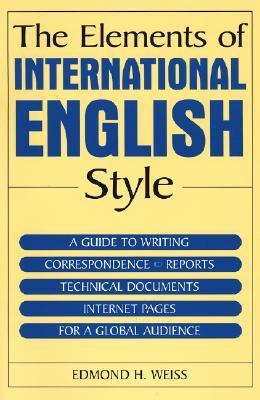
The Elements of International English Style: A Guide to Writing Correspondence, Reports, Technical Documents, and Internet Pages for a Global Audience
This easy-to-use handbook is an essential resource for anyone who needs to write English correspondence for an international business audience. In an engaging, accessible style it integrates the theory and controversies of intercultural communication with the practical skills of writing and editing English for those who read it as a second language. The book emphasizes principles of simplicity and clarity, proper etiquette, cultural sensitivity, appropriate layout and typography, and more to increase the chances that a text prepared by a native English speaker will be better understood by a non-native speaker. It also updates traditional advice with new insights into "e-mail culture." Equally useful for students and professionals in business communication, marketing communication, and international business, The Elements of International English Style is filled with realistic examples, problems, and projects, including: 57 specific tactics to internationalize one's English; hundreds of before-and-after comparisons showing the effects of editing for an international audience; models of international correspondence; practical discussion questions and work projects; useful resources for further study, including books, articles, and websites.
184 pages, Paperback
First published January 1, 2005
Ratings & Reviews
Friends & Following
Create a free account to discover what your friends think of this book!
Community Reviews
Displaying 1 - 4 of 4 reviews

March 19, 2015
I feel as though much of the information here would be more presentable and easier to digest in a pamphlet, but instead, the author, wishing to write a book, added a great deal of fluff and quite often repeated himself. The information present is interesting and valuable, although mainly focused on a single audience of white, male business owners, while frequently disparaging of the very people it is meant to help. Most of the examples are poorly written, but overall, the book is a valuable resource for understanding reasoning and tactics for creating English for international audiences.

December 20, 2013
This is written from a business perspective and highlights what business people may need to know. From a critical perspective, I hated it. I thought it was very white-centric and American-centric. I taught a class where this was the book that had been assigned. I ended up using it more as a guide of what not to do than a guide of what to do. Not a fan. If I teach the class again, I will not be using this book.

June 25, 2009
A solid desk reference when writing for an international audience.

March 9, 2015
Didn't learn anything new. I can see how this could be useful to someone who has never worked or communicated with individuals of different countries (maybe). However, I found it redundant.
Displaying 1 - 4 of 4 reviews