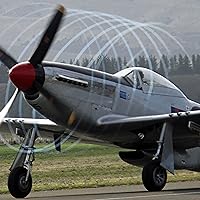
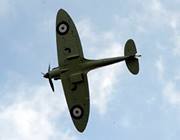
In terms of enemy aircraft shot down or destroyed, Squadron Leader Thomas Pat Pattle was the greatest fighter pilot of the Second World War. A South African who flew with the RAF, Pattle was an airman of outstanding skills and leadership who became the Allies' top-scoring fighter pilot after winning scores of stunning victories in deadly aerial combat. But for years after the war ended, Pattle was virtually an unsung hero because the records of his extraordinary achievements were destroyed amid the turmoil of war. Compiled with the help of surviving pilots and members of the squadrons with which Pattle fought in the air over Greece, Ace of Aces is a gripping and authoritative account of his amazing flying career, and the book which finally brought Pattle the recognition he so richly deserved.
Squadron Leader Marmaduke St.John Pattle is not a household name that comes out of World War 2, but he was the highest scoring fighter ace from the western allies, with at a minimum of 40 victories that tied him with Dick Bong (USAAF), but most likely had 51 victories. Due to his death and loss of squadron records his final tally will never be known. This book was originally written in the 1960's and the author did a great job for that time to get all his service details. Pattle flew the obsolete Gloster Gladiators in the early days of the North African campaign against the Italian Regia Aeronautica before going to Greece flying the same plane against the same opponent. The game changer for him came when Hawker Hurricanes became available and the Germans invaded Greece where he went up against the Luftwaffe and proved more than a match for them before losing his life saving another pilot. Pattle, along with his squadron mates in 80 and 33 Squadron always fought against the odds facing vastly superior numbers of enemy machine, he was the highest scoring Gladiator and Hurricane ace of the war and if he flew during the Battle of Britain he would have been the most recognizable ace from the western allies. A good read about one of the war's forgotten heroes and a highly recommended book.
Off the coast of Greece is a body of water called Eleusis Bay. According to Shipwreck.com, "authorities have stated that Eleusis Bay has over 20 record shipwrecks" and other WWII aircraft that went down. Some have laid there for decades, a virtual graveyard. In among these wrecks lies a a Hawker Hurricane fighter flown by Pat Pattle who was shot down by the Nazi's in 1941 in the Battle of Athens.
There is dozens of books on Ace of Aces of WWII that claim the title accorded to be the top flying ace/fighter of a nation's air force during time of war. This book is about Pat Battle a South African whose parents immigrated to South Africa from England. Battle joined and fought for the Royal Air Force and today is hardly known outside of aviation circles. Had his WWII battles occurred over London, he would have been a household name. This unfortunate historical oversight is because most of Battle's victories were attributed to early Middle East and Greek campaigns. They were regarded as sideshows, lacking the fascination of the Battle of Britain, El Alamein or the Normandy invasion. Most of the book is read as a biography of how he attained his status as ace of ace. It does point out that most of his victories were made in obsolete, outdated, snail speed, Gloster Gladiator. The book explains Pat Battle's 50 air combat victories. I have felt recordkeeping of victories was not the RAF's strong suit in the Middle East and Greece so his count is a bit vague. If there is someone out there in GR that could point out how WWII RAF combat recording kills were done I certainly would like to now. This book didn't point it out. If his air combat victories are true there is no doubt from reading this book that Pat Battle earned himself a lasting place among immortals of air combat. Due to his death and loss of squadron records his final tally will never be known. If this is true at the bottom of Eleusis Bay sits maybe the greatest air ace of WWII from Great Britain. If you love aviation and learning about a WWII forgotten hero this is an interesting read to start with.
Was an interesting read about an ace whose story was in the background probably because of his theatre of operation. The book read a little like Biggles defies the "I-ties"(as referred to in the book)! I find it difficult to accept that an author who never met the pilot, who died more than 20 years before the book was written, can describe how he felt on a particular occasion.
This is a wonderful book that I first read in the summer of 1971. I then bought the later updated version. ECR Baker brought Pattle into the limelight and he is now recognised as the top RAF ace of WW2 with between 41 and 50 air victories. The book is well written, tells of the struggle for the Desert and Greece in Gladiator and Hurricane fighters with 80 and 33 Squadrons against faster and more numerous aircraft opposing them. He writes of the many ace pilots who followed Pat as either a Flt Lt or later Squadron Leader. Pattle was able to take on any pilot in equal or superior fighters in mock combat and real combat-he scored around 15 and a shared kills with Gladiators and was top on that type including shooting many aircraft of equal or better perfomance down. Nine of these 15.5 were of the Fiat biplanes which were equal to his Gladiator 4 gun Biplane fighter, some say better in some respects. When he was equipped with a Hurricane I, he shot down many fighters also although his main targets were the bombers intent on destroying the Greek Army below and her ships. He did not have the advantage with a Spitfire and often fought and destroyed faster German and Italian aircraft inc Messerschmitt BF109E fighters in his early type Hurricanes. At least 17 of his kills in Hurricanes were faster monoplane fighters. He shot down at least 8 109s and 3 faster Me 110s in his much slower Hurricane, and in total he destroyed over 31 fighter aircraft equal to or faster than his own fighters he was flying at the time. He also destroyed a further 5 aircraft, mainly fighters, on the ground. His main success was in shooting down many faster bombers in his Gladiator and later Hurricane which was slower than the Junkers 88s he shot down also. His total included at least 23 and one shared German aircraft. His accuracy in shooting meant he used little ammunition and often scored 5 in a day. His whole 41-50 victories were gained in relativly obsolete aircraft from 1940 to April 20th 1941 when he was killed trying to save "Timber" Woods life who was being attacked by a horde of Me 110s. These killed Woods and two were firing on Pattle, set him on fire, the aircraft exploded lower down and he has never been found. His Hurricane lies in the sea close by Psyttaleia (Pisitella) an uninhabited island in the Saronic Gulf between the harbor of Piraeus and the Kynosoura peninsula on Salamis Island, Greece, near the sewage treatment plant. This is in the Bay, South of Eulisis and clse by Piraeus Harbour where he was fighting to protct "Timber" Woods ( whose body was later recovered and buried at Phaleron War Cemetery Also known as Athens Memorial. Nearby are many Unknown Airmen graves. Could Pattle be one of these? Paul Davies Aviation Historian.
Remarkable story based largely on the personal letters of Squadron Leader Thomas "Pat" Pattle. A South African, Pattle joined the RAF before the Second World War and served in the Middle East before joining the struggle to defend Greece against the Italian and then the German invasion. Pattle may actually be the RAF's highest scoring ace of the Second World War, but because he was fighting on a distant front and the records of his units were lost in the ensuing chaos of defeat, he has not received due recognition.
I was particularly moved by his descriptions of the sacrifices of the Greek people. Pattle describes going to Greek hospitals when off duty from almost continuous flying to visit total strangers. An act of remarkable compassion and empathy for such a young man.
Ultimately, I found this example of the willingness of young men to give their lives to end totalitarian dictatorships distressing in light of the U.S. vote in the UN NOT to condemn Nazism, racism and xenophobia. As "President" Trump attempts a coup d'etat in what was once a bastion of democracy, he reveals his totalitarianism with this UN vote in support of the Nazis and all they stood for. I am ashamed of my country and sad that sacrifice of men like S/L Pattle was insufficient to stop the spread of Nazism to America.
Pattle applied to join the South African Air Force at 18, but was rejected. He travelled to the United Kingdom and joined the RAF in 1936 on a Short Service Commission. Pattle was a pilot by 1937 and was posted to No. 80 Squadron based in Egypt upon the outbreak of war in September 1939. In June 1940, Italy entered the war on the side of the Axis Powers and he began combat operations against the Regia Aeronautica (Italian Air Force), gaining his first successes during the Italian invasion of Egypt. After the Italian invasion, his squadron was sent to Greece in November 1940, where Pattle achieved most of his victories. Pattle claimed around 20 aircraft shot down and in March 1941 was promoted to squadron leader. After the German intervention, and in fourteen days of operations, Pattle claimed victories 24–50. Pattle claimed five or more aircraft destroyed in one day on three occasions, which qualified him for ace in a day status. Pattle achieved his greatest success on 19 April 1941, claiming six victories. The following day, having claimed more aerial victories than any other Western Allied pilot, he took off against orders, while suffering from a high temperature, to engage German aircraft near Athens. He was last seen battling Messerschmitt Bf 110 heavy fighters. His Hurricane crashed into the sea during this dogfight and Pattle was killed. Pattle is sometimes noted as being the highest-scoring British Commonwealth pilot of the war. If all claims made for him are correct, his total could have been more than 51.
This book was written in 1973, when airman from World War II were still alive and relatively young. Thus, the author was able to piece together Pat Prattle’s story from records and first hand accounts. The book often reads like a novel and I found myself anticipating the next chapter. The story starts with Prattle’s youth in South Africa and his desire to fly at an early age. He left South Africa after seeming an advertisement for pilots for the RAF and so he took a chance and went to England where after a short delay he was accepted into the RAF. When war broke out his squadron was sent to Egypt and then to help the Greeks after the Italians invaded Greece in 1940. He was unfortunately killed in action after being attacked by German Me 109’s just before the British evacuated Greece. This book has a number of different threads. First, of course is the story of Prattle and his remarkable, but short flying career as one of the top aces in the RAF. Second, this is also the story of some of the RAF squadrons, and the men, who served in Egypt and Greece in the early years of the war. Third, it is the story of the Gloster Gladiator and the Hurricane aircraft these men flew, and although the Gladiator was obsolète had some great success against the Italian The Hurricanes were successful against the Germans but by that time, in Greece, were overwhelmed by the Germans. The ending was a little weak, summed up in half a page. This was a great book about a remarkable pilot whose flying career was cut short but did his duty to King and country.
How is it that I had never heard of the man who shot down more Axis aircraft than any other pilot flying for the Western Allies? Perhaps due to the loss of official combat records and many of his victories taking place in a "secondary" combat arena (Greece/Albania). It's also remarkable that he shot down a good portion of his opponents while flying a biplane! This was a fascinating book I'll recommend to any who enjoy reading about military aviation history. If there's any drawback, it's that the writer embellishes the tale like a cheerleader narrator - but we must give him some slack as this was originally written in the 1960s when historical writings about WWII were still relatively fresh and contained biases and sentiments of those who lived through and fought in the war. If you think you've read all there is on WWII air combat, give this book a try to see you have not.
Biggles is alive and well in Baker's Boys Own retelling of the short but brilliant career of Pat Pattle. Baker is a meat and two veg writer and this is a meticulous account of how Pattle flying out moded Gladiators took on the Italians and, thankfully in Hurricanes, the Germans in the Middle East and Greece. The odds they fought against are staggering, yet exploits of Pattle and fellow pilot's taking on 5 enemy planes at once are commonplace. You almost feel sorry for the Axis fighters. The book's biggest issues are the conversational style, almost as if Pat was dictating, and the tone deaf approach to Arabs who had the temerity to rebel. There is little insight into what Pattle thought and zero in his sex life. Like Biggles. It's a period piece but without Baker's efforts, Pattle would have been reduced to footnote. Thanks to Pat and his colleagues, we have lived.
This is an outstanding, well written and needed history of probably the greatest English Air man in World War Two. The war in Greece was not told even though brave men and women bravely fought and some gave all. This book is not only a great history lesson, it is the story of a wonderful man. Extremely well written and very enjoyable. Thank You Mr. Baker for a great book.
RAF pilot "Pat" Pattle was a remarkable pilot and inspirational leader within the RAF during the early part of WWII. I had little knowledge of his exploits until introduced to him by author E.C.R. Baker in his well researched and documented story of the "Ace of Aces." Although a South African, his service in the RAF was exemplary and why his service record has not had more notoriety I do not know other than he was not English. Well researched easy read that is worth the time.
This book shines a much needed light on this forgotten arena.
Some years ago while working in Athens I saw a Hawker Hurricane on display with a plaque not referencing WW2 but to the war of 1940/1941. Perhaps Greece could show a little more gratitude to the Commonwealth’s contribution to this campaign as well as the our contribution to thwarting a communist takeover after the Second World War.
Mr. Baker's biography of Pat Battle, DFC w/bar, reveals more than the lost story of a most remarkable pilot ace, it is an expose of the courage, strength and sacrifice of many more RAF servicemen in Greece and the Middle East especially in those early war years. It's a history whose telling has been neglected and should be honored.
After all the material written on the Battle of Britain this is a,story of an amazing pilot who fought first in an outdated machine and later in the reliable hurricane in Africa and Greece. He was a focused expert in the air and also a committed leader of his men.
I thought I knew the history of WWII but I never heard about these pilots that gave their lives to defend Greece against the Italian aggression and the German war machine! Churchill had said that never had so much owed by so many to so few, (Battle of Britain) that is also true of these pilots.
This story needed telling and Mr Baker captured the story of Pat and brave comrades brilliantly. It could easily have been a 'they moved to this place and shot down some aircraft and then they moved to another place and shot down some more' kind of book. But it wasn't. It captured what Pat and his guys did and it also captured the reader.
This book is an amazing story of WW2 flying ace Pat Prattle. The author should be praised not only for the story but also for the research to make the book as accurate as possible.This book should be required reading for all WW2 buffs as it gives a good picture of the Battle to save Greece in the early days of the war.
‘Full many a flower is born to blush unseen’ This is the story of one of the greatest RAF WW2 pilots. He is not well known because he flew in a part of Europe which received little publicity. The author has rectified this. Pattle was a great fighter pilot and it seems a good human being.
Sure we all know about the heroes of our he Battle of Britain, we know their names....taking nothing away from them. Do we know the best and bravest Fighter Pilot of WWII, I do, only after reading this book.
This account of an incredibly skilled pilot as well as a great commander of brave men in the very difficult circumstances that was the Greek campaign is compelling reading, even more so to help spread awareness about a man who is otherwise virtually I known.
A well-written and meticulously researched account of the life of one of the true unsung heroes of WW2. Had his battles occurred over London, he would have been a household name. A highly recommended read.
He was an inspiration to all who flew with him he worked out how defeat the enemy with inferior aircraft and would have probably been the highest scoring pilot had he survived the war.
Highly recommend. Non-stop action from beginning to the very end. If you enjoy page-turner suspense you will thoroughly enjoy this book. Noshir Hansotia.
The book was very enlightening in the clarification of the shortcoming in the support of man and material for this theater of the war. The men working with so little have so much and accomplished so much.
A very interesting story about someone who quite possibly was the best allied fighter pilot in WWII, but relatively unknown. His courage and dedication were unparalleled. Sadly, his number came up too early.
Fantastic tale of a talented fighter pilot and leader by reason of his service in a remote theater in Africa and Greece has been overlooked despite an impressive number of “kills”. Often flying obsolete aircraft he prevailed due his skill.
Great reading, well researched material. A good mix of fact and some romancized conversations etc. Worth reading, I never stopped until it was over. Even the epilogue is good :-)
I could not put this book down. It's hard to believe this life story was forgotten. Not just a list of dates and actions, I like the way the story has been told, bringing Pat Pattle,s heroics to the reader.
It was a bit surprising to me given the superb reviews this fighter pilot account enjoys, but I couldn't settle into the rhythm of the book. I found the writing a little bit on the tedious and boring side.
The whole book is edge of your seat adventure. How this man's accomplishments could be overlooked for so long is unbelievable. This is a must read for all aviation enthusiast. I highly recommend this book.