

What do you think?

All These Worlds Are Yours: The Scientific Search for Alien Life
Where would you look for alien life? An astronomer and science popularizer explains the basics of astrobiology to outline five plausible scenarios for finding extraterrestrials
Long before space travel was possible, the idea of life beyond Earth transfixed humans. In this fascinating book, astronomer Jon Willis explores the science of astrobiology and the possibility of locating other life in our own galaxy.
Describing the most recent discoveries by space exploration missions, including the Kepler space telescope, the Mars Curiosity rover, and the New Horizons probe, Willis asks readers to imagine—and choose among—five scenarios for finding life. He encourages us to wonder whether life might exist within Mars’s subsoil ice. He reveals the vital possibilities on the water-ice moons Europa and Enceladus. He views Saturn’s moon Titan through the lens of our own planet’s ancient past. And, he even looks beyond our solar system, investigating the top candidates for a “second Earth” in a myriad of exoplanets and imagining the case of a radio signal arriving from deep space. Covering the most up-to-date research, this accessibly written book provides readers with the basic knowledge necessary to decide where they would look for alien life.
Long before space travel was possible, the idea of life beyond Earth transfixed humans. In this fascinating book, astronomer Jon Willis explores the science of astrobiology and the possibility of locating other life in our own galaxy.
Describing the most recent discoveries by space exploration missions, including the Kepler space telescope, the Mars Curiosity rover, and the New Horizons probe, Willis asks readers to imagine—and choose among—five scenarios for finding life. He encourages us to wonder whether life might exist within Mars’s subsoil ice. He reveals the vital possibilities on the water-ice moons Europa and Enceladus. He views Saturn’s moon Titan through the lens of our own planet’s ancient past. And, he even looks beyond our solar system, investigating the top candidates for a “second Earth” in a myriad of exoplanets and imagining the case of a radio signal arriving from deep space. Covering the most up-to-date research, this accessibly written book provides readers with the basic knowledge necessary to decide where they would look for alien life.
214 pages, Hardcover
First published August 23, 2016
Ratings & Reviews
Friends & Following
Create a free account to discover what your friends think of this book!
Community Reviews
Displaying 1 - 30 of 72 reviews

January 24, 2024
Чомусь так виходить, що всі книги, які розповідають про науку, природу та космос, приводять мене у моє ж дитинство — з пошарпаними радянськими енциклопедіями, географічними атласами, спостереженнями за зірками та місяцем в телескоп, зачитаними до дірок "цікавими географіями" і головокрутними думками про нескінченний Всесвіт.
Добре пам'ятаю свій шок і захват від уроку, на якому наш фізик розповідав про будову атома, а я зрозумів, що ця структура дуже схожа на те, як організовано простір у космосі. Тоді ж ми спробували припустити: а що, якщо на поверхні протонів, нейтронів та електронів живуть якісь істоти, для яких ми настільки велетенські і за горизонтом розуміння, як хтось інший може бути для нас... І якщо від цієї думки у вас не з'явилося легке запаморочення, то можете спробувати відчути його, читаючи книгу Джона Вілліса "Усі ці світи ваші".
Канадський астроном і популяризатор науки розповідаючи про нескінченність Всесвіту згадує про мільярди планет, на кожній з яких потенційно може існувати життя (що би це слово не означало). Це розповідь та міркування про барвистий і переважно непізнаний світ галактик, зірок, планет та відчайдушних науковців, які понад усе мріють розібратися як і чому саме так все влаштовано.
Джон Вілліс подекуди ставить навіть більше запитань, ніж може запропонувати відповідей, але я несподівано дізнався про купу речей, які завтикав, доки оце жив своє жеття між дитинством і сорокаріччям: про тисячі екзопланет, які можуть мати умови, схожі на земні (а можуть і не мати, звісно, але яка різниця, якщо їх кількість може бути нескінченною), про метаново-етанові моря Титану, крижані океани Європи та гейзери Енцеладу, про метеорит з Марсу, знайдений в антарктичній кризі, на якому мало не виявили ознаки позаземного життя (чи таки виявили?), про можливість допомогти з пошуками іншопланетян зі свого смартфона та чимало інших цікавезних фактів. А також про дивовижні відкриття, зроблені за допомогою різних телескопів, марсоходів та зондів, і про те, що якщо дивитися приблизно від Плутона — наша Земля виглядає не більшою за крихітний блідо-блакитний піксель.
Автор бачить майбутнє астробіології та пошуків позаземного життя у Всесвіті не надто оптимістично не лише через безмежність нових горизонтів, які треба дослідити, а ще й тому, що дослідження в космосі коштують дуже дорого (а втім значно дешевше, ніж боротися за своє життя і незалежність від озвірілих диктаторів та міжнародних терористів).
Хтозна наскільки більше ми б зараз знали про Всесвіт, якби перманентно не винищували життя на Землі. І в той же самий час Джон Вілліс переконує, що спинитися у розширенні меж своїй допитливості та дослідженні світу ми не маємо права.
Сподіваюся, що "Бородатий Тамарин", який поступово стає моїм улюбленим видавництвом, не спинятиметься теж.
Добре пам'ятаю свій шок і захват від уроку, на якому наш фізик розповідав про будову атома, а я зрозумів, що ця структура дуже схожа на те, як організовано простір у космосі. Тоді ж ми спробували припустити: а що, якщо на поверхні протонів, нейтронів та електронів живуть якісь істоти, для яких ми настільки велетенські і за горизонтом розуміння, як хтось інший може бути для нас... І якщо від цієї думки у вас не з'явилося легке запаморочення, то можете спробувати відчути його, читаючи книгу Джона Вілліса "Усі ці світи ваші".
Канадський астроном і популяризатор науки розповідаючи про нескінченність Всесвіту згадує про мільярди планет, на кожній з яких потенційно може існувати життя (що би це слово не означало). Це розповідь та міркування про барвистий і переважно непізнаний світ галактик, зірок, планет та відчайдушних науковців, які понад усе мріють розібратися як і чому саме так все влаштовано.
Джон Вілліс подекуди ставить навіть більше запитань, ніж може запропонувати відповідей, але я несподівано дізнався про купу речей, які завтикав, доки оце жив своє жеття між дитинством і сорокаріччям: про тисячі екзопланет, які можуть мати умови, схожі на земні (а можуть і не мати, звісно, але яка різниця, якщо їх кількість може бути нескінченною), про метаново-етанові моря Титану, крижані океани Європи та гейзери Енцеладу, про метеорит з Марсу, знайдений в антарктичній кризі, на якому мало не виявили ознаки позаземного життя (чи таки виявили?), про можливість допомогти з пошуками іншопланетян зі свого смартфона та чимало інших цікавезних фактів. А також про дивовижні відкриття, зроблені за допомогою різних телескопів, марсоходів та зондів, і про те, що якщо дивитися приблизно від Плутона — наша Земля виглядає не більшою за крихітний блідо-блакитний піксель.
Автор бачить майбутнє астробіології та пошуків позаземного життя у Всесвіті не надто оптимістично не лише через безмежність нових горизонтів, які треба дослідити, а ще й тому, що дослідження в космосі коштують дуже дорого (а втім значно дешевше, ніж боротися за своє життя і незалежність від озвірілих диктаторів та міжнародних терористів).
Хтозна наскільки більше ми б зараз знали про Всесвіт, якби перманентно не винищували життя на Землі. І в той же самий час Джон Вілліс переконує, що спинитися у розширенні меж своїй допитливості та дослідженні світу ми не маємо права.
Сподіваюся, що "Бородатий Тамарин", який поступово стає моїм улюбленим видавництвом, не спинятиметься теж.

January 17, 2024
"Всі ці світи ваші" – про складнощі пошуків життя простими словами.
Тут є відповіді і розповіді. Але передусім в "світах" дуже багато питань. Деякі видавалася мені простими, але вже наступні, в кращих традиціях формули Дрейка, примушували чухати потилицю. "Куди б ви послали дослідницьку місію?". Та на Титан, звісно. "Ок, і як би мало виглядати життя на Титані?". А справді, як? Там прекрасне середовище для утворення органічних сполук, але як вони поведуть себе в холодних етаново-метанових озерах?
Дуже сподобалися підходи і хитрощі, на які йдуть вчені, аби виявити щось, що може бути ознаками життя. Не менше до смаку припали описи контртез і спростувань. Обожнюю дотепні рішення, а в "світах" їх багацько.
Читав повільно, але не тому, що було нецікаво. Часто хапався за телефон, щоб щось записати. Ідеї постійно приходили і забирали собі всю увагу. Бракувало електронного варіанту, щоб робити помітки швидше.
Вганяв в сум тільки контекст світу навколо. За якихось кілька мільярдів доларів можна робити крутезні дослідження. Але грошей на це нема. На "оборону" вони є. Ми всі мешканці pale blue dot. Від кого обороняємося? З сумом думаю, що не пройдемо "великий фільтр".
Ок, моє визначення життя поки – "я допитливий, значить я існую" :)
Тут є відповіді і розповіді. Але передусім в "світах" дуже багато питань. Деякі видавалася мені простими, але вже наступні, в кращих традиціях формули Дрейка, примушували чухати потилицю. "Куди б ви послали дослідницьку місію?". Та на Титан, звісно. "Ок, і як би мало виглядати життя на Титані?". А справді, як? Там прекрасне середовище для утворення органічних сполук, але як вони поведуть себе в холодних етаново-метанових озерах?
Дуже сподобалися підходи і хитрощі, на які йдуть вчені, аби виявити щось, що може бути ознаками життя. Не менше до смаку припали описи контртез і спростувань. Обожнюю дотепні рішення, а в "світах" їх багацько.
Читав повільно, але не тому, що було нецікаво. Часто хапався за телефон, щоб щось записати. Ідеї постійно приходили і забирали собі всю увагу. Бракувало електронного варіанту, щоб робити помітки швидше.
Вганяв в сум тільки контекст світу навколо. За якихось кілька мільярдів доларів можна робити крутезні дослідження. Але грошей на це нема. На "оборону" вони є. Ми всі мешканці pale blue dot. Від кого обороняємося? З сумом думаю, що не пройдемо "великий фільтр".
Ок, моє визначення життя поки – "я допитливий, значить я існую" :)

June 28, 2024
3,5⭐️
Цікаво та пізнавально, проте інфи «море» щоб все запамʼятати. Мозок місцями «вскипав» та пропускав текст місцями під час читання :)
Цікаво та пізнавально, проте інфи «море» щоб все запамʼятати. Мозок місцями «вскипав» та пропускав текст місцями під час читання :)

September 8, 2025
Перші 4 розділи - вода водою, тільки з початком розповіді про дослідження Марсу стає реально цікаво. Тут вже й інформація присутня не рівня сторінок з Вікіпедії, потроху починаєш рефлексувати над прочитаним. Наступні розділи після Марсу присвячені супутникам Юпітера та Сатурна, напевне, найцікавіша частина в книзі. Але й тут інформації суто для поверхового ознайомлення.Завершує свою мандрівку узагальненою інфою, що десь далеко-далеко в інших системах присутні достобіса екзопоанет, але в нас ще руці до них не скоро дотягнуться. Як висновок, найближчим часом максимум- дотягнуться до Марсу і покулупатись зондами в Титані чи Європі. А десь через сотню років, можливо, люди зможуть розширити спектр своїх можливостей. Але це за умови, якщо не повбиваєм один одного. Та й таке.

October 6, 2024
Тема цікава. Звісно, нічого нового ви не дізнаєтесь, пошуки тривають:) Від книги я очікувала захопливої подорожі до інших планет, але в результаті разів десять відкладала читання і просто дивилася документалки від National Geographic та NASA. Читати переказ інформації від астробіолога - ну Ок, але як каже сам автор: «власні очі - найкращий свідок». Це правда, бо більшу частину матеріалу можна реально побачити (є хороші візуалізації про Землю в археї, супутники Юпітера та Сатурна, Європу, Титан, відкриття екзопланет тощо. Місія на Марс «К’юріосіті» вже завершилася, тепер Perseverance 2020 збирає зразки і публікує відео. А ще за кілька днів стартує Europa Clipper - зонд, який буде шукати життя на Європі… нічого вони там не знайдуть, але go ahead, історична подія буде онлайн)
І тут випливає основне моє зауваження: як читати цю книгу без інтернету? 10 сторінок додаткової літератури і статей, 4 сторінки алфавітний покажчик, вітання з кам’яного віку. Хіба не можна було додати хоча б QR-коди на відео, фото з зондів, наприклад « Вояжерів 1-2» ? Книга недопрацьована, інформація неповна. Ще це постійне ниття через брак фінансування ( астробіологи хочуть шукати інопланетне життя за 4млрд $, хоча поняття не мають як утворилось життя на Землі, та хз). І ця фраза в фіналі «…сумарні витрати на оборону 1,5 трлн. На оборону від кого?»…ну як тобі сказати, з 2016 багато чого змінилось, може, від божевільних диктаторів, які хочуть знищити Західну цивілізацію (включно з наукою, вона їм не треба). Якщо це станеться, то всім буде не до інопланетних мікробів, якось так.
І тут випливає основне моє зауваження: як читати цю книгу без інтернету? 10 сторінок додаткової літератури і статей, 4 сторінки алфавітний покажчик, вітання з кам’яного віку. Хіба не можна було додати хоча б QR-коди на відео, фото з зондів, наприклад « Вояжерів 1-2» ? Книга недопрацьована, інформація неповна. Ще це постійне ниття через брак фінансування ( астробіологи хочуть шукати інопланетне життя за 4млрд $, хоча поняття не мають як утворилось життя на Землі, та хз). І ця фраза в фіналі «…сумарні витрати на оборону 1,5 трлн. На оборону від кого?»…ну як тобі сказати, з 2016 багато чого змінилось, може, від божевільних диктаторів, які хочуть знищити Західну цивілізацію (включно з наукою, вона їм не треба). Якщо це станеться, то всім буде не до інопланетних мікробів, якось так.

February 2, 2017
There used to be a popular saying amongst scientists (at least, those who weren't cosmologists) to the effect of 'there's speculation, then there's wild speculation, then there's cosmology.' Even now, there is plenty of uncertainly about how things all started, though we have pinned down a remarkably good picture of most of the last 13.8 billion years. However, at least cosmologists were arguing about something that definitely is there. Remarkably, there's a whole new science of astrobiology which spends its time working on the science of something that may not even exist. Life on other worlds. (As far as I can tell, it was renamed from xenobiology, I suspect either because a) no could pronounce it or b) they thought it was to do with Xena Warrior Princess.)
Most people think there probably is life out there, even if it doesn't fly spaceships around exciting Fox Mulder, but as yet we know nothing about it - so you might think that speculation is absolutely at the heart of this science. And in a way, it is. The science bit comes in deciding to how to look for potential life in the universe, rather than (as yet) studying any alien lifeforms.
Jon Willis takes us on a conventional journey through the potential locations for life in the solar system. He gives the feeling that he thinks Mars is over-rated in this respect, but gets decidedly excited about the various moons of Jupiter and Saturn that could support life, whether in salty water under a thick ice crust or in an enticing mix of frigid liquid methane and ethane. From here we take the further leap to planets around other stars, of which there appear to be billions in our galaxy. As yet we can do very little about detecting life there, but Willis has the chance to take us through the detection mechanisms for remote planets and what might prove to be markers of life in the future.
Throughout, Willis maintains an exhausting energy and bounciness. It's a bit like reading a book written by a puppy. We are battered with rhetorical questions and chatty little remarks. Yet even all this enthusiasm can't avoid making the journey a little dull in places - because we just haven't arrived yet.
Although this book clearly didn't work too well for me, I should stress that there is a lot of information about the various missions to Mars and the outer moons, plus exoplanets here, and even a glancing discussion of SETI, the Search for Extraterrestrial Intelligence, which keeps going despite its loss of government funding.
It's interesting to make the comparison with Louisa Preston's book Goldilocks and the Water Bears, subtitled 'the search for life in the universe.' Although I enjoyed the quirky involvement of tardigrades, the weird little re-animatable creatures known as water bears, I found Willis far better both on looking beyond Earth-inspired types of life and in his scientific coverage. If you can cope with that puppy dog style, this is an informative book, even if it does reinforce the oddity of putting so much effort into studying something we've never seen and may not even exist.
Most people think there probably is life out there, even if it doesn't fly spaceships around exciting Fox Mulder, but as yet we know nothing about it - so you might think that speculation is absolutely at the heart of this science. And in a way, it is. The science bit comes in deciding to how to look for potential life in the universe, rather than (as yet) studying any alien lifeforms.
Jon Willis takes us on a conventional journey through the potential locations for life in the solar system. He gives the feeling that he thinks Mars is over-rated in this respect, but gets decidedly excited about the various moons of Jupiter and Saturn that could support life, whether in salty water under a thick ice crust or in an enticing mix of frigid liquid methane and ethane. From here we take the further leap to planets around other stars, of which there appear to be billions in our galaxy. As yet we can do very little about detecting life there, but Willis has the chance to take us through the detection mechanisms for remote planets and what might prove to be markers of life in the future.
Throughout, Willis maintains an exhausting energy and bounciness. It's a bit like reading a book written by a puppy. We are battered with rhetorical questions and chatty little remarks. Yet even all this enthusiasm can't avoid making the journey a little dull in places - because we just haven't arrived yet.
Although this book clearly didn't work too well for me, I should stress that there is a lot of information about the various missions to Mars and the outer moons, plus exoplanets here, and even a glancing discussion of SETI, the Search for Extraterrestrial Intelligence, which keeps going despite its loss of government funding.
It's interesting to make the comparison with Louisa Preston's book Goldilocks and the Water Bears, subtitled 'the search for life in the universe.' Although I enjoyed the quirky involvement of tardigrades, the weird little re-animatable creatures known as water bears, I found Willis far better both on looking beyond Earth-inspired types of life and in his scientific coverage. If you can cope with that puppy dog style, this is an informative book, even if it does reinforce the oddity of putting so much effort into studying something we've never seen and may not even exist.
January 17, 2019
3.5/5.0

January 8, 2024
Чи існує життя поза межами Землі?
Де та як науковці астробіологи шукають ознаки життя?
А що як іншопланетне життя зовсім не схоже на земне? Як тоді його шукати?
Саме такі і ще десятки інших запитань ставить автор та намагається відповісти на них, спираючись на вже відомі науці факти. Ця книга точно сподобається тим, хто хоча б на мить задумувався про неосяжні масштаби нашого Всесвіту, мільярди унікальних зірок та планет, ймовірність знайти життя на одній із цих планет. Якщо ці думки захоплювали вас - ця книжка для вас.
Автор легко та структуровано подає доволі складний науковий матеріал, у кінці книжки я сам почав розмірковувати на який проект я б виділив $4 млрд (що насправді не так багато для космічної експендиції!), щоб наблизитись до відповіді на запитання про існування позаземного життя.
Відвідати сайт NASA Mars exploration, дізнатись пояснення наукового терміну на Вікіпедії, подивитись кілька відео про космос на Ютуб - ця книга спонукає та заохочує вас дізнатись трішки більше про наш Всесвіт.
Де та як науковці астробіологи шукають ознаки життя?
А що як іншопланетне життя зовсім не схоже на земне? Як тоді його шукати?
Саме такі і ще десятки інших запитань ставить автор та намагається відповісти на них, спираючись на вже відомі науці факти. Ця книга точно сподобається тим, хто хоча б на мить задумувався про неосяжні масштаби нашого Всесвіту, мільярди унікальних зірок та планет, ймовірність знайти життя на одній із цих планет. Якщо ці думки захоплювали вас - ця книжка для вас.
Автор легко та структуровано подає доволі складний науковий матеріал, у кінці книжки я сам почав розмірковувати на який проект я б виділив $4 млрд (що насправді не так багато для космічної експендиції!), щоб наблизитись до відповіді на запитання про існування позаземного життя.
Відвідати сайт NASA Mars exploration, дізнатись пояснення наукового терміну на Вікіпедії, подивитись кілька відео про космос на Ютуб - ця книга спонукає та заохочує вас дізнатись трішки більше про наш Всесвіт.

January 22, 2024
Мені книга дуже сподобалась!
Було цікаво читати, дізналася багато нового і пороздумувала над питаннями, яких раніше чомусь собі не ставила.
Читалося легко, швидко (але без базових хоча б розумінь фізики і хімії звісно буде важче)
Рада, що можно познайомитися з такою якісною роботою на українській мові🫶🏻
Було цікаво читати, дізналася багато нового і пороздумувала над питаннями, яких раніше чомусь собі не ставила.
Читалося легко, швидко (але без базових хоча б розумінь фізики і хімії звісно буде важче)
Рада, що можно познайомитися з такою якісною роботою на українській мові🫶🏻

March 27, 2022
Buen libro de divulgación sobre el concepto y definición de vida extraterrestre, desde el punto de vista de la Astrobiología. Muy fácil lectura para los que no tienen ningún conocimiento del tema.

January 21, 2024
Кому подобається дізнаватись різну інформацію про космос, то ця книга вам сподобається.
Напочатку даються загальновідомі факти, а потім автор ділиться з нами новими дослідженнями та своїми думками на рахунок життя на різних планетах. Деколи вселяє оптимізм, що ми не самі і десь існують живі організми, деколи песимістично дивиться на все те що відбувається у космосі.
Після прочитання я чомусь утвердилась у тому, що розумних істот подібних на нас більше ніде немає…
Але не скажу що засмутилась від цього
Напочатку даються загальновідомі факти, а потім автор ділиться з нами новими дослідженнями та своїми думками на рахунок життя на різних планетах. Деколи вселяє оптимізм, що ми не самі і десь існують живі організми, деколи песимістично дивиться на все те що відбувається у космосі.
Після прочитання я чомусь утвердилась у тому, що розумних істот подібних на нас більше ніде немає…
Але не скажу що засмутилась від цього

December 27, 2023
Very well-written and highly accessible popular science review of the current (2016) state of astrobiology, author Jon Willis (narrated by Eric Jason Martin) covering the history of the science including current and upcoming space missions, current theories in astrobiology, bedrock issues such as what is life and how can life be unambiguously recognized, and looked in detail at the five most promising areas of research for yielding alien life, namely the possibility of past or present life on Mars, life on the icy moons of our solar system (namely Europa, one of the four Galilean satellites of Jupiter, and Enceladus, moon of Saturn), the possibly exotic biochemistry of life on Saturn’s moon Titan, life on exoplanets, and the story and science behind SETI, the Search for Extra Terrestrial Intelligence. Along the way, Willis covered how astrobiology was impacted by study of how life evolved on Earth, covering such things as the Miller-Urey experiment, and how astrobiology research in turn has given us clues about the evolution of life on Earth, such as the study of the complex organic chemistry on Titan and its possible similarities to the early Earth.
Lots of interesting science is covered, such as the science behind the study of famous Martian meteorite ALH84001, the interpretation of the astrobiology experiments on the Viking landers on Mars, the mystery of the recurring slope lineae or RSL on Mars (basically dark streaks that appear on steep slopes, appearing in summer, disappearing in winter, maybe connected to water, possibly even life), the Drake equation, the SERENDIP program (part of SETI), the mysteries of methane replenishment on Mars and on Titan and how this might relate to possible life, how life might survive on Europa and Enceladus, how a possible sample return mission from Enceladus might work, how exoplanets are detected and the different types of exoplanets as well as limitations on exoplanet detection (for instance it isn’t good at detecting either Mars-sized worlds or Jovian planets that are at orbits similar to our Jovian planets), the intriguing mystery of why some planets are enormous rocky super-earths and why some planets are nearly the same size but instead basically gaseous mini-neptunes, could we detect biosignatures from exoplanets, could someone from another star detect biosignatures from Earth, what the current definitions of life are and it is too Earth-centric (and is SETI too anthropocentric), as well as discussion of issues of public interest, public value, funding, deciding what missions to fund given limited resources, and the philosophy of scientific searches and experiments that find nothing, but still tell us something.
Lots of science, but I don’t think the interested layperson would be lost. Writing was engaging and never dry. Anyone interested in Mars, Titan, exoplanets, Europa, Enceladus, or SETI would be interested I think. Also some coverage of marine biology too.
Lots of interesting science is covered, such as the science behind the study of famous Martian meteorite ALH84001, the interpretation of the astrobiology experiments on the Viking landers on Mars, the mystery of the recurring slope lineae or RSL on Mars (basically dark streaks that appear on steep slopes, appearing in summer, disappearing in winter, maybe connected to water, possibly even life), the Drake equation, the SERENDIP program (part of SETI), the mysteries of methane replenishment on Mars and on Titan and how this might relate to possible life, how life might survive on Europa and Enceladus, how a possible sample return mission from Enceladus might work, how exoplanets are detected and the different types of exoplanets as well as limitations on exoplanet detection (for instance it isn’t good at detecting either Mars-sized worlds or Jovian planets that are at orbits similar to our Jovian planets), the intriguing mystery of why some planets are enormous rocky super-earths and why some planets are nearly the same size but instead basically gaseous mini-neptunes, could we detect biosignatures from exoplanets, could someone from another star detect biosignatures from Earth, what the current definitions of life are and it is too Earth-centric (and is SETI too anthropocentric), as well as discussion of issues of public interest, public value, funding, deciding what missions to fund given limited resources, and the philosophy of scientific searches and experiments that find nothing, but still tell us something.
Lots of science, but I don’t think the interested layperson would be lost. Writing was engaging and never dry. Anyone interested in Mars, Titan, exoplanets, Europa, Enceladus, or SETI would be interested I think. Also some coverage of marine biology too.

March 6, 2019
4.5/5
Muy buen ensayo sobre el estado del arte del mundo de la astrobiología. Lo que más me ha gustado es la combinación de partes un poco más técnicas con otras más divulgativas. Creo que me lo voy a comprar en castellano en físico para releerlo en un futuro cercano.
Muy buen ensayo sobre el estado del arte del mundo de la astrobiología. Lo que más me ha gustado es la combinación de partes un poco más técnicas con otras más divulgativas. Creo que me lo voy a comprar en castellano en físico para releerlo en un futuro cercano.

June 25, 2025
way too small in my opinion, but still good

June 28, 2024
Lo he disfrutado mucho. Los primeros capítulos son quizás un poco pesados porque la física que tratan es más popular y generalista y no tiene tanto que ver con lo que la sinopsis vende. Sin embargo, cuando se adentra en explicar los posibles lugares en los que buscar vida —Marte, Europa, Encélado, Titán, exoplanetas y SETI— es muy interesante y específico sin enrollarse demasiado en las partes más técnicas, lo cual lo hace muy informativo a la par de llevadero.
Al leer un libro de divulgación dos de las cosas que más me importan son 1) que sea honesto y 2) que se cite la información. Willis se encarga de añadir en las referencias casi una decena de artículos académicos por capítulo, y a pesar de que él claramente tiene preferencia por ciertos astros a la hora de financiar misiones en busca de vida, se preocupa de dejar claro que no podemos estar seguros de nada y cualquiera de las opciones puede ser interesante.
Es posible que este libro tuviera desde el principio las de ganar conmigo tratándose de astrobiología y con esa imagen de Cassini en la portada, y así ha sido. La astrobiología es algo fascinante: no sólo nos ayuda a contextualizar (y cuestionar) nuestro lugar en el universo, sino que también nos hace ahondar más en los lugares inhóspitos de nuestro propio planeta para poder entender qué es la vida —qué funciones nos hacen pensar que un compuesto químico está vivo. Por otro lado aprecio el juego que hace con el presupuesto (tienes 4 mil millones de dólares, ¿cómo los utilizarás?), no sólo porque pone en perspectiva cuánto cuesta hacer ciencia, sino por el giro final, en el que extiende el famoso discurso de Carl Sagan sobre las medidas contra el cambio climático frente al presupuesto invertido en defensa y pone esos 4MM dólares en el contexto global.
«Each day an average of $4 billion or more is expended on defense [globally]. Every dollar represents a tiny unit of human effort and endeavor. It is a very healthy social exercise to ask to what ends we direct our effort and will—and I am not blindly suggesting that astrobiology as a fundamental science deserves a place at the very front of the queue. But it is profoundly affecting to realize that the aims of this book—or at least your own prioritization of them—could be realized if we asked such questions and were bold enough to seek answers. Just for one day.»
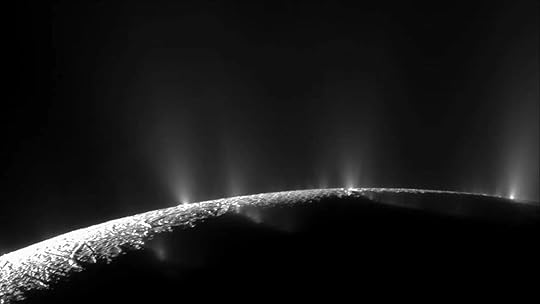
*Agua del océano debajo de la superficie de Encélado sale rociada al espacio en forma de géiseres a través de las fisuras en la corteza de hielo.
P.S. Al escribir Encélado el autocorrector ha propuesto «enchilada» y me parece el nombre perfecto para el próximo rover que aterrice en la luna de Saturno.
Al leer un libro de divulgación dos de las cosas que más me importan son 1) que sea honesto y 2) que se cite la información. Willis se encarga de añadir en las referencias casi una decena de artículos académicos por capítulo, y a pesar de que él claramente tiene preferencia por ciertos astros a la hora de financiar misiones en busca de vida, se preocupa de dejar claro que no podemos estar seguros de nada y cualquiera de las opciones puede ser interesante.
Es posible que este libro tuviera desde el principio las de ganar conmigo tratándose de astrobiología y con esa imagen de Cassini en la portada, y así ha sido. La astrobiología es algo fascinante: no sólo nos ayuda a contextualizar (y cuestionar) nuestro lugar en el universo, sino que también nos hace ahondar más en los lugares inhóspitos de nuestro propio planeta para poder entender qué es la vida —qué funciones nos hacen pensar que un compuesto químico está vivo. Por otro lado aprecio el juego que hace con el presupuesto (tienes 4 mil millones de dólares, ¿cómo los utilizarás?), no sólo porque pone en perspectiva cuánto cuesta hacer ciencia, sino por el giro final, en el que extiende el famoso discurso de Carl Sagan sobre las medidas contra el cambio climático frente al presupuesto invertido en defensa y pone esos 4MM dólares en el contexto global.
«Each day an average of $4 billion or more is expended on defense [globally]. Every dollar represents a tiny unit of human effort and endeavor. It is a very healthy social exercise to ask to what ends we direct our effort and will—and I am not blindly suggesting that astrobiology as a fundamental science deserves a place at the very front of the queue. But it is profoundly affecting to realize that the aims of this book—or at least your own prioritization of them—could be realized if we asked such questions and were bold enough to seek answers. Just for one day.»
*Agua del océano debajo de la superficie de Encélado sale rociada al espacio en forma de géiseres a través de las fisuras en la corteza de hielo.
P.S. Al escribir Encélado el autocorrector ha propuesto «enchilada» y me parece el nombre perfecto para el próximo rover que aterrice en la luna de Saturno.

February 12, 2018
4.5/5 Introducción a la astrobiología. Muy ameno y entretenido, escrito con un estilo muy directo y personal 100% comprensible para el profano (en este caso yo). Un pasapáginas de la divulgación. Lo peor: lo crudo que Willis te presenta el panorama. Probablemente nunca hallaremos vida extraterrestre y eso da (mucho) bajón. Lo mejor: la luna Titán. Que lugar! Y que increíble seria encontrar cualquier cosa viva allí! Como sería? que respiraría? respiraría?
May 15, 2026
Ця книга виявилася не зовсім тим, що я очікувала, бажаючи почитати саме про планети в так званих habitable zones (про них іде опосередковано мова в одному з розділів), але я цілком задоволена тим, що отримала натомість. Хороша оптимістична науково-популярна книга із гарним перекладом і чіткою структурою.

November 28, 2024
Finally a book about astrobiology that put things in perspective: when it comes to looking for life on other planets money is more important than water!

October 27, 2024
Цікава, трохи непроста для непідготовленого читача для розуміння і запамʼятовування, але варта кожної хвилини прочитання. Відклала на «прочитати ще раз»
October 12, 2024
Не знаю, чи після вищого рівня Океанів поза межами Землі, чи через утому, але книга здалася досить простою для сприйняття та навряд чи щось сильно нове розкрила.

January 10, 2024
Цікава книга, яка не тільки розповідає про можливе знаходження позаземного життя, а і як в теорії ми можем це реалізувати.Також ставить питання про те, що ми взагалі вважаємо життям. Читається, як на звичайного читача, достатньо легко і живо.

January 5, 2024
Чудова книга для поглиблення знань щодо позаземного життя. Автор виклав усе так, як є і без прикрас чи перебільшень — все доволі реалістично.
Краще читати, маючи певні знання з астрономії, астрофізики, біології, хімії тощо, щоб легше читалось і деякі аспекти були зрозуміліші, але це не обов'язково, адже автор та науковий редактор перекладу цілком усе пояснюють.
Рекомендую.
Дякую видавництву Бородатий Тамарин за переклад і видання цієї захопливої книги українською.
Краще читати, маючи певні знання з астрономії, астрофізики, біології, хімії тощо, щоб легше читалось і деякі аспекти були зрозуміліші, але це не обов'язково, адже автор та науковий редактор перекладу цілком усе пояснюють.
Рекомендую.
Дякую видавництву Бородатий Тамарин за переклад і видання цієї захопливої книги українською.

July 30, 2016
When I first picked up this book, I was worried it was going to be a repeat of The Aliens Are Coming! which I reviewed earlier this year. Instead, I got presented with a question I think everyone interested in the search for extraterrestrial life should be asked: You've got a budget of $4 billion, how do you spend it to search for life? Willis admits to asking this question of all of his astrobiology students and he uses this to form the backbone of the book. Each chapter involves talking about the pros and cons of searching here, there or elsewhere as well as determining what it is we'd be looking for.
Each chapter held new-to-me information about the history of each planet, moon and star candidates for exploration. I was especially delighted to learn about how various terrains in Antarctica can, and have been used for learning more about how to get samples or what life may look like on other planets.
Probably my favorite part about this book is Willis' tone. If he lectures how he writes, I'd be happy to attend his classes. He mixes in humor and relatability with almost every section, increasing the readability of the overall book. The last chapter was especially attention grabbing, giving information on so many planned missions to the places we had just talked about looking for life. I also appreciated that he didn't disown SETI as a possibility. He acknowledges that it's not where he'd put his money, but he likes the fact that so many people are willing to donate computer time/power to the search because, well, you never know.
Each chapter held new-to-me information about the history of each planet, moon and star candidates for exploration. I was especially delighted to learn about how various terrains in Antarctica can, and have been used for learning more about how to get samples or what life may look like on other planets.
Probably my favorite part about this book is Willis' tone. If he lectures how he writes, I'd be happy to attend his classes. He mixes in humor and relatability with almost every section, increasing the readability of the overall book. The last chapter was especially attention grabbing, giving information on so many planned missions to the places we had just talked about looking for life. I also appreciated that he didn't disown SETI as a possibility. He acknowledges that it's not where he'd put his money, but he likes the fact that so many people are willing to donate computer time/power to the search because, well, you never know.

December 9, 2016
I received a free copy by NetGalley in exchange for an honest review.
This is a lovely and clear book arguing about (and in many ways also *for*) the ways in which we could set about finding extraterrestrial life - if we had 4 billion dollars at our disposal, that is. I'm sure that question ignites the interest of Willis' astrobiology students, as it's the perfect combination of utopian and practical - and it certainly intrigued me enough to read this book in just a few days. Although it was published by Yale University Press, Willis' book isn't really a specialist scholarly work as much as a popular science guide for somewhat knowledgeable laymen readers to the subject of extraterrestrial life, and the challenges confronting us in finding it.
This is a lovely and clear book arguing about (and in many ways also *for*) the ways in which we could set about finding extraterrestrial life - if we had 4 billion dollars at our disposal, that is. I'm sure that question ignites the interest of Willis' astrobiology students, as it's the perfect combination of utopian and practical - and it certainly intrigued me enough to read this book in just a few days. Although it was published by Yale University Press, Willis' book isn't really a specialist scholarly work as much as a popular science guide for somewhat knowledgeable laymen readers to the subject of extraterrestrial life, and the challenges confronting us in finding it.

January 22, 2022
This is a well organized and researched book on the search for alien life. It covers exoplanets, SETI, the Drake equation, etc. It holds up pretty well. Some of the humor is a little cringe, but it's nice the author added about the right amount of personality. It manages to stick close to the scientific consensus, even while covering such speculative ground.
August 28, 2024
A Decent Book on Feasibly Searching for Basic Life Forms in the Near Future Geared Towards Laymen
The below is a review of the unabridged audiobook edition of this work.
This book is written by an academic, a Professor of Astronomy who also teaches astrobiology, and is published by an academic publisher. Despite that fact it is written for the lay audience is mind. It should also be stressed that the book is geared towards "discovering" planetary life within the next few decades. As a result, the emphasis is on potential life forms that may exist in this solar system and hence, in all probability, would be expected to be pretty basic (i.e., bacteria or, at best, amoeba-like life forms). There is very little on the sexy topic of finding interstellar sentient life forms. Even the little the book has on interstellar searches for life is geared, primarily, towards searching for very basic life forms (i.e., again bacteria).
To this end the book starts off with an explanation of how life developed on Earth and what the important components were that helped foster it (i.e., the presence of water, etc.). Then the book goes, to provide some more perspective, into some detail describing recent space exploration missions and what would be required to prepare for interplanetary trips geared to searching for life forms in this solar system. For example, any mission to Titan would require drilling through the ice which, in turn, implies a reconnaissance mission with radar equipped satellites to determine how deep that ice is. He also discusses, with respect to that Titan drilling trip, the relevant technologies that would be used along with the associated difficulties, what types of life may be found and a range of costs that any such mission would entail. The author does this with respect to a number of other space missions that he believes would have the greatest possibilities of uncovering life in this solar system, albeit of only the most primitive type. The emphasis is on "feasible" space missions in terms of current and near future technology (i.e., within the next 2-3 decades) and having budgets that make such missions possible (i.e., within the $3 to $7 billion range).
With respect to all of this the book is very intelligently written and geared to the layman. Highly recommended. With respect to the audiobook it is relatively well read and is never monotone or unenthusiastic.
The below is a review of the unabridged audiobook edition of this work.
This book is written by an academic, a Professor of Astronomy who also teaches astrobiology, and is published by an academic publisher. Despite that fact it is written for the lay audience is mind. It should also be stressed that the book is geared towards "discovering" planetary life within the next few decades. As a result, the emphasis is on potential life forms that may exist in this solar system and hence, in all probability, would be expected to be pretty basic (i.e., bacteria or, at best, amoeba-like life forms). There is very little on the sexy topic of finding interstellar sentient life forms. Even the little the book has on interstellar searches for life is geared, primarily, towards searching for very basic life forms (i.e., again bacteria).
To this end the book starts off with an explanation of how life developed on Earth and what the important components were that helped foster it (i.e., the presence of water, etc.). Then the book goes, to provide some more perspective, into some detail describing recent space exploration missions and what would be required to prepare for interplanetary trips geared to searching for life forms in this solar system. For example, any mission to Titan would require drilling through the ice which, in turn, implies a reconnaissance mission with radar equipped satellites to determine how deep that ice is. He also discusses, with respect to that Titan drilling trip, the relevant technologies that would be used along with the associated difficulties, what types of life may be found and a range of costs that any such mission would entail. The author does this with respect to a number of other space missions that he believes would have the greatest possibilities of uncovering life in this solar system, albeit of only the most primitive type. The emphasis is on "feasible" space missions in terms of current and near future technology (i.e., within the next 2-3 decades) and having budgets that make such missions possible (i.e., within the $3 to $7 billion range).
With respect to all of this the book is very intelligently written and geared to the layman. Highly recommended. With respect to the audiobook it is relatively well read and is never monotone or unenthusiastic.

January 24, 2018
One astrobiologist's attempt to take a hard-headed look at the prospects for discovery of alien life, either within our Solar System or beyond, within the next three decades. Steering clear of the politics, uncertainties, and extraordinary costs of human crewed missions, Willis focuses on the prospects for robotic exploration and remote sensing. I appreciated his careful & up to the minute review of the history of Solar System exploration, the best I have ever read. His handicapping of the life-bearing potential of these various worlds, and his forward-looking statements (as they say in business), will inevitably have their hits and misses for any given reader. Still, I appreciated his willingness to put them in print.
* Willis is skeptical of the claims for methane on Mars. MAVEN mission should clarify.
* He makes a strong case that US, ESA, and potentially others should invest together in a secure containment and study facility for sample return missions, to protect against contamination. He is surely correct that this facility must be built before long, and that only one is needed.
* He is strongly in favor of sample return missions generally, especially targeting Mars and Enceladus.
* Enceladus in particular, because of its geyser activity, offers the opportunity for a sample return mission without a lander, hence cheap even though it's a long way off. Naturally, Europa would be even more promising if its geysers can be confirmed.
* He seems rather down on Titan which surprised me. In particular, I would make more of a case for an ambitious joint mission to Enceladus and Titan, attempt to get NASA and ESA together, and see how far we can take that.
* In ignoring human exploration, I am concerned he misses potentially severe complications of commercial missions, which may be possible, at least in the 20+ year time frame. These might dramatically boost capabilities for exploration, while also raising contamination issues.
* Willis is skeptical of the claims for methane on Mars. MAVEN mission should clarify.
* He makes a strong case that US, ESA, and potentially others should invest together in a secure containment and study facility for sample return missions, to protect against contamination. He is surely correct that this facility must be built before long, and that only one is needed.
* He is strongly in favor of sample return missions generally, especially targeting Mars and Enceladus.
* Enceladus in particular, because of its geyser activity, offers the opportunity for a sample return mission without a lander, hence cheap even though it's a long way off. Naturally, Europa would be even more promising if its geysers can be confirmed.
* He seems rather down on Titan which surprised me. In particular, I would make more of a case for an ambitious joint mission to Enceladus and Titan, attempt to get NASA and ESA together, and see how far we can take that.
* In ignoring human exploration, I am concerned he misses potentially severe complications of commercial missions, which may be possible, at least in the 20+ year time frame. These might dramatically boost capabilities for exploration, while also raising contamination issues.

September 18, 2020
Очень классная книжка. В ней с научной точки зрения рассматриваются поиски жизни во Вселенной - не империй в далеких-далеких галактиках, а той жизни, какую мы реально могли бы отыскать в ближайшую пару столетий.
Что есть жизнь? В каких условиях она может существовать? Что можно считать признаками биологической активности на планете? В каких местах Солнечной системы она теоретически возможна? Обязательно ли жизнь будет построена по земному водно-кислородному принципу - или нет?
Автор - ученый, астрофизик и астробиолог - отвечает на все эти вопросы. Рассказывает, как на практике мы можем искать внеземную жизнь в тех условиях, в которых мы сейчас находимся. И на что имеет смысл тратить финансирование науки, чтобы получить реальный шанс найти что-то живое вовне. А в конце задается другим: что нам вообще даст обнаружение внеземной жизни?
Мне очень понравилось то, что написана книга просто и понятно. В ней очень много интересных фактов об исследованиях Солнечной системы - и, в то же время, читать ее можно без дополнительной подготовки. Все моменты, требующие предварительных знаний, автор разъясняет на пальцах по ходу дела.
Что есть жизнь? В каких условиях она может существовать? Что можно считать признаками биологической активности на планете? В каких местах Солнечной системы она теоретически возможна? Обязательно ли жизнь будет построена по земному водно-кислородному принципу - или нет?
Автор - ученый, астрофизик и астробиолог - отвечает на все эти вопросы. Рассказывает, как на практике мы можем искать внеземную жизнь в тех условиях, в которых мы сейчас находимся. И на что имеет смысл тратить финансирование науки, чтобы получить реальный шанс найти что-то живое вовне. А в конце задается другим: что нам вообще даст обнаружение внеземной жизни?
Мне очень понравилось то, что написана книга просто и понятно. В ней очень много интересных фактов об исследованиях Солнечной системы - и, в то же время, читать ее можно без дополнительной подготовки. Все моменты, требующие предварительных знаний, автор разъясняет на пальцах по ходу дела.

May 16, 2017
Zelo zanimiva razmišljanja o življenju v vesolju. Od tega kako je nastalo na Zemlji do možnosti kako bi lahko nasatlo kje drugje. Od načinov odkrivanja na daljavo, do možnosti odprav in raziskav na planetih. Recimo zanimivo mi je blo da sicer so roboti veliko učinkovitejši za potovanje po vesolju, ker potrebujejo manj energije, prostora, treninga, zdravljenja... pa vseeno lahko izvajajo le predprogramirane funkcije - naprimer robot nebi pobral enega kamna ki bi se mu zdel zanimiv med vsemu drugimi kamni da bi ga analiziral.
Pa koliko se naučimo tud iz neuspelih poskusov in napačnih hipotez, ki potem pomagajo prinovih iskanjih.
In kako sicer to ni najpomembnejša raba davkoplačevalskega denarja, pa je vseeno veliko manj neumna kot financiranje obrambe in vojske - da se branimo pred drugimi vojskami ki se financirajo zato da se branijo pred našimi... Precej preveč smo sprti med sabo na tem malem bledem modrem planetu...
Pa koliko se naučimo tud iz neuspelih poskusov in napačnih hipotez, ki potem pomagajo prinovih iskanjih.
In kako sicer to ni najpomembnejša raba davkoplačevalskega denarja, pa je vseeno veliko manj neumna kot financiranje obrambe in vojske - da se branimo pred drugimi vojskami ki se financirajo zato da se branijo pred našimi... Precej preveč smo sprti med sabo na tem malem bledem modrem planetu...

August 16, 2021
Некоторое введение в астробиологию. Джон Уиллис - профессор астробиологии из Канады. Он объясняет науку поиска инопланетной жизни понятными терминами (это было немного медленное чтение, и пришлось немного потрудиться, чтобы понять все написанное). Используя Землю в качестве отправной точки, автор затем рассматривает, как мы можем обнаружить жизнь на Марсе, найти жизнь, связанную с водной природой жизни на Европе и Энцеладе, и найти жизнь, существующую в нефтехимическом тумане и озерах Титана. Далее мысли автора выходят за пределы нашей Солнечной системы и рассматриваются кандидаты на экзопланеты, которые могут содержать жизнь. Приводятся примеры найденных с помощью космического телескопа NASA Kepler, запущенного в 2009 году, некоторых, потенциальных экзопланет, вращающихся вокруг других звезд. Также есть некоторые мысли насчет проекта SETI. В целом, довольно-таки увлекательная книга и полезная, если интересно понять, куда сейчас двигаются космические исследования. P.S. Полезным также будет список книг и публикаций, которыми пользовался автор при написании данной книги.
Displaying 1 - 30 of 72 reviews