Four billion years ago, the infant Earth was a seething cauldron of erupting volcanoes, raining meteors, and hot noxious gases, totally devoid of life. But a relatively short time later - only 100 million to 200 million years - the planet was teeming with primitive organisms. What happened? Now you can find out - in a series of 24 vibrant lectures from a leader of the NASA - supported team studying the origins of life in the universe and also one of the nation's foremost science educators. The lectures take you from path-breaking experiments in the 19th century that proved the molecules of life to be no different from other chemicals, to our increasingly sophisticated modern understanding of just how the chemistry of life works, to the near certainty that the 21st century will see spectacular and unpredictable developments in our understanding of how life began. For all its familiarity, life is an elusive concept that is hard to define, much less explain. These lectures show how scientists are systematically building a picture of the process by which those chemical reactions on the early Earth eventually led to the first appearance of the DNA-protein world that remains the fundamental basis of all life today. And you'll join them as they probe for evidence of life beyond our planet. Crammed with fascinating experiments, surprising results, heated debates, blind alleys, and promising leads, the investigation of life's origins is a mystery story in the truest sense - one in which the clues are slowly adding up but the solution is not yet in hand.
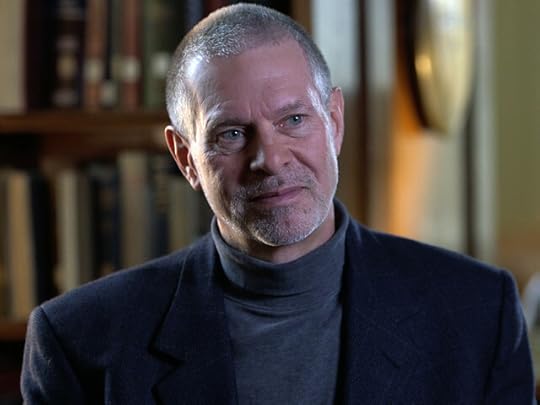
Robert M. Hazen, Senior Research Scientist at the Carnegie Institution of Washington’s Geophysical Laboratory and the Clarence Robinson Professor of Earth Science at George Mason University, received the B.S. and S.M. in geology at the Massachusetts Institute of Technology (1971), and the Ph.D. at Harvard University in earth science (1975). The Past President of the Mineralogical Society of America, Hazen’s recent research focuses on the possible roles of minerals in the origin of life. He is also Principal Investigator of the Deep Carbon Observatory.
I got this series of lectures on sale for only $20 in audio. It's been very good in that format for me, but he does have some pictures in the course guide I was glad to look at. He's a great speaker & did a really good job on this series. He's very much in the forefront of this discipline & did a great job presenting all sides of the many debates, even when he is invested in a different side.
There are sides in this debate - a LOT of them. Scientists have a lot of time invested in their pets & funding often depends on how fruitful their line of research seems to be. Some of them trash talk other lines, unfortunately. Hazen points this out, but he also shows why they might be right & where there are tough questions they still have to answer.
He mentions several times that some scientists once made the claim that we'd discovered everything important & that couldn't be further from the truth. IMO, that was the teenage years of science around 1900. We were cocksure, idealistic, & completely wrong. Even a layman like myself can see huge holes in our knowledge, but I can also see how rapidly we're closing those holes.
There are a lot of holes in the origin(s) of life. Did metabolism or genetic replication come first or together? Could this have happened in a purely mineral basis? When does life start? Lots of questions & many smart people working on it. What a great trip learning about it!
The Great Courses has some issues you should be aware of before buying a lecture. - Courses are not dated on their web site. This one is from 2005, 13 years old, a long time the way science is advancing today. He mentions a Mars mission that will take place in 2010. Of course, Phoenix has landed & came to no conclusions on this subject. Anyway, look the lecture up to find its publishing date. It does matter. This one isn't terribly dated, but it may matter depending on the subject. - They wanted to charge me for the course guide. I didn't pay extra for it & found I could download it some weeks later from my library on their site. I won't pay for something that should be included & this one is a little slim on some points. - Lectures have to be downloaded one at a time. It's a PITA. Right click & 'save as' 24 times in this case. Ugh!
The 24 lectures 1. The Grand Question of Life's Origins 2. The Historical Setting of Origins Research
3. What Is Life? Indeed, this question, with its implicit division of all objects into nonliving or living systems, may well represent a false dichotomy. I'm not shocked. I read a definition of life elsewhere. When applied to a wild fire, it fit perfectly. He mentions another scientist's book which lists 48 different definitions for life at the end & none were satisfactory. This is a case where we're defining what we're looking for as we learn more about it.
4. Is There Life on Mars? 5. Earths Oldest Fossils 6. Fossil Isotopes 7. Molecular Biosignatures was of particular interest since he described many of them & how we find them. Not only do we have new methods, but older ones are much faster & accurate such as the mass spectrometer. Peer review, confirmation experiments by others, & the sharing of different opinions, especially by scientists in other disciplines, is also very important & much faster today. Biologists & chemists led the way, but now other disciplines like his own of mineralogy are pointing out flaws & new avenues of research.
8. Emergence is entropy. Chaos becomes more ordered. A basic facet of how this works in biological evolution.
9. The Miller-Urey Experiment Miller sounds as if he was too lucky too fast. His early rise to prominence allowed him to stifle dissenting views. Not good!
10. Life from the Bottom of the Sea 11. The Deep, Hot Biosphere 12. Experiments at High Pressure He describes one such experiment in some detail. Incredibly interesting!
13. More Experiments Under Pressure
14. Deep Space Dust, Molten Rock, and Zeolite Organic molecules abound & can easily be mistaken for or interpreted as biomarkers. Some might be.
15. Macromolecules and the Tree of Life 16. Lipids and Membrane Self-Organization 17. Life on Clay, Clay as Life 18. Life's Curious Handedness 19. Self-Replicating Molecular Systems 20. Günter Wächtershäusers Grand Hypothesis an autotrophic start to life through chemical reactions. He's done some fantastic work that helps even if he's wrong.
21. The RNA World 22. The Pre-RNA World 23. Natural Selection and Competition 24. Three Scenarios for the Origin of Life
Origins of Life was a decent offering from The Great Courses.
Course presenter Robert M. Hazen is Senior Research Scientist at the Carnegie Institution of Washington’s Geophysical Laboratory and the Clarence Robinson Professor of Earth Science at George Mason University, received the B.S. and S.M. in geology at the Massachusetts Institute of Technology (1971), and the Ph.D. at Harvard University in earth science (1975). The Past President of the Mineralogical Society of America, Hazen’s recent research focuses on the possible roles of minerals in the origin of life. He is also Principal Investigator of the Deep Carbon Observatory.
Robert M. Hazen:
Hazen gets the course going on a good foot, with an energetic delivery of the material right from the get-go. He has a high energy engaging presentation that shouldn't have trouble holding the viewer's attention.
I have gone through many offerings from the good folks over at The Great Courses, and found that an effective, energetic delivery of the course material is somewhat hit-or-miss. In some courses, the professor delivers the material in an engaging, accessible format. In others; they can drone on monotonously for the entire duration. Thankfully, this course is an example of the former, and not the latter...
The formatting of this course is similar to other offerings from The Great Courses; this series is 24 lectures; each ~30mins in duration.
Would-be students of this course should note that Professor Hazen does get into some fairly technical biochemistry in these lectures, so ideally they should possess some degree of scientific literacy, or they may find themselves a bit lost here at times...
The meat and potatoes of this course examines many different postulates for how life began in great detail. The scientific concept of emergence plays a central role in any viable theory.
Hazen examines the most compelling theories here: The "primordial soup" postulate; with the famous Miller Urey experiment is covered in great detail. A "deep sea" origin of life; "extremophile" bacteria that proliferate near undersea thermal vents are discussed. A clay hypothesis is presented here as well, with Hazen noting some special material and chemical properties of clay to bolster this case. He also discusses the "metabolism first" vs "self-replicating molecule first" theories. The "RNA world" postulate is covered here in great detail.
The course also discusses Darwinian evolution; even mentioning the famous English peppered moths and adaptive selection. Hazen notes that evolutionary forces would be applicable in any self-replicating model postulate.
I will give Professor Hazen some bonus points, as his presentation of this material is not dogmatic. He covers the evidence for and against each of these postulates in an objective fashion, which shows he is open-minded in following the evidence. This is a welcome change from many scientists who end up having large ego stakes attached to their work.
I did have one tiny point of contention here. Hazen mentions that life should violate the second law of thermodynamics, which states (roughly) that entropy increases. This is a common misconception. Life does not violate the second law. The second law states that entropy increases in a closed system. The Earth is not a closed system, however, and energy, as well as matter routinely enter and even exit our planet...
***********************
Origins of Life was an interesting look at the modern theories of how life on Earth began. Note that the course was produced in 2005, so some of what he covers here is outdated - ie; he talks about possible missions to Mars. 4 stars.
As an audio edition from The Great Courses, I treated myself to what it might actually be like to sit-in on a full 2014 Earth Science course from the great Robert Hazen. Super Cool right! Its like slipping into a lecture hall seat at MIT (just to see if you could take it, ala Good Will Hunting) However, unlike Matt Damon, this lecture series was way... WAY over my head! Just when I was going to admit defeat and accept my C- lot in life, the last three chapters saved me. Hazen's legendary explanation of the next stage of life's evolution is remarkable and entirely accessible. Well worth a common man's time and awe. Wild, blow your mind kinda stuff!
This is one of the best Great Courses I've listened to. Most of the time a Great Course listens like it's a series of disjointed half hour lectures only loosely tied together with a common subject but without an overriding narrative. This lecture does not, it listens as if it's a well written book with a narrative tying. I never grow tired of listening to origin of life books, but they usually suffer by explaining too much of the detail and therefore end up losing me in the minutia of the arcane processes, but this lecture does not. He gave just enough of the detail to not overwhelm, but enough to make me feel like I understood the big picture.
I did not realize how Stanley Miller (of the Miller and Urey experiments) let his ego get so involved in creation theories and did everything he possibly good to stop any other explanations for early life explanations. Reminds me of working with really smart people who always wanted to protect their own turf at the expense of finding other possible solutions. I don't miss work at all!
This lecture and the book "Creation: How Science is Reinventing Life Itself" are two of the most accessible surveys that I know of for the origins of the first life on earth. I've tried many others and have probably enjoyed these the best.
This course is an introduction to some of the theories on how life evolved and the research that is being done to further our knowledge of the origins of life. In the first part of the course, he explains some of the competing theories; for example, the idea that life actually began in the depths of the oceans. In the 1970's, a remarkable variety of life was discovered around hydro-thermal vents at the bottom of the sea. It has been postulated that the ocean was actually a more stable environment for life to have evolved, since it was away from early Earth's violent surface that was being bombarded with meteors. The second part of the class delves into the chemistry of life and, for a novice like me, was a bit difficult to follow. He went into detail on some of the experiments that his team and other scientists have done on this topic. One issue regarding the audio version vs the video version is that he frequently referred showed the viewers images as he was lecturing, and did not give an indication as to which image in the reference material was being viewed. This was frustrating for me, since I was listening to the audio version.
Low key chemistry. Relevant research, complimentary and competing models. Professor super engaging- anybody who can make rocks really exciting - well someone worth listening to-. Very much enjoyed this course- listen to a lot of great courses and this is definitely a fav now- worth a second listen- useful pdf. Also when is emergent behaviors not amazing?
I remember watching a protein chain crawl across a phospholipid bilayer in college and that was an amazing revelatory moment for me. Abiogenesis is obvious- the questions in how are complex but riveting. Listening to this lecture series was that a thousand-fold times over. Wish more people would listen to this- cause im sure it would open some eyes.
Very good good at leading anyone through the discoveries that provided the foundational thinking of astrobiology today. All the lectures discussed are pieces to a large puzzle, and if mastered can make one fluent in the discipline. I would heartily recommend this to most who are interesting in the topic. Be forewarned, however, since it is heavy on science and scientific processes. Not much simplification so the language and concepts may be difficult.
Not a book, but an engaging course available in audio or video from The Great Courses. A fascinating overview of a whole spectrum of intriguing investigations into the emergence of systems we recognize as "living" from increasingly complex self-organizing systems we think of as prebiological. For the interested layperson---strongly recommend.
This is a great collection of lectures by experts in the field of chemistry that speculate and provide evidence about how life came to be on a molecular level. It is fascinating to be exposed to these ideas and learn about speculation concerning ancient and future life on Earth and Mars.
Prof Hazen is the foremost expert on this remarkable subject: what are we and how did we turn up? In all of his works, he tries to zero in on one critical stage of the story - "the second stage". As this reviewer sees it, the first stage was from the big bang to various minerals/materials that are a part of our planet. This is the domain of astronomy. This field's findings and progress are easily accessible to anyone interested. The third stage is the biological evolution from the most basic form of life to us - again well studied and well accessible. The second critical stage is where Professor Hazen is a master - the subject that details the formation of early chemicals and from there to the early life.
This is a less sexy, difficult and complex topic that involves thinking about matter or material that is tiny and bookish. There are no black holes or apes to help the understanding. There are no Darwins or Einsteins too in this field for those looking for the heroes. And, it appears like a small-step in the story that spans billions of years before the creation of the earth and another few billions after the creation of life.
The lecture series is not as updated or lucid as Mr Hazen's other books on the subject as this appears more for students of the subject rather than general readers. As a result, many of the sub-topics could sound pedantic. It does not help that there is so much of our tiny cell constituents/processes that is plain unknown and some of the previous conclusions are changing rapidly as we understand our genes better. Still, a good book for anyone interested in the genetics and that crucial interim stage of our evolution from nothing.
Audio download (with a lot of online help). Dr Hazen presents a very much scienced-based set of lectures dealing with the determination of first life on this (as well as other) planet. The lectures are part history and part methodology of the research efforts...and, since no clear-cut 'first life' has been proven, it is very much a work in progress. It is helpful, though not necessary, to have a background in both physical and organic chemistry to understand many of the points Hazen employs. For those interested in or considering purchasing these lectures might want to visit one of the many lectures Dr Hazen has posted on Utube...notably https://www.youtube.com/watch?v=tzgHZ.... This video updates these lectures (created in 2005) with slightly new approaches (like mineral evolution) that may help to answer the origins question. As an aside, I began to wonder if the approach for the first life assumes that that life would have eventually evolved into present-day life (RNA/DNA dominated). What if first life was indeed the 'flat life' that established colonies in extreme environments (I like the Fe-S World) that provided the first molecular organization was metabolized by the later, more complex molecules. All traces of that life form would quite possibly be missing from the rock and geochemical record. I highly recommend these lectures...it invigorated my scientific curiosity and made me feel like a kid once more. Oh, and get it when it's on sale...with a coupon. Audio would be OK, but you will need to pay attention on the treadmill....
I would rank this to be a 200, maybe 300 level undergrad university course. A course for introducing undergrads to a field of research. Dr. Hazen is a gifted presenter. He makes the daunting topic of the Origins of Life understandable and reveals that we still have much to learn. While this is an introductory course, you should have a basic understanding of the scientific method and some scientific knowledge under your belt or you may get confused and lose interest. Some of the scientific disciplines Origins of Life study incorporates are Chemistry, Geology, Biology, Astro-Physics and Paleontology. The beauty of the internet is that you can learn more about any of the topics covered in greater detail by just Googling so you can keep up with the course.
In the last lecture of this series, Dr. Hazen sums up the implications of this area of scientific exploration in a mind blowing philosophical question. You'll have to read/listen because I won't ruin it for you. It's that profound.
If you are science nut like me or a professional interested in the topic, get this course. Please know that this course was created in 2005 so there have been break throughs in the field of study since its creation. You can learn more about those from Dr. Hazen's university webpage. http://hazen.gl.ciw.edu/
This was a great lecture series on the origins of life. As the title indicates, this series sticks with molecular origins ONLY and does not really move beyond unicellular life (bottom up approach). Having a background in chemistry/biochem is certainly helpful, but overall I found this to be an interesting and relevant series on covering the many theories of life's origins.
Pros: Dr. Hazen covers many of the theories held by a variety of disciplines for life's origins in a neat, organized manner. He really drives home the point that there are MANY ideas on how life arose verses the misconception that some scientists feel there is only one means by which life could have begun. Cons: Without a basic understanding of chemistry, most people would have a hard time following this lecture. Bottom line: certainly worth a listen for anyone interested in getting a 10,000 foot perspective on the many ideas as to a natural means for emergence of life on earth.
This is a course on modern theories of the origin of life. It is thorough, informative, and accessible to the layman science fan. It is also useful for those considering a career in science.
Some claim that scientists have no idea how life began and insist that it must be a miracle provided by a creator. This argument from ignorance couldn't be further from the truth. Scientists have many ideas how life could emerge from chemical processes. Life is, after all, nothing more than chemical processes. If you want to know how life could have emerged on this planet (and probably others), this course will inspire your imagination and your intellect.
An excellent course covering the various theories of the origins of life. The coverage is quite broad and I learned about theories I'd never heard of elsewhere. Hazen interjects biographical and autobiographical to round out the history and context of the material.
I'd recommend this to anyone with an interest in science.
Rather above my head for all the detail but even as a layman you can get the general idea. There are plenty of points to research further info if you wish too.. I’ll be looking for more from this guy.
[Audiobook Review] It's obvious this guy is an expert in his field. My only quip is most Great Courses audiobooks are great without any supplement material, this one not so much. Sometimes you can hear him doing things, but not describing them as well as he could. I'd give it a 4.5 if I could.
An incredible journey into the past and present science of the origins of life. A bit heavy on the organic chemistry, but I don't see how it could have been an accurate investigation without it.