In the summer of 1947, a young priest, Petter, his wife and baby daughter, arrive by mail boat at a tiny island. They are to take over its drafty homestead from where Petter is to minister to the scattered community. In this evocative tale, Ulla-Lena Lundberg draws us into the minutiae of an austere yet purposeful life where the demands of self-sufficiency - cows to milk and sheep to graze - are tempered by the kindness of neighbours. With each season, the family's love of the island grows and when the winter brings ice a new and tentative link is created. Told through the eyes of Petter, the wholehearted if naive novice priest, and Mona, his tough-minded wife, a story unfolds that is as immersive as it is heartrending.
Winner of the Finlandia prize and nominated for the Nordic Critics Prize, Ice was a huge bestseller in Finland.
Ulla-Lena Lundberg on syntynyt Kökarissa ja asuu nykyisin Porvoossa. Jo 15-vuotiaana debytoinut Lundberg on julkaissut lähes kaksikymmentä kirjaa: runoja, raportteja, matkakertomuksia ja romaaneja. Hänet on palkittu moneen kertaan; hän on mm. saanut kahdesti valtion kirjallisuuspalkinnon, ollut neljä kertaa Finlandia-ehdokkaana ja Pohjoismaisen kirjallisuuspalkinnon ehdokkaana ja saanut Ruotsin Akatemian Finland-palkinnon, Gummeruksen Kaarlen palkinnon ja Kiitos kirjasta -mitalin. Vuonna 1993 hänet nimitettiin taiteilijaprofessoriksi sekä Åbo Akademin kunniatohtoriksi. Lundberg voitti vuoden 2012 Finlandia-palkinnon romaanillaan Jää.
jedna od najboljih knjiga koje sam pročitala ove godine. rečenice besprijekorne, svaka riječ na svom mjestu. roman jake atmosfere, bogat mirisima, okusima i zvukovima. stilski dotjeran do maksimuma. iako ništa ne znam o životu protestantske zajednice na izoliranom finskom otoku, nakon ove knjige imam osjećaj da sam se suživjela s njima i da znam sve. ulla-lena lundberg maestralno je prenijela trogodišnji isječak života, ujedno realističan i bajkovit... roman za dugo pamćenje i za ponovno čitanje.
"Ice" is translated from the Swedish by Thomas Teal.
It is the summer of 1946. A novice Lutheran priest, his wife and baby daughter arrive at a windswept island off the coast of Finland, where they are welcomed by its frugal, self-sufficient community of fisher folk turned reluctant farmers.
This is a deeply atmospheric and quietly epic tale.
The author uses a wealth of everyday detail to draw us in irresistibly into a world of choir practice, coffee parties, seal hunting and two little girls that are bundled up like parcels against the icy blasts penetrating the wooden walls of the vicarage. There is a captivating sense of peace in the treeless, windswept islands where the ice is actually a force for social cohesion because it is so much easier to move around and visit each other when the sea freezes, but that ice is also treacherous.....a moment's lapse in concentration can prove fatal, even as familiar lights are beckoning you home through the darkness.
Lundberg actually brings you right into of lives of people of the church, the priest and his family and how the power of a church when lead by the right priest can contribute to the good of the people.
There are life lessons to be learned from this read.....one especially...searching questions about life and death.
I really felt honored to be able to read this beautiful and heartbreaking story.
"Lód" Ulli-Leny Lundberg opowiada historię młodego pastorstwa, które wraz z dwuletnią córeczką wprowadza się na Örlandię na Wyspach Alandzkich i szybko odnajduje się w spokojnym rytmie życia mieszkańców wyspy. Obserwujemy ich codzienność, nawiązywanie relacji z mieszkańcami i wsciąknięcie w tę społeczność.
"Lód" to książka stworzona do powolnego czytania i delektowania się lekturą. Hasło z tyłu okładki "Znasz slow life? Wypróbuj slow reading" jest bardzo trafne. Mamy tutaj długie, przeciągnięte sceny, pełne szczegółowych opisów, które wspaniale oddają surowy skandynawski klimat. Polecam sięgnąć po "Lód", gdy będziecie mieli czas i ochotę na powolną lekturę, której będziecie mogli się w pełni oddać. Mam wrażenie, że na przeczytanie tej książki trzeba mieć odpowiedni nastrój, bo inaczej można się z nią rozminąć.
Mnie pochłonął ten kameralny klimat wyspy i codzienne problemy młodego pastorstwa, które z pozoru mogą wydawać się nudne, ale mnie bardzo wciągnęły i zaangażowały. Pokochałam bohaterów, przywiązałam się do nich i z dużym zainteresowaniem śledziłam ich losy.
Nie spodziewałam się, że "Lód" aż tak do mnie trafi. To spokojna lektura, w której nie ma pędzącej akcji, a dużą rolę odgrywa klimat i nastrój. Polecam.
✨ Garść cytatów na zachętę:
"Gdy dotarł na miejsce, w okolicy panował absolutny spokój. Z jakiegoś powodu pomyślał o pasterskiej idylli: z wolna pasące się krowy, gdzie okiem sięgnąć żadnej aktywności, na niebie chmury jak baranki, nad wszystkim świeci łaskawe słońce. „Życie jak na ziemi przed potopem" myśli z uśmiechem na ustach. A z każdego oblicza ludzkiego, jakie napotkał po przybyciu do największej z zachodnich wiosek, biła życzliwość i dobroduszność.
W przystani wszyscy zadziwiająco niewzruszeni, siedzieli jak siedzieli, z wolna, po królewsku pomachali mu w odpowiedzi na jego przywitanie. Niedzielny spokój w środku zwykłego dnia."
"Bałaby się, gdyby nie siedziała w ramionach taty. Kłębiące się na górze światło nie dociera do ziemi, ta jest czarna jak węgiel. Nic jej nie oświetla, tylko niebo płonie i migocze, bardzo zimnym, słabym światłem. Bardziej niż tego widoku doświadcza obecności taty. Ciepło jego rozradowanego ciała, które wibruje, gdy mówi, uczucie bycia tak mocno przytuloną. Zimne powietrze na plecach, jego ciepła pierś z przodu, jej policzek na jego policzku. Tego, że są sami, bez matki i Malusi. Tylko ona, jego powierniczka i asystentka podczas obserwacji zorzy polarnej."
“The congregation sees [Petter] sunny. Smiling, interested, eager to learn. Friendly, unaffected. Full of energy. Unassuming and appreciative, always with a good word for everyone. Full of fun, once you get to know him and realize that there is more than gravity beneath that cassock. So charmed by everything the parish has to offer that everyone melts. He likes the landscape: bleak, improbably beautiful in all its moods, fresh breezes and open vistas. The people: indescribably appealing. Charming. Intelligent. Handsome, lively, quick-witted. Knowledgeable, amazingly well-informed. Talkative and articulate. Exceptional. His new life as an island priest: a gift from God.”
This book tells the story of pastor Petter Kummel, and his wife, Mona, in the late 1940s, living on a remote Finnish archipelago in the Baltic Sea. Petter arrives at his first post, settles in, and falls in love with the people, the harsh landscape, and the rural life. The narrative is a story of daily lives – fishing and farming, as well as the celebrations and tragedies.
The writing is beautiful and atmospheric. The characters are vivid. It is a study in contrasts between Petter, the dreamer, and Mona, the practical one. It reminds us to appreciate happiness when it arises.
It is not a book for anyone seeking action. The majority is a quiet, reflective story of community. I loved the first three quarters of this book. It takes an unexpected turn toward the end, which significantly changes the tone. It is a novel about the power of nature and the fragility of life.
This is an incredible book. The author does a phenomenal job of pulling you into the life of the characters so that you really feel that you are one of them. The translator did an excellent job of bringing the story to life in English. The story is somewhat a tragic idyll detailing the life of Petter and his family as he begins his pastoral career on the islands of Åland off the coast of Finland. It's the postwar years and it gives you a bit of insight into the hardships the Finns faced during and after the war with the Soviets at that time. It also brings to life the Lutheran faith of the pastor and how this informs his own dealings with parish life. It's really an incredible book and I highly recommend it.
Pokochałam tę książkę, bardziej niż się tego spodziewałam. Jest zimna, cicha, pełna samotności, ukrytych uczuć. Od każdego słowa bije ogromna prostota i pustka, która zachwyca. Pejzaż Finlandii skradł moje serce w tej powieści.
Deskriptivni roman atmosfere i prostora. Opisuje dolazak mladog pastora sa porodicom na jedan otočić između Finske i Švedske. Roman u kojem je priroda glavni lik, a junaci su podređeni njenom uticaju. Atmosfera romana je tako vjerno opisana da se uživljavamo u radnji i tegobe likova tako prisno, da sam ja u jednom momentu pomislila da ponudim Moni da ja izmuzem krave! 😀 Likovi su tako vijerno predstavljeni, da njihova ponašanja graniče sa intrigantnim i hladnim kao i podnevlje u kojem žive. Posebno se to odnosi na lik Mone, koja nakon najvece životne tragedije spolja ostaje hladna kao led. Odlična ocjena, jer me roman zaintrigirao i svojom nepredvidljivom radnjom osvojio.
Ne znam da me ikad pogodila smrt nekog književnog lika kao u ovom romanu. U pitanju je baltička pastorala, sa pomalo dosadnjikavim opisima izmjene godišnjih doba na otoku, župljanima u jednoj luteranskoj zajednici i već kad sam mislilo da neće bit promjene, počela su sudbonosna zbivanja. Bas mi je dala za mislit, zapravo je tako i u životu, dogodi se sudbonosno a da to i ne slutiš. Preporuka za sve koji vole slow&tender romane.
Kérdezte az egyik kolléga, hogy mit olvasol. Mondom, Lundberg regényét, az a címe, hogy „Jég”. Skandináv krimi? - kérdezte ő. Nem - így én -, pont az ellenkezője. És csak utána jöttem rá, milyen bölcset mondtam. Ez a könyv pont az ellenkezője egy skandináv kriminek. El is méláztam azon, hogy milyen érdekes ez az északi irodalom, két jellegzetes megjelenési formája van, amelyek egymás ellentétei. A vérben tocsogás, meg a cselekményminimalizmus*.
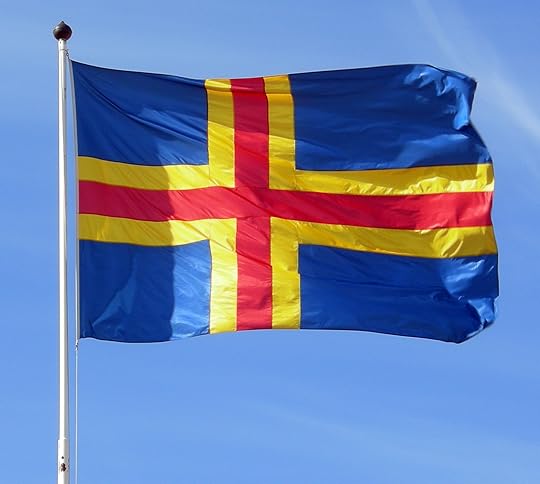
Ez a kötet Alandról szól. Ez egy szigetcsoport Svédország és Finnország között, ami jogilag Finnország része, de svédek lakják, akik svédül intézik ügyeiket, és egyéb tekintetben is széles körű autonómiával rendelkeznek (saját zászlójuk is van, lásd fenn), ezzel pedig köbö jól elvannak. (Így is lehet kisebbségi ügyeket intézni, nahát.) Az itt élők szegények, de tisztes szegények: halászatból, fókavadászatból tartják el magukat, nincsenek nagy ambícióik, szeretnének jó fogást, meg egy-két tehenet, ennyi. (Legalábbis a regény idejében, vagyis közvetlenül a második világháború után.) Ide érkezik Petter, a lelkész, valamint családja, hogy gondoskodjon a lakosság hitéletéről. És mint a fülszöveg elspoilerezi, innen megy el ugyanez a család (immár Petter nélkül) a regény végén. Ez a két esemény biztosítja a keretet az úgynevezett „történethez”.
No most azon gondolkodom, hogy a fülszöveg elspoilerezi a regény végét, ez világos. Én viszont elspoilerezem a regényt, ha azt mondom, hogy a kettő között vagy 300 oldalon keresztül kvázi nem történik semmi? Spolier azt mondani, hogy nincs mit spoilerezni? Nem tudom.
Jó, hát amúgy a „semmi” elég tág fogalom. Például a cselekmény hétköznapi mércével igenis valami: Petter például levizsgázik, megszerzi a lelkészi képesítést közben, megszületik második gyermeke, belebonyolódik a közösség belső érdekellentéteibe, egészségház építését szorgalmazza, és mindenek előtt: szorgos és határozott feleségével együtt műveli a földet ezerrel, feji a tehenet, legelteti a birkát, miegymás. Mindezt nyilván tekinthetjük cselekménynek, sőt, annak kell tekintenünk, még ha nem is igazán drámai. Illetve máshogy drámai, mint ahogy mondjuk Hugo vagy Zola képzeli el a drámaiságot. Lundberg ugyanis arra törekszik, hogy a szigetlakó-lét valódi ritmusát ragadja meg. Kényelmesen poroszkál irrelevánsnak tűnő eseményeken át, mert pontosan tudja, az irrelevánsnak tűnő események hosszú sora, nos, az maga az élet. Szép ez a lassúság, tükrözi a szigeti élet ciklikusságát, amiben fagyos tél és rövid nyár követi egymást, rákényszerítve a maga évszakok diktálta ritmusát az ott élőkre. A maga szűk korlátait, ami nem tekint túl Aland határain, elég neki azt tudni, lesz-e elég széna télre a jószágnak. És meg tudja értetni velünk, hogy ezek a szűk határok egy olyan világot vesznek körül, ami a maga nemében gyönyörű és otthonos – azzal együtt, hogy mellesleg szigorú és kegyetlen is.
(Fura érzés volt amúgy egy ilyen elképesztően visszafogott, cselekménymentes szöveget olvasni pont akkor, amikor úgy fest, túlságosan is sok cselekmény zajlik épp a világban. Komolyan, tudom, hogy hülyeség, de néha majdnem megsértődtem ezekre a csókákra, hogy ilyen piszlicsáré konfliktusokkal bíbelődnek, amikor máshol háború van.)
* Közben meg persze a vérben tocsogás és a cselekményminimalizmus is építkezhet szövegszinten minimalista jegyekből, irodalmi purizmusból, szóval az ellentét bizonyos tekintetben csak látszólagos.
Olihan tämä hyvä ja koskettava, hidas ja verkkainen. Hitaasti aukeava, mutta ihan hyvällä tavalla. Tarjosi tilaa lukijan omille oivalluksillekin. Tekee mieli lukea lisää Lundbergin teoksia.
Nä Freunde. Hab mich bis 13% durchgebissen. Ich kann jetzt nicht noch mehr Religionsgedöns ertragen. Auch wenn anscheinend mit der Sowjetischen Fluchtgeschichte der Hebamme und dem Kontext des Krieges eine erweiterte Dimension hinzu kommt, ist mir das viel zu sehr auf die Familie, insbesondere Kleinkindbespaßung und die Problemchen des Pastorenlebens konzentriert. Sprachlich ist es jetzt auch nicht der Bringer.
Beautifully written story set in the remote Orland islands, an archipelago in the Baltic Sea. It is 1947 and young Petter Kummel takes up his first appointment as priest to a far-flung community of islanders. Petter, his wife and baby daughter take up residence on a small island, where the parish church and its neighbouring homestead are situated and begin to build up a new life with vision, energy and respect. The novel follows Petter as he learns more about his neighbours, their customs & history and the politics that divide the east and west sides of the village.
The pace of the novel is slow. Petter becomes more immersed in his community and his family starts to take root and thrive as the seasons slowly turn and the years roll on. The novel gradually weaves a strong feeling of place which the reader is slowly drawn in to.
For most of the book, nothing much really happens. I continued reading because I loved the characters, the setting, the culture, humour and the general good feel of the novel. I admired Petter especially.
There is a twist (of course) and a major change in direction after about 80% of the book is done... No spoilers here. Suffice it to say, events in the last 20% of the bookwill haunt me for a while to come..
Hieno kirja. Ei varsinaisesti mikään juonivetoinen juttu, vaan enemmän kronikka. Nuori pappi saapuu perheineen ulkosaaristoon Luotojen pastoriksi, ja mitä sitten seuraavan muutaman vuoden aikana tapahtuu.
Kaunis kertomus, ulkosaaristo tarjoaa hienot puitteet ja loppu on sopivasti kipeä ja raastava. Elämä 1940-luvun ulkosaaristossa ei ole helppoa, mutta pastori perheineen on kuitenkin kuin kotonaan kauniin luonnon ja paikallisten ihmisten keskuudessa.
Samaa jatkumoa kuin moni muu Ulla-Lena Lundbergin kirja, Kummelin suvun vaiheita tämäkin kartoittaa. Aikaisempien kirjojen tuntemus ei ole tarpeen, sen verran itsenäisiä nämä sukukronikan eri vaiheet ovat.
Lata powojenne, Petter młody pastor wraz z żoną i córeczką przybywa na Wyspy Alandzkie do Örlandii gdzie ma zostac proboszczem w parafii. Wita ich mała zamknięta społeczność, wilgotność i wietrzność wybrzeży Finlandii i skute lodem rzeki. Rodzina dość szybko odnajduje się w surowym wiejskim krajobrazie i wkupia w łaski zmieszkujących ją wiernych. Historia bardzo klimatyczna, nieśpieszna, z ogromem szczegółów i ludzkich historii. Mnie chyba najbardziej zainteresowała perspektywa kobieca (wiadaomo) szczególnie w postaci żony kaznodzieji Mony. On jest ciepły, spokojny i uwielbiany przez swoje córeczki i mieszkańców. A ona zgorzgniała i stanowcza. Ale to ona troszczy się o dom, to ona przygotowuje jedzenie dla przewijających się przez plebanię gości, to ona wszystkiego musi dopilnować. On dzięki temu może w pełni oddać się swojej posłudze, nauce i kolejnym pomysłom na rozwój. I oczywiście skoro to powieść o pastorskiej rodzinie to przewijają się tu tematy religijne, ale są na tyle subtelne, że nie przytłoczyły nawet mnie, ateistki. To niezwykle refleksyjna spokojna literatura, bardzo przyziemna - zwykle życie zwykłych ludzi, ale ja uwielbiam takie opowieści, w których totalnie mogę się zanurzyć i poczuć członkinią opisywanej społeczności. A w drugiej połowie, właściwie pod koniec, autorka uderza nas obuchem w głowę i calkiem zmienia kierunek, ale oczywiście nie będę Wam zdradzać co dokładnie się wydarza. Polecam bardzo, szczególnie dla miłośniczek „Kronik portowych” Proulx i „Gilead” Robinson, bo dla mnie to taki mix tych dwóch wspaniałych powieści.
This is an incredibly slow-moving, yet atmospheric tale of a young priest and his wife moving to an archipelago community in The Baltic Sea in the aftermath of the second world war. It's really quite an unusual novel in that, there really isn't all that much happening for vast periods of the tale, yet despite that, Ulla-Lena Lundberg somehow manages to hypnotize you with beautiful narratives of the mundane. At the beginning, I wasn't sure I was going to like her writing. Everything was too sickly sweet. Everyone loved the beautiful priest and his beautiful wife. He was god like and had no vices. The islands were beautiful and despite a hint at bad feeling between those in the 'east' and 'west' villages, no trouble comes of this. However, I stuck with it and am so glad I did. The whole point of this tale is life, relationships and nature. Lundberg somehow magically transforms these in her writing to a point I actually felt part of the community. Yet, still nothing of great interest was happening. Perhaps this is the real magic, the author managed to bring me into her world because there was no sensationalism, just life, people, nature over and over. To the point I could 'feel' the archipelago. Then as the tale was drawing to a close......Bang! Without giving away too much of a spoiler all I'll say is I experienced something like actual grief. But yet again, the author managed to convey this huge change in a very matter-of-fact way which very much mirrors real life and avoids the sensational so many authors are guilty of. I was tempted to give this 5* but I'm conscious that would be at odds with the mundane and slow pace of the novel. It's definitely worth more than the 4* I'm able to give here, if only for the atmospheric and beautiful way Ulla-Lena draws you into characters, their relationships and a community without using the tempting tools of sensation that so many other authors do. This novel is likely to stay with me for a very long time, simply from it's reminder of the beauty and fragility of daily life.
Örar-Inseln, Finnland, nach dem zweiten Weltkrieg. Der junge Pfarrer Petter Kummel, seine Frau Mona und ihre kleine Tochter Sanna kommen per Schiff in einer Gemeinde an, die er ab sofort betreuen soll. Er verliebt sich direkt in die raue Insellandschaft und ihre Bevölkerung. Es gilt nicht nur zu predigen und Seelsorge zu betreiben, sondern auch die Konflikte zwischen den Dörfern im westlichen und östlichen Teil kleinzuhalten.
Ich weiß nicht so recht, was ich über dieses Buch sagen soll. Ich habe auf der Buchmesse ein Interview mit Ulla-Lena Lundberg und ihrem Übersetzer gesehen, daher wusste ich ungefähr, worum es ging, dass es ein Buch ist, in dem im Grunde über große Strecken “nicht viel passiert”, dass das Glück beschrieben wird und dass dieses am Ende jedoch zerbricht. Auf welche Weise, wusste ich nicht. Und es ist tatsächlich ein Buch über die Zerbrechlichkeit des Glücks, doch gleichzeitig ist es auch eine wunderschöne Beschreibung des Lebens auf den abgelegenen Örar-Inseln, die von der schwedischsprechenden Minderheit Finnlands bewohnt werden, mit Anklängen der politischen Situation Finnlands nach dem zweiten Weltkrieg, von dem Schrecken, das Finnen in Russland erlebt haben.
Am besten gefallen haben mir die in Kursivschrift gedruckten Passagen, in denen der Postschiffer Anton erzählt, von seiner Wahrnehmung der Pfarrersfamilie, aber auch vom alten Glauben an Geister auf dem Meer und ihren Einfluss auf die Naturgewalten. Diese Stellen sind geradezu mystisch.
Gleichzeitig muss ich aber auch sagen, es ist wirklich ein langsames, ruhiges Buch. Langweilig möchte ich es aber auf keinen Fall nennen, so habe ich es wirklich nicht empfunden. Große Spannung darf man nicht erwarten, aber die brauche ich auch nicht. Gestört hat mich ein wenig, wie lange das Buch nach dem Eintreten der Katastrophe noch weitergeht, diese Kapitel habe ich als ein wenig quälend empfunden.
Es ist kein Buch für Actionfreunde und Krimifans, aber wer in die Atmosphäre der finnischen Insellandschaft abtauchen möchte, dem kann ich das Buch sehr empfehlen.
Available in English as 'Ice'; couldn't find on Goodreads yet. I read the original in Swedish 'Is'. Also couldn't find here, so let's review the Finnish copy.
Spoilers to follow, but you should thank me, because that will save you the agony of these 364 pages.
Absolutely nothing interesting happens in the book: a priest, Petter Kummel, a complete Mary Sue character, moves to a remote island with his family to look after the congregation there. Everything goes perfectly and there is not an ounce of drama or suspense.
He is a great singer and, guess what, the islanders love to sing. The east and west islanders are in competition with each other, but no worries, Petter perfectly manages them and ensures there's a balance and everyone gets along. Everyone dreads sermons, but lo and behold, Petter's sermons are from the heart and speak to the locals. Having a child in the country in late 1940s can be risky, but Petter's wife is hard at work at their little farm right until the end and then pops out their second healthy daughter before getting back to work. I could go on. (Wait - I don't need to: Ulla-Lena already did!) Everyone loves Petter, he's awesome, you have to like him, and everything works out for him. Then he goes and falls in - yes, you guessed it - the ice and dies. And everyone's sad. Because he was perfect and there will never be anyone like him again. The end.
There are two good scenes, and admittedly, they are very good: the first service Petter gives is beautifully written, so is the day of his funeral.
If you are not familiar with winter, ice, remote cold locations, then the exotic setting may provide for an interesting read. I am familiar with these things, so I am just angry at this book for having wasted my time.
3.5 stars. The first two thirds of the books were a bit boring and everything was just too idyllic in a sense. For a long time I was waiting for the story to really get going, but a half way through the book I realized it probably wasn't going to happen.
However, the last third I liked a lot. It got extremely emotional. And I cried. But it's a good thing, I guess.
And I must admit that I thought her depiction of nature and the archipelago was really beautiful.
They have actually been performing this as an opera here in Helsinki. Of course, there's a lot of singing in the novel. But I still wonder if there's enough of a story to make an interesting stage performance.
Druga, ciekawsza połowa niestety nie uratowała tej książki. Miałam ogromną nadzieję na ulubieńca, myślałam o tej książce miesiącami, ale niestety to slow reading w tym przypadku było raczej nudnawe. Mając w perspektywie przeczytane przeze mnie niedawno "A lasy wiecznie śpiewają" nie jestem w stanie pokochać Lodu.
В книгата " Лед " на Уна - Лена Лундберг скованата от зимата финландска земя става сцена на много човешки страсти. Действието се развива през 40- те години на двадесети век. На един от Оландските острови пристига млад свещеник , който носи неподправена доброта и желание да се впише в порядките на мястото. С него са жена му и малкото им момиченце. Всеки жител е вселена от миналите преживявания ,от настоящите си занимания, от мислите си напред и от уменията си да разговаря с природата, от способността си да усеща присъствието на невидими, безплътни същества, които сякаш идват от скандинавската митология. Ледът се е промъкнал в духа на някои хора и християнските учения на свещеника търсят път към нуждата от общуване. Войната е завършила, но грозната й сянка още тегне над онези , които са я преживели. И всеки обитател на тези късчета земя сред морето се радва на липсата на страх , на липсата на глад и на липсата на омраза и подозрителност. Мирът носи удовлетворение от труда и желание градеж. Реалните трудности, малките ежедневни битки и победите над собствените слабости, удовлетворението от уверените крачки далеч от руините на войната се смесват със сърдечни трепети, с разочарованието да си свързан в съюз с един човек, докато жадуваш друг , да умираш всеки път когато го виждаш да се прибира в друг дом , да гаснеш по малко всеки ден, защото душата ти жадува да лети, но тялото ти я държи впримчена и зазимена и защото не живееш собствения си желан живот.... Цялата книга прелива от доброжелателност и надежда. " Лед " е един от най - добрите романи на Финландия. Той е върхът в кариерата на Уна - Лена Лундберг. И с право е номиниран за Литературната награда на Северния съвет. " Хората вярват , че взимат правилни решения, когато са спокойни, но спокойствието може да бъде форма на самозаблуда. А кое всъщност е правилното решение? Онова, което е най - разумно ? Или онова, което съвпада с най - съкровените мечти и желания на човека , който го е взел ? " 5 /5
About 300 pages one waits for something to happen; the narrative focuses on its characters and their everyday lives. It's a bit boring but enjoyable, though always one feels the constant feeling of expectation of something worth the Finlandia literature prize. As the wait is rewarded, one feels a sadness surprisingly strong. Apparently the whole book is about the forming of the characters so that in the end the reader cares more about them than originally thought to. This novel may not have been worthy of Finlandia in my opinion, but it sure as hell was an experience.
The thing is though... I cannot judge a novel based on one scene. As amazing as it was. Or even based on a few very good scenes. Since the whole novel was a very, very long wait, the quality of the few ending chapters won't save it. So two stars: too much of a prelude.
But... That being said, the book wasn't bad. The writing was good, and to a point kept me interested. So if you don't mind reading a few hundred pages about nothing particularly special before the amazing part, this is for you. For those who like reading about people, not about thrilling plots, this could be a brilliant choice.
Melkoinen yllätys tämä tosi kaunis romaani. En lainkaan odottanut todella pitäväni näin paljon tarinasta, joka kertoo Ahvenanmaan äärisaarelle muuttavasta papista sodan jälkeen. Hienosti kirjoitettu, loistavasti käännetty - ei varmastikaan jää viimeiseksi Ulla-Lena Lundbergin teokseksi, jonka luen.
Tässä ei ole mitään kovin selkeää perinteistä juonta, vaan tarinan keskiössä olevan pappisperheen arkista elämää kuvataan hyvin realistisesti, vaikka kyllä kauniisti. Varsinkin alku- ja keskiosan lukeminen sai aikaan rauhallisen ja hyvän olon - sen verran vahvasti että loppu olikin sitten järkytys, olin melkein aidosti vihainen. Ymmärrän, miksi tämä on Finlandiansa voittanut, vaikka ei ehkä ihan omien suosikkieni joukkoon ylläkään.
Haikea ja koskettava tarina saaristolaispapista perheineen syrjäisillä Luodoilla, meren ja jään ympäröiminä. Olisin halunnut pitää tästä enemmän kuin lopulta pidin. Tarinassa on aivan liikaa jaarittelua ja uskonnollista/kirkollista höpinää, melkein 2/3 kirjasta lähinnä pitkästytti. Lundbergin kieli on kaunista ja lumoavaa, ja sen muuttuva tahti kuvaa hyvin eri henkilöiden sisäistä maailmaa: esimerkiksi pastorska Monan päästessä ääneen vauhti on hirmuinen ja pysähtymätön.
Tässä kirjassa on paljon pinnan alla, ja pidän sitä taidokkaana teoksena, mutta en voinut mitään sille, että paikoin kohottelin kulmiani ja mietin, miksei esimerkiksi pisimpiä kirkkojorinoita ole hiottu pois. En ymmärtänyt niiden merkitystä, vaikka ne minua noin yleisesti ilmiönä kiinnostavatkin. Jään kuvaama miljöö on todella kiinnostava ja elävästi kuvattu, mutta silti olen pettynyt.
A slow moving and detailed account of life on the fictitious island of Or - part of the Aland Islands - in the years following WWII. Quite fascinating in its details and how life revolved around the church and the seasons. The community comes together to help each other, yet there is still tribal tensions (this time between the people who live in the East and those in the West of the island) and more importantly it shows the fragility of life. The story traces the arrival of the new priest, his wife and young daughter. It follows the seasons and the various work that must be done in order to grown the hay for the animals, fish when there is fish, keep a house in order, make butter, bake bread, find and cut wood, repair the house and barns, look after the children. A hard but happy life if you can remain healthy.
Ice was tremendously atmospheric, and intensely detailed. I felt completely immersed in the Orland Islanders' daily lives. I actually have felt so at home in this book that I don't want to start another, paralleling the way in which Petter and Mona are adopted into island life, and that feeling of being thrown off balance on leaving a place you have loved.