Jump to ratings and reviews
Rate this book

Flowering Judas

Rate this book
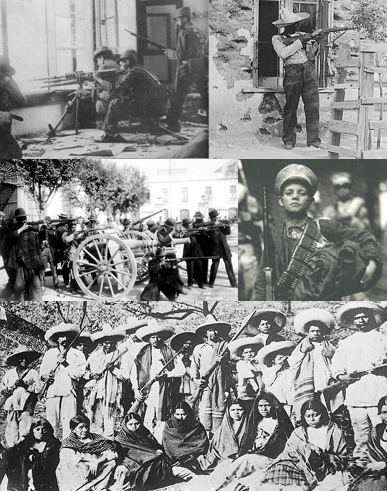
Katherine Anne Porter often spoke of her story "Flowering Judas" as the tale she liked best of all her stories because it came the nearest to what she meant it to be. It is the story of Laura, an idealistic woman, who travels to Mexico from Arizona at the age of twenty-two to assist the Obregon Revolution.
_____

This casebook on "Flowering Judas" addresses Porter's ambivalence surrounding her roles as woman and artist and also attests to the profound influence of Mexico upon her work. Readers of this early tale will not be surprised to learn that although Porter was a practicing feminist in her life and her work, she actually eschewed the feminist label.

Virginia Spencer Carr brings her own sharply focused biographer's eye to the introduction, further illuminating the story and the superb critical essays that it provokes. The casebook includes the authoritative text of the story itself, Porter's own statement regarding the genesis of this highly acclaimed work, an important interview, a collection of significant essays on "Flowering Judas" and the historical, cultural, and personal milieu from which the tale evolved, a bibliography, and a chronology of Porter's life and work.

Contents: Introduction / Virginia Spencer Carr --
Chronology --
Flowering Judas / Katherine Anne Porter --
Background to the story. Why [I] selected "Flowering Judas" ; Why I write about Mexico ; The Mexican trinity / Katherine Anne Porter --
Katherine Anne Porter : an interview / Barbara Thompson --
Critical essays. Katherine Anne Porter : symbol and theme in "Flowering Judas" / Ray B. West, Jr. --
Death's other kingdom : Dantesque and theological symbolism in "Flowering Judas" / Leon Gottfried --
The charged image in Katherine Anne Porter's "Flowering Judas" / David Madden --
Revolution and the female principle in "Flowering Judas" / Darlene Harbour Unrue --"Flowering Judas" : psyche, symbol, and self-betrayal / Jane Krause DeMouy --
The making of "Flowering Judas" / Thomas F. Walsh --
Mexico, memory, and betrayal : Katherine Anne Porter's "Flowering Judas" / Robert H. Brinkmeyer, Jr.

210 pages, Hardcover

First published August 2, 2011

8 people are currently reading
351 people want to read

About the author

Katherine Anne Porter

154 books350 followers
Katherine Anne Porter was a Pulitzer Prize-winning American journalist, essayist, short story writer, novelist, and political activist. She is known for her penetrating insight; her works deal with dark themes such as betrayal, death and the origin of human evil.
See also http://en.wikipedia.org/wiki/Katherin...

Ratings & Reviews

What do you think?
Rate this book

Friends & Following

Create a free account to discover what your friends think of this book!

Community Reviews

5 stars
65 (19%)
4 stars
100 (30%)
3 stars
99 (30%)
2 stars
48 (14%)
1 star
17 (5%)
Displaying 1 - 30 of 37 reviews
Profile Image for Ilse.
555 reviews4,483 followers
August 6, 2023
It is monstrous to confuse love with revolution, night with day, life with death.


From the title I assumed that Flowering Judas would be a story on betrayal – it brought to mind Judas Iscariot, the archetypical traitor – and there are a few allusions to that biblical figure, from the eponymous Judas tree that is associated with him to the suicide of one the characters in the story.

Told from the perspective of Laura, a young American woman who gets involved in the Mexican Revolution of 1910-1920, it turned out a story of small and large acts of betrayal, ranging from a forbidden indulgence in lace and silk to the major ideals of the Revolution itself, personified in the nasty revolutionist leader Braggioni, who not only cheats on his wife and is greedy, vain and arrogant, but also doesn’t lend any hand to help the comrades that ended up in prison because of him.


Swapping one religion – the Catholic faith – for another – socialism – Laura gradually perceives the same hypocrisy, corruption and flaws – whether in the leaders and in herself.

Katherine Anne Porter, politically involved in Mexico following the Mexican Revolution herself, seems to suggest that the path to a new world cleansed of cruelty and injustice, ruled by benevolent anarchy is as illusionary as the one to heaven – it is simply a road to nowhere, because of human nature.

The moonlight spread a wash of gauzy silver over the clear spaces of the garden, and the shadows were cobalt blue. The scarlet blossoms of the Judas tree were dull purple.

Tell me it will be different one day.

(***1/2)
Profile Image for Cecily.
1,329 reviews5,386 followers
December 11, 2022
The 31st piece I’ve read with The Short Story Club is the first I’ve actively disliked, which is pretty impressive.

Backdrop

Laura is a young American Catholic who’s gone to Mexico to support Braggioni, a revolutionist [sic] leader, in the 1920s.

She seems lost, detached, naive, and finds occasional solace in beauty:
Laura, who haunts the markets listening to the ballad singers, and stops every day to hear the blind boy playing his reed-flute in Sixteenth of September Street, listens to Braggioni with pitiless courtesy, because she dares not smile at his miserable performance.
She struggles to live by her political principles: beautiful lace, even though it’s machine-made, is her secret vice.

Braggioni is an unpleasant man who uses and seduces people, and cares little about the consequences for them. He is happy to live outside the principles he preaches:
Over the tops of his glossy yellow shoes Braggioni swells with ominous ripeness.

Like any autocratic cult leader, he has a hold on his followers, even as the scales begin to fall from their eyes:
The gluttonous bulk of Braggioni has become a symbol of her many disillusions, for a revolutionist should be lean, animated by heroic faith, a vessel of abstract virtues.

Laura does his bidding, for the cause. A cause and leader she is increasingly disillusioned with, and even afraid of.
He has the malice, the cleverness, the wickedness, the sharpness of wit, the hardness of heart, stipulated for loving the world profitably.


Image: A Judas tree (Cercis siliquastrum). A pink flowering tree, allegedly of the type Judas hanged himself from. It’s native to Southern Europe and Western Asia - not Mexico. (Source)

But… so many buts

That’s the setup. I never felt immersed in it, despite the present tense. I couldn’t picture it. I didn’t really understand the context. I didn't really care.

The distastefulness of the situation, and especially of Braggioni, was not contrasted with the presumably positive vision they were supposedly fighting for.

What prompted Laura to go there? There are autobiographical aspects, so Porter must know.

What were they trying to achieve? You won't find out on these pages. Perhaps that's my fault for having zero prior knowledge of a Communist uprising in Mexico on the 1920s. Regardless, it added to my inability to connect with the story, and robbed it of necessary balance.

We only see Braggioni's many repellent aspects. So how and why does he hold such sway over his followers? I need a sliver of something before I can believe in his power.

The long final paragraph was a total surprise. It was so jarring, I had to read it three times to understand it. Not a plot twist, so much as a switch of genre, full of religious allegory suggested by the title. It didn’t improve my feelings about the story, and the longer I thought about it and reread it, the more I disliked it.

Short story club

I read this as one of the stories in The Art of the Short Story, by Dana Gioia, from which I'm aiming to read one story a week with The Short Story Club, starting 2 May 2022.

You can read this story here.

You can join the group here.
Profile Image for PattyMacDotComma.
1,785 reviews1,063 followers
December 20, 2022
3★ [for the title story only, not the collection]
“The gluttonous bulk of Braggioni has become a symbol of her many disillusions, for a revolutionist should be lean, animated by heroic faith, a vessel of abstract virtues.”


Mexico, early 1920s. Revolution, American girl carrying messages, trying to placate the repulsive self-centred leader, Braggioni. Laura is an American girl, wanting to be part of a revolution, but this isn’t what she was expecting. Braggioni insists upon serenading her with his off-key singing and his scratchy guitar-playing.

She does her best to avoid any closer contact.

“It would require a cruelty and vanity greater than his own to lay a finger on the vast cureless wound of his self-esteem. It would require courage, too, for it is dangerous to offend him, and nobody has this courage.”

My father enjoyed wordplay and used to occasionally remind us of this one, which seems to have many possible origins:

‘The peasants are revolting.

‘They certainly are.’


Braggioni certainly is. I can’t say I liked the story, but I did enjoy some of Porter’s descriptions, and I think it might be a good one for book club discussions. Symbolism, questions.

I read it in the collection, Flowering Judas, as one of the stories selected by the Short Story Club Group:
https://www.goodreads.com/group/show/...

It is also available to read online.
https://biblioklept.org/2015/05/15/re...
or to download here:
http://vitaeducation.org/wp-content/u...

This is one of the stories included in the author's The Collected Stories of Katherine Anne Porter, for which she won the 1966 Pulitzer Prize.
Profile Image for Connie  G.
2,155 reviews710 followers
November 30, 2022
Laura, a young reserved teacher, is an American who is working for the socialist revolutionary cause soon after the Mexican Revolution. She feels like she does not really belong anywhere. She's lost her belief in her Catholic faith, and feels a distance from the revolutionaries. She's cut ties with America, but does not feel a part of Mexican culture or understand their language well. She refuses any involvement with the men who are romantically interested in her. Unlike her idealistic notion of a good leader, Laura sees that Braggioni is a corrupt revolutionary leader whose constant visiting makes her uncomfortable and anxious when she goes back to her own apartment. Although she is working for the revolutionary cause, she has no real connection to the strangers to whom she delivers messages. Laura is living in a state of alienation. There is a contrast between her original idealism and the reality of the political cause.

The Judas tree is named for Judas Iscariot who betrayed Jesus Christ, and may have later hung himself from the branches of the tree in repentance. The flowers of this tree are religiously symbolic in a dream where Laura refuses to follow the ghost of a suicidal political prisoner.

The author, Katherine Anne Porter, met a group of young Mexican artists and revolutionaries in New York City. She went to Mexico City in 1920, soon after the Mexican Revolution. The visit was a source of inspiration for a group of short stories set in Mexico. 3.5 stars, rounded down.
Profile Image for Kalliope.
742 reviews22 followers
December 18, 2022


I felt somewhat claustrophobic while reading my first taste of Katherine Anne Porter’s writings.

Her Laura is too often dragged into doing something she does not feel like doing. She is engaged in a mission which has disappointed her but even if she no longer believes in it, she goes on. She is also too closely connected to someone she does not, deep down, respect – and yet seems unable to break away. She keeps having forewarnings that disaster is about to take place, and that danger is lurking around the corner, but her reaction is to pretend that her surroundings don’t touch her.

And then Christian religion pervades the story, as if to give sense to it - giving a Biblical pedigree to what Betrayal is. As if it needed such an unabashed backing.

But with this story I feel like Laura, and have to say No.
Profile Image for George Ilsley.
Author 12 books319 followers
December 5, 2022
Nobody dares to smile at him. Braggioni is cruel to everyone, with a kind of specialized insolence, but he is so vain of his talents, and so sensitive to slights, it would require a cruelty and vanity greater than his own to lay a finger on the vast cureless wound of his self-esteem.

The mood of this short story, set in Mexico in a time of revolution, is ominous. Power, and control, operate a maze trapping the characters — but powerlessness and lack of control are also part of of the air they breathe. Hopelessness infiltrates a face seen looming out of the darkness of a prison cell.

The ominous mood here, one of betrayal and faithlessness, with overtones of sexual harassment and predatory instincts, is enough to push many readers out of the story.

However, I believe the author knew what she was doing with this text, and was brave enough to juggle its many complicated mysteries. By the end it had won me over — somehow the extra dose of bleak reality at the end —boredom!— made it all more attractive. Real life is boring, and mysterious, and ominous. Also, the "vast cureless wound of his self-esteem" is a wonderful phrase!
Profile Image for Larry Bassett.
1,638 reviews337 followers
June 18, 2014
This is NOT the collection of short stories titled Flowering Judas and Other Stories by Katherine Anne Porter. This is part of a "Women Writers" series and focuses on the single short story "Flowering Judas."

The book includes a lengthy introduction by the editor, Virginia Spencer Carr, and a chronology of the life of the author.

The short story itself is, of course, included. There are also several brief essays by the author as well as the text of a 1963 interview with her.

In addition there are seven "critical essays" that have been previously published 1n 1947, 1969, 1970, 1983, & 1985.

I am always looking for signs of feminism in women authors I read so this caught my attention from the Introduction to the casebook edited by Virginia Spencer Carr titled “Flowering Judas”

Porter herself was a spirited independent woman all of her life. Some would call her a feminist, but not in the sense by which feminists are known today. Save for gender alone, for example, she refused to identify with the women depicted in Simone de Beauvior’s The Second Sex. In 1962, at the age of seventy-two, she informed a book reviewer for the New York Herald Tribune that she had little use for books that make such sweeping assertions as “women are . . . women do . . . women think.” She said that she had never blamed her difficult life on anyone else, nor did she think that being a woman had ever put her at a disadvantage in a male-dominated culture. Being a woman was exciting, she acknowledged, but reading about women as women bored her. Porter was an unlikely feminist both in her refusal to join any group and in her personal distaste for lesbianism, which she associated with the early feminist movement. Moreover, the very act of aligning herself with others violated the spirit of individuality on which she prided herself. When asked by Barbara Thompson about “choosing a pattern” for her life, Porter replied: “The thing is not to follow a pattern. . . . The thing is to accept your own life and not try to live someone else’s life. Look, the thumbprint is what you must go by.” She went on to say that she had “never belonged to any group or huddle of any kind.” Most of Porter’s female protagonists find that family ties, marriage, and love are threats to their personal freedom, and that a woman must be alone to be free. Laura, too, lives by such a dictum, but her independence is achieved at great cost. Her only escape from Mexico’s patriarchal society can come through an inner withdrawal from life, a withdrawal that offers autonomy without hope. Laura’s unwillingness to take chances and her determination to engage neither enemy nor suitor and to make of her one positive act a negative is, in effect, to go to bed with the damned. Porter’s own ”En avant!” [Forward!] was both prayer and battle cry, and it sustained her for ninety years.



Profile Image for Katy.
375 reviews
November 28, 2022
From this book, I only read the actual short story and not the case study or interviews. This was a read for the short story club. The story is very well written but requires a great deal of thought and reflection to make sense of it. There is much symbolism within the story which adds to the interpretation.

Laura, the young American teacher who goes to Mexico and takes up not only a teaching job, but a position within the revolutionaries of the day. She is a strong willed woman but seems like a fish out of water, never really fitting in with the locals or the revolutionaries. I didn’t find her particularly engaging.

Braggioni is the equally unlikeable revolutionary leader who fancies himself not only to be a ladies’ man, but a many of many fine qualities and power. While he may be powerful among his own kind, Laura fails to see any of his so-called, or likely non-existent, fine qualities.

They seem to tolerate each other, but have no real relationship.

The story is really about Laura, and how as a young woman, she has lost her way in the world, and yet does not seem to wish to return to America. She then experiences an unfortunate event for which she feels responsible and dreams of a near death opportunity, which she doesn’t take, and wakes before the dreamed of death.

This book, though well written was somewhat of a challenge and perhaps a re-read may be of benefit. It was also a challenge to rate and write a review. But there it is!
Profile Image for Realini Ionescu.
4,173 reviews22 followers
October 2, 2025
The Jilting of Granny Weatherall and Flowering Judas by Katherine Anne Porter

Another version of this note and thoughts on other books are available at:

- https://www.youtube.com/playlist?list...


The Jilting of Granny Weatherall

Granny Weatherall is dying.
A spoiler alert is not necessary before saying that because it is clear from the start.

The doctor is there to help, but there isn't much he can do for the eighty years old woman, even if he does try an injection and all that is possible.

Granny dismisses this professional because he is so much younger than herself.

She says something to the effect that he was not born when she had her double pneumonia and other diseases that she vanquished without his help.

Her daughter, Caroline is there to help...
Well, to do what she can, which is kneel and pray.

At one point, Granny wants a strong drink.
This is because her father, who lived to the age of one hundred and two had what I guess is a strong equivalent of whiskey.

He mocked the reporter who asked him about the secret of his longevity.
It was that strong alcohol, taken daily.

The trouble with these last hours is that communication is really difficult.

At times, Granny thinks she is speaking and saying what she wants, but she isn't.
We can tell that from the reaction or lack there of of those around.

And all the family is gathering there, with children and grandchildren.

When she hears about all these relatives arriving, Granny Weatherall is somewhat upset...

- Why? You mean there's a party?
- Somebody's birthday?

When they are actually coming to pay their last respects.

When she is told about the preacher, she does not think about death.
She thinks that this man has always liked to play cards and hear gossip.

But death is a major theme here and Granny has thought about it many years before.
Indeed, when she was sixty, she made a tour to say an anticipated goodbye.


Flowering Judas

Laura is the heroine of this account.
We also have Braggioni, Lupe and Eugenio, together with some other minor characters.

Braggioni is a braggart, maybe his name really comes close to even mean that in his native tongue.
He is the controversial, mean, scheming leader of men who are involved in subversive activities.

I was tempted to say revolutionary, but it is not quite as serious as that.

In fact Laura is funny when she says about some of these disgruntled Mexicans that although they talk like they have a whole army at their heels, they could easily attend a social event, a dance or a concert without anybody caring.

Laura is helping these people, with money and moral support.
She takes money from a Polish man and gives it to his bitter, mortal enemy...


A Romanian!
Profile Image for Jara.
59 reviews
February 20, 2016
Porter is a MASTER. The story is so beautifully written, and for being so short it packs a punch. It seems like the easiest story to follow but when you think about it and question the themes, you realize just how complex Porter wanted the story to be. Her perfectionism shines through her writing.
Profile Image for Andy Miller.
984 reviews68 followers
November 15, 2015
This is a collection of Porter's first stories, written between 1922 and 1932. While some are dated, there are enough good ones to make reading the collection worthwhile

"Maria Concepcion" is set in a rural Mexican village with an American Archaeologist searching for Indian artifacts and an armed revolution just miles away as a backdrop. The story's focus is a love triangle with a hard working and loyal wife, a lazy and selfish husband, and a young, exotic mistress. The tragic ending jars against today's sensibilities but is still a provocative read

"Virgin Violetta" tells of a poet who flirts with two young sisters from an upper class Mexican family. When the poet makes an inappropriate pass at the younger sister her reaction and her mother's unsupportive response to anticipates the development of the strong, independent woman characters in 20th century literature

"Theft" is about a struggling actress whose bad luck is compounded by the theft of her purse, the link between her life and theft are described in this great paragraph

"In this moment she felt she had been robbed of an enormous number of valuable things, whether material or intangible: things lost or broken by her own fault, things she had forgotten and left in homes when she moved; books borrowed from her and not returned, journeys she had planned and had not made,words she had waited to hear spoken to her and had not heard, and the words she had meant to answer with; bitter alternatives and intolerable substitutes worse than nothing, and yet inescapable: the long patient suffering of dying friendships and the dark inexplicable death of love-all that she had had, and all that she had missed, were lost together, and were twice lost in this landslide of remembered losses."

"The Jilting of Granny Weatherall" may be my favorite. Granny Weatherall is on her deathbed with her doctor, priest and children at her side at different times. The story mixes reminiscences of her life, especially of her being jilted before her eventual marriage to another man, with her dreams and confused conversations with those at her side

"Flowering Judas" is about a young, attractive, virgin woman who goes to Mexico to support the revolution. She is caught up with and then repulsed by the local revolutionary leader who is contrasted by stalwart revolutionaries imprisoned with decreasing hope. Porter shows us the idealism, the disillusionment and the realistic narrative of how the two often go hand in hand
764 reviews35 followers
September 7, 2015
This story boils down to: Mommy Dearest plus Son to Fear-est. (Yeah, lame. I needed a rhyme.)

This is my first encounter with Gregor Demarkian, the Armenian-American crime consultant who's a former FBI agent.

I wish his personality came out stronger. Despite Gregor's interesting talents and quirks, the book seemed rendered in a monotone, or monochrome, that barely distinguished the book's high points from its transitional lulls.

The story shifts location, back and forth, between Demarkian's home life in an an Armenian neighborhood in Philadelphia and his work assignment in Mattatuck, a New York town that's summoned him to review a possibly humdrum suicide.

Along the way, the author makes a couple interesting points about present U.S. society: Even small towns have serious crime that can devastate residents. Adjunct professors can function near the poverty line because the pay per course taught is so low.

The story happens to have a high number of dislikeable characters, including the dead young man, Chester Morton, as well as his mom, who's a prominent Mattatuck businesswoman. Throw in the Mattatuck police commissioner, the Mattatuck funeral-home director and the trailer-park mom of community-college student Haydee Michaelman -- and the mom's live-in boyfriend, too.

Demarkian cleverly unravels the clever coverup of an old crime, but the story never grabbed me by the jugular. Nor by the heartstrings. In the end, the tale was tepid.
Profile Image for Jennifer M. Hartsock.
64 reviews2 followers
April 8, 2011
It’s interesting to hear her stories of her children and then go off on a completely random tangent, but is relevant to her. This story should be read as an example of character because by reading her thoughts, we get a very clear sense of who she is as a person, and how over time, her illness has made her mind wander in and out of reality.

The old woman feels that aid from her doctor is a waste of the doctor’s time and her money. She seems to be very hostile toward Cornelia, her daughter. This character has flashbacks to define her attitude toward Cornelia, and then talks to that certain person as if they were right in front of her. We clearly see she’s “not all there” because of her age. This story includes the “round” character of the doctor. I would refer to this story as a Stream of Consciousness because of how in depth we see her thoughts as they occur.
Profile Image for Matthias.
30 reviews3 followers
December 16, 2012
Not too much attention given to the linguistic and cultural problems of the border region between Mexico and the US. Plot takes place in Mexico and focuses on the inner fragmentation (written in the 30's: modernism is at the heart of Europe's culture) of the main character, Laura. Laura is a modern revolutionist disillusioned by the the leader of the revolution that shook Mexico at that time.
Profile Image for Eg.
218 reviews1 follower
January 10, 2015
Setting is Mexico city in 1920s. Interestingly, as I later read, the story involves real-life events. The author has put part of herself in the protagonist Laura. Characters are complicated and the story doesn't evolve easily. However, the open-ending gives good fantasy about what is meant by Judas tree in a dream, and how it could/will affect Laura.
932 reviews10 followers
June 3, 2009
Re-reading early Katherine Anne Porter stories, prompted by a review of a new collection in NYRB. A bit uneven, but the best, "Flowering Judas," "Rope" "The Cracked Looking Glass" and one or two others, are magnificent and modern as hell.
Profile Image for Keith Miller.
Author 6 books207 followers
Read
March 30, 2009
Flowering Judas (Women Writers) by Katherine Anne Porter (1993)
Profile Image for Julie.
16 reviews9 followers
July 10, 2009
Theft, That Tree, and Flowering Judas = 5 stars.
Profile Image for Jim O'Loughlin.
Author 21 books7 followers
January 6, 2011
"The Jilting of Granny Weatherall" is one of the most amazing stories ever written and one of the best (if challenging) introductions to stream of consciousness prose.
Profile Image for A L.
591 reviews42 followers
Read
January 11, 2021
Loved the first two stories in this collection.
Profile Image for christine.
90 reviews1 follower
August 29, 2023
“Some day this world, now seemingly so composed and eternal, to the edges of every sea shall be a tangle of gaping trenches, of crashing walls and broken bodies.”

Profile Image for George P..
482 reviews85 followers
December 18, 2023
3.5 stars. Eloquent writing though it didn't have much emotional connection for me. It's in the anthology The Art of the Short Story which I have.
Profile Image for Laura.
1,785 reviews27 followers
December 22, 2025
No ha sido para mí.
Está bien escrito y entiendo lo que quiere decir este relato, pero no lo he disfrutado. Quizás en un futuro lo relea para ver si consigo encontrarle algo más.
Profile Image for Petergiaquinta.
699 reviews131 followers
May 14, 2023
I am in Nepal right now, and as we just recently had an election here, in a developing nation which is still working through the aftermath of revolutionary upheaval, I found this story quite fascinating. Somehow I’d never read Katherine Anne Porter before, although during the pandemic I had planned to read Pale Horse, Pale Rider which she wrote after her experiences with the Spanish Flu epidemic of 1918. One day I’ll get to it.

But, despite some of what I see as flaws in “Flowering Judas”—I am not at all fond of the present tense or the tendency for the story’s focus to wander—I am lining up with those readers who appreciate and enjoy it. I am working through it more slowly a second time today, and I might offer more specific commentary later, but I wanted to to get some of my initial thoughts down after my first reading of this story in which Porter explores the inevitable letdown or even “betrayal” of revolutionary idealism in the wake of the day-to-day realities of real life and human nature.

Porter seems to intend the grotesque figure of Braggioni to embody the current state of affairs of the Mexican Revolution, and that first image of Braggioni “heaped upon the edge of a straight-backed chair much too small for him” perfectly encapsulates what happens in politics (revolutionary or otherwise) when personalities overwhelm principles.

I have just spent the last couple of weeks in the Khumbu region of Nepal, and the recent election was a great topic of discussion among the guides and lodge owners. Nepal has been through much social and political upheaval over the last thirty years. First, in 1990, the king was forced by the people to accept political pluralism in the country and the first real elections were held; this was followed by a People’s War waged by the Maoists in the countryside, the mass murder of the royal family by the crown prince who then committed suicide, and then the eventual abolition of the monarchy when the Maoists and the Red Army joined the government and a new constitution was eventually established.

And then? Well, some things got better, some things stayed the same, and human nature being what it is, some of these revolutionary figures settled into comfortable positions of power and began behaving much like the royalists they had overthrown. I remember vividly my shock about ten years ago watching a Nepali television song and dance variety show along the lines of American Idol, when I realized the jolly emcee of the show was the same dreaded revolutionary leader of the Maoists who had been hiding away in the jungle over the last couple of decades, waging his war against land owners and the monarchy.

And so we have the image of Braggioni opening the story, too fat for his chair, a rather absurd figure who once was a revolutionary leader inspiring great fervor from his followers. So I really connected to that because a couple of weeks ago in a Khumbu lodge during an animated discussion of current politics, a guide announced that the real problem in contemporary Nepali politics is these old men in power refuse to share the chair they are sitting in,as the present political leadership here is composed mostly of the same men going back fifty or more years who have been guiding the revolutionary political process in Nepal, despite the desire among many of the rank and file for younger, fresher figures. Thus that chair image at the beginning of Porter’s story really spoke to me.

So Judas and his betrayal of Christ is embodied in this figure of the fat, corrupt Braggioni and his betrayal of his ideals, in the tendency for revolutions to ultimately betray the very people for whom they are fought, and Laura’s internal betrayal of this movement which has failed to live up to her naive idealism which has now fallen into a kind of weary cynicism at this point. Eventually, this “gringita” will cross the border and go back to the safety and security of her life in the U.S., no doubt her experience as a tourist revolutionary something to look back on with nostalgic wonder or even amusement.

I like this early quote describing Laura and her falling out with the revolution: “But she cannot help feeling that she has been betrayed irreparably by the disunion between her way of living and her feeling of what life should be, and at times she is almost contented to rest in this sense of grievance as a private store of consolation.”

Or this realization she is beginning to have about her own political naïveté: “The gluttonous bulk of Braggioni has become a symbol of her many disillusions, for a revolutionist should be lean, animated by heroic faith, a vessel of abstract virtues. This is nonsense, she knows it now and is ashamed of it.”

+++++++++++++++++++
Read for GoodReads short story group
Review written on December 2, 2022
Profile Image for Iona  Stewart.
833 reviews277 followers
December 3, 2022
I haven’t previously read anything by this author, and hope not to read any more stories by her.

I will first admit that from the beginning I didn’t like this story – I liked nothing about it.

Neither did I understand the point of it.

Laura is the protagonist. She is visited by Braggioni almost every night; he strums his guitar and sings to her.

Laura is tired when she comes home and wants to lie down but she doesn’t say so; she says “Have you a new song for me this evening?” (She sounds like a woman who loves too much.)

Laura listens “with pitiless courtesy”. “--- she does not smile at his miserable performance.”

Braggion is sensitive to slights and it is dangerous to offend him.

He is a skilled revolutionist with an excess of self-love.

He has a “gluttonous bulk”.

There is a “disunion between her way of living and her feeling of what life should be”.

It is not explained how Laura comes to end in this situation with the unwanted visits of the obese, singing Braggioni, and why she cannot do something to get rid of him.

She is in Mexico, where she teaches children English. She visits prisoners and brings them food, cigarettes, money and messages.

The author states that the “scarlet blossoms” of the Judas tree are “dull purple”. How can they be both?? But we are not told where the Judas tree is.

The scrawny Braggione is a poet and a leader of men. I understand he once was scrawny and now has become gluttonous and fat.

He has “good food and abundant drink”. He has a wife. He confesses “One woman is really as good as another for me, in the dark.”

Braggione loves pistols, cannon and, best of all, dynamite.

We are told that Eugenio’s body has not yet been discovered by the guard, but we have not been introduced to Eugenio, and don’t know who he is.

It turns out Eugenio had taken tablets given to him by Laura, all of them. Why does she give him tablets that can kill him, whoever he is?

Braggioni’s wife weeps constantly – he is the cause of all her sorrows. I would also weep constantly if I were married to Braggioni.

This is such a confused story: we are not told things clearly.

Yet it was much appreciated when first published and probably still is. In 1966 the author received a Pulitzer Prize.

In the final paragraph Laura has a dream where she is told to leave the house. She reaches for Eugenio’s hand. The Judas tree is in the dream and sets her upon the earth and finally to a sea that is not water but a desert of crumbling stone.

Eugenio says he is taking her to Death and they must hurry as it is a long way off. He strips the “warm, bleeding flowers” from the Judas tree and Laura eats the flowers greedily. Eugenio calls her ”Murderer” and ”Cannibal!”

I assume the dream means she quickly has to get away from Braggioni, but she is going to Death, nonetheless. I see the Judas tree as significant since by leaving Brggioni Laura feels she would be betraying him as Judas betrayed Christ.
Profile Image for Anatoly.
336 reviews4 followers
January 2, 2022
The story “Flowering Judas” by American writer, Katherine Anne Porter, is the story of the revolutionary leader Braggioni, who cynically manipulates his associates, while he himself enjoys his prosperity and power.

The title of the story is the name of the tree on which Judas hung himself, and it contains a bitter allusion to the dubiousness of all revolutions, including religious revolutions.

According to the author, everything that seems progressive, indisputable, extremely necessary for improving the life of mankind, upon closer examination, turns out to be distorted and destructive.

Here is the link to the text of the story:
https://vitaeducation.org/wp-content/...

Profile Image for Larrry G .
161 reviews15 followers
May 5, 2023
A sprinkling of sparkling snippets in an otherwise bit obscure rendition. So supposedly KAP sees this "couple" through a window while she's self-exiling in Mexico, and years later determines to use these window views of her time abroad, coupled with the pair, not knowing whether she knew more about them specifically and transpose onto paper a fitting backdrop for all this. There's some sonic passages here, some cobbling of concepts, in a fitful delivery. It's almost as though she's purposefully writing at the agonizing inducing level one must have felt from the discordant serenades to an afficionado and the multiple other grating moments consuming the wilting main character. If so, then we must give her due credit for so pervasively offending our sensibilities.
Profile Image for David.
321 reviews26 followers
April 18, 2025
Written in the 1920's so the language is expectantly different but this book was popular during that era. I kind of slogged through it, had a difficult time with the lack of cadence and just wasn't able to identify with anything.
Displaying 1 - 30 of 37 reviews

Can't find what you're looking for?

Get help and learn more about the design.