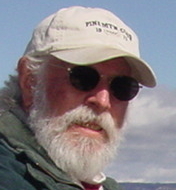
This is a biography of Fred Hoyle, the man who coined the term “Big Bang”, and who was one of the leading astronomers of the 20th century. “Conflict in the Cosmos” does not refer to some sort of violence out in the stars, but instead to Hoyle’s squabbles with fellow scholars and astronomers at Cambridge and elsewhere. Hoyle could be a pleasant chap, but was brash and outspoken (he may have lost a Nobel Prize by shooting off his mouth) and wasted a lot of energy fighting his peers, and left Cambridge early in a sulk. (The book may have given too many details about these academic spats.)
The two main things that Hoyle will be remembered for are pioneering work in understanding how most the elements in our world such as carbon or gold were created inside stars, and his strong support of the “steady state theory”. The steady state theory posits that the universe has always forever and ever been as we see it now. The steady state theory is in definite conflict with the current view in astronomy (the Big Bang theory), which is that the universe began about 14 billion years ago in a vast explosion, and has been expanding ever since. Hoyle fought a long and losing battle against the Big Bang theory, and it is the height of irony that Hoyle invented the term “Big Bang” as a pejorative to describe a theory he despised.
Fred Hoyle was quite busy. Besides his work in astronomy, during World War II he did important work in the clever use of radar, he wrote popular books (both fiction and non-fiction), his lectures on BBC made him one of the most famous scientists in England, and he held several administrative posts. But besides his good ideas, his biographer says he had some dopey ones.
An interesting character study – how did such a talented scientist get along so badly with some of his fellow scientists? The book uses the term “corrosive paranoia”.
This was an important book. Much of my knowledge, heretofore, of Sir Fred came from Hawking biopics which were not completely complimentary of the man.
As usual, real life is both far more complex and fascinating. The man, in the end, was a pivotal and important figure with respect to 20th century astronomy in general and in the UK in particular. The author, Mitton, does a reasonable job with the prose, and I think this ends up being an important book for those interested in astronomical history.