

What do you think?

Apogee Books Space Series #29
Apollo 17: The NASA Mission Reports, Volume 1
Apollo 17, documented in these reports, was the first mission to make it possible for a qualified geologist to explore the moon.
- GenresSpaceHistoryNonfiction
240 pages, Paperback
First published November 1, 2002
Ratings & Reviews
Friends & Following
Create a free account to discover what your friends think of this book!
Community Reviews
Displaying 1 - 2 of 2 reviews
Read
October 13, 2020Nagasai
April 21, 2008
The successful Apollo 17 manned lunar landing mission was the last in a series of three J-type missions planned for the Apollo Program. The J-type missions have been characterized by extended hardware capability, by a scientific payload larger than the previous G- and H-series missions and by use of a battery powered lunar roving vehicle (LRV). As a result of these additions, the Apollo 17 mission had a duration of 12.6 days, and a time on the lunar surface of 75 hr with a total surface traverse distance of approximately 35 km.
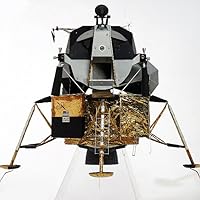
Lunar Module: Challenger
Command and Service Module: America
Crew: Eugene A. Cernan, commander,
Ronald E. Evans, command module pilot
Harrison H. Schmitt, lunar module pilot
Launch: December 7, 1972
05:33:00 UT (12:33:00 a.m. EST)
Kennedy Space Center Launch Complex 39A
Landing Site: Taurus-Littrow
(20.18N, 30.76E)
Landed on Moon: December 11, 1972
19:54:57 UT (02:54:57 p.m. EST)
EVA duration: 22 hours 4 minutes
( EVA 1: 7 hr 12 min, EVA 2: 7 hr 37 min., EVA 3 ended at 05:40:56 GMT on December 14.)
Lunar Surface Traversed 30 kilometers
Moon Rocks Returned: 110 kilograms
LM Departed Moon: December 14, 1972
22:54:37 UT (5:54:37 p.m. EST)
Time on Lunar Surface: 74 hr. 59 min. 40 sec.
[19:54:57 UT December 11, 1972 - 22:54:37 GMT December 14, 1972]
Returned to Earth: December 19, 1972
splashdown at 19:24:59 UT (2:24:59p.m. EST)
Mission Duration: 301 hr. 51 min. 59 sec.
Retrieval site: Pacific Ocean 17° 53' S, 166° 7' W
Retrieval ship: U.S.S. Ticonderoga
Special Payload:
Third mission with a lunar roving vehicle (LRV) that could transport two astronauts. The LRV could also carry tools, scientific equipment, communications gear, and lunar samples.
Highlights:
First geologist on lunar surface.
Longest LRV traverse on a single EVA.
Greatest amount of lunar samples returned to Earth.
Lunar Module: Challenger
Command and Service Module: America
Crew: Eugene A. Cernan, commander,
Ronald E. Evans, command module pilot
Harrison H. Schmitt, lunar module pilot
Launch: December 7, 1972
05:33:00 UT (12:33:00 a.m. EST)
Kennedy Space Center Launch Complex 39A
Landing Site: Taurus-Littrow
(20.18N, 30.76E)
Landed on Moon: December 11, 1972
19:54:57 UT (02:54:57 p.m. EST)
EVA duration: 22 hours 4 minutes
( EVA 1: 7 hr 12 min, EVA 2: 7 hr 37 min., EVA 3 ended at 05:40:56 GMT on December 14.)
Lunar Surface Traversed 30 kilometers
Moon Rocks Returned: 110 kilograms
LM Departed Moon: December 14, 1972
22:54:37 UT (5:54:37 p.m. EST)
Time on Lunar Surface: 74 hr. 59 min. 40 sec.
[19:54:57 UT December 11, 1972 - 22:54:37 GMT December 14, 1972]
Returned to Earth: December 19, 1972
splashdown at 19:24:59 UT (2:24:59p.m. EST)
Mission Duration: 301 hr. 51 min. 59 sec.
Retrieval site: Pacific Ocean 17° 53' S, 166° 7' W
Retrieval ship: U.S.S. Ticonderoga
Special Payload:
Third mission with a lunar roving vehicle (LRV) that could transport two astronauts. The LRV could also carry tools, scientific equipment, communications gear, and lunar samples.
Highlights:
First geologist on lunar surface.
Longest LRV traverse on a single EVA.
Greatest amount of lunar samples returned to Earth.
Displaying 1 - 2 of 2 reviews