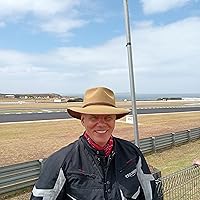
Richard Storry was educated at Repton and Merton College, Oxford, where he held a History Postmastership. In 1937, he accepted an appointment as Lecturer in English at Otaru Koto Shogyo Gakko (now Otaru University of Commerce), Hokkaido from 1937-40 before returning to Europe and served in the intelligence corps across the world earning the rank of Major
Richard Storry began his academic study of Japanese history as a Research Scholar of the Australian National University in 1947. In 1952 he became a Research Fellow of the School of Pacific Studies at the same university, where he remained until 1955. From 1955 to I960 he was Roger Heyworth Memorial Research Fellow at St. Antony's College, Oxford. In I960 he became an Official Fellow of the College and he was appointed a Special Lecturer in Far Eastern Studies. In 1970 he became Director of St. Antony's Far East Centre. In 1981 he was appointed to an ad hominem Professorship of Japanese Studies by the university
held the position of Emeritus Professor of Japanese Studies at the University of Oxford and Director of the Far East Centre at St Antony's College from 1970 until his retirement. He was a member of the Editorial Board of History Today and frequently contributed to that magazine.
The book with its yellowing pages lay unread on my book-shelf till I planned my visit to Japan. And what an experience it was! I could not have got the 360 degree view of the Japanese mind, the people's philosophy of life, spiritual and material aspirations, their changing world view from any other source so vividly. In barely 300 plus pages Storry has made the history of a great but controversial nation come alive.
What particularly enthralled me is the way the author has presented the great spectrum of Japanese history -- from its hoary beginning shrouded in mythology till the recent well documented past -- from the perspective of three generations of an imaginary Saito family. The family members’ destinies are inextricably bound to the fate of the nation. This family’s story that opens the narrative and ties it up, is a very useful apparatus with which to understand the collective psyche of the Japanese people of all epochs.
The narrative succinctly explains the ambivalence of the people about violence and peace, isolationism and going out to the world, social discipline and riotous behavior. The history is replete with incidents of volatility of emotions at both individual and group levels. Several assassinations, suicides, hara kiri and armed rebellion show that a traditional society unable to cope with the forces of change, resorting to these extreme steps. But in the end the resilience of the great race brings new glory for the nation.
The author portrays all war expeditions by Japan with vivid details. The Pacific War takes a pride of place as all the military maneuvers are described animatedly. Richard Storry had taken part in WW II in India, Burma and other Asian countries. His experience has been put to best use while describing the Pacifiac War that Japan fought and lost.
I found this book in a used bookstore on New Year's Eve in Taipei. The title is a bit ironic because actually the book was first published in 1960 (although revised in 1961,1968, 1972, 1976, and 1982).
This book is similar in scope to another book that I read a few years ago called "Inventing Japan". Both books are about how Japan used to be a closed-off country, but in around 1850 the United States forced the Shogun to open the country up to trade, triggering the rapid (relative to other Asian countries at the time) modernization of Japan, which in turn led to the Japanese colonialism, which then led to the war in the Pacific. In both books the fallout from the war in the Pacific - which I think would be interesting as a book all on its own, isn't discussed much - the focus instead being on what happened to post-war Japan.
This book was a bit thicker than the previous one and as such was able to cover these topics in greater depth. For example, it was explained that the reason for Japan's policy of isolation from 1603-1868 is because the ruler that came into power at the beginning of this period was relatively weak. In particular, he knew that if his enemies banded together, they could overthrow him. So he needed to implement a number of measures in order to keep them weak and divided, of which Japan's policy of isolation was just one (the logic being that if Japan was not isolated, then western powers might secretly ally with or supply arms to the enemies of the shogun). This book also helped to give a bigger picture about the opening up of Japan. Most of the accounts that I have heard give exclusive credit to Admiral Perry from the USA, but this book explains that many western powers were having the same idea around this time, and Perry just got there first.
"It looked as if either Russia or Great Britain would be the first to compel the shogunal government to open its doors. The betting, we might say, was on the Russians. For in October 1852, there set off from Europe on the long voyage to the Far East the Russian Admiral Putyatin, empowered to persuade the Japanese to sign a commercial treaty. However, when the four vessels of Putyatin's expedition approached Nagasaki in August 1853, an American squadron under Commodore Matthew Perry had already presented what amounted to an ultimatum to the shogunate."
I found the part about the Pacific war a little bit confusing. I'm still not clear exactly why Japan decided to go to war with China - the book makes it sound like the war with China just kind of evolved organically. To the best of my understanding, the war with China evolved like this:
1. 1894-1895: Japan and Qing China go to war. Although both countries were opened up by the west around the same time (Japan as above and China by the Opium war), Japan took advantage of trade with Europe and rapidly modernized its military, whereas China, for various reasons, did not. China, who had been the dominant power in the region since antiquity, is easily beaten by Japan.
Although technically a war between Japan and China, the real issue of this war seems to be Korea, which was a vassal state of China at the time. It's not clear to me if Japan at this time already wanted to take complete control of Korea or just wanted to have more influence (and the ability to trade with Korea), but the outcome of the war was that Korea became recognized as independent from China, while China gave up Taiwan* as well as a part of Manchuria (the Liaodong peninsula) to Japan.
*side note: When Qing China gave Taiwan to Japan, it is more accurate to say that it gave the *portion* of Taiwan under its control to Japan. Because actually, China had never been able to bring the Eastern side of the island under control, as the natives there were too fierce. It was Japan, and not China, that was the first to control Taiwan in its entirety.
Right after the war, a few European powers (including Russia) convinced Japan to give up its claim on the Liaodong peninsula (which it did, but only under duress). Five years later, Russia took it for itself. Japan was understandably pissed off about this.
2. 1905 Japan goes to war with Russia in Manchuria. After taking the Liaodong peninsula, Russian influence in Manchuria continued to grow (part of the reason Russia wanted Manchuria is that the port of Vladivostok, which was part of Russia, was harder to reach if you have to go around Manchuria). After taking the Liaodong peninsula, Russia used the boxer rebellion in China as an excuse to move a large number of troops into the region, and was eyeing Korea. Japan felt threatened, and a few years later went to war with Russia and won. This was considered a big deal because it was the first time an Asian power defeated a European power. Japan won the Liaodong peninsula and a small piece of Manchuria, as well as Russia's promise not to interfere with Korea.
3. 1904 - 1907 Japan takes control of Korea. This part is better explained in another book of mine, but I forgot the details. Nevertheless, by 1907 the Korean King abdicates and Japan is in control of Korea from then until the end of WWII.
So, now we have this situation where Japan controls Korea, Taiwan, and part of Manchuria. At this point, as we'll see below, it would be natural for Japan to attack either China or Russia. But there are deep internal divisions within Japan (a theme which we will keep coming back to).
4. 1931 - The Manchurian Incident: This step illustrates the divisions stated above. The Prime minister of Japan finds out that officers in Manchuria are planning a coup. He tells the Emperor, who tells the minister of war that the army needs to be reigned in. The minister of war then writes an urgent letter to the army commander in Manchuria, telling him to cancel any plans the army might have. But then the person whose job it is to deliver the letter takes a deliberately long time to get to Manchuria (taking the train instead of flying, and then well he gets there instead of immediately delivering the letter, he goes to a Geisha-house). While he is at the Geisha house, the coup takes place. Interestingly, the courier was someone known to be involved in a previously planned coup in Manchuria, making him a seemingly obvious poor choice, unless the minister of war didn't actually want the letter to be delivered. The result of this is that within a year Japan has taken control of most of Manchuria.
The Manchurian incident is often considered the trigger of the war with China. But, according to the above, it was carried out by a rogue faction of the military against the explicit instructions of the emperor.
It's worth mentioning that the divisions between the Japan army and government ran so deep that on multiple occasions factions within the military planned to eliminate the latter by simply bombing them out of existence while they were in session:
"The Saito cabinet, before it resigned in the summer of 1934, had survived a murderous conspiracy as sensational as any that had been known before. The plot, like the 'October Incident' of 1934, included preparations for the liquidation of the government at one blow by bombing from the air. The military cabinet to be established by a coup d'etat was to be headed by a prince of the imperial house."
Here's another quote illustrating the divide between the army and government, when the league of nations asks Japan to withdraw from Manchuria:
"There now followed weeks of public embarrassment and secret humiliation for the Wakatsuki government. While the army in the field boldly extended the scope of its operations, Japanese representatives at the League of Nations in Geneva, and at London, Washington, and other capitals, declared that these military measures were only temporary and would soon cease. Indeed, on 30 September Japan accepted a resolution by the Council of the League calling for the withdrawal of Japanese troops to the South Manchurian Railway zone. So far from withdrawal taking place, further advances were made...This blatant contrast between Japanese promises and the action of Japanese troops spreading fan-like through Manchuria led the world to suppose that the cabinet in Tokyo had adopted a policy of deliberate chicanery and deceit. This was not so. What was happening was the breakdown of coordination between the civil and military wings of the Japanese structure of state power. The position of the Wakatsuki administration is best summed up in the words of Saionji's secretary, who in a private talk at the time to members of the House of Peers declared: ' From the beginning to end the government has been utterly fooled by the army.' "
5. 1932 Japan creates the puppet state of Manchukuo Japan declares Manchuria an "independent state", giving it the new name Manchukuo, and installs the former Qing emperor Puyi as its ruler. In reality, Manchukuo is a puppet state and Puyi is a puppet emperor. There is a great movie about this, called "The Last Emperor". Relations between Japan and the League of Nations break down and Japan withdraws from the League.
6. 1937 - Japanese invasion begins in earnest. Here is where the book really makes it sound like the invasion just kind of happened:
"Early in July fighting broke out near Peking between Japanese and Chinese troops. The situation deteriorated, and the minister of War - a tough-minded Tosei-ha [Tosei-ha refers to one of two major factions within the army] general named Sugiyama - proposed to make it worse by the dispatch of reinforcements from Manchukuo and Korea. Konoye [the prime minister], backed by the Navy and Foreign Ministers, tried to resist this demand. Sugiyama was adamant; so, dreading the political crisis that would occur if the War Minister resigned, Konoye gave way.
Thus the clash near Peking was allowed to widen into what became in fact an invasion of China. Undoubtedly this accorded with the plans of the Tosei-ha. While there is no convincing evidence, as in the case of the Mukden coup [The Manchurian Incident], that hostilities in North China originated from an incident planned by Japanese officers on the spot, there is reason to believe that at General Staff Headquarters in Tokyo there was a feeling, especially among colonels and below, that the time had come to settle accounts with Chiang Kai-shek."
So this paragraph at least makes it sound like the invasion of China is mainly the idea of the Tosei-ha faction within the army and something opposed by both the government and the emperor. Interestingly, the other major faction within the army wanted to ignore China and instead saw Manchuria as a launch pad for war with Russia:
"The Kodo-ha...were obsessed by the prospect of war with the Russians, and they were not very interested in plans for a Japanese advance south of the Great Wall into China. On the other hand, the Tosei-ha thought it wise to maintain friendly relations with the Soviet Union and to make China the main target of Japanese expansion once Manchuria had been secured. These internal stresses within the Japanese army were of course hidden from the contemporary world."
7. The Pacific War
Then there is the question of why Japan, for whom things were going so well (with China now largely under its control and none of the allies directly opposing it), decided to embark on a suicidal war against the USA and the UK at the same time. Here, the short answer seems to be that when Japan invaded Saigon, she had finally gone too far, and the United States, the UK, and Holland imposed crippling economic sanctions on it (in particular regarding oil). Japan could either back down, or secure its own source of oil by attacking the Dutch East Indies. It went with the latter, but rather than just attacking the Dutch East Indies, decided to also launch surprise attacks on Hawaii, Hong Kong, Malaya, Singapore, and the Philippines. But the deeper answer is that this again comes down to divisions within the Japanese power structure.
"...yet even now the navy was reluctant to engage in war with the United States. In fact, if the Navy Minister and the Chief of the Naval General Staff had possessed the courage of their inner convictions and had openly resisted Tojo, the Minister of War, it is possible, even probable, that with the backing of the emperor and of Konoye they might have saved Japan at the 11th hour by advising acceptance of the American demands regarding China."
To me, the most interesting things about the book is how the decisions of a few key individuals at critical moments shaped Japan's war with China and subsequent war in the Pacific. Had Japan gone the other way and attacked Russia instead, it's hard to imagine how different the world might be today. It seems unlikely that the Chinese communists could ever have come to power without the unwitting help of the Japanese army. This, in turn, makes the rise of communism in Vietnam and Cambodia less likely. Instead of a divided Korea we might have a united, but communist, Korea, since if attacked by Japan the USSR would likely have attacked Manchuria and then continued on into Korea (as it did at the end of the war), in this version of history unopposed by the United States.
Seems like a good basic introduction, sketching main developments from a couple of thousand years ago but understandably concentrating on how Japan ended up plunging into war with China in the 1930s and a far more dangerous war with the U.S. in 1941. There may or may not have been better histories of the country written since this one was published in 1960 and updated eight years later. It feels somewhat dated in spots, especially in a dwelling on minor details from the 1960s in the closing chapter. There are some curious omissions such as the nearly complete lack of discussion of how Japanese commerce and industry developed after the start of the Meiji Restoration in 1868, and the lack of any explanation of why the Americans decided to let the Emperor remain in place after 1945. Some of the descriptions carry circumspection and respect to ludicrous levels: Storry blithely mentions "excesses" in the Japanese assault on Nanking (Nanjing) in 1937; actually, Japanese soldiers killed an estimated 200,000 civilians and disarmed Chinese soldiers (numbers vary from 40,000 to 300,000), and raped at least 20,000 women, killing many of those women immediately afterward — all of which makes "excesses" a remarkable understatement, although Storry undoubtedly counted on the basic facts being known worldwide. The way that junior army officers forced senior commanders to acquiesce to aggression on the Asian mainland through the 1930s, and the way that senior commanders forced the civilian government to go along, is described but not really explained. One statement about the reactionary vision of many junior army officers in the late 1920s resonates today: "This, if it meant anything rational at all, was state socialism administered by a military dictatorship." That's not an entirely accurate description of China today but veers toward being close. Storry probably deserves some points for predicting in 1968 that China would probably emerge as the dominant power in East Asia: "And yet from a vantage point two centuries hence Far Eastern history may be seen broadly as a tale of Chinese supremacy, interrupted for a mere hundred years or so …" He also correctly suspected Japan would build a strong export-led economy in the 1970s and later before losing economic dynamism.
Definitely outdated with far too much top-down history and a lot of mid-century Oxbridge don baggage that no modern historian could get away with.
Wins points for a nice, succinct description of the Meiji restoration and the eventual descent of Japanese politics into militarism. Also includes some amusing asides such as a certain Australian Prime Minister described as the "vinegary little Mr Hughes" and a frankly bizarre hypothetical of the Japanese colonising Australia before the British.
Mason and Caiger's one-volume A History of Japan is still my personal go-to for an overview of Japanese history but this is at least a somewhat interesting run-through and at least amusing as a blue Pelican paperback history from the 1960s which just kept getting reprinted.
Originally published in 1961, or so, but updated through to the 1980s this book was strangely engaging for a traditional history written by an Oxford-don type. The story begins in the beginning of Japanese time and hits the main points throughout history but with an emphasis on the Meiji Restoration and after. I learned a lot and enjoyed reading it.
This is a good, if somewhat dated, political history of Japan focussing on the Meiji period and beyond. At 300 paperback pages covering 150 years of history, it is necessarily brief, but no less informative for that. Storry begins his history with a brief overview of Japanese history prior to Perry's mission to Japan, writing about the rise and fall of the Emperors, Shoguns and Tokugawa, explaining that while Perry's visit and ultimatum to the government was a major factor in the cataclysmic changes that overtook Japan, there were other internal pressures that were also released by the Black Ships arrival.
One thing that is conveyed well by this book is the fact that in a generation and a half Japan changed from a feudal aristocracy into a modern industrialised country, more along the lines of Germany than Britain, but perhaps with a British sense of empire and mission.
Before the war Japan was not a democracy in the modern sense - with limited suffrage, the state was ruled by a small group of aristocrats, business men and the military. The military successes against Russia in 1904-5 gave the Army and Navy greater prestige, enough to enable them to destroy any government by withholding their ministers. This power, in combination with a resurgent sense of nationalism, led the Army in particular to dream dreams of expansion in Asia. Dreams that the Army acted on without the approval of the government.
The weakness of the various cabinets that were formed in the 1920s and 30s meant that inexorably Japan was drawn deeper and deeper into their Manchurian adventure, their Korean annexation, and eventual invasion of China. The World looked on askance, but had it's own problems to deal with, and didn't focus on Japan's aggression until it was very much too late. Meanwhile in Japan itself, those political actors who understood that Japan could not conquer China, defeat Russia and take over the Pacific at the same time were sidelined or assassinated.
The Pacific War came to Japan even though most in the Navy and the government didn't want it. Their feeling was that the West, with its sanctions, forced them into action. Japan didn't have the infrastructure, industry or manpower to win all the battles it picked, and their defeat was total.
The rebuilding of Japan, and its ability to put the past behind it and turn into a modern democracy, is testament to the spirit of the Japanese people - in eighty years they went from feudalism to an empire, and after the war they went from abject surrender to the second biggest economy in the World. Storry tells us that Japanese inquisitiveness and willingness to learn from others are key attributes that enabled them to build and build again.
For a quick update on modern Japanese history, that deals well with the confusion of the 1930s in particular, this is worth a read.
Just like a finely aged bottle of wine. An overall fantastic post-WWII account of Japan's history focusing on the period between the Meiji reforms and the 1960s, immediately before Japan's rise and fall as an economic powerhouse. But just like a finely aged wine, there are sediments. The overuse of the word "race" is one, albeit used in a more neutral manner, and an over reliance on stereotypes.
Regardless, Storry's prose is straightforward and to the point, without losing a sense of eloquence. His insights into the motivations of the actors involved in steering the country, and the what ifs that could have occurred had Japan avoided authoritarianism, were all extremely interesting.
There is great insight into the psyche of the Japanese people, and Storry does a great job in clarifying and adding nuance to the events of WWII that I was not taught in school.
It is rather distasteful how he writes about the atrocities committed by the Japanese with kid-gloves. Maybe a full dive into their war crimes would distract from the narrative, but he definitely pulls his punches when he is forced to discuss them.
Well written and quite enjoyable. I think that the last 6 pages may come off as presumptuous but I found it to be very interesting and somewhat accurate for a book written in the 60s
Originally published in 1961, or so, but updated through to the 1980s this book was strangely engaging for a traditional history written by an Oxford-don type. The story begins in the beginning of Japanese time and hits the main points throughout history but with an emphasis on the Meiji Restoration and after.
The first chapter started off good; like a story. After that it read much like a history textbook; focusing seemingly more on politics than any other topic. I'll return it to the thrift store rather than let it take up room on my shelf.
I like Storry's professional tone; it is very pleasant to read. My only real issue is that the sentences get really long and run-on-y. I would prefer if they were broken into smaller and more digestible pieces.