

What do you think?

Lights Out in the Reptile House
Coming of age in a country reminiscent of Nazi Germany, Karel Roeder grapples with the conflicting forces in his life--the drumbeat of the fascist authority, and his girlfriend Leda, who tempts him into a world of forbidben thought
285 pages, Hardcover
First published January 1, 1990
About the author
Jim Shepard
77 books317 followersJim Shepard is the author of seven novels, including most recently The Book of Aron, which won the Sophie Brody Medal for Achievement in Jewish Literature from the American Library Association and the PEN/New England Award for fiction, and five story collections, including his new collection, The World To Come. Five of his short stories have been chosen for the Best American Short Stories, two for the PEN/O. Henry Prize Stories, and one for a Pushcart Prize. He teaches at Williams College.
Ratings & Reviews
Friends & Following
Create a free account to discover what your friends think of this book!
Community Reviews
Displaying 1 - 9 of 9 reviews

January 17, 2011
"Take for example the prisoner who was sitting here yesterday recording the session. What he intuited some time a go was that there was nothing a man wouldn't do to save himself, and having saved himself, there was nothing he wouldn't do for increasingly tirvial reasons, and that eventually he finds himself doing these things out of duty, out of habit, out of pleasure, or for no reason at all."
Following a few books about all too real totalitarianism lately, here's a somewhat fictionalized variation, no less harsh for it. Perhaps a warped dystopian coming-of-age. Jim Shepard is a formidable storyteller, particularly short form, his focus of late, so I wanted to try one of his old novels. Which seem largely unread or forgotten. And this is good, it turns out, Shepard's spare style focused if somewhat unadorned, but very apt when it starts to jumble into scenes of nightmarish confusion (political rallies, interrogations). The minimal prose also a very precise tool for conveying the scenes where this becomes truly, unforeseeably harsh. There's a quote about how evil occurs and is allowed to occur out of thoughtlessness that plunges home very sharply, in particular, especially in context.
Interesting also that the marginalized scape-goat people here are nomads, which both defamiliarizes the scenario here somewhat, but also rings all too true: see the Romani, see the Tauregs fighting for recognition right now. The latter represented largely in my head right now by Group Inerane, which may be somewhat accurate to the desert nation context of the story:
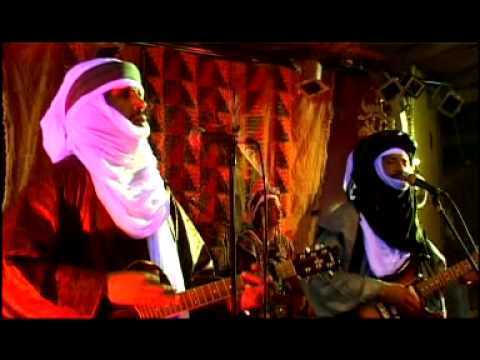
(This is also my recommendation to check them out.)

September 28, 2010
I wonder if Cormac McCarthy ever read this book...the sparse prose made me occasionally think of his writing, especially of The Road.
I read this as my sister and I tend my mother on her deathbed, and last night after I finished the last chapter I had a terrible nightmare about a serial killer who chased me out of the company of my friend Luke. Which probably means nothing except too much stress at the moment. Luke is easygoing and would just stick out his foot and trip a serial killer. We will never be in love; we are better than that.
This book will stay with me a long time but I don't think I'll read it again. The scariest parts are mercifully short and withheld until the end which roars defiantly with the vehemence of all good endings: true love for true love's sake.
But too late and for nothing.
I read this as my sister and I tend my mother on her deathbed, and last night after I finished the last chapter I had a terrible nightmare about a serial killer who chased me out of the company of my friend Luke. Which probably means nothing except too much stress at the moment. Luke is easygoing and would just stick out his foot and trip a serial killer. We will never be in love; we are better than that.
This book will stay with me a long time but I don't think I'll read it again. The scariest parts are mercifully short and withheld until the end which roars defiantly with the vehemence of all good endings: true love for true love's sake.
But too late and for nothing.

Read
December 8, 2015Disclaimer: ARC via Netgalley.
Not really my cup of tea.
However.
This would be an excellent book to use in a class. Shepherd takes a young boy and shows the reader the effects of totalitarian government on his life and the live of those around him. It should spark discussion among young readers.
Not really my cup of tea.
However.
This would be an excellent book to use in a class. Shepherd takes a young boy and shows the reader the effects of totalitarian government on his life and the live of those around him. It should spark discussion among young readers.

February 3, 2025
Very interesting read, considering the times at present.

December 1, 2015
For the most part, the dystopian classics like 1984 focus on adults. Childhood in a dystopian-esque environment isn't really touched on, but Jim Shepard's Lights Out In The Reptile House puts young teenagers front and center. Set in an unnamed country, it's less of an active dystopia than a totalitarian state, but there are definite parallels with the world of 1984. There's a single Party that controls everything, there's a love story, there are sudden disappearances, there's a close relationship that springs up between the protagonist and a Party official. The protagonist in question is Karel Roeder, a shy loner who's about 14 or 15 years old. His mother has long since been gone, so he's being raised by his perpetually unemployed father. He works at the local zoo, at the reptile house, and nurses a desperate crush on his neighbor and classmate, Lina.
Karel wants nothing more than to be left alone, outside of politics and the machinations of the real world, to work with lizards and long for Lina. But the world won't let him be: his father disappears, he's there when a neighbor is dragged away by the secret police, both his crush and his boss at the reptile house are involved in the resistance, and then suddenly a mysterious party official, Kehr, takes over Karel's home. From there, it's a battle for Karel's metaphorical soul between Kehr and the resistance forces, and a destructive fire at the zoo pushes Karel towards his fate.
As difficult as I imagine it would be to exist as an adult in a highly-surveilled police state, I don't know that I'd ever thought of what it might be like to grow up like that. To know no other normal but the one where your neighbors or even your own family members vanish and don't return, where you're afraid almost in equal measure to inform or to not inform, knowing that if it were to be known that you didn't inform when you should have, there could be consequences for you and your loved ones. It's not hard to imagine that it would create teenagers like Karel, who keep their heads down and try to escape unnoticed. But it's also understandable that it would create teenagers like Lina, whose natural rebellious instinct and high spirits draw her inexorably towards the resistance movement. And who is right? Is it better to keep to yourself and try to stay safe or to fight back, potentially risking the lives of your loved ones as well as your own?
Despite the interesting thoughts and questions the book raises, though, it ultimately just wasn't anything special in and of itself. The prose and characterizations were adequate but nothing more than that, and the plot moved in fits and starts, with long periods of time waiting for something to happen, and then it would pick up, and then slow back down. This may apply especially for the squeamish, like me, but the graphic depiction of torture, especially at the end, was just stomach-turning. I didn't particularly enjoy the experience of reading it, and although I think it's supposed to be pitched to the YA market, I wouldn't recommend it to a teenager, either. Just not worth the time. Read 1984 instead.
Karel wants nothing more than to be left alone, outside of politics and the machinations of the real world, to work with lizards and long for Lina. But the world won't let him be: his father disappears, he's there when a neighbor is dragged away by the secret police, both his crush and his boss at the reptile house are involved in the resistance, and then suddenly a mysterious party official, Kehr, takes over Karel's home. From there, it's a battle for Karel's metaphorical soul between Kehr and the resistance forces, and a destructive fire at the zoo pushes Karel towards his fate.
As difficult as I imagine it would be to exist as an adult in a highly-surveilled police state, I don't know that I'd ever thought of what it might be like to grow up like that. To know no other normal but the one where your neighbors or even your own family members vanish and don't return, where you're afraid almost in equal measure to inform or to not inform, knowing that if it were to be known that you didn't inform when you should have, there could be consequences for you and your loved ones. It's not hard to imagine that it would create teenagers like Karel, who keep their heads down and try to escape unnoticed. But it's also understandable that it would create teenagers like Lina, whose natural rebellious instinct and high spirits draw her inexorably towards the resistance movement. And who is right? Is it better to keep to yourself and try to stay safe or to fight back, potentially risking the lives of your loved ones as well as your own?
Despite the interesting thoughts and questions the book raises, though, it ultimately just wasn't anything special in and of itself. The prose and characterizations were adequate but nothing more than that, and the plot moved in fits and starts, with long periods of time waiting for something to happen, and then it would pick up, and then slow back down. This may apply especially for the squeamish, like me, but the graphic depiction of torture, especially at the end, was just stomach-turning. I didn't particularly enjoy the experience of reading it, and although I think it's supposed to be pitched to the YA market, I wouldn't recommend it to a teenager, either. Just not worth the time. Read 1984 instead.

April 28, 2016
We often hear that no matter how good a story may be, it must be well-written to provide an enjoyable reading experience. Having put away many books for this very reason, I tend to agree with this idea. Lights Out in the Reptile House is an example of how the opposite is true, as well.
Jim Shepard's writing is technically flawless. All the elements of literary fiction writing are present. His descriptions are vivid and effective. There are unexpected linguistic twists and turns, surprising aphorisms, and beautiful, paradoxical metaphors that will make you remember why you fell in love with reading to begin with.
So, why the low star rating?
I did not connect emotionally with the characters at all. Karel was a big of an enigma to me, even though we spent the entire book hovering around his head. I didn't understand why he was so enamored with Leda, who was mean to him so often. I often forgot he was fifteen, because he acted (and was treated by most of the other characters) as if he were seven or eight. The rare sexual thought passing through his mind shocked me into remembering he was an adolescent, but other than that, he thought and behaved in a rather childish way. Had there been a reason for why this was, I would have been fine with that--after all, I don't think all teenage protagonists have to be the bravest or the smartest to be interesting--but it just did not make sense.
I could have forgiven vague, unemotional characters had they been placed in a more concrete setting, but I was denied that as well. I understand why Shepard chose to leave so many details about where they are, who the Praetor really is and how he came to power, what The Party really aims to accomplish. We begin the book watching a meeting of the League of Young Mothers, but we never understand what this group is or why it is "semicompulsory." This lack of information reflects the chaos of those living under Party rule. It manages to transfer confusion and uncertainty to the reader, so the method is obviously effective, but the book ends leaving so many questions unanswered.
Not to mention, the story finishes with absolutely no hope. In the interests of remaining spoiler-free, that's all I'll say. George Orwell does the same thing in 1984, one of my favorite books, but he does it in such a way that doesn't make me feel like I've wasted hours of my life.
As much as I wanted this book to satisfy me, it just couldn't quite get there. However, I'm on the fence when it comes to literary fiction. It's always a toss-up whether I will like it or not. If you're a more devoted fan of the genre, you will most likely enjoy this book. If you're looking for another 1984 or Brave New World, though, you won't find it here. I'd suggest Breeder by K. B. Hoyle if you're looking for a contemporary dystopian novel geared more toward adults than young teens.
I received a complimentary copy from the publisher via Netgalley in exchange for an honest review.
Jim Shepard's writing is technically flawless. All the elements of literary fiction writing are present. His descriptions are vivid and effective. There are unexpected linguistic twists and turns, surprising aphorisms, and beautiful, paradoxical metaphors that will make you remember why you fell in love with reading to begin with.
So, why the low star rating?
I did not connect emotionally with the characters at all. Karel was a big of an enigma to me, even though we spent the entire book hovering around his head. I didn't understand why he was so enamored with Leda, who was mean to him so often. I often forgot he was fifteen, because he acted (and was treated by most of the other characters) as if he were seven or eight. The rare sexual thought passing through his mind shocked me into remembering he was an adolescent, but other than that, he thought and behaved in a rather childish way. Had there been a reason for why this was, I would have been fine with that--after all, I don't think all teenage protagonists have to be the bravest or the smartest to be interesting--but it just did not make sense.
I could have forgiven vague, unemotional characters had they been placed in a more concrete setting, but I was denied that as well. I understand why Shepard chose to leave so many details about where they are, who the Praetor really is and how he came to power, what The Party really aims to accomplish. We begin the book watching a meeting of the League of Young Mothers, but we never understand what this group is or why it is "semicompulsory." This lack of information reflects the chaos of those living under Party rule. It manages to transfer confusion and uncertainty to the reader, so the method is obviously effective, but the book ends leaving so many questions unanswered.
Not to mention, the story finishes with absolutely no hope. In the interests of remaining spoiler-free, that's all I'll say. George Orwell does the same thing in 1984, one of my favorite books, but he does it in such a way that doesn't make me feel like I've wasted hours of my life.
As much as I wanted this book to satisfy me, it just couldn't quite get there. However, I'm on the fence when it comes to literary fiction. It's always a toss-up whether I will like it or not. If you're a more devoted fan of the genre, you will most likely enjoy this book. If you're looking for another 1984 or Brave New World, though, you won't find it here. I'd suggest Breeder by K. B. Hoyle if you're looking for a contemporary dystopian novel geared more toward adults than young teens.
I received a complimentary copy from the publisher via Netgalley in exchange for an honest review.

December 15, 2015
Lights Out in the Reptile House by Jim Shepard is a highly recommended coming-of-age novel set in an unnamed totalitarian state.
Karel Roeder is a fifteen year old who works part time at the reptile house in the local zoo and has an unspoken love for his neighbor, Leda. Karel main interest is in reptiles and the herpetologist-in-training is learning what he can from Albert, the older man who is in charge of the reptile house at the zoo. Karel has no interest in politics, but circumstances are forcing him to take note of what is going on in his country.
The unnamed country is a totalitarian regime that combines elements of Chile under its military regime, South Africa under apartheid, and Italy under fascism. Karel notes that people are being watched, turned in by others, taken in for questioning and disappearing. He knows that a specific ethnic group is being targeted and fighting back. Nevertheless, he tries to remain apolitical; however, Leda is becoming more and more political, as is Albert.
When Karel's father disappears, the zoo is taken over by political forces, and Leda becomes more and more agitated, Karel is slowly being pulled into taking a firm stand. When Albert rejects his student and Kehr, a special assistant of the civil guard, moves into Karel's house, the real tension and fight for Karel's mind begins. Originally published in 1990, this is the Open Road Media digital re-release and is as pertinent today as it was then.
Setting this novel in an unnamed country works both for and against the narrative. It does allow Shepard to take elements from many regimes and combine them to make a picture of what growing up in a totalitarian police state might look like to a teen. He truly captures man's inhumanity to man. As I was reading, though, I kept trying to place the story in a country, or a part of the world. It is sad that the narrative can fit so many different regimes, but, for me, I kept wanting to know the place, rather than a general unnamed country.
The novel does contain scenes of torture and destruction that might bother some readers.
Disclosure: My Kindle edition was courtesy of Open Road Media for review purposes.
http://shetreadssoftly.blogspot.com/2...
Karel Roeder is a fifteen year old who works part time at the reptile house in the local zoo and has an unspoken love for his neighbor, Leda. Karel main interest is in reptiles and the herpetologist-in-training is learning what he can from Albert, the older man who is in charge of the reptile house at the zoo. Karel has no interest in politics, but circumstances are forcing him to take note of what is going on in his country.
The unnamed country is a totalitarian regime that combines elements of Chile under its military regime, South Africa under apartheid, and Italy under fascism. Karel notes that people are being watched, turned in by others, taken in for questioning and disappearing. He knows that a specific ethnic group is being targeted and fighting back. Nevertheless, he tries to remain apolitical; however, Leda is becoming more and more political, as is Albert.
When Karel's father disappears, the zoo is taken over by political forces, and Leda becomes more and more agitated, Karel is slowly being pulled into taking a firm stand. When Albert rejects his student and Kehr, a special assistant of the civil guard, moves into Karel's house, the real tension and fight for Karel's mind begins. Originally published in 1990, this is the Open Road Media digital re-release and is as pertinent today as it was then.
Setting this novel in an unnamed country works both for and against the narrative. It does allow Shepard to take elements from many regimes and combine them to make a picture of what growing up in a totalitarian police state might look like to a teen. He truly captures man's inhumanity to man. As I was reading, though, I kept trying to place the story in a country, or a part of the world. It is sad that the narrative can fit so many different regimes, but, for me, I kept wanting to know the place, rather than a general unnamed country.
The novel does contain scenes of torture and destruction that might bother some readers.
Disclosure: My Kindle edition was courtesy of Open Road Media for review purposes.
http://shetreadssoftly.blogspot.com/2...
August 20, 2008
Coetzee-esque, I'm told. As bleak as you can be, really, where an absent-minded apathy in a paranoid police state can yield utter emotional loss and excruciating suffering ad infinitum.

October 3, 2016
This is a scary and incredibly sad book. The teenaged protagonist has no one to buffer him when he becomes the victim of the police state. What would you do in his place?
Displaying 1 - 9 of 9 reviews