In the Hippias Major, Socrates and Hippias set out to find a definition for "beauty", but are destined to fail due to their inability to formulate an answer which encompasses the entire concept. The actual Greek term that is used in the dialogue is καλόν, which as an adjective often means fine or noble as well as beautiful. For this reason, translators such as Paul Woodruff typically translate the term (τὸ καλόν—the abstract noun of the adjective) as "the Fine" (things) instead of "Beauty."
Published with the assistance of a grant from the National Endowment for the Humanities. Paul Woodruff is Professor of Philosophy, University of Texas at Austin.
Plato (Greek: Πλάτων), born Aristocles (c. 427 – 348 BC), was an ancient Greek philosopher of the Classical period who is considered a foundational thinker in Western philosophy and an innovator of the written dialogue and dialectic forms. He raised problems for what became all the major areas of both theoretical philosophy and practical philosophy, and was the founder of the Platonic Academy, a philosophical school in Athens where Plato taught the doctrines that would later become known as Platonism. Plato's most famous contribution is the theory of forms (or ideas), which has been interpreted as advancing a solution to what is now known as the problem of universals. He was decisively influenced by the pre-Socratic thinkers Pythagoras, Heraclitus, and Parmenides, although much of what is known about them is derived from Plato himself. Along with his teacher Socrates, and Aristotle, his student, Plato is a central figure in the history of philosophy. Plato's entire body of work is believed to have survived intact for over 2,400 years—unlike that of nearly all of his contemporaries. Although their popularity has fluctuated, they have consistently been read and studied through the ages. Through Neoplatonism, he also greatly influenced both Christian and Islamic philosophy. In modern times, Alfred North Whitehead famously said: "the safest general characterization of the European philosophical tradition is that it consists of a series of footnotes to Plato."
In Hippias Minor, Platonic reasoning is perfected by the Greek philosopher Plato's thesis's chain of implacable logic. It is a straightforward dialogue, tackling a few unimportant points, and a short Platonic dialogue, but it is the dialogue of a master, where the reasoning is flawless, unstoppable logic. Plato here brings to perfection the kind of philosophical dialogue that created him. Awesome.
Sokrat je uporni arhitrol. Izburgijao bi on, da nam je kojim slučajem savremenik, uvođenje dijalektike i na internetske agore. Majeutika bi doživela digitalni procvat, koji se samo može dogoditi u susretu dva logosa (dijalog kao (najmanje) dva logosa). Opasnost svakog mišljenja je njegova učaurenost – nekomunikativna samozačaranost koja samo u sebi cirkuliše. Buka slaganja i sleganja ramenima. Najhermetičnija je banalnost i ravnodušnost. A još je gore kad se umnožavaju senzacije šokova što nikakve veze sa temeljnom uznemirenošću nemaju. Mi telad – svet šarada šarenih vrata.
Dijalog o Hipiji može bez ikakvih problema da se čita i na scenu postavi kao komedija. Što mu je sagovornik nadobudniji, to je Sokrat superiorniji u vređanju (Oh, Hipijo, vodenički kamenu bez uha i mozga!) A Hipija je jedan posebno umišljen druškan, istina, ne bez ikakve misaone aparature, ali krajnje ovozemaljski čovek. Hvalisav, talentovan za politiku i osetljiv da namiriše ono što je lukrativno.
Sokrat u svom razmišljajnom hodu sve skenira, dovodeći Hipiju do duvara, pogotovo kad je o estetici reč. A iz pitanja o prirodi lepog šikne gejzir različitih problema.
Reč je o sledećem – može li se, pita se Sokrat, izdvojiti ne ono što je LEPO već ono što je LEPOTA. Razni predmeti i pojave mogu biti doživljeni kao lepi, ali šta se nalazi iza tog doživljaja? Sokrat odbacuje čulni doživljaj jer su čula varljiva i zavise od individue i konteksta. Takođe, iz gotovo istih razloga, lepota se ne može vezati za prijatnost. Ono što je prijatno u velikoj meri je individualno, a takođe podrazumeva diktat određenih čula nauštrb drugih – tako se Sokrat pita zašto bi vid bio merodavniji za ocenu prijatnosti od, na primer, mirisa ili dodira. Govor o prijatnosti nikad nema suštinske veze sa lepotom jer je sužavajuć po ono što se lepim naziva – ne predstavlja ga na celovit način.
Tragajući o onome što bi bio ideal lepote, Sokrat je došao do probitačnosti. Lepota, dakle, proističe iz dobrog, a dobro je vezano za valjanost u upotrebi nekog predmeta! Dato je slikovito poređenje između zlatne kutlače i kutlače od smokvinog drveta – za Sokrata, zlatna kutlača je ružna jer je nekorisna, dok je ova druga u skladu sa onim što kutlača treba da bude. Odnosno, lepo nije ono što se ČINI lepim (dakle, lepo na način laskanju čulima), već ono što teži da BUDE lepo. Hipija, snob kakav jeste, istakao je kako neki svakidašnji predmeti poput lonaca teško da mogu biti razmatrani u kategoriji lepog, a Sokrat je odlučno replicirao kako je lep onaj lonac koji služi svojoj svrsi. Do umeća lončara je, ne do oka lepe posmatračke duše.
Govore, naravno, Hipija i Sokrat o temama lepog i korisnog i u političkom kontekstu i vrlo je zanimljivo da bi u tom najlepše u politici biti moćan. Ukoliko je lepo uzrok dobra, treba razmisliti o uzroku uzroka i na pravi način ga primeniti na fizičku, društvenu i svaku drugu stvarnost.
Dok kalokagatija igra dijalektički limbo-dens sa mogućnostima svojih značenjima, Hipija se sve više nervira (neprijatelj vrline!), a Sokrat nakon određenja da je lepota „probitačno uživanje” dolazi do besprekornih završnih reči koje sve mogu opet da preispitaju: „Sve lepo je teško.”
Zanimljivo je što mi danas, pre svega zbog akademskog okruženja, Platonove dijaloge čitamo kao sistem ideja koji treba da nam donese ili neku mudrost ili pripremljeno ispitno pitanje. A još je Pjer Ado primetio kako o antiku iznova ogrešujemo time što je smatramo homogenom, pa čak i unisonom. Naše mišljenje o antici uglavnom ne proizlazi iz same antike, već iz istorije tumačenja antike. Ali zaista je poseban osećaj kada se taj međustepenik makar na tren izgubi i kad uronimo u neki drevni tekst kao da prisluškujemo raspravu na pijaci. A ta živost Sokratovih ideja-vidri čini mene još življim bićem nego što jesam. To je verovatno lepo, a dobro je gotovo izvesno. Teško nije.
Trenutno se u završnom, master radu, bavim "problemom umetničkog stvaranja" i drago mi je što sam "Hipiju Većeg" preskakao sve ove godine. Nisam bio ni svestan koliko je široka oblast kojom se bavim, ali odgovoriti na potrebe za definicijom umetnosti možda bismo mogli na tragu Vajcove teorije ( a opet na tragu Vitgenštajna ) da je "umetnost otvoren pojam". Naravno, ni to nije sasvim jasno, niti ona može da bude sasvim otvoren pojam, ali je to definicija kojoj sam, možda, najviše naklonjen.
Što se ovog Platonovog dijaloga tiče, mislim da svi, što smo stariji, na Sokrata gledamo drugačije. Ne bih rekao da Platon ovde dolazi do kakvog nužnog rešenja, već pokazuje mogućnosti, kao i uvek. Ima jedna knjiga Miloša Todorovića o Kjerkegorovoj filozofiji, zove se "Misao i strast", i tu jedna rečenica koja, za mene lično, predstavlja srž Sokratovog delovanja:" Sokrat je svaku istinu dovodio u pitanje ne zato što je verovao da postoji jedna istina, već jer je verovao da nijedna ne postoji." Oprostite mi malu parafrazu. :) Svakako dobar početak za razmišljanje o lepom i lepoti.
With all of the discussions that Socrates seems to have with people, sooner or later he is going to come around to having a discussion about beauty. Well, this is basically what Hippias Major is all about. The reason it is called Hippias Major is because there are two dialogues in which Socrates has a discussion with Hippias (the other one is called, not surprisingly, Hippias Minor). The reason they refer to it at Hippias Major is, I suspect, because it happens to be the longer one.
I have to admit that I was a little disappointed by the translation that I read because they translate the Greek word Kalon as fineness as opposed to beauty, and it took me a bit to work out that the whole dialogue is about what beauty actually happens to be. I guess the reason that it irked me a bit is because calling something fine, and calling something beautiful, is sort of an understatement. In a way a fine thing is, well, just okay, but a beautiful thing, well, that goes a lot further. Then again, that probably has a lot to do with the fact that English has borrowed words from both German and French that have the same meaning, and the French words tend to be used to describe something much better than the German word (House/Haus vs Mansion/Maison is a great example).
The thing with beauty is that it tends to be a lot more subjective than, say, bravery. For instance, it goes without saying that these people are brave:
particularly since they do this voluntarily (though of course many of them live in areas that are prone to bushfires, so there does tend to be some necessity as well).
However, there is a huge debate as to whether these are beautiful:
In my mind, they symbolise a clean, green future, whereas others simply consider them an eyesore that is destroying the natural beauty of the region where they are located (ignoring the fact that many of them happen to be built on farms, where the natural beauty has already been destroyed). In fact, I remember a time where there was a huge protest movement in Australia about the logging of old growth forests, and there are many people out there that consider these old growth forests to be a thing of natural beauty, however one politician went on a tour of one of these forests and when he was pointed out a particularly old tree his respose was basically ‘yes, it’s a tree’.
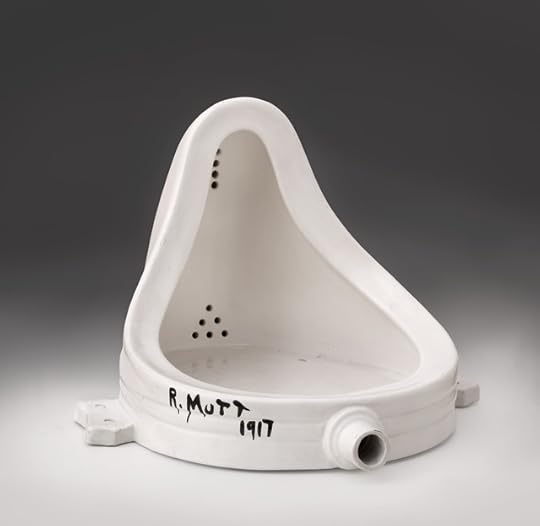
I guess beauty also has a lot of context to it as well. For instance, there are an awful lot of paintings (and other works of art) in an awful lot of art galleries that people consider to be an absolute waste of space. Take this one for instance:
and this is only one of many that I could refer to. Anyway, understanding the meaning and the background to this work of art does a lot to emphase it as a piece of beauty (and being a work of art usually indicates that people consider it to be beautiful). Yet, in a way, what Duchamp did was that he presented it and stated that it was a work of art (ie, it was beautiful), and in turn it was then accepted by the musuem, and then by the general populace, as a work of art – namely that it was beautiful.
However, Socrates does discuss what makes something beautiful. If we add gold and silver to an otherwise plain vase, does that make it beautiful? Well, one could argue that it does. In the same way, by giving an old, run down building, a coat of paint, then one could easily also argue that they are now making it beautiful. Yet, in another way, something old can also be considered beautiful, particularly if the age of the object has indicted that it was built so well that it stood the test of time.
Let us consider people though, and I feel that this is important because it ties into The Symposium, namely because the major theme of that work is basically ‘what is love’, and one of the ideas that float around is that love is the desire to possess that which is beautiful. This is where the objectivity really comes into play because not only are people all unique, each person’s idea of what is beautiful is also unique. Some (in fact a lot) consider physical beauty to be an important factor, but the problem is that physical beauty changes quite a lot. There are also characteristics that appeal to one person that does not really appeal to another. Then there are other aspects beyond that which is physical, when we move into the mental, and even intellectual, space.
Which is also interesting because we can consider a work of literature beautiful, and I’m sure I could list countless numbers of works that many of us will consider to be the case. Yet a work of literature is not a physical entity, but rather a concept. In fact, I remember sitting in a lecture where there lecturer was describing a computer program as being a thing of beauty (or at least a part of a computer program).
So, this is definitely one of those works that I could quite easily talk about for much, much longer, however I feel that I will simply leave it at that. Though, once again, what we see is that Plato isn’t really giving us an answer, but rather giving us some ideas to think about.
Num diálogo com o sofista Hípias, a personagem Sócrates formula a seguinte pergunta primária: o que é o Belo? Como normalmente sucede neste modelo de diálogo, o interlocutor de Sócrates não compreende bem o alcance da pergunta (e não lhe sabe dar resposta), pelo que várias tentativas definicionais se vão sucedendo e sendo impiedosamente refutadas. Desde aquelas que confundem o conceito com o exemplo, às que procuram equivalências entre conceitos confundindo o direccionamento das relações causais que entre ambos se estabelecem, àqueloutras que não estão dotadas de suficiente universalidade, para terminar em aporia. Porque aquilo que Sócrates busca é a identificação do que é o Belo em si, aquela propriedade ou característica que existe por igual em todas as coisas que são belas e pela qual elas são belas. A ironia socrática manifesta-se neste diálogo de forma particularmente acutilante e a única conclusão a que se chega é a de que, afinal, o belo é difícil! Esta edição – há muito esgotada, mas retomada pelas Edições 70 – conta com a tradução directa do grego por uma comprovada especialista, que escreve igualmente uma desenvolvida e informativa introdução e que elabora profusas notas de grande mais valia filosófica mas também filológica.
«إن ما هو جميلٌ صعب» وكذلك محاولة تكوين فكرة ش��ملة عمّا أراد سقراط قوله، عدا نقض أقوال هيبياس، التي بدت لي، باستثناء خلطه بين الجمال بذاته والجميل، منطقية إلى حد ما. على الرغم من ماديتها.
Para além de um diálogo sobre o belo, "Hípias Maior" é também um estudo sobre o porquê de um conceito não poder ser definido por exemplos ou examplares (instâncias particulares). A distinção entre as perguntas "o que é belo?” [ti esti kalon] e “o que é o belo” [ti esti to kalon] é o mote deste diálogo. Assim como consultei na literatura secundária (nas notas da tradução do Lucas Angioni e no mais recente livro do Vasilis Politis), há um problema no uso do verbo 'ser' nos argumentos finais do diálogo. Mais precisamente, uma confusão entre os usos predicativo e de identidade. Mas, claro, nada que prejudique a alegria que é ler um diálogo de Platão.
Som ofta är, kan jag inte annat än att hålla med Sokrates motståndare. I detta fall försöker man, via omvägar, definiera det vackra. Hippias, Sokrates motståndare, lyckas bara delvis. Han försöker påvisa att det ändamålsenliga och det vackra är samma sak, vilket skulle innebära att det vackra är en kategori egenskaper, eller ett förhållande mellan sak och dess funktion, snarare än en egenskap i sig. Att det är ett attribut helt enkelt.
Sokrates vägrar acceptera detta, i relation till något slags objektiv ord-verklighet, en aning av Platons idélära. Sokrates lyckas inte så bra.
Jag rekommenderar den till nördar på ämnet, och kommer återvända till den vid tillfälle.
"Pues, ¿cómo sabrás si un razonamiento u otra cosa cualquiera está o no bellamente compuesta, ignorante de lo bello? Y todavía crees que en tal estado te es mejor vivir que morir. Difícil cosa es lo bello"
Em "Hípias Maior", Sócrates e seu único interlocutor, Hípias, se colocam na busca de uma definição satisfatória do Belo.
Mais do que em outros diálogos, contudo, neste vemos um Sócrates além do irônico, beirando o sarcasmo e a impaciência, quando defrontado com um sofista da pior espécie, o que acha que a sabedoria tanto mais vale quanto mais ouro se paga por ela.
Usando o método de propor um terceiro personagem ausente para, através dele, castigar as proposições francamente estúpidas de Hípias, Sócrates vai se aproximando do conceito do Belo sem, contudo, atingi-lo. Mas a parte mais importante desse diálogo, o qual de resto não consegue alcançar seu objetivo de conceituar o belo, é a profissão de fé socrática, da busca da verdade e livre assunção das exigências morais dessa busca ante a própria consciência e seu contraste duro com a presunção dos sofistas, representados por Hípias.
Socrates, as always, questions someone to arrive at the meaning of a concept, which in this case is The Fine/Beauty. However, in this dialogue, Socrates creates a fictional character in order to present his arguments in a non-confrontational manner to the victim of his questioning. The resulting dialogue, which I really liked, felt like a sitcom script.
"Hippias: Heracles! What kind of man is this! Won't you tell me who he is? Socrates: You wouldn't know him if I told you the name. H: But I know right now he's an ignoramus. S: Oh, he's a real plague, Hippias."
Super funny dialogue. Socrates has lost it and his evil inner self who is this random man in the dialogue who is not present but speaks through him, who beats him (legally) and yells at him for what he says is a wild analogy to make his argument.
El diálogo "Hipias Mayor" de Platón me dejó pensando mucho sobre lo que significa realmente la belleza y cómo puede ser algo mucho más profundo de lo que solemos imaginar. Cuando Sócrates e Hipias (sofista, incluso Sócrates critica a los sofistas porque se quedan en lo superficial solamente para hablar retóricamente y que la gente les pague por conocimiento basura que suena bonito) debaten sobre qué es lo bello, queda claro que no es solo una cuestión de apariencia o algo bonito que nos gusta ver. Hay algo más en juego: una búsqueda de lo que hace que algo sea verdaderamente valioso y que toque nuestras vidas de una manera más profunda y duradera.
Al final, después de analizar, llegué a una definición de la belleza que dice que no se trata solo de lo que es agradable a la vista o de lo que produce placer. La belleza verdadera es algo que tiene el poder de manifestar el bien y crear armonía, tanto en el aspecto moral como en el estético. Esto significa que la belleza no solo está en lo que miramos, sino también en cómo actuamos, cómo tratamos a los demás y cómo contribuimos al mundo que nos rodea. Esto fue lo que pude definir con mis palabras, ya que en el diálogo queda todo muy ambiguo: "Aquello que, por su naturaleza intrínseca, tiene la capacidad de manifestar el bien y producir armonía, tanto en el sentido moral como estético, y que posee una cualidad inherente que trasciende la mera apariencia, utilidad o placer sensorial."
Este concepto me impactó porque me hizo darme cuenta de que la belleza no es solo cuestión de lo físico o de lo que es "bonito" según los estándares superficiales. También puede ser la forma en que una persona actúa con bondad, en cómo busca el bien, en cómo sus palabras y sus acciones pueden hacer que otros se sientan mejor. Esto nos cambia la perspectiva: en lugar de enfocarnos tanto en lo externo, podríamos empezar a valorar más lo que una persona aporta al mundo, cómo trata a los demás, y cómo sus actos generan armonía o incluso inspiran a otros. Igualmente, fue inevitable pensar en que gracias a la ley natural, podemos realmente saber que hay una directriz en cuanto a las cosas buenas en nuestro universo, cosas universales, aplicables para todo mundo.
Pensar en la belleza de esta manera puede cambiar cómo vemos a las personas y a nosotros mismos. Nos recuerda que alguien puede ser hermoso no solo por su apariencia, sino por la manera en que su vida refleja valores como la bondad, la justicia o el amor. Y esto también se aplica a las cosas que hacemos y decimos; cada uno de nosotros tiene el poder de reflejar esa belleza a través de nuestras acciones diarias. Eso, en mi opinión, es mucho más profundo y duradero que cualquier belleza que dependa solo de cómo nos vemos.
El diálogo también me hizo darme cuenta de que no debemos aceptar definiciones superficiales o rápidas de lo que es importante. En un mundo donde a menudo se valora lo instantáneo, lo que parece bonito o lo que nos entretiene rápido, Platón nos invita a buscar más allá, a no conformarnos con lo que está en la superficie. Nos recuerda que la belleza real puede ser un camino hacia el bien y hacia conexiones que realmente importan.
Al final del día, esta reflexión sobre la belleza me lleva a querer ser mejor, a pensar en cómo mis acciones, mis palabras y mis decisiones pueden ser una expresión de algo bello, no solo por cómo se ven o se escuchan, sino por el impacto positivo que pueden tener. Saber que la belleza tiene que ver con el bien que generamos y la armonía que creamos en la vida de los demás nos da un propósito más valioso. No se trata solo de lo que agrada a los ojos, sino de cómo hacemos del mundo un lugar mejor y más armónico. Y creo que eso es algo que todos podemos buscar en nuestras vidas.
Sigo todavía en búsqueda de lo que es la estética, y si es que podemos tener una base objetiva de lo que puede ser estético para todo mundo en cuanto a algo bonito, pero hoy ya me queda clara la distinción, ya que la estética entonces vendría a ser parte de la belleza, y no serían el mismo concepto abstracto. Pronto la encontraré.
Diálogo corto y aporético en el que se vislumbra la futura teoría de las ideas para explicar qué es la belleza. Más adelante, en otros diálogos, Platón dirá que lo bello lo es en cuanto participa o se refleja en la idea de belleza. En el diálogo, Hipias queda encerrado en su propio argumentario por la habilidad e ironía socrática al atribuir belleza a los objetos sin dar con la idea de belleza universal y que, por lo tanto, hace a las cosas bellas.
Es un libro demasiado complicado y la conclusión que acaban teniendo me ha dejado igual que al principio. No puedes estar tantas páginas debatiendo sobre qué es lo bello y al final no llegar a ninguna puta conclusión, encima eran ideas muy enrevesadas y complicadas. No me ha gustado nada, y he entendido bastante poco.
Sócrates como el buscador de la verdad e Hipías como farsante y vanidoso. En este diálogo Platon busca ridiculizar al sofista, con Sócrates pidiéndole consejo entorno a la idea de la belleza, para luego humillarle y engrandecer sus teorías.
This entire review has been hidden because of spoilers.
Nunca me había reído en voz alta leyendo a Platón hasta cuando Sócrates le dice a Hipias que si respondiera a su interlocutor con lo que H le decía le perseguiría con un palo.
La parte sobre lo bello a diferencia de la apariencia de lo bello 🔥🔥🔥🔥🔥🔥🔥
Dialogul, despre care inca se discuta inca daca este autentic sau nu, trateaza tema frumosului. Chiar daca temele par a fi diferite in dialogurile lui Socrate, toate urmaresc acelasi lucru, atat luminarea partenerului de discutie, cat si mai mult, cea a lui Socrate.
La cat de inconfortabil este in dialoguri, nici nu este de mirare ca ii deranjeaza pe majoritatea sofistilor, care cred ca stiu totul sau pot convinge pe oricine de orice, ducand chiar si pana la moartea lui intr-un tarziu. El este insa preocupat de toate intrebarile pe care ar trebui sa si le puna orice om intr-o viata.
Ma port frumos, sunt bun, care este sensul vietii, de ce reactionez in anume fel, la astea ar trebui sa ne raspundem fiecare dintre noi. Din pacate, majoritatea oamenilor nu au timp sau cred ca nu au timp sa faca asta. In primul rand, trebuie sa existe o oarecare stabilitate financiara pentru a incepe sa filosofezi, iar mai apoi sa existe si dorinta de a filosofa. A filosofa inseamna in primul rand sa gandesti. Dar daca scopul principal este sa ai un televizor cu cati mai multi inchi, sau sa urmaresti ce dume a mai scos Viorica Pîrţ Dancila, atunci aceasta te va distrage de la aceasta sau macar te va intarzia.
Unul din citatele cu care am ramas este cel de mai jos:
“Tot astfel spunem şi despre trup că este frumos, aşa potrivit cum se arată pentru alergări şi lupte; animalele apoi, calul, cocoşul, prepeliţa, pe toate le numim frumoase; să nu mai vorbim de tot soiul de ustensile, care cu patru roţi sau nave, fie ele negustoreşti sau de război; în sfîrşit, toate instrumentele folosite în muzică şi în alte arte, ba chiar, dacă vrei, pînă şi obiceiurile şi legile — pe toate le numim frumoase, gîndindu-ne Ia unul şi acelaşi lucru, adică cercetîndu-le pe fiecare în parte potrivit naturii, alcătuirii şi stării în care se află. Iar despre ceea ce este folositor noi spunem că este frumos tocmai în măsura în care este folositor, servind unor scopuri anume şi în împrejurări anumite; şi urît, îi spunem acelui obiect care în toate aceste privinţe se dovedeşte a nu fi de folos.”
I didn’t actually read this particular version, but I read a version in a complete works of Plato. I have used this version just to log something on my Goodreads book list. I have read all 26 of Plato’s authentic works, however, I didn’t read them all in the complete works of Plato. I just used the complete works of Plato to fill in the remaining books I hadn’t read.