An Australian historian determined to find the truth, two young men searching for identity, a stolen inheritance, a wishing tree, a long-lost grandmother and an unlikely sweetheart come together in an original and audacious novel.
Set in Australia and Turkey, and spanning almost a hundred years, The Secret Son is a remarkable debut. At once joyous and haunting it is a moving meditation on love, honour and belonging. It is a story about the strength of women and what it means to be a good man.
As much as I very much enjoyed reading this book I found it very difficult to review as there was so much going on that it felt like many mini stories, each one with its own special qualities...this is not a criticism, as they all tended to flow nicely into one big cohesive picture.
This book speaks volumes about relationships, in all shapes and circumstances, from the deep and personal type, to the everyday interactions with complete strangers. It had the effect of making this reader ponder the deeper meanings of those big, and small, everyday interactions we have with people and how we manage them.
Some of the things I loved about this story: I love the relationship between James and his Mother and their special relationship with their Bees. That part of the story gave me much pause for thought, and even renewed my excitement about the possibility of one day keeping my own bees.
I loved the dialogues between the immigrants and their confusion with Australian speech and customs.
I very much loved the story behind the Wishing Tree and the idea of it, especially as a communal feature.
I loved the way it blended the cultures to find a common ground to build on, and I love the way it made me think about that.
I should probably give it five stars for giving me all of those lovely feelings...but.... I do think the overall structure was a little scattered and could have the effect of losing the reader's interest. However, this book has so much going for it that I would recommend it, bearing that in mind.
The Secret Son is the first novel by Australian author, Jenny Ackland. James Kelly never knew who his father was; when he finds out, he wonders if he can have inherited the badness that must have resided in this infamous man. Fascinated by old Ahmet’s tales, Cem Keloglu decides to visit the Turkish village that his parents and grandfather left 23 years earlier. Berna knows that the arrival of this young man in her village will cause upheavals in all their lives.
Is it pacifism or want of a backbone that sees James going where he is pushed or pulled by others, staying almost by default? Cem is a rather dissolute young man, often shallow, shiftless and selfish, whose attaining of maturity is finally mentioned almost as an afterthought. The purpose of Berna’s twenty-seven years of suffering with Ahmet defies logical explanation.
Many of the secondary characters, in particular Ibrahim the taxi driver, Harry the historian, Mustafa the village chief, Lame Adar, writer/retailer/father Edward Cole and even Alphonse the marmoset are endowed wisdom, charm and appeal that is lacking in the three main characters, with the result that it is difficult to care a great deal about their fates.
This novel has the bones of a great story, with some interesting themes: the secret son of Ned Kelly; a soldier left behind at Gallipoli; the dramas of an isolated Turkish mountain village. Unfortunately, in the fleshing out of these threads it just does not make the grade. It’s a good debut, but due to poor editing, not a great one.
The story often seems to ramble on and some episodes drag on to the tale’s detriment: if this is meant to help draw the characters, then it could have been done more efficiently. The irony of the title and source of the novel that spurs on Harry’s quest is delightful, but neither the significance of the bridge, nor the reason a certain skull is buried nearby, is ever really made clear. While the potential of this novel was not fully realised, Ackland will be an author to watch.
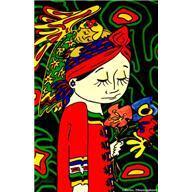
Two and a half stars. The premise of this book was promising and the cover is stunning. I was really looking forward to reading it and settled happily into the story with James. The passion James has for bees and his relationship with them was an interesting twist. The story moves from Beechworth Australia to Turkey. When war breaks out James sets off to war vowing to himself not to kill anyone. Despite opportunities he sticks to his vow. James is rescued from the abandoned trenches of Gallipoli by a young Turkish young man, whose life he had earlier spared. He takes the gravely injured James to his village. When the story moved to Cem, who despite family objections, goes to Turkey seeking his family’s village and past, I became less interested. This was largely due to the character. As the story jumped around from character to character, I struggled to maintain interest. Setting was conveyed well and Turkish life, but I never became emotionally invested in the characters. In the end for me, the story never realised its potential. I never really wanted to keep reading or, when I did pick it up, found myself skimming. While I am sure there will be others who will enjoy it, it wasn’t for me and ended up just an okay read. A lot could depend on the individual, their frame of mind at the time and also what other books they have read around it. However it will be interesting to see what this author does next and will be worth keeping an eye on.
You know that old discussion starter; if you could invite any five people from history to come to your place for dinner, who would you choose? At the moment, I'd choose this author. This is an intriguing book, and the symbolism contained within it has stayed with me so strongly that I want to be able to talk to this author and ask her what she intended and to then to discuss what it meant to me, her reader. Is what she intended the meaning I have ultimately taken away with me?
There are a lot of different levels this book can be read on; from a simple generational tale, to a novel with depth asking questions about where home is; about belonging; about family; about whether people can be redeemed.
I very much enjoyed this book. This one's a keeper.
Thank-you to Goodreads First Reads and the publisher for my copy to read and review.
I was born in Beechworth, with the sister above me called “Kelly” - named for the local bushranger. My father would point to the hills and rocks around us and ask with fervent mischief, “What do you think kids? Do you think Ned Kelly would have hidden up there?” We felt this mysterious Ned Kelly’s presence everywhere. So I was intrigued with the premise of Jenny Ackland’s debut novel, “The Secret Son” – that Ned Kelly had a secret child. That through this child, a son, Ned lived on.
Jenny Ackland has delivered an ambitious, rich narrative with “The Secret Son.” It bristles with detailed texture, vast scope, delightful plotting and a myriad of well-drawn characters. Ackland playfully riffs on the legacy of Ned Kelly, the experience of Gallipoli and migration, giving insight into the weight of legend, the pull of myths and the power of discovering the truth in order to find identity.
One main thread to the book is the story of James. Set in early 20th century, James is unwittingly the son of Ned Kelly, already the stuff of legend for his violent standoff with the police. James is the antithesis of the idea of Ned Kelly - a gentle passive man, slightly ambivalent, who has a particular knack for understanding bees. As a young man, James’ wandering takes him from Beechworth to Melbourne, armed with some gold nuggets, a photograph of his father and his favourite book “Cole’s Funny Picture Book”. In Melbourne James actually encounters the author and eccentric entrepreneur E.W. Cole and is taken under his wing, where he falls in love with Cole’s ambitious, independent, spirited daughter, Linda. Years of this unrequited love inspire James to join up in the First World War where he ends up in Gallipoli, (trying not to kill anyone) only to be left behind. A Turkish boy soldier finds him and takes back to his village home in the mountains.
James’ thread is one of continually suspending disbelief. Could he really grow up in Beechworth and not know who his father is? Would a pacifist really join up for fighting in WW1? Would he remain with Cole and Linda for so long in Melbourne? These are just the beginning of questions. James’ determination to be a good man leads him to some interesting impasses. His determination to reject the idea of Ned Kelly seeing him only as a murdering scoundrel is never really explored in any depth but touched on at important junctures. It’s like a pivot point for James’ life.
From James’ story we move to the contemporary story of Cem (pronounced Jem), son of Turkish migrants to Australia, returning to the village of his family. Ackland describes him thus: “At twenty-three, Cem was a kind of shrug.” Cem is an aimless young man, empty of a plan for the future, with very little attachment to any one and immersed in a self-indulgent unwillingness to take responsibility for anything or anyone or for himself.
There are parallels here about wandering and connecting to myths from the past and finding truth and identity within them. Cem’s story of returning to the village his parents and grandfather are from, a village he grew up listening to a mythologised version of from his grandfather, is a strong parallel to that of James, someone who has rejected the idea of connecting to legend. Both have a story of discovery and belonging and finding the truth of themselves within a myth that touches their lives. Of finding ones true identity beyond family inheritance.
On the plane to Turkey Cem co-incidentally sits next to Harry, a drunk middle-aged professor of history on a quest to find Ned Kelly’s son, who he believes ended up in Turkey after the war – something he bases research and on a novel he has found called “The Secret Son”. All this is very coincidental but through evocative imaginings of Turkey, the village and the people, Ackland manages to avoid what could have been twee and transform it into something more for more rich and meaningful.
The other point of view we get in the book is the first person narration of Berna, old woman of the village and the abandoned Grandmother of Cem. Her first person narrative is full of insight from the fish eye lens of the village and was, for me, the strongest voice in the novel. She is the key to all the threads and holds all the answers. The evocation of Turkey - the description of the place, food and sounds - is certainly where the book is at its most compelling. Cem’s discovery of the truth about his grandfather and the past is a strong story line and where Ackland displays her wonderful storytelling skills. It is told with clever twists and turns, well-paced changes of point of view and compelling mystery. There is so much in the story of the village, the story coming full circle with Cem’s arrival, that the plot of Kelly’s son, the mystery of his whereabouts and Harry’s quest to find him, almost isn’t needed.
However, what Ackland has cleverly done here is to launch her story into something beyond a family saga/coming of age story by referencing two of the strongest narratives in the Australian psyche, Ned Kelly and Gallipoli, using them as a foothold to jump higher and to do a bit of a double twist somersault with her novel and take it somewhere quite unexpected – all while lulling the reader into feeling surefooted with the level of detail in the descriptions. It is a way to connect Australia and Turkey in a very significant way and to give added weight to the story of migration and return. It shows Ackland’s skill as a writer but also displays a wonderful confidence in storytelling which felt delightful to indulge in.
The main male characters of Cem, Harry and James were weak and flaky but the story is weighted down with other strong well drawn characters and themes that it managed to feel solid and balanced. It is interesting to me that a female author has written a book with two (three if you include Harry) male characters who are weak, spineless and lost but the women in their lives are marvellous and strong – Berna, Linda, Halide, Jenna, and Harry’s absent wife Marlene. For Cem and James their weak traits are in a constant narrative dialogue with their ancestors and this interplay gives a great tension in what we expect from these characters and who they become.
For James, there are some audacious turns of events in his tale – the connection with E.W. Cole, the re-appearance of Linda in the story, some pivotal decisions, and the evolution of his later life - that felt completely over the top. However I delighted in the fact that the author seemed to recognise that the reader would feel this way – that instead of arrogantly railroading her narrative forward, she actually raises and addresses many of the questions. There is a part later in the book where some characters (and I won’t reveal who for the sake of no spoilers) are discussing memoir versus novel and a character says they need to novelise their story because as memoir it would be too over the top and unbelievable! This dialogue with the reader was incredibly refreshing. This assured approach by the writer actually made me overcome my misgivings.
In “The Secret Son” Ackland weaves a plush carpet of many threads. She combines heightened story telling – to the point of the absurd – with intimate details of characters life from Cem’s bowel movements to the waxing of a bride’s entire body. She draws from the well of myth and legend but maintains her story in the real stuff of lives and people. As Berna tells us “Death, truth, proof, life: it is all the same.” In the end, the reader may have questioned character actions, quibbled at plot turns, had difficulty suspending disbelief, but in spite of all this, the expert storytelling, warmth, engagement with the reader, evocative detail and a sense of courageous plotting wins out in the end. With each thread tied up and the fringe of the carpet plaited, I found it was incredibly accomplished debut.
A little while ago I had a minor whinge about my wish that debut authors would write about less predictable topics, about how it’s disappointing to see promising authors dredging up Relationships #101 and Dysfunctional Families #101 over and over again, as if there were nothing else to write about in Australia. So I was very pleased to come across debut author Jenny Ackland’s The Secret Son – because it’s ambitious in theme, scope and structure and very interesting to read as well.
There are two narratives, the turn-of-the-20th-century narrative of James, a farm boy of little initiative in Beechworth, and of Cem, a young man of Turkish descent who, despite his family’s misgivings, takes off from Australia for the village of his ancestors in the 1990s. These two narratives do intersect, but the novel takes its time to do that, creating a nice frisson of mystery to be resolved.
James’ narrative is well-written, with a slow gentle rhythm that matches this character’s ambivalent personality and also that peaceful lost era before the cataclysm of World War I. For James there is the puzzle of his vanished father’s identity and his mother’s reluctance to talk about it, exacerbated by the town’s diffidence towards them. When his mother dies and James finds out that the property for which he had plans is only rented, and that puts paid to his even more vague plans for a bride, he drifts into working at a newspaper printing room in Melbourne, and from there into enlistment. He ends up in the Dardanelles.
Tthis novel had me hooked at the beginning and took me on an incredible journey at first. Then when the story line changed to the present time the story lost some of the vigor that had been present at the beginning. When the author switched back into the past again I found those parts of the story more intriguing. However the final chapters where the author intertwined the past with the present was captivating and the resolution of the whole story line was superb. I would have given the book a five star rating if the sections set in the present was as captivating as those written about the "Secret Son".
This was so well written and full of stories! This is written from a few characters points of views but in third person which gives a very interesting insight into events and the characters themselves. Each of the characters has a story, an answer to find or some truths to reveal.
This story is based around the possibility of the bushranger Ned Kelly having a son that nobody knew about. This son was believed to have ended up in Turkey. An Australian Historian and a descendant of one of the families of this village both go looking for their own answers in the same place.
Jenny Ackland It seems lately, all the books I’m reading are connecting me to my past. THE SECRET SON by Australian author, Jenny Ackland took me back to my Melbournian roots, albeit in a different time period and with people I didn’t know.
Jenny Ackland has written a highly original novel, the kind that whips you through history as well as across the globe. The story itself is hard to classify – it’s a touch literary, a little bit quirky, brushes with history at Gallipoli, Australian legend, it immerses the reader Turkish village life yet also has contemporary characters. For such a short novel it has an epic feeling.
It begins in the mid 1880’s in the Victorian town of Beechworth, introducing the child James, about whom the mystery of the novel swirls. Bees are charmingly represented and become one of the recurring links through time for the characters.
In the recent timeline, we are introduced to Cem and his family. It is a real skill to drive a story forward through the point of view of an unlikeable character. Cem is young, aimless and lacking integrity and has a disturbing view of women. Against the wishes of his Grandfather he decides to return to the Turkish village where his family lived before coming to Australia.
The Turkish village appears in two time periods; both equally fascinating and immersive, complete with frustrations and injustices. Village life is the real star in this novel, as are the women we meet here. Unfolding the links and twists in history that bind the characters and reveal their secrets is intriguing, yet I found myself always wondering about James and what happened to him.
When his story was finally revealed it was both satisfying and insufficient to my thirst for his story. After investing in his pint sized, boyhood character, following him into the trenches of Gallipoli with Alfonse the marmoset, seeing him integrate and bring bees to the Turkish village, I wanted to know more. This is the sign of a really memorable character, the namesake of the book.
This novel has a bit of everything and after you finish you will be pondering the story in your subconscious. It would be a good book club read as it is the kind of book that begs for discussion.
It seemed to be a book made from a couple of good ideas but no single focus. An unlikely plot of the unknown son of Ned Kelly being left behind at Gallipoli and then being able to travel some 500km to a remote village without any trouble from the local military. Then Ned's skull gets flown to the village by the daughter of E.W. Cole. Pleeeease. Years later the grandson of a villager who has migrated to Australia goes back to the village to try to find himself. He and his grandfather are not nice people. This storyline had some moments but could not rescue the book for me.
From Beechworth to Turkey this book was a great read. Loved the characters of Jack and Cem and wanted to see where life took them. This is a book about love, honour and belonging and finding out who they were and whether the gossips in Beechworth were true, who really was Jack's father. Highly recommend this debut novel.
Mythical and mystical, this is an intense and intricate exploration of love, human nature, and two cultures whose histories are woven together like a Turkish rug.
James, a quiet, thoughtful beekeeper, grows up wondering who his father was and ends up fighting on the shores of Gallipoli. Years later, Cem returns to the village in Turkey that was once home to his parents and grandfather, trying to find himself, as an old woman prepares to speak the truth. These seemingly unconnected people are tied together by blood and secrets.
Layer upon layer of secrets are found in Jenny Ackland's The Secret Son. Perhaps the biggest secret for me was the question of whether this book was good – it was a question I pondered soon after beginning the book and hoped to have an answer for when I finished. I don't.
Ackland's settings are well-developed and striking in their own way, and the story she sketches out intriguing at least. I particularly liked the early chapters, detailing James's upbringing in Beechworth during the 1880s. But the one word I keep wanting to describe this book with is "muted". Every time I picked up the book, I felt I was skimming the surface. I believed there was a rich, vivid world underneath it, but I just couldn't see it.
The characters are certainly verging on the complex side of things, but, again, the impression I get is vague – once again, muted. I never felt as though I knew them. Their decisions felt unfathomable, their behaviour and motives impenetrable. It didn't help that Ackland's structure spans several decades, so that while we meet familiar faces, they feel utterly alien compared to where they were when we last met them, seventy or so years ago.
In fact, Ackland's structure works against her in another way. Jumping between characters, timelines and storylines to lead up to the climatic revelations felt alienating – just as I was beginning to be caught up in James's story, I'm introduced to Cem and just as I'm being swept away by Cem's story, I'm sent back to James then forwards to Berna then back to Cem and so on. Granted, Ackland is restricted by the need to hold back the secrets that these past narratives reveal and I did find these storylines alone engaging, but I felt like I couldn't get a firm grip on anyone's story because of I kept being whisked off into someone else's story.
The ending, for me, felt a bit – confused? Disjointed? I felt as though I was waiting for the storylines to converge in a major way, but they never quite made it there. Each character has their own satisfying conclusion, though.
A final note, this time focusing on the Ned Kelly angle this book takes (and the reason why I picked it up in the first place), I found that Ackland's presentation of the history to be thought-provoking and fits in well with the historical evidence. Ackland has clearly done her research and incorporated it within her story well. I admit to making the sobering realisation that most fiction about Ned Kelly is about him (or features him) having a secret lover and/or child, which is tiring, but The Secret Son at least, does something vastly different with that old trope.
During the early stages of reading The Secret Son, I noted that I couldn't actually decide whether it was good or wishy-washy. I still don't know, but I feel that The Secret Son intrigued me enough to want to read more of Ackland's work.
Melbourne-based author Jenny Ackland has tried something rather audacious in her debut novel, The Secret Son. Instead of following the autobiographical route that many first novelists do, she has leapt right in and tackled, albeit from left field, one of Australia’s most controversial legends, Ned Kelly. But, here’s the rub: it’s not exactly about Ned Kelly. It’s far more complex than that.
The secret son spans more than a century, from the 1880s to 1990 and beyond. It is set in both Turkey and Australia, and it weaves two stories. One concerns the 19th-century-born James who ends up living in Turkey, having gone to fight at Gallipoli in 1915, and the other tells of Cem, a 23-year-old Turkish-Australian man who is related to the village where James had lived and who travels there in 1990, ostensibly to learn about his heritage and identity.
I love reading an author who's interested in experimenting with form. This is a wonderful book - loved its quirky plot, the evocation of Turkey, and the fascinating characters. Looking forward to Jenny Ackland's next book!
The Secret Son draws a captivating link between Australia and Turkey through two soldiers who connect at Gallipoli during World War 1. James is an Australian who was orphaned not long before the war. Both soldiers are young and impassive soldiers and when the Australian is left behind, rather than being imprisoned the Australian is taken by the Turkish soldier to his village where he is welcomed and just stays. The author creates a second link when the grandson of a Turkish immigrant, travels to Turkey as part of his journey to discover himself, and arrives at the same village where the descendants of the Australian soldier still live. I liked the switch between the lives in Australia and the village in Turkey, the aspirations of the people in the village and what their immigrant relations realised in Australia. Nevertheless sometimes it was a bit hard to follow quickly when there was a time shift in the village as the characters are the same but 60 years on. The added mystery about James and his father – possibly the son of the bushranger, Ned Kelly - and the comparison between the search for identity of the two young men, James and Cem, on different time lines, more interesting. Also, the comparison between Ataturk and Kelly as revolutionaries when one was revered in Turkey but the other reviled or denied any credibility apart from that of a criminal is also an interesting philosophical idea. This is a very creative and readable first novel
I wasn't quite sure what to make of this debut novel. Its premise - that Ned Kelly had a son was intriguing but the fact that this son ended up being left behind in Turkey after the evacuation of Gallipoli seemed far fetched.
I was more interested in the connections between a young Turkish Australian, Cem, and dark secrets in the village from which his grandfather emigrated. Parts of the story are told by the old village woman, Berna. She knows the connections between herself and Cem when he arrives in the village and gradually the secrets are revealed. This dimension of the novel touches on the role of women and the violence that can be perpetrated against them.
This novel has a wide canvass and multiple themes - too many, I felt overall. The writing is sometimes excellent and at other times rather desultory. So, a bit of a mixed bag for me.
3 1/2 stars but unfortunately, have to give it 3 based on these ratings; it just wasn't quite up with my 4-star books. I really enjoyed parts of it (the story of James Kelly in particular) but struggled to stay engaged with other parts (mainly Cem early in the tale). Not a prude by any means, I found some of the sentences crude and totally unnecessary to the development of the character involved (Cem). In other books this wouldn't make me flinch but the fact this did, made it feel out of place and too contrived. All in all an interesting spin on Ned Kelly and what if he had had a son. Thank you to Good Reading magazine for this copy.
It was hard to figure out what to rate this book. I loved the premise - that Ned Kelly had a secret son who fought at Gallipoli and stayed behind in Turkey. There were some amazingly lyrical pieces of writing, but then that was jarred by rather crude dialogue that I didn't feel was necessary, and not very well rounded characters. My favourite character was the old Turkish woman, Berna; my least favourite, Cem. There were many times it took me a while to figure out which of the timelines I was reading, or whose POV I was in. The story was intriguing enough however to keep me reading until the end, and has lingered in my mind during the times I wasn't reading.
I was fooled by the cover, it didn't grab my attention as it should. But when the story started I couldn't stop. This book kept me up late at night wanting to know more. A great story of Cem, a twenty something returning to his grandfathers homeland to unlock the secrets of his ancestry. I would have love to see a family tree possibly on the inside blurb to give me a better idea of the extended family.
This was a wonderful read. Jenny Ackland tells a convoluted but interesting tale. Her characters are amazing and so diverse and believable. It is always the characters that carry the story and her collection of people in the book are riveting. The plot flows well although is spans about 100 years and jumps back and forth. It is always easy to follow.The scenes are great and she shows us part of the world that come to life through her descriptions. It is a great book.
Story waffles around, often unclear as to who's point of view it is from and what time period, with so many storey threads. Too many coincidental happenings to be believable.
I have just finished reading, The Secret Son By Jenny Ackland. I found it to be a disappointing read. It is quite boring at the beginning until eventually half way through the novel, the two separate stories of James and Cem, interconnect. James is supposedly the son of Ned Kelly but he does not know this, and is against violence. He is conscripted to Turkey in World War 1, and after the war settles there. Cem is also an Australian, but of two generations later. He visits Turkey to find out more about his family roots that begun in Turkey. There are pocket sized loose threads throughtout the story, but were mainly irrelevant. However, the characters Aunt Berna and E W Cole (Cole’s Funny Books), and his daughter Linda were the ones that interested me more.
It was hard to figure out what to rate this book. I loved the premise - that Ned Kelly had a secret son who fought at Gallipoli and stayed behind in Turkey. There were some amazingly lyrical pieces of writing, but then that was jarred by rather crude dialogue that I didn't feel was necessary, and not very well rounded characters. My favourite character was the old Turkish woman, Berna; my least favourite, Cem. There were many times it took me a while to figure out which of the timelines I was reading, or whose POV I was in. The story was intriguing enough however to keep me reading until the end, and has lingered in my mind during the times I wasn't reading.
Ackland's debut novel starts with the premise that Ned Kelly may have had a son - the "secret son" of the title. After his mother dies, James Kelly, like many young men at the time heads off to Gallipoli where he is eventually wounded and rescued by a Turkish boy who brings James back to his village. James remains there, marrying one of the local woman.
In another time-line, Cem (pronounced Jem) a Turkish Australian decides to journey to the ancestral village of this father. It just happens to be the same village. There are many characters and convoluted plotlines and although intriguing at first, it had a bit of a "so what" factor by the end.
I loved the premise, and enjoyed it very much. In the latter stages I found it quite hard going keeping relationships in my head (ended up drawing a family tree & still not sure I have it right!). The switchibg from third to first peraon narrative was also abrupt and I think unnecessary. Great plot though. James was the best character.
The basis of this book was a really original idea and I enjoyed the Turkish/Australian crossover, the link with WWI and the two timeframes. I really did not understand why the author felt the need to include the Ned Kelly information as it didn't add anything to my appreciation of the novel. I liked the character of Berna and felt the book could have had more of her.
A story set across a century from country Victoria to a small village in Turkey James serves at Gallipoli and is left behind in the troop evacuation He is rescued by a Turkish soldier and spends the rest of his life in Turkey Many stories within the novel tend to be confusing but perhaps held together by the historian trying to prove that James is the son of Ned Kelly Perhaps 2.5 stars
This book had many situations that jarred with me, although they did not jar with other members of my bookclub. A story spanning Australia and Turkey, and not necessarily showing either well.