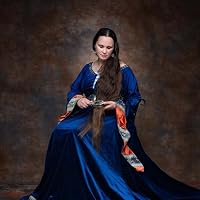
Maids, Wives, Widows is a lively exploration of the everyday lives of women in early modern England, from 1540-1740. The book uncovers details of how women filled their days, what they liked to eat and drink, what jobs they held, and how they raised their children. With chapters devoted to beauty regimes, fashion, and literature, the book also examines the cultural as well as the domestic aspect of early modern women's lives. Further, the book answers questions such as how women understood and dealt with their monthly periods and what it was like to give birth in a time before modern obstetric care was available. The book also highlights key moments in women's history such as the publication in 1671, of the first midwifery guide by an English woman, Jane Sharp. The turmoil caused by the Civil Wars of the 1640s gave rise to a number of religious sects in which women participated to a surprising extent and some of their stories are included in this book. Also scrutinised are cases of notorious criminals such as murderer Sarah Malcolm and confidence trickster Mary Toft who pretended to give birth to rabbits. Overall the book describes the experiences of women over a two hundred year period noting the changes and continuities of daily life during this fascinating era.
This book gives a lot of good reading. Many details about the lives of British women who lived in the 16th to 18th century.
The book covers the role of women in the family. The working world of the lower classes and how they lived and worked. How they raised their children and supported their husbands.
It discussed the life of the middle class and upper class woman, too. Also their role in taking care of the children and family members and their household.
Lots of discussion on the upper class women and their efforts to help make the lives of women bearable. Being somewhat educated, they were able to have some influence.
All in all, the book covers a very thorough look at the interesting lives of women during this period. So drop on by. You’ll be glad you did.
A very engrossing read that covers, in straightforward terms, various elements of women's lives in this period. Some sections were more engaging than others; the chapters on childbirth and menstruation were particularly interesting, while chapters on political and religious activities were somewhat drier. I would have enjoyed a concluding chapter rather than for the book to suddenly stop after the chapter on women's literary work. That said this is an informative text, well sourced and accessible to readers with no previous knowledge of the subject.
A fun read - took it on in a day as I’ve been getting R&R from being sick. Readable, digestible and well paced. Loved interesting tidbits like where the phrase “eavesdropping” originates. I felt the author introduced a great amount of primary sources and kept going back to them- fleshing out a picture of women’s concerns and joys. I didn’t think this book tried to make political statements or revise history - and I value that. Will read more from Ms Read if she releases similar titles. Only complaint ending was a final chapter with no conclusion - perhaps none was needed.
Mõnus lugemine naistest ajaloos, andis täiesti teise perspektiivi ja süvendas minu huvi ajaloo vastu just isiklikus mõttes. Nii paljutki oli tänapäevaga sarnane, nii paljut samas ka erinevat. Kui hea, et on selliseid teoseid, mis toovad ajalugu inimestele lähedale!
Solid book with a look into all classes. Medical and biological topics were especially interesting while political ones were a bit of a bore. All in all an enjoyable and fast read. Also I feel genuinely rattled that there was no conclusion. Felt like I was flung off a cliff...
I found this book to be thoroughly enjoyable. I kept finding myself saying aloud things like “wow” or “oh, so interesting” every few page — sometimes multiple times on the same page — while reading this book. If you are a lover of English history, or even if you are just a lover of women’s history in general women’s place in history, I would highly recommend this book. It covers all aspects of being a woman in the early modern era (so from about Queen Elizabeth I to some time after the Civil War between Royalists and Roundheads) and shows very well the many different ways women participated in their society: as servants, as wives, as mothers, as authors, businesswomen, politically, religiously, medically…. The list goes on. Any aspect of women’s’ lives during this era that could possibly be covered seems to be covered by this book… and in a way that feels enlightening rather than rote or dull.
If this sounds even remotely interesting to you, give this book a shot. I don’t think you’ll regret it.
A very enjoyable and informative read, perhaps not as in depth as I would have liked, but none the less it did come up with new insights. Good bibliography which includes websites, an excellent edition. Recommended to anyone interested in the period or social history generally.
It gets alittle dry at times but is full of great facts! I suggest reading it along with another book so you can take a break from it from time to time.
I find most people have a time in history they are most interested in, for me it’s medieval England. I love everything about it and that made this book so much better for me. It was so good, so well researched and so finally put together I couldn’t stop reading it. I have a list of books that is called books to read again and they have seven books on it and this is one of them. If you love history then you’ll love this book. You don’t even have to love women’s history is this book is so interesting on so many levels. I even learned that in medieval times doctors thought it took women longer to birthday girl baby then a boy it’s so therefore if you gave birth to a girl you had to have 60 days of bedrest, if you had a boy you only got 30 days. They have a Lotta funny and and adults like that in the book into meme very hilarious. I highly recommend this book so much! I loved loved loved it!
Well written and carefully researched, this is a fascinating and thought-provoking account of the reality of women's lives in early modern England. I
It is easy to believe that we know far more about life in past centuries than we actually do. That misogyny was rampant is no surprise, though Sara Read 's book reveals occasional instances where women were not necessarily as hard done by as the overall culture of the time and most historical research suggests. These welcome revelations, though, are rare lights in what was mostly an impossibly difficult time for women to live. If ever you have wondered what life was really like, day to day, for adult females, 'Maids, Wives, Widows ' provides an informative insight, rich in detail, and well supported by well -chosen excerpts from contemporary sources. This deserves to be a set text on all modules about women's history.
I read this over about two months while reading several other books at the same time; it wasn't exactly a page-turner, but the individual sections were very interesting. I felt that there wasn't much of an introduction or conclusion, but there were a lot of interesting insights about what life was like for at least some women in Early Modern England. I thought that the author used an interesting variety of sources. My favorite factoid: women who killed their husbands were guilty not of murder, but of petty treason, since she was seen as his subordinate. However, I liked that although the author did not in any way act like being a woman during that time period wasn't difficult, she did find examples of women owning businesses, writing plays, and in other ways either being a partner with their husbands or making a life for themselves as a widow or single woman.
This book was a bit like the infamous curate’s egg. There were things about it that I loved and others that detracted from the pleasure in reading it. I’ll begin with the problems. Basically, it wasn’t an easy or pleasurable reading experience. The writing style was stiff and there was a lot of repetition. Having introduced the women who had been able to write about their experiences, these same women were re-introduced repeatedly. The positives concern the actual information in the content. This was a comprehensive, no-holds barred account of what it was like to be a woman within the timeframe of 1540 to 1740. It covered such things as marriage, expectations within marriage, menstruation and childbirth. It was perhaps better suited to a more academic audience expecting a scholarly, more factual work than an absorbing read.
A lively and interesting book about women's role in English society during this this time period. While it is primarily anecdotal, the author was able to show the extent to which women fit themselves into their male dominated scenarios while in many instances transforming and questioning their imposed positions.
Very interesting book about women's lives and how women were treated in every area including marriage, birth, housekeeping, jobs, etc. We have come a long way but this book shows that in some things it was and can still be a man's world. A history lesson for everyone.
This would probably be a good introduction to the subject for those with no prior knowledge of the period. Generally it is a fairly uninteresting compilation of quotations. The timespan is a large one and is somewhat confusing; almost as if the standards and philosophy of a sample generation represent the whole 200 years.
As easy read but takes on too many subjects to be really informative. I would just be getting interested in something when the topic changed. A good starter book for someone who knows nothing about women in this period but not useful for anyone who already knows something about this.
This book covers a wide range of information on its subject and it is a very interesting read. The only thing I didn't like about it was the ending, as it seemed to just stop. There wasn't really a conclusion.
An enjoyable overview of women's lives just before Elizabeth 1st and just after Anne II. Most interesting to me were the sections on birth and writings.
Loved this! As a history lover, for me, this was a feast of information. I had great fun sharing passages with my British Literature students, who also found the insights into the daily lives, ideas, activities, and beliefs to be utterly fascinating.
You would be well-advised to gain insight to their beliefs and treatments in the past. Pleasant prose style keeps you engaged throughout the entire book. "Gossips?". Who knew!
This book offers a quick overview of life for women from 1540-1740. The author uses lots of specific examples of real women and their own words. I learned a lot about life during that time period. This book gives more of a broad overview rather than many details.
I wasn’t a huge fan of the sections on religion, but overall a decently entertaining read. I think it was interesting to find how different the perceptions we had of women in the past are from reality, and how similar some of the debates you see in society today are.
Dry, boring, and occasionally misleading. The entire chapter on clothing, especially the section on undergarments was filled with misinformation and felt like it was written by AI.