

What do you think?
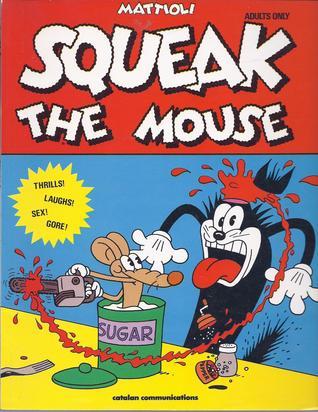
Squeak the Mouse #1
Squeak the Mouse
An outrageously cruel cat versus a wily a rivalry as old as time, popularized by the beloved Tom & Jerry cartoons of the '40s and '50s. In the hands of renowned Italian cartoonist Massimo Mattioli, however, this classic premise is infused with a whole new perverse and anarchic energy. Laying full-on slasher horror onto wacky cartoon violence, Mattioli's characters embark on a sadistic bloodthirsty rampage, leaving a trail of mangled corpses and pools of blood in their wake. And the comic's gratuitous bloodshed is not to be overshadowed by its crude humor and over-the-top sexcapades. In sum, a tour de force of unrelenting transgression, rendered in clean line art and dazzling pastel colors.
Conceived in the early '80s, Squeak the Mouse was originally serialized in the Italian underground comics magazine Frigidaire to much acclaim. This silent comic series gained notoriety in the US when customs agents seized a shipment of Mattioli's books; deemed pornographic, the work was subsequently made the subject of an obscenity trial (which was won by the publisher). Best known today as the precursor to the Itchy & Scratchy characters in The Simpsons, this cult classic comic series is finally coming back into print in a gorgeous and affordable hardcover.
Conceived in the early '80s, Squeak the Mouse was originally serialized in the Italian underground comics magazine Frigidaire to much acclaim. This silent comic series gained notoriety in the US when customs agents seized a shipment of Mattioli's books; deemed pornographic, the work was subsequently made the subject of an obscenity trial (which was won by the publisher). Best known today as the precursor to the Itchy & Scratchy characters in The Simpsons, this cult classic comic series is finally coming back into print in a gorgeous and affordable hardcover.
44 pages, Paperback
First published April 1, 1989
About the author
Massimo Mattioli
30 books5 followersMassimo Mattioli (1943-2019) was an Italian cartoonist, illustrator and screenwriter.
Born in Rome, Mattioli debuted in the middle of the 60's with the comic Vermetto Sigh for the magazine 'Il Vittorioso'. After some cartooning experiences in London and Paris, in the early 70's he returned to Italy and created the character Pasquino for the newspaper 'Paese Sera'. He also began a collaboration with the comics magazine 'Il Giornalino', that lasted more than forty years. Therein, he published Pinky (1973-2014), a whimsical and surrealist strip about a pink rabbit reporter.
In 1977, together with Stefano Tamburini and Marco D'Alessandro, Mattioli founded the seminal underground magazine 'Cannibale'. He remained a frequent contributor to both 'Cannibale' and its successor magazine 'Frigidaire' throughout the 80's. In this period, Mattioli adapted his surrealist cartooning style for a mature audience, most notably with the series Joe Galaxy (1979-1983) and Squeak the Mouse (1982-1984). The latter remains his best-known work internationally. A sequel Squeak the Mouse 2 was published in 1992, and a third volume appeared in 2019 in the collected Squeak the Mouse by Coconino Press.
Mattioli was awarded several prizes, including the Yellow Kid Prize at the Lucca Comics Festival in 1975 and the Attilio Micheluzzi Prize at the Napoli Comicon in 2010 and 2011.
As an illustrator, Mattioli worked for advertisement and music album covers. Additionally, he wrote short stories and screenplays for cinema and television.
Massimo Mattioli died in 2019, at age 75.
Born in Rome, Mattioli debuted in the middle of the 60's with the comic Vermetto Sigh for the magazine 'Il Vittorioso'. After some cartooning experiences in London and Paris, in the early 70's he returned to Italy and created the character Pasquino for the newspaper 'Paese Sera'. He also began a collaboration with the comics magazine 'Il Giornalino', that lasted more than forty years. Therein, he published Pinky (1973-2014), a whimsical and surrealist strip about a pink rabbit reporter.
In 1977, together with Stefano Tamburini and Marco D'Alessandro, Mattioli founded the seminal underground magazine 'Cannibale'. He remained a frequent contributor to both 'Cannibale' and its successor magazine 'Frigidaire' throughout the 80's. In this period, Mattioli adapted his surrealist cartooning style for a mature audience, most notably with the series Joe Galaxy (1979-1983) and Squeak the Mouse (1982-1984). The latter remains his best-known work internationally. A sequel Squeak the Mouse 2 was published in 1992, and a third volume appeared in 2019 in the collected Squeak the Mouse by Coconino Press.
Mattioli was awarded several prizes, including the Yellow Kid Prize at the Lucca Comics Festival in 1975 and the Attilio Micheluzzi Prize at the Napoli Comicon in 2010 and 2011.
As an illustrator, Mattioli worked for advertisement and music album covers. Additionally, he wrote short stories and screenplays for cinema and television.
Massimo Mattioli died in 2019, at age 75.
Ratings & Reviews
Friends & Following
Create a free account to discover what your friends think of this book!
Community Reviews
Displaying 1 - 30 of 31 reviews

July 1, 2022
What do you get if you cross Tom and Jerry with Italian zombie films and Fritz the Cat? Squeak the Mouse! Kind of over the top; lots of gory violence and VERY X-rated! Nothing really wrong with it if that does not bother you. Kind of gets a little redundant: how many times can you kill someone and then kill their zombie?

November 7, 2022
Definitely not for kids.
The cover promises, "Thrills! Laughs! Sex! Gore!" and delivers on all four. The book begins with fairly typical Tom and Jerry style Cat vs. Mouse hijinks. It's all in a light, cartoony style with great pacing on the gags. Just when you've been lulled into a false sense of security, the chapter ends with the cat very graphically ripping off the mouse's head, smashing it flat against a wall, and devouring the body.
But then the book becomes a slasher movie as the undead mouse rises from the grave to seek vengeance. The innocent, cartoon-y violence of the first chapter gives way to explicit blood and gore. But all that's really changed is the context and the style, which is largely Mattioli's point.
The book was actually the subject of an obscenity trial in the mid-80's–found innocent–more on the basis of the sexual content (which is quite explicit) than the violence. This fact was not lost upon teenaged me back in those pre-Internet days when I finally found a copy for sale.
Mattioli has a great cartoony style and a fine sense of pacing, not to mention a talent for grand guignol. On the other hand, his point is not exactly subtle and he does go on rather long about it. Fun book, but probably not for everybody.
The cover promises, "Thrills! Laughs! Sex! Gore!" and delivers on all four. The book begins with fairly typical Tom and Jerry style Cat vs. Mouse hijinks. It's all in a light, cartoony style with great pacing on the gags. Just when you've been lulled into a false sense of security, the chapter ends with the cat very graphically ripping off the mouse's head, smashing it flat against a wall, and devouring the body.
But then the book becomes a slasher movie as the undead mouse rises from the grave to seek vengeance. The innocent, cartoon-y violence of the first chapter gives way to explicit blood and gore. But all that's really changed is the context and the style, which is largely Mattioli's point.
The book was actually the subject of an obscenity trial in the mid-80's–found innocent–more on the basis of the sexual content (which is quite explicit) than the violence. This fact was not lost upon teenaged me back in those pre-Internet days when I finally found a copy for sale.
Mattioli has a great cartoony style and a fine sense of pacing, not to mention a talent for grand guignol. On the other hand, his point is not exactly subtle and he does go on rather long about it. Fun book, but probably not for everybody.

August 18, 2021
->Interesting Background<-
This book fetches extraordinary prices because it was banned in the States. I assume that it was not allowed in after being printed in Spain which is what must have precipitated the trial in which a jury found that it was not "too sexually explicit". The first amendment won against the scheming of those who think they have our best interests in mind.
This is a masterpiece for what it is, versus in general, so while it doesn't make my top shelf- it's TREMENDOUSLY ENJOYABLE!
It's an aggressive gore fest that inserts shamelessly hardcore sex enthusiastically to make even more horrid circumstances. Total overkill- literally. So leave your sensitivities and scruples out of this because you will be shocked.
I may have enjoyed the choice of protagonist most because it's actually the unnamed cat in which you follow throughout the entire book. I always rooted for "Tom" as a kid, in the same fashion as "Wile E. Coyote", since their opposition was some domineering and here you get it that other way around!
I didn't think I would be able to get this until the future in which I believe that I will have money comes about but I found a banged up copy for $9 instead of it's usual $90+. This first book was released by Catalan Communications, the publisher who's entire library I will one day own, and the sequel is an NBM book so the hunt is still on. But, since I'm not love-of-my-life married to NBM, I can get the second book from France (Albin Michel, Revival) as well, without needing my phone's camera translator, because it's essentially wordless.
->Fun Fact: You can get it shipped from France for less money than you can from your neighbor! Yup. Our "Media Mail" covers nearly as many books as you can fit in a box for it's price but for a single book it's only $2 coming across the ocean. Non-thick mass market paperbacks are only a coin over $1! Don't believe me?
https://www.laposte.fr/tarifs-livres-...
You should read the page anyway (click translate in your browser) because you learn about their "Livres et Brochures" service that shares their works with the world affordably to anybody. It's the secret to my massive bd collection. Go on ebay and inquire abroad!
This book fetches extraordinary prices because it was banned in the States. I assume that it was not allowed in after being printed in Spain which is what must have precipitated the trial in which a jury found that it was not "too sexually explicit". The first amendment won against the scheming of those who think they have our best interests in mind.
This is a masterpiece for what it is, versus in general, so while it doesn't make my top shelf- it's TREMENDOUSLY ENJOYABLE!
It's an aggressive gore fest that inserts shamelessly hardcore sex enthusiastically to make even more horrid circumstances. Total overkill- literally. So leave your sensitivities and scruples out of this because you will be shocked.
I may have enjoyed the choice of protagonist most because it's actually the unnamed cat in which you follow throughout the entire book. I always rooted for "Tom" as a kid, in the same fashion as "Wile E. Coyote", since their opposition was some domineering and here you get it that other way around!
I didn't think I would be able to get this until the future in which I believe that I will have money comes about but I found a banged up copy for $9 instead of it's usual $90+. This first book was released by Catalan Communications, the publisher who's entire library I will one day own, and the sequel is an NBM book so the hunt is still on. But, since I'm not love-of-my-life married to NBM, I can get the second book from France (Albin Michel, Revival) as well, without needing my phone's camera translator, because it's essentially wordless.
->Fun Fact: You can get it shipped from France for less money than you can from your neighbor! Yup. Our "Media Mail" covers nearly as many books as you can fit in a box for it's price but for a single book it's only $2 coming across the ocean. Non-thick mass market paperbacks are only a coin over $1! Don't believe me?
https://www.laposte.fr/tarifs-livres-...
You should read the page anyway (click translate in your browser) because you learn about their "Livres et Brochures" service that shares their works with the world affordably to anybody. It's the secret to my massive bd collection. Go on ebay and inquire abroad!

January 8, 2008
Before Itchy & Scratchy, before Happy Tree Friends, There was Squeak. Hyper violent porn comics for... Well, I have no idea who these were for. But they were funny as all hell.

March 20, 2024
What a wild ride. Just constant violence and sex and zombies. I originally thought the book was just a fun little thing about a cat chasing a mouse and it had funny over the top violence. It still had that but it was also way darker than I would have thought. It was a fun, quick read. Maybe don't read it on the train like I did. I had to hide so many pages from prying eyes!
January 3, 2025
I read this yesterday as my first read of 2025 and I can't recommend it more. It's just up my alley with its sense of humor and feels to me like if Garth Ennis or someone decided it was time to lampoon old Hanna-Barbera cartoons. Wonderfully graphic and disgusting in its gore and nudity, it makes for a great over the top parody that I highly recommend.
9/10.
9/10.

June 16, 2018
Humor gamberro y subido de tono que se anticipó a la invasión zombie y a las salvajadas de rasca y pica. Muy recomendable.

May 29, 2022
This book is mostly amazingly great. I know the "what if cartoon violence had real consequences" trope is played out, but Mattioli goes so far with it that this comic is still pretty shocking. The best experience is probably the one I had: Feeling nauseous with a bad headache and about to go to sleep. My mind was in a great place where the sex and violence could really do some damage. Unfortunately, Mattioli seems to misstep a little with the third chapter. He focuses less on shocks and more on the cartoon scenarios, which are still good but don't have the same impact. It doesn't make those first two chapters any less memorable. And how couldn't I forgive this guy when he has his characters watch Videodrome AND Texas Chainsaw Massacre 2?

read-in-2016
March 21, 2016Somewhere between or beyond Itchy and Scratchy and Fritz the Cat, this takes the oldschool cat and mouse cartoon to its furthest blood and body fluid-spattered ends. Starts out as a kind of joke about meaningless/repercussionless cartoon violence before veering into horror tropes (repercussions enter the formula nonetheless). Gratuity as its own cultural ends -- whether that's a justifiable m.o. or not is really up to the reader. Incidentally, this had to make it through a two-day obscenity trial in 1989 before it was allowed for release in the USA.

May 21, 2019
This is probably a huge influence to Itchy and Scratchy from the Simpsons but it's even more extreme of course. I really don't know why I liked it but I did.

December 18, 2020
I love the way Mattioli draws fire. In the midst of over the top cartoon violence and orgies, the few panels in which somebody is burning are fascinatingly eerie.
December 9, 2023
Bonkers content. Love that it exists.

December 16, 2024
Massimo Mattioli filters the animated classic television series, Tom and Jerry, through the lens of Italian horror films and further perverse depths. The concept of satirizing children's media into a more adult setting isn't anything new, but I struggle to think of someone doing it nearly as brazenly as Mattioli did with his Squeak the Mouse strips. Indeed, I would not be surprised if Matt Groening used Mattioli's strips as primary influence for The Itchy & Scratchy Show that featured prominently on The Simpsons.
This first issue, translated into English by Catalan Communications, features the first four Squeak the Mouse strips. Though titled after the mouse, Squeak, the main character is really the unnamed cat that initially serves as the pursuer. Like in Tom and Jerry, the cat is the antagonist that actually ends up more victimized than actual victimizer. In a sense, the cat is pretty much Wile E. Coyote, endlessly at the end of torment due to his pursuit of the Road Runner. The strips show the cat subject to all manner of violence, some of it deserved, but most of it quite over the top. The most conventional of these strips is the first one, "The Big Game", the only one that actually shows the back and forth between Squeak and the cat. Subsequent adventures only really feature the cat, usually in explicit sexual and violent scenarios. Both "Blood Feast" and "Magma" effectively serve as slasher thrillers, where the cat and his friends are victimized by unseen killers who maim, mutilate and violently kill them. "Zombie Night" is an homage to classic horror films, indicating Mattioli's influences behind the strips.
The only reason these strips work is Mattioli's gorgeous cartooning. The violence and perversion are all rendered in an overly appealing child-like cartoon aesthetic, a vibrant juxtaposition that just works really well. Mattioli's choice of bold, flat colors highlights the cartoonish designs well, with tons of primary colors used frequently to emphasize the juvenile aspects of the strip. These are strips that ultimately read best in short doses, and with just four strips contained in the first issue, it couldn't have been more perfect of a way to sample Mattioli's work.
This first issue, translated into English by Catalan Communications, features the first four Squeak the Mouse strips. Though titled after the mouse, Squeak, the main character is really the unnamed cat that initially serves as the pursuer. Like in Tom and Jerry, the cat is the antagonist that actually ends up more victimized than actual victimizer. In a sense, the cat is pretty much Wile E. Coyote, endlessly at the end of torment due to his pursuit of the Road Runner. The strips show the cat subject to all manner of violence, some of it deserved, but most of it quite over the top. The most conventional of these strips is the first one, "The Big Game", the only one that actually shows the back and forth between Squeak and the cat. Subsequent adventures only really feature the cat, usually in explicit sexual and violent scenarios. Both "Blood Feast" and "Magma" effectively serve as slasher thrillers, where the cat and his friends are victimized by unseen killers who maim, mutilate and violently kill them. "Zombie Night" is an homage to classic horror films, indicating Mattioli's influences behind the strips.
The only reason these strips work is Mattioli's gorgeous cartooning. The violence and perversion are all rendered in an overly appealing child-like cartoon aesthetic, a vibrant juxtaposition that just works really well. Mattioli's choice of bold, flat colors highlights the cartoonish designs well, with tons of primary colors used frequently to emphasize the juvenile aspects of the strip. These are strips that ultimately read best in short doses, and with just four strips contained in the first issue, it couldn't have been more perfect of a way to sample Mattioli's work.

August 8, 2020
É difícil ser mais controverso do que com este trabalho brilhante e visceral de Mattioli. Um clássico da BD independente europeia dos anos 80. Squeak the Mouse desmonta brilhante (e violentamente) a estética Disney, reconstruindo-a num registo gore/splatterpunk e toques hardcore. Tudo imitando o estilo inocente dos cartoons disneyfiados, das cores à estética, passando pelo rigor da construção da prancha. Esta série clássica é uma inversão escatológica do estereótipo gato versus rato da banda desenhada infantil.
Neste primeiro volume, o gato parece vence, eliminando o rato com extremo prejuízo. Mas o cadáver do rato voltará para se vingar, em sequências slasher violentas que têm tendência a acontecer quando o gato se safa com garotas. Desmontando brilhantemente a iconografia dos cartoons, com um profundo humor negro e vénias ao horror exploitation dos anos 70 e 80, só surpreende como é que Mattioli se safou com isto. Hoje, seria arrasado por processos de violação de propriedade intelectual e crucificado na praça pública pela inconveniência das suas histórias.
Neste primeiro volume, o gato parece vence, eliminando o rato com extremo prejuízo. Mas o cadáver do rato voltará para se vingar, em sequências slasher violentas que têm tendência a acontecer quando o gato se safa com garotas. Desmontando brilhantemente a iconografia dos cartoons, com um profundo humor negro e vénias ao horror exploitation dos anos 70 e 80, só surpreende como é que Mattioli se safou com isto. Hoje, seria arrasado por processos de violação de propriedade intelectual e crucificado na praça pública pela inconveniência das suas histórias.

April 24, 2026
Finally got a chance to read this! I knew I'd love it. Who doesn't love a little "Thrill! Laughs! Sex! Gore!"? These are the kinds of comics that I live for. Imagine Tom and Jerry but adult oriented. Where they actually hurt and killed each other and those around them. Brutal murders. Tons of blood. Great sex scenes. What starts out as a goofy comic about a rat and cat fighting, quickly turns into a full on horror movie. As a murderous rage strikes. Horrifically killing a dozen party goers. Zombies coming to haunt and try to kill the only survivor in the night. And great sex ruined again by a terrifying monster. This was a phenomenal book. And absolutely a new favorite of mine. Highly recommend! Not for kids or the squeamish!

January 4, 2024
This is every bit as violent as I expected, with the unexpected bonus of jarring interludes of hardcore Funny Animal sex. Europeans are nothing if not more sophisticated than us American philistines. Most unexpected of all, however, is that this is really well-constructed. The art style would lead you to believe this is of the Johnny Ryan sloppy shitpost variety, but the pacing and construction are really solid. It’s not just violence for the sake of violence, Mattioli makes it have an impact. Italian artists as a whole were just really good at the horror genre in the ‘80s, I guess.
December 1, 2019
I never understood the appeal of the gross sex bits in these kind of comics. They never seem to add anything other than showcase to us the author's weird fantasies.
The gore is fun at times, but it's actually less shocking than Tom & Jerry and other cartoons childish violence. Blood and sex it's an easy way to twist a formula but it gets old fast if there's no imagination behind it.
The gore is fun at times, but it's actually less shocking than Tom & Jerry and other cartoons childish violence. Blood and sex it's an easy way to twist a formula but it gets old fast if there's no imagination behind it.

June 17, 2022
Read in one sitting (had a power outage).
Incredibly entertaining and just as misogynistic, and a bit exhaustiby the end. As a guy I have the privilege of being able to appreciate this despite its intense misogyny. Happy I read this, but hard to love given the grossness of the material, where women exist ONLY as sexual objects, with no agency, character, or ounce of life.
Incredibly entertaining and just as misogynistic, and a bit exhaustiby the end. As a guy I have the privilege of being able to appreciate this despite its intense misogyny. Happy I read this, but hard to love given the grossness of the material, where women exist ONLY as sexual objects, with no agency, character, or ounce of life.

June 12, 2023
Absolutely brilliant. I can see why this is often cited by Scott McCloud as an example of pure comics storytelling. Imagine if Tom and Jerry had real consequences, so it became a splatter-horror. If you like shlocky, cartoonish violence with a side of pornographic angst, this is hands-down for you.

April 28, 2026
You gotta rate books by their success at accomplishing what they set out to do. I believe that the author tried to draw a hilarious, gross book with too much gratuitous violence and sex, and he succeeded, in my opinion.

February 25, 2018
before Itchy and Scratchy and it was better !!!

January 4, 2019
Forgot about Squeak the Mouse but I loved it

July 31, 2022
This comics takes quite the edge off.
Though the plot is pretty simple, cat and mouse chase each other. But that's in between that is surprising and very good!
Though the plot is pretty simple, cat and mouse chase each other. But that's in between that is surprising and very good!

November 15, 2022
Would have easily been just as important to me as Jason and Jim Woodring if I’d found this when I was younger.
Wish there was more
5.0/5.0
Wish there was more
5.0/5.0
April 24, 2023
coisa de gênio

January 31, 2024
Hilariously messed up, closest thing in American comics would probably be Johnny Ryan. Tom and Jerry taken to x-rated levels.

July 12, 2024
A riot of bad taste.
August 30, 2025
Brutal
July 23, 2026
Crosses the line from ridiculous cartoon violence into stuff I'd expect to find doodled in Ian Brady's school exercise books.

April 25, 2015
Without going back and re-reading this, I remember that this was violent and raunchy, with lots of blood. I remember hiding it from Mom, knowing she would blow a gasket. If I went back to it now, I would likely find it tame. The panels I have engraved in my memory remind me of Itchy and Scratchy from the Simpsons.
Displaying 1 - 30 of 31 reviews