The winner of the inaugural Australian Fiction Prize, Every Wild Soul is a lyrical and compelling tale of secrets, survival, and the healing power of nature.
On Tasmania's wild and remote Maria Island, eighteen-year-old Min is trying to break free from her controlling, overly protective father, the island's head ranger. Her unlikely ally is Werner, an eccentric, homeless biologist who has always taught her to care for the imperilled natural world around her - even as it sets them against Piers, her father, who has his own plans. When Lucie, a journalist haunted by her family's role in the thylacine's extinction, arrives from London to investigate the island's Tasmanian devil conservation project, she is drawn into the island's rare beauty and mysteries, discovering a community grappling with the tension between progress and preservation, care and control. After a tempestuous storm sees a stranger wash ashore, a chain of events is set in motion that ends in a shocking and mysterious death, only weeks later.
A breathtakingly beautiful and gripping exploration of humanity's connection to the wild - and the hope that can be born from even the darkest of times - Every Wild Soul is an absorbing and evocative exploration of resilience, rewilding and healing, a story with nature and courage at its heart. Perfect for readers of Where the Crawdads Sing, The Lost Flowers of Alice Hart, Prodigal Summer, and Wild Dark Shore, it is a vivid and haunting ode to the wild in all of us.
'A heartfelt and intriguing novel set in a wild and beautiful place. A wonderful read.' Favel Parrett
'A tender, aching story of our elemental need for wilderness.' Robyn Mundy
'A sense of wonder for the land and sea pervades this beautifully crafted novel. It is a work of passion and ferocity - also of gentleness - that, in bringing to life the rewilding of an island and the people who live there, offers a spark of hope to us all.' Suzanne Leal
'A thrilling journey into the wildness of landscape and heart, longing and desire, captivity and freedom. Science meets love. Nature meets redemption. Cleverly woven and beautifully written. An intricate portrayal of the fragility of human relationships and the natural world. Lyrical, mysterious, unexpected, Every Wild Soul will bring you closer to nature and the wilderness that hides inside all of us.' Karen Viggers
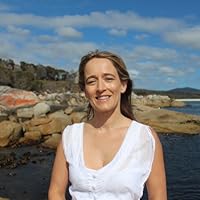
Tasmanian writer Katherine Johnson is the inaugural winner of The Australian Fiction Prize for her novel Every Wild Soul due out with HarperCollins in April 2026. She is the author of four previous novels: Pescador's Wake (Fourth Estate 2009), The Better Son (Ventura Press 2016), Matryoshka (Ventura Press 2018) and Paris Savages (Ventura Press 2019, Allison and Busby UK 2020, Jimenez Edizioni Italy 2021 - published under the title Selvaggi).
Paris Savages, is based on the true story of three Aboriginal (Badtjala) people from Fraser Island, Queensland, who were transported to Europe in 1882 as ethnographic curiosities. It was shortlisted in the ABIA Awards 2020 and was The Times Historical Fiction Book of the Month (July 2020).
The Better Son tells the story of a family yearning for love but layered with secrets, and the price of a lie. Set in northern Tasmania’s cave country, The Better Son won the University of Tasmania Prize in 2013 (Tasmanian Literary Awards), the People's Choice Award (Tasmanian Literary Awards 2013), as well as a HarperCollins Varuna Award for Manuscript Development in 2013. The Better Son was Longlisted for the Australian Indie Book Awards and The Tasmania Book Prize (Premier’s Literary Awards).
Matryoshka is set against the beautiful backdrop of Tasmania and tells the story of secrets, refuge, and loves lost and found.
Pescador's Wake, set on the Southern Ocean and in Tasmania and Uruguay, won a HarperCollins Varuna Award for Manuscript Development in 2007.
Born in Brisbane, Queensland, Katherine Johnson now lives in Tasmania where she also works as a science journalist. Her non-fiction articles have been published in Good Weekend (Sydney Morning Herald), Ecos, The Conversation, Australasian Science, Island and Forty South.
Katherine Johnson has a Bachelor of Arts (Journalism), an honours degree in marine science and a PhD in creative writing. She is an Adjunct Researcher at the University of Tasmania, where she has taught creative writing and works in alumni communications.
DNF @ 22% on 5 May 2026—The book was so good at the start!🥲 The first chapter was all about the location of the story—real-life Maria Island on Tasmania’s eastern coast. The author described the island with such gorgeous prose that my arms were just covered in goosebumps! I was aching to be there, on this beautiful island that’s a national park; no cars allowed. Its pristine environment is renowned as a sanctuary for wildlife and the best place in Tasmania for bird-watching, earning it the nickname, “Noah's Ark of Australia”. The island’s 200-year-old prison is a UNESCO World Heritage site and, walking along the coastline, spectacular sandstone rock pools are found, rich in amazing marine life at low tide. At the same spot are the famous Painted Cliffs and ancient fossil beds to explore. As you might imagine, I was absolutely captivated!🥰
And then… the focus changed in the next chapter, and suddenly it was all about the ranger’s teenage daughter who, apparently, had never seen a boy/man her age and was now lusting for the experience.🙄 Those beautiful, natural, wild descriptions were gone, and I found myself in the middle of a sappy, cheesy romance. The text had become altogether too “precious” for my liking and, though I tried a little longer, I just couldn’t take another minute of it. It was a stunning disappointment, after such a wonderful start! UGH!!😖
I should note, however, that it seems to be quite a well-written book, and I'm certain many people will love it—women especially. It simply wasn't the right fit for me. I have two others by this author (The Better Son and Paris Savages) and if I feel like reading them someday, I won't let this stop me.
I fell in love in the first few pages, but unfortunately it was a fleeting romance. By halfway through I was struggling and I never fully regained my passion.
The setting is real - Maria (pronounced Mar-eye-ah) Island off the east coast of Tasmania, Australia. The author's descriptions of the island are captivating. Just as captivating are the characters, each with their own backstory, and each an integral part of the jigsaw that forms the plot.
So, what went wrong? Teenage romance. For me it left an ugly stain on what was otherwise a fascinating read with a strong ecological message.
Maria Island, Tasmania. Miranda or Min is the eighteen year old daughter of Piers the Head Ranger, and she’s lived a very sheltered life. Min grew up on the island, her mum left when she was a toddler, and her father is controlling, restricts where she can go and when and she’s never been on the ferry to Triabunna.
Min is friends with Werner, a nomadic taxonomist and he’s taught her all about nature, insects, bird, animals, plants and the scientific names and he thinks his protégée should go to university.
Lucie is an Aussie living in London and a freelance journalist, she’s married to Richard a lawyer. Lucie becomes interested in rewilding, and she travels to the Maria Island to investigate the Tasmanian devil conservation project and to have a break from her husband.
The island is just as beautiful and precious as she remembers, while some people think it should be preserved and stay the same, and others are on the side of progress.
Lucie feels guilty because her great grandfather was a trapper in the 1930’s and is one of the people who unknowingly led to the Thylacine or Tasmanian tiger becoming extinct. Lucie was once a confident hiker, diver, and camper and while on the island she rediscovers herself and her love of the outdoors.
One day Min noticed a boat stuck on a reef, a young man washes up on shore and he’s lucky to survive. When he recovers, Fergus visits and Min has no experience with dating or men, but she’s curious and will she be tempted by him and have her heartbroken?
Thanks to HarperCollins Books Australia for my copy of Every Wild Soul in exchange for an honest review and I can understand why the novel and Katherine Johnson won the inaugural Australian Fiction Prize.
A poetic and compelling story about living on a remote island, a place rich in convict history, the old buildings and nature. I liked reading about the animals, sea, beaches, coves, cliffs, and I think it should be protected and conserved.
Relationships between charters are complicated and at times dysfunctional and I didn’t feel this took anything away from the environmental side of the narrative and added another element and few lucky humans do live on Maria Island.
I found the concept of rewilding interesting, species and plants that haven’t been seen in hundreds of years like the storks in England finding their way back, reproducing and growing and this creates hope for the future.
I highly recommend Every Wild Soul, Ms Johnson is a skilful and talented writer, I can’t wait to see what she comes up with next and five stars.
I adored this setting, the characters and the entire story!
The writing was lyrical and immersive. The characters were believable and realistically complex. The mysterious elements kept me intrigued. This story also beautifully highlights the power of nature and reminds me why I am endlessly fascinated by the natural world.
I am looking forward to reading more novels from Tasmanian author Katherine Johnson.
As the inaugural winner of the Australian Fiction Prize, I imagine this book will be getting a lot of attention, for better or worse. I had really high hopes for it, and while it did have a lot of appeal in some respects, I found my expectations unmet in others. I enjoyed Lucie's story - arguably the secondary storyline - very much, while Min's story just annoyed me for being on the wrong side of realistic. Comparisons are bound to be made with fellow Australian author, Charlotte McConaghy. But the star is, of course, the setting and Katherine Johnson has shown Maria Island (off the east coast of Tasmania) in all its glory.
Narration by Sophie Weiss is an easy listen. She does a great job of a few different accents to support the story, but some of the pronunciation was a bit off.
Overall a decent read, but I much preferred Johnson's The Better Son.
It was so heartening to read a hopeful environmental novel. I read this book slowly to relish the beautiful prose. I will be recommending this book to all my friends!
Give me a book with evocative storytelling, lyrical prose, and flawed characters, and you can pretty much guarantee that it’s going to be right up my alley. And Every Wild Soul did not disappoint on all fronts.
It’s the story of eighteen year old Min and her need to flee the control of her overprotective father. It’s journalist Lucy who struggles with the role her family may have played in the extinction of the thylacine. It’s the thrill of first attraction, and friendships forged over a shared common cause.
But the standout in this novel for me was the beauty of nature and this amazing world that we live in. Not just the gorgeous Maria Island, off the coast of Tasmania, but the many stunning locations spoken about with such beauty and awe throughout Every Wild Soul.
And while there were so many wonderful characters, the one I loved most was Werner. His vast knowledge, love for, and need for preservation and protection of the land and its wildlife was so inspiring.
I was hooked from page one, and that didn’t let up for a minute while reading it. A story that I hadn’t heard about until it was placed in my hands by the team at HarperCollins Australia, and for that I am so thankful.
Every Wild Soul by Katherine Johnson captured my imagination and transported me back to the wild beauty of Maria Island, off the coast of Tasmania. Through lyrical descriptions and an evocative sense of place, the novel highlights the quiet but powerful pull of nature—something that calls to us if we’re willing to listen.
At its heart, the story weaves together themes of loss, extinction, and the fragile hope of rewilding. It follows two women, Lucie and Min, both searching for identity and purpose. Lucie dreams of writing for The Times, while Min is only beginning to understand herself as she explores the untamed landscape of the island. Their journeys feel deeply personal, yet are grounded in broader environmental questions.
Johnson connects local and global efforts—from the return of storks in the UK and wolves in France to the preservation of Tasmanian devils in Australia—prompting an important question: can we truly reverse the damage that has been done, and if so, how far should we go? Or is our energy better spent protecting what still remains?
Ultimately, this is also a story of resilience—of both people and the natural world. The novel reminds us that while loss is inevitable, there is still strength in survival and renewal.
One particularly haunting moment captures this beautifully: “One of the lyrebird’s distant relatives must have learned the call and passed it down to its offspring. It was the loneliest sound Lucie had ever heard, the echo of an extinct species still ringing out in the wilderness, like the memory of a person who had died.”
Equally vivid is Johnson’s portrayal of Tasmania itself: “But here in Tasmania, the ocean was served on ice and was gin-clear. Here the sand was snow-white and the rocks crusted with lichen as orange as marigolds.”
These passages encapsulate the novel’s ability to balance beauty with melancholy, leaving a lasting impression long after the final page
This is a beautiful reflection of nature and the place we play in it. I couldn’t recommend it more.
Thank you Harper Collins Australia for sending me a copy of this novel in exchange for an honest review. The book was a gift but opinions are all my own.
Maria Island (it’s pronounced Mariah, like the singer) is an isolated island off the east coast of Tasmania: a wildlife sanctuary known for its incredible landscapes. It’s also the setting for this debut novel that feels like Where The Crawdads Sing if it had been written by Charlotte McConaghy.
Miranda is at the heart of this story. The teenage daughter of the Head Ranger, a naïve and sheltered young woman guided by a love of literature. She’s grown up on the island, raised by her extremely controlling father who has restricted her access to the outside world. She only knows the handful of people who also live on the island.
But two things are about to change her life. A boating accident means a handsome young man literally washes up on shore. And a journalist comes from London to report on the introduction of endangered Tasmanian Devils to the island.
Poetically written, this is a love letter to nature and conservation which also weaves in projects to rewild wolves in France, reintroduce storks to England and reforest parts of China.
If I’m honest this wasn’t 100% a book for me. I felt like it was trying to do a lot and needed more focus. The plot often took a backseat to the environmental elements and the characters felt under-developed. But if you liked the books I mentioned above, you may well like this too. The sense of place was amazing.
‘Nature doesn’t need a master; it’s its own master, and we should seek our answers from it! And so she’d learned to marvel. To sit in awe of the world around her.’
Tasmanian author Katherine Johnson’s novel Every Wild Soul - winner of the inaugural Australian Fiction Prize - is an evocative piece of eco-literature that incorporates mystery, character study and a passionate ode to environmental rewilding. Set against the rugged backdrop of Tasmania’s Maria Island, the story centres on eighteen-year-old Miranda, known as Min, who has grown up in near-isolation. Her world is strictly monitored by her controlling, overprotective father, Piers, the island’s head ranger. Min’s primary solace lies in her art and her unlikely friendship with Werner, an eccentric, homeless German taxonomist who teaches her to look at the natural world with deep reverence. Another main character is Lucie, a London-based journalist haunted by her family’s historical ties to the extinction of the Tasmanian tiger. She arrives to cover a Tasmanian devil conservation project another rewinding project - a topic I found incredibly interesting.
‘She’d always known he didn’t need nature the way she did, but for him to be so cut and dried struck her as lacking in soul. Lucie ached when she hadn’t been in a forest or the mountains or the ocean for some time, felt claustrophobic when all she could see were houses and roads and buildings. It shrank her to spend her days looking at a glaring screen just a couple of feet from her face rather than an infinitely wild and luminous sky that stretched above her, seemingly forever.’
Johnson’s prose surrounding Maria Island is exceptional, she presents the landscape not just as a backdrop, but as a central character. The vivid descriptions of the sea, the local wildlife, and the raw, untamed elements ground the reader completely in the environment. The novel masterfully parallels the environmental concept of rewilding - repairing ecosystems by stepping back and letting nature take control - with human trauma. As the characters fight to protect the island’s endangered species, they are simultaneously forced to confront their own needs for ‘survival’ - especially Min. While the book is marketed as a crime thriller, to me, it reads much more like an environmental commentary accompanied by rich atmosphere, scientific observations, and complex character relationships, with a mystery surrounding a death.
Ultimately, Every Wild Soul is a breathtakingly beautiful novel that firmly cements Katherine Johnson as a leading voice in contemporary Australian eco-fiction. It balances critique of human environmental degradation with a genuinely hopeful, gentle message about resilience and the healing power of the wilderness.
Every wild soul deserves a place in this world. The human ones too
Thank you Harper Collins for my copy of every wild soul as part of the Bookstagram book club.
This beautifully written novel is based on Maria Island off the coast of Tasmania. Growing up in Tasmania I have been fortunate enough to visit Maria Island through school camp and spending 7 glorious days on this beautiful part of the world. Johnson has captured the magic and beauty perfectly and it is written so so well- I can see why it’s a fiction award winner!
The plot is a dual POV, i definitely felt more drawn to the character of Lucie and her journey to the island. Lucie is strong willed and follows her head. A journalist with an interest in rewilding of creatures, a woman stuck in a loveless marriage.
Min our other FMC, is a sheltered and naive 18 year old, the character is similar to Kya in Crawdads. Min has spent her entire life on the island and she is taken under the wing of homeless German scientist Werner since a child. She knows more about island species than social skills and social media. Min’s domineering father frustrated the hell out of me. Let the girl live!
As much as I enjoyed the authors writing, the plot was anticlimactic… I was expecting a crescendo at the end!
This book is reminiscent of Where the Crawdads Sing and Wild Dark Shore. It is a beautiful spotlight on current environment challenges and how scientists are working tirelessly to improve our planet.
A compelling story set in the wilderness of Tasmania’s Maria Island. The writing is beautifully descriptive and I was transported to the beaches and mountains of this beautiful place. If you’re drawn to reading about the wonders of Australia’s precious natives and how we all have a part to play in their preservation, then this book is definitely for you. Thoroughly enjoyable!
A huge thank you to Harper Collins for sending me this copy of Every Wild Soul by Katherine Johnson as part of the litfic Bookstagram Book Club 🫶
A powerful story of how we are tied to nature, how we survive, and the secrets we hide. Living on the wild Maria Island in Tasmania, Min is eighteen and sheltered. She desperately wants to escape from under her father’s thumb. Living in London, journalist Lucie is dealing with loss and upcoming changes in her life, at a loss of what to write next. When she hears about rewilding efforts around the world, hope sparks in her, and her journey to Tasmania to investigate the Tasmanian devil project leads her to the complex and beautiful Maria Island.
This is one of the most unique books I’ve read in recent times! Katherine Johnson weaves such incredibly detailed fact into the fiction - you can visualise every animal, every tree, every facet of Maria island. The book is at times quite heavy (CW for sexual assault,) but it ebbs and flows with the constant changes of nature.
I would’ve liked a little more resolution towards the end, especially with Min’s storyline as I desperately wanted so much more for her life. Every character is so interesting and different, and fit into the Tasmanian landscape so well.
If you’re into Australian fiction, give this one a go 🍃
Every Wild Soul ⭐️⭐️⭐️✨ ________________________________________________
Original review 11/06/2026:
What an incredibly unique and beautiful book about the world, nature, and how we’re tied to it.
This is a wonderful read, a story set in remote Maria Island in Tasmania where Miranda(Min) has grown up with her father in a natural environment rich in wonder but with limited human interaction. Her ranger father Piers has tried to protect her from harm but this has made her dangerously naive in personal relationships. The environment is remote, and Min assists in the management alongside Carl, another ranger but her friend Werner has been the major influence in her education into the natural world. Werner has taught her about biology and she has talent as an illustrator for his samples, but Piers has become suspicious of his influence and restricted his contact with Min as she reaches her 18th birthday. Local scientist Mary, and Lucie, an Australian journalist living in the UK but relocated to Maria Island, are both sympathetic to the young woman and her difficulty maturing with such a strict father. From the first page the land, vegetation, animals, the sea and creatures are the background of the story; the people are there to protect and care for the land and the creatures on, and in, it. It is a rich environment and the people do their best to preserve and protect it. Rewilding is taking place through relocation of Tasmanian Devils to preserve their species from the tumour disease threatening them. Min and her father find a young man Fergus, who had been washed overboard in a storm, and Min sat with him until he was rescued. He was returned to his family. Lucie had memories of her grandfather, a hunter of the thylacine which was hunted to extinction in the past and had found her forte exploring attempts at re -wilding. Returning to Maria Island allowed her to develop her theme, while exploring a place she had loved as a child. Min was the central character, the story revolving around her fight to gain independence from her overprotective father. Her clothes are second hand, from her mother or left behind by tourists, including her pink bra, but her life is rich and rewarding despite being empty of technology. Werner had taught her biology, including latin terminology for plants and animals, and her talent for drawing had developed through her own recording of species on the island. Fergus returned to the island to work and Min gradually spent time with him. Katherine Johnson described Min's fascination : the young woman trying to make sense of social situations beyond her grasp and experience but her longing was beautifully realised. Werner's character was a positive one: a person with knowledge and a strong belief in saving the natural world,.he was Min's best friend and surrogate father. He was able to help her when she was in danger, which enabled her to realise her dream of re uniting with her mother and leaving Maria Island. The story was a refreshing blend of human endeavour in stopping extinction and in re wilding efforts, along with the effort of women in science, but the real beauty was the island itself and it was a star.
Although I've only read one of Johnson's backlist, truth seems to be a preoccupation in all of them, and in Every Wild Soul too. Who 'owns' a story? When is it ok to tell it?*** Every Wild Soul is not, however, about identity politics. It's about honesty in interpersonal communication and issues of responsibility in journalism.
The central character Min is a curious mixture of feisty and naïve because her overprotective father Piers has kept her isolated on Tasmania's remote Maria Island where he works as the head ranger. When the story opens she is eighteen, and chafing at the restrictions he places on her, but she isn't game to stand up to him because he has a controlling personality. She sees young tourists of her own age and yearns to dress and behave like they do, but although she is scientifically literate well beyond her years, she is ignorant about contemporary life and lacks confidence with strangers, especially judgemental teenagers who regard her as a bit of an oddity. She doesn't have a phone, is denied access to the internet, and doesn't have the wherewithal to buy clothing suited to her age so she gets about in clothes her mother left behind when she abandoned the family long ago. She has one bra, found in the tourist facilities, and one of the concerned older women scientists gives her a jumper. Her father has maintained a stoic silence about this missing mother and refuses to answer any questions about her.
Min is also clueless about boys.
So when a handsome young man called Fergus is washed ashore in a storm, Min develops a romantic attachment to him, based on not much more than her reading of her mother's copy of Shakespeare's The Tempest. When he recovers from his injuries and returns to the island, her father's over-protectiveness has made her uniquely vulnerable to impulses she doesn't understand, but she doesn't trust her own instincts. She wants to be like the other carefree and confident girls she sees at a distance, and has no one to counsel her because she doesn't confide her doubts and uncertainties about his oafish behaviour to anyone. She blames herself for not knowing how to respond as he expects.
Thank you to HarperCollins Australia for kindly sending me a copy of Every Wild Soul by Katherine Johnson as part of their Bookstagram book club.
Set in the rugged and beautiful landscapes of Tasmania, the novel follows two central characters whose lives and personal journeys slowly begin to intertwine over the course of the story. Through themes of womanhood, identity, family, and belonging, the book explores how deeply people can be shaped by both the environment around them and the experiences they carry.
One of the strongest aspects of the novel for me was its connection to nature and the environment. The themes of environmentalism, naturalism, and natural sciences, particularly biology, are woven deeply into the narrative in a way that makes the reader feel immersed in the land itself. Tasmania’s landscapes feel vivid and alive throughout the story, creating a strong emotional connection between the characters and the natural world around them.
I also really appreciated the coming of age elements within the novel, especially how both protagonists are navigating their own understanding of themselves and the world they inhabit. Their storylines were individually engaging, and I enjoyed seeing how they eventually met in the middle as the narrative unfolded.
Another aspect I loved was the inclusion of parallels and similarities to The Tempest. Those literary influences added an extra layer to the story and suited the isolated, atmospheric setting perfectly.
The book also gave me strong Where the Crawdads Sing vibes, but with a distinctly Australian atmosphere and perspective, which I found really enjoyable. The combination of emotional storytelling, environmental themes, and vivid writing made this a thoughtful and immersive read that stayed with me after finishing it.
✨Tropes and themes featured in the book✨ 🌷coming of age 🪷womanhood 🌱environmentalism 🐘nature and isolation 🦋dual perspectives 🎨literary parallels ❤️🩹emotional family dynamics 🍃atmospheric setting
Fellow readers I have a new favourite book to urge you to read!
Every Wild Soul is the latest book by Tasmanian author Katherine Johnson. I enjoyed reading her last book Paris Savages so I was beyond excited to receive a copy of Every Wild Soul.
Set on remote Maria Island off the Tasmanian coast eighteen-year-old Min is living a sheltered life under the watchful eye of her controlling father who is the head ranger. Min has limited contact with the world and people beyond the island with Werner a homeless biologist one of her few friends and the source of her understanding about the animals that live around them. On the other side of the world in London former Tasmanian Lucie has a breakthrough in her journalistic career and soon finds herself on Maria Island to report on a conservation project. She becomes drawn into the island’s inhabitants and their plans. Alongside this there is a storm and a young man washes ashore and is saved by Min.
I felt deeply for Min who is so unworldly and desperate to break free. And Lucie was a beautiful character too. I’m not entirely sure I was on board with the actions of some of the characters towards the end but honestly, I just adored the storyline overall and I could forgive some minor things.
This book was an absolute joy to read - full of nature, rewilding projects, animals, love of the environment, seeing the beauty in the natural world. There were storks, Tasmanian devils (and thylacines!) and kelp. I honestly cannot get enough of books that focus so beautifully on the natural world and its preservation. Every Wild Soul reminds me of other incredible books by authors such as Charlotte McConaghy, Robbie Arnott, Erin Hortle, Holly Ringland. And Tasmanian authors wow are they having a moment!
This was a beautiful piece of writing that celebrates human connection with nature and the desire to rewild and bring back some of what has already been lost. I felt this book deeply and highly recommend it. I hope that it gets lots of love!
Thank you @harpercollinsaustralia for my #gifted copy.
This is a tender, complex, multi-layered story about so many things – nature, ethics, love, betrayal, history, science and nature – that are intricately woven into a powerful, resonant and timely story. Compellingly and powerfully, the novel explores what it means to be human, and how humans treat animals and the environment, opening up complicated, troubling ideas beautifully and with nuance, so that each idea, truth or ethical dilemma illuminates, in some way, another idea. There’s an intriguing, gently unfolding crime plot as well. As a Tasmanian, I thought the landscape of Maria Island is gorgeously and accurately written. Tasmania has a muted colour palate, I often think, but this novel shines a light on it, illuminating the raw, rugged beauty, the ocean and forest, the beaches and sky, and the creatures who live there, making them shine with kaleidoscopic colour. I was entranced by the scientists and the lengths they go to and their determined ambition to rewild endangered animals from Tasmanian devils to English storks. We have so much to learn. An exquisite marvel of a book.
A massive thanks to HarperCollins for the gifted copy in exchange for an honest review!
Every Wild Soul is a book with a deep connection to nature. It’s about conservation, seeing the beauty in the environment and disconnecting from the oppressively overconnected and fast paced modern society. The passion the author has for the small Tasmanian Island setting was apparent, it leeched through the pages in a refreshing way!
Following dual storylines of a young woman isolated and suffocating under the oppressive control of her father, and a freelance reporter feeling lost within her own marriage, the story focused heavily on finding yourself and the freedom to unleash the wildness within.
There was a big event that had been built up to near the end of the novel that I would have enjoyed the emotional repercussions for the characters to have been explored more, but maybe I’m just used to books being self-indulgent in their page counts.
Overall a tenderly written new Australian novel about reconnecting with nature and oneself, that ends with one of the characters maybe not entirely healed, and maybe that’s okay.
Wish I could give it 3.75 🌟 just not quite at the 4, due to the story falling into the ‘not like other girls’ trope of Min’s story arc, and becoming quite unrealistic and predictable. I think her character deserved better, and more focus on her chasing her naturalist and artist dreams would have been great to see. This all too familiar ‘popular boy falls for strange quiet girl’ theme was a bit jarring amidst the beautiful imagery Johnson portrayed of the Tasmanian environment and its authentic lifelike characters. Werner and Carl were my favourites - enigmatic, humble and believable. All in all, a beautiful portrayal of the remoteness that is Tasmania, and Johnson captured the meaning of wildness well and truly.
If you want to get philosophical and find deep meaning in the telling of the story you will not be disappointed. If you want to read and be transported into the story you will not be disappointed. It isn't often you will find coming of age and a life changing stories woven together successfully. This is one. I gave it 5 stars because it kept me reading. As you read if you decide the characters stories are clichés then you will miss the true beauty of words and the message the story tells. Open your mind and look through Min's, Lucie's, and Werner's eyes. Feel what they are seeing and thinking. Take three breaths slowly.
🎧 Every Wild Soul by Katherine Johnson 🎧 ⭐️⭐️⭐️⭐️ @kjohnsonauthor
Wow, I loved this Australian masterpiece. This book had a bit of everything. I loved Min and Lucie and how each character inspired the other. Lots of beautiful complex characters with different motives and different directions in life. All placed in a beautiful Australian landscape.
"The winner of the inaugural Australian Fiction Prize, Every Wild Soul is a lyrical and compelling tale of secrets, survival, and the healing power of nature.
On Tasmania's wild and remote Maria Island, eighteen-year-old Min is trying to break free from her controlling, overly protective father, the island's head ranger. Her unlikely ally is Werner, an eccentric, homeless biologist who has always taught her to care for the imperilled natural world around her - even as it sets them against Piers, her father, who has his own plans. When Lucie, a journalist haunted by her family's role in the thylacine's extinction, arrives from London to investigate the island's Tasmanian devil conservation project, she is drawn into the island's rare beauty and mysteries, discovering a community grappling with the tension between progress and preservation, care and control. After a tempestuous storm sees a stranger wash ashore, a chain of events is set in motion that ends in a shocking and mysterious death, only weeks later."
I enjoyed this book and the ending is not what I expected. It gave clousure and showed the resilience of women. Highly recommend.
An important book, reminding us of our necessary connection with this planet and all it’s living things. Important also for illuminating the global rewilding movement. An absolute delight to read of the success of some of these projects—inspirational and heart-warming. At times I felt the book was trying too hard, forcing a viewpoint upon us rather than letting it flow, letting me as reader lean into the concepts. Dialogue was also a little clunky at times.
A fascinating read. The snippets on biology were interesting. I really enjoyed the different relationships between men and women in these books. A cold and dismissive husband in Lucie’s husband. The controlling father in Piers. The warmth and generosity of Werner to Min. And definitely what appears to be a mysterious, benign, somewhat disinterested and distracted Fergus who ends up being a sinister villain. A character arc being Min growing up in the setting of these relationships.
This entire review has been hidden because of spoilers.
Absolutely loved this novel! Katherine conjures images of Maria Island and the parks and wildlife / researcher life that take me straight back to those chapters of my own life. Her past in science comms and biology shine as the reader is taken on a multifaceted journey. Transport me to Maria !! Thank you Katherine, best book I have read in a long time. X Caroline
Oh my. What a glorious book. Katherine Johnson gets the perfect balance of character, plot and setting for a wonderfully rich reading experience. Complex, flawed characters, an intriguing plot that ebbs and flows with tension and the stunning descriptions of the natural world.