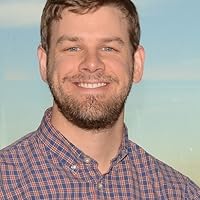
Представления о красоте и комфорте постоянно меняются, на сцену выходят всё новые поколения архитекторов и градостроителей, экономисты придумывают новые концепции, а экологи - новые угрозы, и каждый этап переходящей интеллектуальной моды становится частью истории города - идеи о городском развитии не уходят в прошлое вместе со своим временем, но получают физическое воплощение в городском ландшафте, наслаиваются и влияют друг на друга - и на нас, городских жителей. Основные детали интеллектуального конструктора, из которого собран современный город, описывает профессор Пенсильванского университета Витольд Рыбчинский.
Witold Rybczynski was born in Edinburgh, of Polish parentage, raised in London, and attended Jesuit schools in England and Canada. He studied architecture at McGill University in Montreal, where he also taught for twenty years. He is currently the Martin and Margy Meyerson Professor of Urbanism at the University of Pennsylvania, where he also co-edits the Wharton Real Estate Review. Rybczynski has designed and built houses as a registered architect, as well as doing practical experiments in low-cost housing, which took him to Mexico, Nigeria, India, the Philippines, and China.
I have mixed feelings about this book. On the one hand, Rybczynski writes a succinct history of the evolution of city planning ideas, and he's a clear thinker always who's always full of insights. I got this book because I was interested in seeing a good criticism not just of Modernist planning but also the reactions to it from Jane Jacobs and, more recently, the New Urbanists, which Rybczynski supplies. But the book felt a bit too short, a bit too thin. So while what he did say was smart, he didn't say enough. The book serves as something of a primer on "here are some schools of planning thought and my impressions of them," but nothing that made me really think hard or change my mind.
I also thought that he was remiss in not getting into the various government programs and regulatory regimes that led to the auto-oriented suburbia of the mid-20th century. Instead it gets glossed over as a result purely of free market preferences, which is an unforced error on his part. Was/is suburbia popular? Yes. But that's not the whole story.
pretty basic primer-would have bee nice to read it before my urban design program which, by the way, can be described thus:
Urban designers deal with the collection of buildings, such as downtown business districts, residential neighborhoods, planned communities, town centers, and college campuses. While they are often architects, urban designers don't design individual buildings, Instead they plan the public spaces between buildings-avenues,streets, squares, promenades, and parks-and establish general guidelines such as setbacks, heights and other rules that govern how buildings relate to one another. Reacting to the failures of the megaprojects of the 1950s-and to Jane Jacob's critique-urban designers recognize that building a city is different from constructing a building; in this gradual process many actors participate over long periods of time.
gradual process, many actors, public spaces, how buildings relate to one another-and thank you for the summary, thats really something i was looking for. i'd like to check out Christopher Alexander et al:A New Theory of Urban Design-on the piecemeal approcach-how do you plan piecemeal...?
Witold Rybczynski is always fun to read. One of my favorites by him is "The Most Beautiful House in the World," about architecture at its most intimate, designing a structure for yourself. Here, he backs away two orders of magnitude and discusses how the design of cities has evolved over the centuries, and manages to bring the same intimate sensibility to the grand scale.
I think I have read nearly all of the books by Withold Rybczynski. I started with WAITING FOR THE WEEKEND and due to reading it when The Dowager on Downtown Abbey asked what was a weekend, I understood that weekends didn't always exist! I also liked his book HOME which was a history of where we have lived and went to bed at night.
This book MAKESHIFT METROPOLIS was on my shelf, I think for quite a while since it was written in 2010. I had started it at one point and must have moved on to something else. I was looking for a short book since I am trying to get my 50 books in before the end of the year and came across it. Also I just finished THE NEW GEOGRAPHY OF JOBS where the author talked about the cities where the money gets made and the smart (college-educated) people live. So I thought I would see what my favorite author Witty has to say about cities. He gives me the history of city planning and landscape architecture with information about Lewis Mumford and Jane Jacobs who had much to say in the past about cities. Rybczynski wrote a whole book on Olmsted which was also one of my favorite reads A CLEARING IN THE DISTANCE. He says that most Americans prefer suburbs so that they have more space and less crowding, that is until there is a gas shortage and then they wish they lived in a city and could walk or take public transportation. He says that cities are for single people, emptynesters and wealthy people. But he does come to mention some of the things that the author (Enrico Moretti) of THE NEW GEOGRAPHY OF JOBS mentioned. "Without cities, epoch-making events such as the Renaissance and the Industrial Revolution could not have occurred, for ideas develop best, and fastest, when large numbers of people congregate in one spot. This remains true even in an age of online social networking." "Big cities are not just large concentrations of people, they are also concentrations of knowledge, skills and information." "People come to WORK--not to sew clothing or to build locomotives, as they did in the past, but to do brain-work. Big cities with well-educated work-forces (Seattle, Boston, San Francisco) continue to be the best places for financial and communications work, as well as for creative enterprises." Moretti adds Washington DC, San Jose, Raleigh, Austin and Minneapolis to the list of cities with smart people doing innovative work and being highly paid for it. From what I can see from the Bay Area the people living in SF and Silicon Valley doing those jobs are young, single and often foreign born or at least first generation Americans. Millennials who were raised by parents who pushed higher education. If and when they do settle down to raise children, they may choose to move to the suburbs or like people in NYC continue to live in the city and raise children there because they can afford private schools or they will make sure the public schools are the best they can be.
Rybczynski talks about climate change and the need to reduce our ecological footprints. He says "What really makes a city green are not grassy roofs and rainwater cisterns but DENSITY." We are hurting the planet more by our desire for low density, auto-dependent suburbs than other areas of the world. Copenhagen is loaded with people riding bicycles and living in apartments. The suburban city I moved to 50 years ago had rural fields of flowers, apricot trees and vineyards. Almost every inch has been built over and more condos and apartments are coming as public transportation spreads making it easier for workers to get to their jobs in nearby cities. We who are old and treasured open space can see that with a crowded planet with decreasing resources, the coming generations will have to limit reproduction and live together in denser cities. The smart ones already are doing it.
It's a concise, informative book. I've always been interested in urban-planning theories, or, theories that human beings developed which shaped the space we live in. From this point, Rybczynski provides a good start for me. As a person lives (in a short term) in Beijing right now, I've discovered countless failed urban projects, from over-populated residential district, to these weird-looking buildings in CBD area. Beijing is becoming increasingly vertical, yet the scale of the city is ever-growing. I am also a New York veteran. Living in New York for a year enables me to observe every corner in the greatest city in the world. And Rybczynski told me, New York is a result of many debates among urban planners and idealists. Jabobs, for example, contributed the reservation of beautiful neighborhoods such as Greenwich and East Villages. Even the Chinatown in New York, as I figured recently, is so different from other Chinatowns. It's vibrant, vivid, interactive. Venders and passengers form a unique community which is very non-metropolitan but very New York.
Makeshift Metropolis provides a good overview of the ideas that Jane Jacobs critiqued in Death and Life, from Garden Cities to the City Beautiful to the Radiant City, and how those ideas and her own live on in our cities. There isn't a great deal of depth or critique here, but it's a solid overview of where our cities are coming from and where we're going.
I particularly enjoyed the accounts of Battery Park City, Reston, and other developments that have used a more piecemeal, fine-grain approach to major change. As Jacobs and Rybczynski both put it, these "collections of little plans" tend to be far more successful than the urban renewal of yesteryear, in a time when an affordability crisis demands that our cities build more than ever before and history demands that we do it better than last time.
This is the fourth book I have read by Witold Rybczynski lately. He taught in an architecture and design programs and you can sense his teaching skills on these topics in these books. I am a geographer by training and many of the ideas overlap with urban geography and planning. I enjoyed this book which builds on some of the ideas he wrote about in CITY LIFE, a book he wrote fifteen years earlier. I wish that he showed a few maps to highlight times when geographic ideas were most important, but his photos help us understand the ideas. Though the book is now 16 years old, the only part that felt dated was his last chapter on the future of cities. Rybczynski helps us understand our cities and their designs easily. Worth reading for a good introduction to many ideas on urban development.
Book devotes more time to the author’s favourite STRIP MALLS than it does to housing and transit. Gets some fundamental things wrong about density and affordability, not to mention completely ignoring the effects of zoning.
It does start with a nice summary of American city planning trends, but even then we get an entire chapter dedicated to Frank Lloyd Wright, a guy who planned imaginary cities based on FLYING CARS.
But the ultimate conclusion is that… Garden Cities are the optimal mode of city planning?! In the year 2010?! I promise you if Ebanezer Howard himself came to life in 2010 he wouldn’t want us building GARDEN CITIES, man!
Рыбчинский про все. О том как развиваются города, про гениев, меняющих основные стереотипы и в архитектуре и в жизни обычных людей, о том как журналистка-не-архитектор может повлиять на большие градостроительные решение и как цена на бензин и urban planing связаны друг с другому. Интересно будет, я думаю, не только архитекторам.
Rybczynski offers some good insight into the competing theories of urban planning and the modern city. Although the length (roughly 200 pages) makes it feel partially incomplete, still some things here worth reading.
Interesting read, but it's a book about urban planning clearly written by an architect, in that it deals with the built environment on a building-level scale, for better or worse. The author has a good voice and seems to have a well rounded sense of the industry around them.
An interesting read but overall a lot of the author's arguments were a bit too black-and-white for me, not taking into account the gray which is so important when it comes to city building.
I've always been fascinated by architecture and cities, and was introduced to ideas about regionalism and the way infrastructure drives so many decisions when I was involved in community organizing many years ago; Myron Orfield's regionalism and David Rusk's Cities without Suburbs come to mind. This book is a nice primer, including a history of the seminal ideas and works that have shaped ideas to date, and an argument against planning driven by gov't agencies without significant market involvement - the latter often producing places which are empty and lifeless. One of his key examples of the mix is Brooklyn Bridge Park, which I now have to visit. I've seen his ideas come to life in Cleveland, which imho is doing a pretty good job of using incentives, market forces, and cool old spaces to bring new life into the city. Liked the book in part because it put some theory to my observations.
This is an enjoyable book; a well written synopsis of various urbanism/planning ideas and realizations over the last hundred-plus years with a concluding, general prescription that future development of US cities should acknowledge the better products of these histories while dispensing with the myopic attitudes that also defined most of the various movements. I think that was the gist, for it’s been some time since I finished the book.
What I do recall is that this doesn’t offer much to those already well versed in these and related fields. Sure, there are plenty of interesting anecdotes and details that I felt made the book worth the read. And certainly I have no problem with Rybczynski’s writings being positioned towards the unindoctrinated retail sales manager or software “architects” out in suburban Nebraska or wherever. I’d be pleased if everyone in my family read this quite frankly. However, the primary problem is the scarcity of images to supplement the text. If this is geared towards the general populace, then he needed to include far more than the occasional cropped perspective view of the Chicago Columbia Exposition or a FLW headshot to really show people what he’s referring to. With the current dozen or so, grainy thumbnail images, this might as well be a Mark Wigley theoretical treatise. My Aunt ain’t gonna get it either way.
The other issue I would note is that this is very selective. This doesn’t seem to be a summary of everything he’s “learned about city planning and urban development” as he states. If so then even I should write a book or two. Rather, this comes off as a collection of separate essays. In fact I was sure this was such a collection from Slate or the Wharton Real Estate Review or whatever forum he’s recently engaged with, but apparently this was purposely composed. It’s not terrible of course, just a bit scattered and seemingly lacking a thread of continuity across chapters beyond overriding notions of good stuff versus bad.
Nonetheless, this does have many qualities such as his typical engaging prose. One thing he brings up at the end that I never really thought about was the rupture in professional continuity caused by the Great Depression and WWII which opened the door to the now acknowledged naïve experiments in mid-century planning. Certainly the chronological gulf between, say, the City Beautiful Movement and the displace-raze-and-rebuild antics of Urban Renewal is clear in an historical timeline sense (the City Beautiful Movement also clearly sported a displace-raze-and-rebuild modus operandi, by the way. Perhaps even more despicably so). I guess the introduction of modernist planning modes always seemed somewhat inevitable - seasoned planning veterans jumped on board with the new paradigm or perished. But it’s interesting to consider how different mid-century productions would have been had the design professions not been essentially gutted for a good decade and more.
Great book detailing urban planning history: garden city (Ebenezer Howard), radiant city (Le Corbusier), and the city beautiful movements/civic art (Charles Robinson) and modern day practises including their own unique and respective take on how cities should be designed.
The author takes you on a journey through history weaving in narratives related to each urban planning development milestone. Next comes Frank Lloyd Wright's broadacre city, the prelude to modern American suburbia, a consequence of government regulations and the automobile. He discusses Jane Jacobs ideas of urban planning and how she advocated a kind of independent and anarchist approach to urban planning i.e. a makeshift metropolis. Also how she used urban vitality as a barometer of healthy city life. Her ideas imprinted a huge influence on the urban planners of the future. Although, a criticism of the kind of ideal neighbourhoods Jacobs recommended are often very segregated and only for the preserve of the wealthy. Thus exclusionary of the working class people she envisioned them to be for.
The author also mentions the Bilbao anomaly, which is essentially how huge and unique architectural signature projects and urban planning undertakings generally don't work and the Guggenheim museum in Bilbao is an outlier in terms of using these kinds of projects to revitalise a city. The book also forays into the subject of the economics of urbanism and whether planning of a city is a result of demand or urban planners. In the end he concludes it's both and that both are needed to guide the city of the future. Finally he mentions that the ideal development cycle is one of a mixture of public and private partnerships with piecemeal development and this should be the model for cities and urban planners moving forward.
I should have known that I would find this book problematic from the mere fact that Rybczynski teaches real estate and urban planning at Wharton, but that by no means prepared me for the pro-free-market ra! ra! conclusions Rybczynski comes to.
What this book does extremely well is provide well-written, engaging summaries of the major schools of thought in urban planning in the 20th century (City Beautiful, Garden Cities, Megablocks, etc). As someone who had vague conceptions of what these different ideas were, Rybczynski's history was welcome. I was with him for the first hundred or so pages.
It is when Rybczynski steps out of the past and into the present day that things get complicated. Vitally important issues of economic and racial segregation are not mentioned (really! not even given lip service.), and while the solution Rybczynski proposes to our urban problems, "density" is a fine one, the examples he gives of density are glorified housing developments. Rybczynski puts too much faith in the benevolence of housing developers, assuming that because those developers want to sell units, they will design to what people need. Well, Witold, no, those developers will design to what rich people need. Anyone reading this book looking for a persuasive vision of how to improve our cities will be severely disappointed.
This is a quick and interesting book. I have recently read Jane Jacobs classic critique of city planning The Death and Life of Great American Cities. This is a good follow up. It goes back into some of the same history as Jacobs does and quickly reviews her stands, but then goes on to let us know what has happened in the last 40 plus years. Rybszynski's assumption that the Brooklyn Bridge Park Development and the Washington Naval Yard Development (and the Hope IV development across the street) are going to be successes even though they have not been finished is a little arrogant considering how many of the visionaries he discusses have been wrong (according to Rbyszynski). And he barely mentions what I think is the biggest challenge for cities now--the older "inner ring" suburbs.
Witold Rybczynski teaches at the U Penn school of architecture. In recent years, he's also been teaching a class at the Wharton Business school. He says that this book came out of his exposure to the thinking of professors of business and economics. That exposure has made him more cognizant of the realities of city planning the the market will bear - hence the title "Makeshift Metropolis." He traces the history of city planning, starting with the Garden City and City Beautiful Movements. He moves on into Le Corbusier and Frank Lloyd Wright's absurdly impractical ideas about city planning that nonetheless inspired a generation of city planners. He discusses Jane Jacobs' reaction to modernist city planners, lent credence by the abject failure of large-scale public housing projects. He finishes with examples of public/private collaborations that have resulted in good city design. As always, very readable and clearly reasoned.
Despite being a bit dry (Rybczynski can be that way), this book was very educational and would be of interest to anyone who wonders how it is our cities (and our suburbs including the big box store phenomena) has developed. Very few Canadian examples, but if you’ve been to most of the major American cities you’ll be able to relate to what he writes. For all the things he talked about, I could easily find examples in Toronto. Such as the failed Bilbao effect of the ROMs renovation (Gehry built the unprecedented Bilbao Guggenheim and literally put that city on the map in one fell swoop). He puts the debate of what he calls demand-side urbanism (essentially organic bit-by-bit growth) with supply-chain urban planning into perspective. I finished reading this book with the belief that livable space means: good architecture, great urban planning, people (density), and beauty. Not such a bad recipe.
I want to read this book again. Am I nuts? I guess so ... I love and married a city planner; I've always considered the profession important. Rybczynski even-handedly conveys this romantic view. City by city, project by project important figure by important figure, in this book he guided me through time, from when people began to see the American city as a creation to this moment, when we (he says) will be tempted to go overboard with grand urban designs in response to today's urgent needs. Resist! he pleads. "... piecemeal urbanism has a long and proven track record. Effective planning should recognize that while the market is not always right, an aggregation of individual decisions is generally closer to the mark than the plans of willful urban visionaries." (199) Maybe I like this conclusion -- to learn from history and avoid smashing grandiosity -- because he echoes what I have been hearing in my own home, from my own beloved planner. Or maybe it's just right.
Makeshift Metropolis looks at the ideas and forces that led to the cities of the 20th century, and questions the emerging forces contributing to future cities. From the Garden City to City Beautiful, and then the Radiant City, these original ideas are examined for their origins, and how they were adopted by city builders. Out of these examinations there appears to be a recommended balance in city building, where a loose framework is provided (top down), and individuals can then act within this framework (bottom up) to appropriate and express their space. And that there should be a nod to the past, and principles and practises that have proven the test of time, while also looking to the current, and future requirements.
I enjoyed reading this book. It was a balanced exploration of urbanism and city building.
In contrast to the authors of most urban planning books I've read, Rybczynski seems much interested in arguing a specific idea. He offers a history of how cities have become the way they are today without being overly critical.
I found the first part of the book, a brief history of urban planning, to be very illuminating of our current situation. If you already have a solid grasp of urban planning history I imagine it would be boring.
The author's main argument is that in spite of urban planners' attempts, cities have been and will be shaped predominantly by market forces. He doesn't discourage planning, but argues that planning should operate within what people want, not what planners think is best.
I agree with his conclusions, and think the book was informative on historical issues. It is a fairly quick and easy read too.
Witold Rybczynski is perhaps the most recognized architectural writer of the past 40 years. His secret is that avoids jardon and "50 cent" words. The concepts may be large; the sentences are accessible to any high-schooler. He is a wonderful teacher. When he is through explaining, the reader understands. His books are always physically small, matched to the focused prose within.
The "Makeshift Metropolis" is Rybczynski's explication of urban design. It's a tour of the intellectual "schools" of the 20th century and what we're likely to see in urban planning in the 21st century.
It's worth pointing out that this book is more of a historical review of urban planning theories, rather than any kind of developed treatise on how cities should evolve going forward. Only the final two brief chapters address the future of cities, and the content is a mere summary of already well-known ideas.
The narrative is well-written, however, and in very economical fashion Rybczynski provides a synthesis of American urban thought that will give helpful context to a lot of current planning debates.
this is for my architectural historian friends...really good read so far
However the end of this book died out. I felt that this book really went nowhere. It was so interesting but I kept waiting for the point. I feel like his point was making an opinion on what we need in our cities which contradicted everything he was saying. A short read that I think if the book was longer it would have been better.
This entire review has been hidden because of spoilers.
A good primer on 20th century urban planning. I gave it only three stars because much of this information was known to me already, but I really recommend the book to those wanting to throw themselves into the subject. Very readable, and the examples given are excellent. In fact, I really wish the book had included more pictures, or an accompanying DVD with video or pictures. I spent a lot of time on Google hunting down the planning examples given in the book.