Jump to ratings and reviews
Rate this book

Witches' Loaves

Rate this book

4 pages, Unknown Binding

First published January 1, 1911

5 people are currently reading
60 people want to read

About the author

O. Henry

2,919 books1,891 followers
Such volumes as Cabbages and Kings (1904) and The Four Million (1906) collect short stories, noted for their often surprising endings, of American writer William Sydney Porter, who used the pen name O. Henry.

His biography shows where he found inspiration for his characters. His era produced their voices and his language.

Mother of three-year-old Porter died from tuberculosis. He left school at fifteen years of age and worked for five years in drugstore of his uncle and then for two years at a Texas sheep ranch.

In 1884, he went to Austin, where he worked in a real estate office and a church choir and spent four years as a draftsman in the general land office. His wife and firstborn died, but daughter Margaret survived him.

He failed to establish a small humorous weekly and afterward worked in poorly-run bank. When its accounts balanced not, people blamed and fired him.

In Houston, he worked for a few years until, ordered to stand trial for embezzlement, he fled to New Orleans and thence Honduras.

Two years later, he returned on account of illness of his wife. Apprehended, Porter served a few months more than three years in a penitentiary in Columbus, Ohio. During his incarceration, he composed ten short stories, including A Blackjack Bargainer , The Enchanted Kiss , and The Duplicity of Hargraves .

In 1899, McClure's published Whistling Dick's Christmas Story and Georgia's Ruling .

In Pittsburgh, Pennsylvania, he sent manuscripts to New York editors. In the spring of 1902, Ainslee's Magazine offered him a regular income if he moved to New York.

In less than eight years, he became a bestselling author of collections of short stories. Cabbages and Kings came first in 1904 The Four Million, and The Trimmed Lamp and Heart of the West followed in 1907, and The Voice of the City in 1908, Roads of Destiny and Options in 1909, Strictly Business and Whirligigs in 1910 followed.

Posthumously published collections include The Gentle Grafter about the swindler, Jeff Peters; Rolling Stones , Waifs and Strays , and in 1936, unsigned stories, followed.

People rewarded other persons financially more. A Retrieved Reformation about the safe-cracker Jimmy Valentine got $250; six years later, $500 for dramatic rights, which gave over $100,000 royalties for playwright Paul Armstrong. Many stories have been made into films.

Ratings & Reviews

What do you think?
Rate this book

Friends & Following

Create a free account to discover what your friends think of this book!

Community Reviews

5 stars
33 (21%)
4 stars
57 (36%)
3 stars
48 (30%)
2 stars
15 (9%)
1 star
2 (1%)
Displaying 1 - 30 of 32 reviews
Profile Image for Maureen .
1,732 reviews7,566 followers
July 1, 2021
What a sweet but sad little tale. Miss Martha is a really kind hearted lady, full of good intentions, but her kindness isn’t always appreciated!
A short story by O Henry, here’s the link https://americanliterature.com/author...
Profile Image for Nika.
256 reviews325 followers
October 11, 2021
Miss Martha was forty, her bank-book showed a credit of two thousand dollars, and she possessed two false teeth and a sympathetic heart. Many people have married whose chances to do so were much inferior to Miss Martha's.
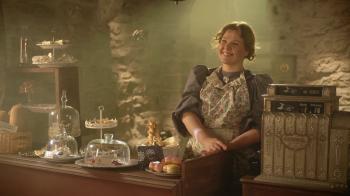

Miss Martha keeps a little bakery, and her life is quite monotonous, not to say boring.
The situation changes as she becomes interested in one of her regular customers - a middle-aged man with good manners. She starts to hope for happiness. She has waited too long.
When the opportunity presents itself, she is ready to seize it. She must show the customer that she cares about him.

Is the story going to come to a happy ending? Are Miss Martha's plans doomed to failure?

You could read this short story here.
Profile Image for Thibault Busschots.
Author 6 books211 followers
December 17, 2025
Miss Martha runs a little bakery and she begins to take interest in one of her customers. He’s a man who wears worn and wrinkled clothes, but he looks neat and has good manners. The curious thing about him is that he always buys stale bread, which is cheaper than fresh bread. Her kind heart is craving for love and she decides one day to subtly make her affections known to him.


What a delicious twist. A very short story about a woman in love and something else that’s worth discovering for yourself. It’s sad and it’s sweet, and worth a read.
Profile Image for Hany Adeeb.
Author 7 books163 followers
August 15, 2021
بائعة الخبز و رجل من خلفية المانية
تعاطفت معه لانه كان منظره جميل رغم انه يبدو عليه الفقر
و كان لا يطلب شيئا منها سوى الخبز الجاف
توقعت انه رسام
حاولت ان تفتح موضوعات معه
وضعت لوحة للبندقية امام الخبز
للتاكد انه فنان

و في احد الايام قررت بدهاء ان تضع شيئا من الزبد مع الخبز الجاف لكي تساعده و لكي يتغذى جيدا

الست لغاية هنا حاجة زي الفل

و لكن ما لا تتوقعه هذه المدام ..ان الرجل لم يشتري الخبز يوما للاكل .. و لكنه كان يمسح به خطوطه
التي يرسم بها على اوراق لمسابقة مشترك فيه

فافسدت الزبدة عمله
جاء مع صديقه و صب غضبه عليها متهما اياه بالالمانية انها ساحرة افسدت عمله متداخلة
مثل القطط

و تحولت توقعاتها الرومانسية الى كابوس .. فرجعت و ارتدت ملابسها العادية و سكبت خليط صنعته مخصوص لرجلها
المنشود
Profile Image for Andria Potter.
Author 2 books95 followers
September 24, 2022
This was very good, brief, yet full of character! Miss Martha was enjoyable and "Meacham" which is part of her name made me think oddly of Diana Gabaldons "Beecham". Perhaps a link between the two? O. Henry came well before Diana however, but the last names are remarkably similar. This was quite fun if a bit sad. 4.5 ⭐!
253 reviews39 followers
June 6, 2018
never assume..

trying to be over smart just make you fool..
Profile Image for Firefox.
45 reviews1 follower
May 12, 2019
Maybe I shouldn't so serious, but the comments are just too cruel, why nobody thinks the artist should share some responsibilities for the ruined draft? I think her love is quite admirable.
This entire review has been hidden because of spoilers.
Profile Image for Dave.
1,359 reviews11 followers
April 19, 2020
A hilarious story!
Profile Image for  Bon.
1,349 reviews202 followers
May 1, 2020
just read this on my lunch break. what a sad little tale!
3,496 reviews46 followers
August 27, 2023
4.5⭐


The story is about an unmarried woman running a bakery, who takes a shine to one of her regular customers, a man who she deduces is an artist. It is about loneliness, courtship, and how looks can be deceptive along with a act of kindness backfiring.
98 reviews
September 19, 2022
This story felt a little contrived compared to his other stories. The twist in the end didn't feel right...especially since it involved the benevolent baker Martha.
Profile Image for Classic reverie.
1,868 reviews
May 27, 2025
O. Henry’s “Witches’ Loaves” is a short story that was surprising. I had not thought the ending would turn out for Miss Martha but I did not expect this ending.

Story in short- A older maiden who owns a little bakery makes assumptions about a frequent male customer.

➖➖➖➖➖➖➖➖➖➖➖➖➖➖➖➖➖➖➖➖➖➖➖➖➖➖➖➖➖➖➖➖➖➖➖➖➖
Highlight (Yellow) | Page 2091
MISS MARTHA MEACHAM kept the little bakery on the corner (the one where you go up three steps, and
the bell tinkles when you open the door). Miss Martha was forty, her bank-book showed a credit of two
thousand dollars, and she possessed two false teeth and a sympathetic heart. Many people have married
whose
Highlight (Yellow) | Page 2091
chances to do so were much inferior to Miss Martha’s. Two or three times a week a customer came in in
whom she began to take an interest. He was a middle-aged man, wearing spectacles and a brown beard
trimmed to a careful point. He spoke English with a strong German accent. His clothes were worn and
darned in places, and wrinkled and baggy in others. But he looked neat, and had very good manners.
Highlight (Yellow) | Page 2091
He always bought two loaves of stale bread. Fresh bread was five cents a loaf. Stale ones were two for
five. Never did he call for anything but stale bread. Once Miss Martha saw a red and brown stain on his
fingers. She was sure then that he was an artist and very poor. No doubt he lived in a garret, where he
painted pictures and ate stale bread and thought of the good things to eat in Miss Martha’s bakery. Often
when Miss Martha sat down to her chops and light rolls
Highlight (Yellow) | Page 2091
and jam and tea she would sigh, and wish that the gentle-mannered artist might share her tasty meal
instead of eating his dry crust in that draughty attic. Miss Martha’s heart, as you have been told, was a
sympathetic one. In order to test her theory as to his occupation, she brought from her room one day a
painting that she had bought at a sale, and set it against the shelves behind the bread counter. It was a
Venetian scene. A splendid marble palazzio (so it said on

Page 2092
Highlight (Yellow) | Page 2092
the picture) stood in the foreground — or rather forewater. For the rest there were gondolas (with the
lady trailing her hand in the water), clouds, sky, and chiaro-oscuro in plenty. No artist could fail to
notice it. Two days afterward the customer came in. “Two loafs of stale bread, if you blease. “You haf
here a fine bicture, madame,” he said while she was wrapping up the bread.

❌❌❌❌❌❌❌❌❌❌❌❌❌❌❌❌❌❌❌❌❌❌❌❌❌❌❌❌❌❌❌❌❌❌❌❌❌❌❌spoiler alert


Martha thought the customer was a poor artist, his hands stained with paint and he daily buys stale bread, she imagines helping him and more but after the last time he came, she gave him butter in the bread, without telling him. She was wrong and her kind gesture was her last to men, I am sure because he ruined his chance for a project for the draftsman for he used the bread for the links of an eraser. He was furious.


Highlight (Yellow) | Page 2092
“Yes?” says Miss Martha, revelling in her own cunning. “I do so admire art and” (no, it would not do to
say “artists” thus early) “and paintings,” she substituted. “You think it is a good picture?” “Der balance,”
said the customer, “is not in good drawing. Der bairspective of it is not true. Goot morning, madame.”
He took his bread, bowed, and hurried out. Yes, he must be an artist. Miss Martha took the picture back
to her room.
Highlight (Yellow) | Page 2092
How gentle and kindly his eyes shone behind his spectacles! What a broad brow he had! To be able to
judge perspective at a glance — and to live on stale bread! But genius often has to struggle before it is
recognized. What a thing it would be for art and perspective if genius were backed by two thousand
dollars in bank, a bakery, and a sympathetic heart to — But these were day-dreams, Miss Martha. Often
now when he came he would chat for a while across the
Highlight (Yellow) | Page 2092
showcase. He seemed to crave Miss Martha’s cheerful words. He kept on buying stale bread. Never a
cake, never a pie, never one of her delicious Sally Lunns. She thought he began to look thinner and
discouraged. Her heart ached to add something good to eat to his meagre purchase, but her courage
failed at the act. She did not dare affront him. She knew the pride of artists. Miss Martha took to wearing
her blue-dotted silk waist behind the counter. In the back room she
Page 2093
Highlight (Yellow) | Page 2093
cooked a mysterious compound of quince seeds and borax. Ever so many people use it for the
complexion. One day the customer came in as usual, laid his nickel on the showcase, and called for his
stale loaves. While Miss Martha was reaching for them there was a great tooting and clanging, and a fire-
engine came lumbering past. The customer hurried to the door to look, as any one will. Suddenly
inspired, Miss Martha seized the opportunity.

Highlight (Yellow) | Page 2093
On the bottom shelf behind the counter was a pound of fresh butter that the dairyman had left ten
minutes before. With a bread knife Miss Martha made a deep slash in each of the stale loaves, inserted a
generous quantity of butter, and pressed the loaves tight again. When the customer turned once more
she was tying the paper around them. When he had gone, after an unusually pleasant little chat, Miss
Martha smiled to herself, but not
Highlight (Yellow) | Page 2093
without a slight fluttering of the heart. Had she been too bold? Would he take offense? But surely not.
There was no language of edibles. Butter was no emblem of unmaidenly forwardness. For a long time
that day her mind dwelt on the subject. She imagined the scene when he should discover her little
deception. He would lay down his brushes and palette. There would stand his easel with the picture he
was painting in which the perspective was beyond criticism. He would prepare for his luncheon of dry
bread and water. He would slice into a loaf — ah! Miss Martha blushed. Would he think of the hand that
placed it there as he ate? Would he — The front door bell jangled viciously. Somebody was coming in,
making a great deal of noise. Miss Martha hurried to the front. Two men were there. One was a young
man smoking a pipe — a
Page 2094
Highlight (Yellow) | Page 2094
man she had never seen before. The other was her artist. His face was very red, his hat was on the back
of his head, his hair was wildly rumpled. He clinched his two fists and shook them ferociously at Miss
Martha. At Miss Martha. “Dummkopf!” he shouted with extreme loudness; and then “Tausendonfer!” or
something like it in German. The young man tried to draw him away. “I vill not go,” he said angrily,
“else I shall told her.”
Highlight (Yellow) | Page 2094
He made a bass drum of Miss Martha’s counter. “You haf shpoilt me,” he cried, his blue eyes blazing
behind his spectacles. “I vill tell you. You vas von meddingsome old cat!” Miss Martha leaned weakly
against the shelves and laid one hand on her blue-dotted silk waist. The young man took the other by
the collar. “Come on,” he said, “you’ve said enough.” He dragged the angry one out at the door to the
sidewalk, and then came back.
Highlight (Yellow) | Page 2094
“Guess you ought to be told, ma’am,” he said, “what the row is about. That’s Blumberger. He’s an
architectural draftsman. I work in the same office with him. “He’s been working hard for three months
drawing a plan for a new city hall. It was a prize competition. He finished inking the lines yesterday.
You know, a draftsman always makes his drawing in pencil first. When it’s done he rubs out the pencil
lines with handfuls of stale bread crumbs. That’s better than India rubber.

Highlight (Yellow) | Page 2094
“Blumberger’s been buying the bread here. Well, to-day — well, you know, ma’am, that butter isn’t —
well, Blumberger’s plan isn’t good for anything now except to cut up into railroad sandwiches.” Miss
Martha went into the back room. She took off the blue-dotted silk waist and put on the old brown serge
she used to wear. Then she poured the quince seed and borax mixture out of the window into the ash
can.
362 reviews41 followers
July 1, 2021
I love a good moral of the story tale. Never make assumptions!
Profile Image for Shweta Kesari.
Author 5 books22 followers
August 8, 2020
I'm not sure as what O. Henry has in store for his readers in this story. But, I got a blur picture of it that speaks that your good intention can even make you pay. Sometimes the goodness in you can make you pay which is a very evident fact in 21st century.
Profile Image for K. Anna Kraft.
1,178 reviews38 followers
November 6, 2017
I have arranged my takeaway thoughts into a haiku:

"Pleasing assumptions
Made without direct questions
Lead to bad endings."
Profile Image for Prashant.
70 reviews57 followers
May 5, 2018
Summary : "A little knowledge is a dangerous thing."
Profile Image for April Helms.
1,457 reviews8 followers
July 10, 2024
This short story, while amusing at first, has a twist that's actually quite sad. It's a tale of a middle-aged baker, her distinguished customer, and the perils of jumping to wrong conclusions. In this narrative, the result of the erroneous assumptions is nothing short of disastrous. I do like the story, title is in poor taste, though.
39 reviews34 followers
September 23, 2024
I found this amazingly written. I did not see the ending coming at all. I laughed and this book made me feel good. I do not know if it was written to make the person feel good but this story is light and funny!.
Profile Image for Kari Ivanova.
376 reviews4 followers
April 25, 2025
Разказът подчертава как добрите намерения, когато не са основани на пълно разбиране на ситуацията, могат да доведат до нежелани последици. О. Хенри използва характерния си стил с неочакван край, за да илюстрира важността на комуникацията и предпазливостта при правене на предположения.
Profile Image for Julia.
94 reviews4 followers
December 30, 2017
Goes to show what happens when you assume!
Profile Image for zi.
52 reviews2 followers
December 24, 2025
it is sad that sometimes our kind deed can inadvertently ruin all of the sincere things we’ve done
Profile Image for Atiyeh.
266 reviews
March 24, 2025
داستان در موردِ یک خانم مجردِ میانسال به اسم مارتاست که بسیار خوش قلبه، نونوایی داره و تلاش میکنه نظرِ یکی از مشتریاش رو به خودش جلب کنه.

O. Henry’s short story Witches' Loaves is a classic example of his signature storytelling style—witty, ironic, and filled with a touch of bittersweet humour. The story follows Miss Martha Meacham, a kindhearted, middle-aged bakery owner who takes a special interest in a mysterious, quiet customer—a seemingly struggling artist who regularly buys stale bread. Believing she is helping him, Miss Martha decides to add butter to his loaves one day, expecting to improve his meals. However, her well-intentioned act leads to an unexpected and ironic twist.

O. Henry masterfully crafts the story with his trademark irony and sharp observations of human nature. The narrative is simple yet deeply engaging, highlighting themes of loneliness, kindness, and misjudgment. Miss Martha's character is both endearing and relatable—her small acts of care stem from a longing for companionship, making the story’s outcome all the more poignant.

The twist at the end is both humorous and tragic, reinforcing O. Henry’s signature storytelling approach, where misunderstandings often lead to surprising consequences. The story reminds readers of the complexities of kindness and the unpredictable nature of human interactions.

Witches' Loaves is a short but impactful tale, perfect for those who enjoy O. Henry’s blend of humour and irony. It leaves readers reflecting on the nature of assumptions and the unintended effects of good intentions.
Profile Image for Amin Bachari.
192 reviews
December 24, 2025
داستان های این نویسنده برای پیج های داستان کوتاه فیس بوک و اینستاگرام جالبن

یادمه دورانی که فیس بوک توی ایران مد بود، داستان های این شکلی زیاد گفته میشدن

خوانش دوم (سه دی ۱۴۰۴):

مارتا زن ۴۰ ساله ای بود که سنش برای ازدواج داشت بالا می‌رفت. توی اون زمان به اون ترشیده (Spinster) میگفتن. اون در وجودش نیاز به عشق رو میدید.

و وقتی مشتری اون ازش نون مونده می خرید، اون از راه حل قطعی که این بود که بهش خوردنی های خوشمزه تر تعارف کنه فرار میکرد و در نهایت تصمیم گرفت به صورت مخفیانه کره ی خوشمزه در نان مانده جاساز کنه که عشقش رو به طرف نشون بده و طبق داستان همین فاجعه آفرید.

شاید دلیل اینکه مارتا نتوانسته بود عشق پیدا کنه و ازدواج کنه این بود که اون از رو به رویی مستقیم ترس داشت و به جای راه حل مستقیم و کاربردی، درباره ی اون رویاپردازی میکرد و حتی عشقش رو مخفیانه ابراز میکرد. همین باعث شد اون هیچوقت مشکلش حل نشه.

آخر سر هم مارتا شد آدم بده طبق عنوان داستان عجوزه ای بود که میخواست با نان هاش اون شخص رو طلسم کنه (Witches' Loaves)

برای دچار نشدن به عاقبت مارتا بهتره با مسائل مستقیما رو به رو بشیم.
Profile Image for Pallavi Kamat.
212 reviews76 followers
March 16, 2016
The build-up to the end was great. If only wishes were horses!
Displaying 1 - 30 of 32 reviews

Can't find what you're looking for?

Get help and learn more about the design.