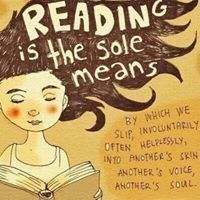
This. Book. It is my favourite book that I have ever read, ever. And for this book book work to say such a thing, you know it has to be good! It was…..I don’t know. It had all the elements of a good book — humour, sadness, mystery, a mission, and growth in all the characters.
Tracy Groot has a way of bringing out the humanity on her characters. Nothing seems to be staged, nothing seems to be cliche, nothing seems to be overdone. Emotions are expressed beautifully, all of the characters seem to really, truly feel. By the time you are done reading, you realize that the characters have become your friends and that they have taken you on an emotional journey and taught you a lesson along the way. The style of writing Ms. Groot has is unlike any other that I’ve read. The words she uses are big and wonderful and descriptive. The way she uses punctuation creates an element of authenticity to the story.
There were several elements I enjoyed about the actual story line itself — my favourite was the romance of the two characters that developed slowly. And I am using “romance” in the original intent. From the 1828 dictionary: “A fabulous relation or story of adventures and incidents, designed for the entertainment of readers; a tale of extraordinary adventures….a tale of love or war, subjects interesting the sensibilities of the heart, or the passions of wonder and curiosity.” This was a tale of terrible atrocities done to children in WW2. Not Jewish extermination camps, which is what I originally assumed it was about, but about the experiments done upon the children who were born with down syndrome, cerebral palsy, blind, deaf, etc. sanctioned by Hitler. One man sets out to bring help to these children, secreting some of them away, until he was killed. And so he passes on this information to others, giving them the daunting task of changing America’s minds about the war and bringing to the public the information he has gathered. The young detective who is involved with this has a personal tie to the whole ordeal — his baby sister has down syndrome.
In and amidst this story line, you have a tale of a soldier who is helping an injured lieutenant to Dunkirk. You read about the retreat through the soldiers eyes, of the many deaths of comrades, and of the faith the lieutenant shares with those around him even though he can’t even remember his own name. You see the beaches of Dunkirk with them and cheer on the civilians who have come to help the soldiers. You share the fears of the soldiers as they head back home, seemingly defeated, wondering how everyone will greet them once they arrive.
I mentioned the romance between the two main characters being my favourite part of the story. And it was. This romance was so sweet and subtle, that I was surprised by the end of the book. Instead of being filled with a bunch of gushy love sentiments, the two are busy working feverishly together towards the same goal: that of rescuing the children. Maggie Bright was the boat used to help these children, and it holds the key to everything else about these experiments, so they meet. And they learn to trust each other through working hard together toward one common goal. They get to know each other, not through a sappy courtship, but through a realization that they can work together towards a purpose greater than either of them. And that, my friends, is rare indeed in a story.
This book was wonderful. I will read it again, very soon. ‘Cause I tend to like to re-visit and re-acquaint myself with my “friends” from my books =) I would lend this book out and pass it on, as the story should be read by everyone. The underlying question of this book is “What can I be doing now? How can I be helping?” I don’t know that this book is just for older readers — there were thematic elements, but nothing worse than, say, Douglas Bond’s War in the Wastelands. Even the part about the children isn’t described in detail, you are led to know what is happening. I would say it depended on the maturity of the person reading it, and the parents wishes.
My favourite quote:
"It was the worst picture she had seen in her life. It was worse than the crying baby in Shanghai.
‘Sometimes we need to see why we fight,’ said the burglar vicar gently. ’We need to see what God sees. Then we can understand just a little better His wrath, and His justice, and His love.’
He slipped the photograph from her hand, put it in the folder, slipped the folder from her. She pulled the pillow over her face and wept.
She’d not forget that image, not for the rest of her life.
She cried herself deaf for the child and for Arthur Vance; for Murray whose Rocket Kid could not save this child, and for William, because she finally understood what it felt like to be eviscerated.
She wept that she could not go and die for this boy.
‘I’m utterly useless!’ she screamed into the pillow, and finally came to her defeated senses. A good cry, and she did not feel better.
‘You are hardly useless,’ said the Burglar Vicar.
‘Oh really? I can’t even sit up.’
‘You can pray.’
‘How do you know it does any good?’
‘It’s better than moping, which does no good at all.”
She supposed it would be better to pray than to mope. The Shrew said prayer held them to their tasks. She said she saw before her eyes that it worked. ‘Yes, yes — I can pray!’"