

What do you think?

Das Flirren am Horizont
1976 herrscht Dürre in Europa, seit Wochen drückt eine wahnsinnige Hitze auf die Felder – eine Katastrophe für die Landwirtschaft. Den Hof der Sutters in der französischen Schweiz trifft es besonders hart: Der Bauer und Familienvater hat sein ganzes Vermögen in die Hühnerzucht gesteckt, und die Küken sterben in der Hitze weg; die Mutter quartiert eine geheimnisvolle Fremde auf dem Hof ein, die sich als ihre Geliebte herausstellt; der geistig zurückgebliebene Knecht Rudy wird, als ein fürchterliches Gewitter ausbricht, von einem Balken erschlagen; und für den 13-jährigen Gus ist es das Ende seiner Kindheit. Wuchtig, farbig, zum Anfassen plastisch lässt Butis Roman eine Welt entstehen im Moment ihres Untergangs.
192 pages, Hardcover
First published April 1, 2013
Ratings & Reviews
Friends & Following
Create a free account to discover what your friends think of this book!
Community Reviews
Displaying 1 - 30 of 59 reviews

April 30, 2022
1976 saw a fierce heat wave that brought drought to Switzerland. Narrated by 13 year old Gus, the setting is a farm in the canton of Vaud. Gus helps his father and the farmhand, Rudi, son of a distant cousin, who has Down’s syndrome.
In an effort to improve the family’s financial situation, the father has invested his savings and taken a loan to purchase chickens. But the excessive heat turns their newly installed metal-roofed coop into an oven. Each morning there are more carcasses to clear away. When his work is done, Gus visits his grandfather who lives close by, and escapes the temperature by sleeping in the stall of his beloved and elderly horse.
Cécile, a family friend who works at the post office, tries to bring some order to what seems a doomed situation. But the financial woes of farm intensify and the relationships that bind the family together are tested to breaking point.
Buti skilfully amplifies the tension and delivers a final scene that is both a literal and figurative deluge.
This is an unexpectedly moving story about the power of nature, and man’s valiant but futile efforts to harness it.
In an effort to improve the family’s financial situation, the father has invested his savings and taken a loan to purchase chickens. But the excessive heat turns their newly installed metal-roofed coop into an oven. Each morning there are more carcasses to clear away. When his work is done, Gus visits his grandfather who lives close by, and escapes the temperature by sleeping in the stall of his beloved and elderly horse.
Cécile, a family friend who works at the post office, tries to bring some order to what seems a doomed situation. But the financial woes of farm intensify and the relationships that bind the family together are tested to breaking point.
Buti skilfully amplifies the tension and delivers a final scene that is both a literal and figurative deluge.
This is an unexpectedly moving story about the power of nature, and man’s valiant but futile efforts to harness it.

October 25, 2019
Apbrīnoju autorus,kuri caur it kā necilu cilvēku dzīvi spēj parādīt tik daudz. Tāds "biezs" stāsts par ģimenes attiecībām, kur nozīme ir katram sīkumam un katram lielam darbam vai lēmumam.
Ir notikumi,kurus mēs nevaram ietekmēt. Mūsu neveiksmes var būt atkarīgas no mums, no laikapstākļiem, no citu cilvēku lēmumiem, bet varbūt neveiksmes cēlonis ir balta dūja? Jā, vainīga ir baltā dūja. Kāpēc? Jo tā ir vieglāk.
Man ļoti patika.
Ir notikumi,kurus mēs nevaram ietekmēt. Mūsu neveiksmes var būt atkarīgas no mums, no laikapstākļiem, no citu cilvēku lēmumiem, bet varbūt neveiksmes cēlonis ir balta dūja? Jā, vainīga ir baltā dūja. Kāpēc? Jo tā ir vieglāk.
Man ļoti patika.

August 15, 2023
Neliels romāns, bet rada pamatīgu karstuma un spriedzes atmosfēru. Labi uzrakstīts. Par zēna bērnības, par viņa pasaules galu. Laimīgu beigu nav, bet tāda jau tā dzīve ir - asinis, sekss un lauksaimniecība.

September 14, 2020
In a story lead by a misogynistic 13-year-old sniffer dog-boy, I don't know what's worse... is it the annoying overuse of simile, disgusting and incessant descriptions of a young girl's body or complete lack of depth in any of the characters?

February 22, 2021
This book had some great literary qualities, but I couldn’t get past the cliché and semi-mysogynistic descriptions of the women characters - so much glorified breast, so little substance in my opinion. The sexist vibe in this book overshadowed it’s better qualities for me.

October 7, 2023
Mit dem Buch bin ich nicht so richtig „warm“ geworden. Die Geschichten rund um den Hitzesommer haben mich nur wenig berührt. Das Leiden der Menschen und Tiere aus den unterschiedlichen Ursachen kann ich zwar nachvollziehen und fand deren Beschreibung auch gelungen, aber die Atmosphäre konnte mich nicht richtig einfangen. Gus Brutalität gegenüber Tier und Mensch war für mich nicht verständlich. Insgesamt ein Buch, das ich zwar beendet habe, das ich aber nicht in guter Erinnerung behalten werde.
August 15, 2022
C'est un très beau roman de formation d'un garçon de 13 ans qui perd son innocence et découvre le désir au cours de l'été caniculaire de 1976. Son monde sera à jamais changé.
Il y a l'amour du travail bien fait; le respect de la terre et des bêtes; la réalisation que sans la nature, l'homme n'est rien; la complicité entre les animaux et les habitants de la ferme; l'amitié et l'amour qui dépassent les préjugés; l'avancée inéluctable de la modernité, face à laquelle l'homme risque de perdre beaucoup, y compris son âme.
Quant aux commentaires ridicules de lecteurs américains - de lectrices plutôt - taxant ce livre de misogyne, ils n'ont encore une fois rien compris, certainement parce qu'ils n'ont pas cherché à comprendre, c'est-à-dire à se transposer dans la peau d'un gamin suisse qui vit sa vie changée à jamais au cours de cet été fatidique de 1976.
Il y a l'amour du travail bien fait; le respect de la terre et des bêtes; la réalisation que sans la nature, l'homme n'est rien; la complicité entre les animaux et les habitants de la ferme; l'amitié et l'amour qui dépassent les préjugés; l'avancée inéluctable de la modernité, face à laquelle l'homme risque de perdre beaucoup, y compris son âme.
Quant aux commentaires ridicules de lecteurs américains - de lectrices plutôt - taxant ce livre de misogyne, ils n'ont encore une fois rien compris, certainement parce qu'ils n'ont pas cherché à comprendre, c'est-à-dire à se transposer dans la peau d'un gamin suisse qui vit sa vie changée à jamais au cours de cet été fatidique de 1976.
This entire review has been hidden because of spoilers.

July 28, 2026
"How exhausting was that summer of 1976, always beating down on our heads!" This Swiss novella takes place during the infamous European heat wave that people still talk about half a century later. It’s a perfect febrile setting for 13-year-old Gus’s coming-of-age, which includes a sexual awakening and the dawning realisation that his parents aren’t perfect; that in fact his family is falling apart. The Sutters’ operations embody the move from family smallholding to an industrial model. They keep a small number of cattle but are also experimenting with large-scale henhouses holding thousands of birds. In contrast with that vast flock, about whose welfare the characters seem indifferent, is an injured white dove that Gus finds and keeps as a pet. (A wise choice by Buti: it’s easier to feel compassion for an individual, such as the dove or the old farm horse, Bagatelle, than for a faceless mass.) Helping Gus and his father on the farm is distant cousin Rudy, who has Down’s syndrome; disrupting their routines is Cécile, Gus’s mother’s friend, who has come to stay with them.
Because of the drought, our minds were full of dreams of coolness and moisture
Dreams of rain, dreams of love, dreams of preserving some mythical family happiness that maybe never existed. Like the weather, everything goes wrong – in tragic ways. It’s all so awful I recoiled. Buti jumps ahead several decades to offer a longer view of the land, but I couldn’t ignore how casually the teenage Gus adopted his father’s violent, misogynistic ways. None of what happens bodes well for the future. The one laugh I got out of the experience was the charity shop accidentally labelling the book “Romance fiction.”
Originally published on my blog, Bookish Beck.
Because of the drought, our minds were full of dreams of coolness and moisture
Dreams of rain, dreams of love, dreams of preserving some mythical family happiness that maybe never existed. Like the weather, everything goes wrong – in tragic ways. It’s all so awful I recoiled. Buti jumps ahead several decades to offer a longer view of the land, but I couldn’t ignore how casually the teenage Gus adopted his father’s violent, misogynistic ways. None of what happens bodes well for the future. The one laugh I got out of the experience was the charity shop accidentally labelling the book “Romance fiction.”
Originally published on my blog, Bookish Beck.

August 11, 2020
Coming of Age Geschichte eines Sommers und der Untergang einer bäuerlichen Familie.

February 12, 2018
På samma sätt som det ofta görs i fransk litteratur, berättas historien i ett lågmält tempo och skildrar, utan att det är direkt uttryckt, starka men tillbakahållna känslor som man anar kommer att omkullkasta allt innan boken är slut. Och på samma franska vis är det realistiskt. Jämfört med många amerikanska berättelser, där huvudpersonen går igenom en kris och kommer ut på andra sidan som en bättre människa, kan man inte räkna med samma lyckliga slut i fransk litteratur.
Torkans år är Roland Butis tredje roman, vilken likt de tidigare har vunnit flera priser i hemlandet Schweiz. Handlingen utspelar sig mestadels på en socialt ganska isolerad gård i den franskspråkiga delen av Schweiz. Här sliter Jean för att få lantbruket att gå runt. Han har nyligen gjort en stor och avgörande investering i en modern ladugård och 10.000 kycklingar. När det inte regnar på hela sommaren torkar grödorna bort och djuren dör i värmen.
Historien om den olycksaliga sommaren år 1976 berättas av Gus, den då trettonårige sonen i familjen. Det är genom honom vi lär känna alla de färgstarka karaktärerna i boken. Förutom Gus och hans föräldrar är det den unge släktingen Rudy, som Jean åkte och hämtade till gården när Rudys föräldrar tänkte skriva in honom på en institution. Det är den excentriske farfar Anni och hans gamla häst Bagatelle, duvan utan namn och hunden Shérif. Här finns också Mado, Gus närmaste vän, och hans syster Léa.
När hustruns vackra väninna flyttar in på gården omkullkastar det allting. Ingenting är längre som förut och ingenting kan bli vad det var. Det är genom Gus’ ögon vi ser hur föräldrarna förändras av det som sker. Den kraftfulle och stabile fadern, som inte i ord men i handling visar att han älskar sin hustru, sina barn och sitt liv på gården. Som kommer helt ur balans när hustrun oväntat visar en ny sida av sig själv, och vid en tid då familjen utkämpar sin värsta kamp väljer att bryta banden med familjen för att leva ett helt annat liv.
Det är olycksbådande och tragiskt, men hela tiden med en varmhjärtad och humoristisk underton. Nästan genast när jag läst ut boken känner jag att jag kommer att vilja läsa den igen, övertygad om att den rymmer ännu mer som jag säkert missade vid första läsningen. En riktigt fin och minnesvärd bok.
Torkans år är Roland Butis tredje roman, vilken likt de tidigare har vunnit flera priser i hemlandet Schweiz. Handlingen utspelar sig mestadels på en socialt ganska isolerad gård i den franskspråkiga delen av Schweiz. Här sliter Jean för att få lantbruket att gå runt. Han har nyligen gjort en stor och avgörande investering i en modern ladugård och 10.000 kycklingar. När det inte regnar på hela sommaren torkar grödorna bort och djuren dör i värmen.
Historien om den olycksaliga sommaren år 1976 berättas av Gus, den då trettonårige sonen i familjen. Det är genom honom vi lär känna alla de färgstarka karaktärerna i boken. Förutom Gus och hans föräldrar är det den unge släktingen Rudy, som Jean åkte och hämtade till gården när Rudys föräldrar tänkte skriva in honom på en institution. Det är den excentriske farfar Anni och hans gamla häst Bagatelle, duvan utan namn och hunden Shérif. Här finns också Mado, Gus närmaste vän, och hans syster Léa.
När hustruns vackra väninna flyttar in på gården omkullkastar det allting. Ingenting är längre som förut och ingenting kan bli vad det var. Det är genom Gus’ ögon vi ser hur föräldrarna förändras av det som sker. Den kraftfulle och stabile fadern, som inte i ord men i handling visar att han älskar sin hustru, sina barn och sitt liv på gården. Som kommer helt ur balans när hustrun oväntat visar en ny sida av sig själv, och vid en tid då familjen utkämpar sin värsta kamp väljer att bryta banden med familjen för att leva ett helt annat liv.
Det är olycksbådande och tragiskt, men hela tiden med en varmhjärtad och humoristisk underton. Nästan genast när jag läst ut boken känner jag att jag kommer att vilja läsa den igen, övertygad om att den rymmer ännu mer som jag säkert missade vid första läsningen. En riktigt fin och minnesvärd bok.
May 27, 2016
Variācija par tēmu - vīrietim neveicas. :)
Bet vispār šo grāmatu vajadzētu obligāti izlasīt visiem, kas ir iedomājušies, ka putnkopība ir viegla un vienkārša nodarbe.
Un, Dieva dēļ, nekad nevelciet mājās pussprāgušus baložus.
Bet vispār šo grāmatu vajadzētu obligāti izlasīt visiem, kas ir iedomājušies, ka putnkopība ir viegla un vienkārša nodarbe.
Un, Dieva dēļ, nekad nevelciet mājās pussprāgušus baložus.

December 1, 2017
Novel set in Canton Vaud, SWITZERLAND - it's the Summer of 1976
Auguste (Gus) Sutter is 13 when the Summer drought of 1976 clamps its iron grip across Europe. He is part of a farming family in French speaking Switzerland. His father has just invested in a large chicken coup, where temperatures are kept regular through automation – this is the make or break investment his father has made to keep their head above water. But there is no water, the land is dry and cracking…
A little dove, a tame and biddable magician’s dove, lands in Gus’s life, unable to fly as it is missing its tail feathers. A mutual attachment between the two ensues but from the point of its arrival, life seems to disintegrate. The heating in the hen house becomes erratic as the fans fight against the rising heat, the hens stop eating and start to die. Bagatelle, the ancient horse on the farm searches out what seems to be her final resting place.
There is a sexual tension that overlays the novel, heightened when Cécile, her mother’s metropolitan friend, arrives in the house. Gus, in early adolescence, can only guess at what might be going on in the household. Rudy, who joined the Sutter household many years ago, is a distant relative with learning difficulties who attends to his tasks on the farm with dedication, but is always searching for a female partner; however, he is not skilled at seduction, nor knows how to handle his sexual cravings. The brooding sexual electricity is heightened by the stress of the all pervading heat.
This is a coming-of-age story firmly set in the tradition of European story-telling. It is melancholic, stark and peppered with wry humour. Grandfather is a chain smoker and his annual target is to smoke over a kilometre of cigarettes by the end of the year. It delves under the bucolic veneer of Switzerland, portraying people struggling to survive both emotionally and physically.
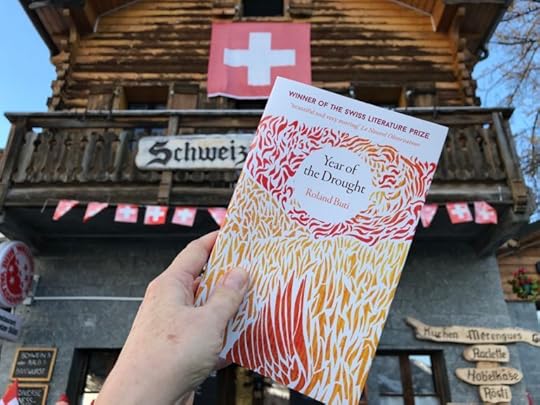
I read this book whilst spending a few days in Switzerland and it played with my imagination as I walked past brooding farmhouses that are so typical of the country, imagining the lives of the people within.
This is a beautifully written, slim novel. Much credit to the translator, Charlotte Mandell. If you want to delve deeper in the narrative, I am sure a quick reference to Freud’s work will get you exploring themes of sex/death and patriarchy.
The Scotsman describes the book as “…an agricultural version of A Streetcar Named Desire, only with a few kids thrown into the emotional pressure cooker along with the adults.”
Auguste (Gus) Sutter is 13 when the Summer drought of 1976 clamps its iron grip across Europe. He is part of a farming family in French speaking Switzerland. His father has just invested in a large chicken coup, where temperatures are kept regular through automation – this is the make or break investment his father has made to keep their head above water. But there is no water, the land is dry and cracking…
A little dove, a tame and biddable magician’s dove, lands in Gus’s life, unable to fly as it is missing its tail feathers. A mutual attachment between the two ensues but from the point of its arrival, life seems to disintegrate. The heating in the hen house becomes erratic as the fans fight against the rising heat, the hens stop eating and start to die. Bagatelle, the ancient horse on the farm searches out what seems to be her final resting place.
There is a sexual tension that overlays the novel, heightened when Cécile, her mother’s metropolitan friend, arrives in the house. Gus, in early adolescence, can only guess at what might be going on in the household. Rudy, who joined the Sutter household many years ago, is a distant relative with learning difficulties who attends to his tasks on the farm with dedication, but is always searching for a female partner; however, he is not skilled at seduction, nor knows how to handle his sexual cravings. The brooding sexual electricity is heightened by the stress of the all pervading heat.
This is a coming-of-age story firmly set in the tradition of European story-telling. It is melancholic, stark and peppered with wry humour. Grandfather is a chain smoker and his annual target is to smoke over a kilometre of cigarettes by the end of the year. It delves under the bucolic veneer of Switzerland, portraying people struggling to survive both emotionally and physically.
I read this book whilst spending a few days in Switzerland and it played with my imagination as I walked past brooding farmhouses that are so typical of the country, imagining the lives of the people within.
This is a beautifully written, slim novel. Much credit to the translator, Charlotte Mandell. If you want to delve deeper in the narrative, I am sure a quick reference to Freud’s work will get you exploring themes of sex/death and patriarchy.
The Scotsman describes the book as “…an agricultural version of A Streetcar Named Desire, only with a few kids thrown into the emotional pressure cooker along with the adults.”
March 21, 2023
Sarežģīti novērtēt konkrēto darbu - no vienas puses atmiņu stāsts par kādu "īpašu" vasaru bērna/jaunieša dzīvē, kuru autors izcili aprakstīja. Savukārt no otras puses - tāds virspusējs stāsts, kuru iespējams varēja izvērstāk uzrakstīt (bet ne parāk daudz).
Lieku četras zvaigznes, jo autors meistarīgi aprakstīja pieredzi/ieskatu ģimenē, plus bija meistarīgi uzrakstīts.
Lieku četras zvaigznes, jo autors meistarīgi aprakstīja pieredzi/ieskatu ģimenē, plus bija meistarīgi uzrakstīts.

July 23, 2025
This book initially held great promise for me; it's beautifully written, and there are some incredibly poignant descriptive passages. But, ultimately, I didn't warm to any of the characters (aside, perhaps, from holding a small soft spot for Rudy), and it really was all quite depressing.

September 17, 2018
2,5 owls.
Tror jag hade uppskattat denna bok mer på originalspråket (om jag nu kunde franska).
Tror jag hade uppskattat denna bok mer på originalspråket (om jag nu kunde franska).

August 14, 2022
Really enjoyed this, felt the ending was maybe wrapped up a little too quickly, a glimpse at a pivotal summer in the life of teenage boy and his family (both human & animal!)

May 15, 2026
(auf deutsch gelesen)
man spürt die dürre förmlich beim lesen.
man spürt die dürre förmlich beim lesen.

August 10, 2026
très bien mais roland buti doit expliquer la raison de la scène du réservoir souterrain

Read
April 26, 2018Inte alls muntert, men riktigt bra.

September 6, 2018
Finstämd och sorglig. Slutscenen läste jag hulkande på 53ans hållplats.
December 23, 2018
During the intense summer drought of 1976, which all who lived through it can never forget, thirteen-year-old Gus is growing up on the family farm in French-speaking Switzerland. In what seems at first like a slow-burning, even somewhat bland “coming of age” novel, narrated years later by Gus himself, what really held my attention was the expressive clarity of the writing: the vivid descriptions of the merciless, monotonous heat, the parching of the countryside; the close observations of the working of a farm, the unrelenting hard labour, and vulnerability of the business, in particular the chicken shed in which Gus’s father has borrowed heavily to invest; the gradual revelation of relationships within what initially seems a stable family, seen through the eyes of an unusually thoughtful and perceptive boy, still too young to understand fully what is going on.
For Gus, his father Jean is a rock, unflagging in his physical and mental strength. A peasant at heart, there is a certain rigidity in his attitudes, yet also signs of his essential decency in, for instance, his decision to employ a simple-minded relative Rudy, who would otherwise have been consigned to an asylum which would have driven him totally mad, whereas on the farm he can at least be useful. Jean clearly loves his graceful, child-like wife, yet fails to see her needs, as, married too young, she slaves away at household tasks, too busy to show Gus the love and attention he craves, and with tell-tale sign of stress in the perpetual respiratory problems which may well be psychosomatic.
Apart from helping on the farm, Gus spends his summer caring for the stray dove which has lost its wings in a mishap, exercising Bagatelle, his grandfather’s semi-catatonic, incontinent old draught horse (whose droppings he has to collect), sparring with his disdainful elder sister Léa, half-playing, half-fumbling with the quirky adolescent Mado who pursues him with persistence, all the while slipping into a cartoon-like fantasy world. There is a good deal of irony and humour in all this, as when Gus imagines that the giant, windowless chicken incubator is a mysterious distant planet whose toxic atmosphere contains mutant bacteria with the power to penetrate his tissues in the cunning intention of assuming his appearance.
In reality, it is his stable world that is penetrated by the arrival of his mother’s new friend Cécile, the provocative, opinionated sun-tanned hippy, supposedly needing a place to stay after splitting up with her husband. The story then gathers pace and builds inexorably to a crisis worthy of Thomas Hardy in his darkest mood, or a Greek tragedy. I found the final chapter something of an anti-climax, but perhaps as “the calm after the storm” it was effective. If it struck a note of resignation, a sense of our insignificance in the scale of things, that is maybe what the author intended.
For Gus, his father Jean is a rock, unflagging in his physical and mental strength. A peasant at heart, there is a certain rigidity in his attitudes, yet also signs of his essential decency in, for instance, his decision to employ a simple-minded relative Rudy, who would otherwise have been consigned to an asylum which would have driven him totally mad, whereas on the farm he can at least be useful. Jean clearly loves his graceful, child-like wife, yet fails to see her needs, as, married too young, she slaves away at household tasks, too busy to show Gus the love and attention he craves, and with tell-tale sign of stress in the perpetual respiratory problems which may well be psychosomatic.
Apart from helping on the farm, Gus spends his summer caring for the stray dove which has lost its wings in a mishap, exercising Bagatelle, his grandfather’s semi-catatonic, incontinent old draught horse (whose droppings he has to collect), sparring with his disdainful elder sister Léa, half-playing, half-fumbling with the quirky adolescent Mado who pursues him with persistence, all the while slipping into a cartoon-like fantasy world. There is a good deal of irony and humour in all this, as when Gus imagines that the giant, windowless chicken incubator is a mysterious distant planet whose toxic atmosphere contains mutant bacteria with the power to penetrate his tissues in the cunning intention of assuming his appearance.
In reality, it is his stable world that is penetrated by the arrival of his mother’s new friend Cécile, the provocative, opinionated sun-tanned hippy, supposedly needing a place to stay after splitting up with her husband. The story then gathers pace and builds inexorably to a crisis worthy of Thomas Hardy in his darkest mood, or a Greek tragedy. I found the final chapter something of an anti-climax, but perhaps as “the calm after the storm” it was effective. If it struck a note of resignation, a sense of our insignificance in the scale of things, that is maybe what the author intended.
November 13, 2017
First published in 2014 in Switzerland Year of the Drought by Roland Buti went on to win the prestigious Swiss Literature Prize. Set in the sizzling Summer of 1976 and is a coming of age novel that is just simply beautiful written and a novel that is a must read for anyone who loves great literature.
It is the time of the school holidays and the summer is going to be long and hot and on the family’s farm in Canton of Vaud in Switzerland 13–year-old Gus is the key character in this beautiful novel yet under cloudless skies and endless blue skies this is a tragic story unfolding.
The family have invested everything in thousands of chickens and a modern barn but something clearly is wrong and the heat and drought are now killing the chickens in their hundreds and the crops are now wilting under the baking sun and this is clearly affecting the family and is hitting the farms finances to add to this the arrival of the glamorous Cécile who is a friend of Gus’s mother and life suddenly changes for Gus, now he dreams of those dreams that have been suppressed until now. Our narrator watches as his family is tested like never before the bonds and ties of family unity are now under the most incredible strain and the novel reaches its finale with great tragedy that cannot be undone. The family is literally blown apart. Roland Buti clearly has written a novel that at times is poetic with some humour a novel that one will read and re-read in the future and one not to be ignored. Beautifully constructed and written it is no surprise The Year of the Drought has won awards and a book I am happy to HIGHLY RECOMMEND.
160 Pages.
It is the time of the school holidays and the summer is going to be long and hot and on the family’s farm in Canton of Vaud in Switzerland 13–year-old Gus is the key character in this beautiful novel yet under cloudless skies and endless blue skies this is a tragic story unfolding.
The family have invested everything in thousands of chickens and a modern barn but something clearly is wrong and the heat and drought are now killing the chickens in their hundreds and the crops are now wilting under the baking sun and this is clearly affecting the family and is hitting the farms finances to add to this the arrival of the glamorous Cécile who is a friend of Gus’s mother and life suddenly changes for Gus, now he dreams of those dreams that have been suppressed until now. Our narrator watches as his family is tested like never before the bonds and ties of family unity are now under the most incredible strain and the novel reaches its finale with great tragedy that cannot be undone. The family is literally blown apart. Roland Buti clearly has written a novel that at times is poetic with some humour a novel that one will read and re-read in the future and one not to be ignored. Beautifully constructed and written it is no surprise The Year of the Drought has won awards and a book I am happy to HIGHLY RECOMMEND.
160 Pages.

May 5, 2021
Mein zweiter Quartalskauf bei der @buechergilde war „Das Flirren am Horizont“ von Roland Buti, das 2014 mit dem Schweizer Literaturpreis ausgezeichnet wurde.
Die Geschichte spielt im Hitzesommer 1976 In der Schweiz auf einem Bauernhof und wird aus Sicht des 13-jährigen Gus erzählt, dessen gewohntes Leben sich innerhalb weniger Wochen zerbricht.
Das Beeindruckende an dem Roman sind allerdings nicht in erster Linie die Geschehnisse, sondern die Stimmungen, die Sprache, die Lethargie, mit der Gus die herannahende Katastrophe erlebt und über allem liegt die erdrückende Hitze wie ein Schleier, durch den man auf den Schauplatz sieht.
Mir hat die Sprache unheimlich gut gefallen, auch die Art und Weise, wie man manches aus Gus naiver Sicht für den Leser eher zu erahnen war und nicht plakativ von einem außenstehenden Erzähler geschildert wurde. Ich tue mir allerdings mit Gus schwer, ich kann mich nicht richtig in ihn einfühlen. Für mich war es schwer mit anzuschauen, wie die Katastrophe ihren Lauf nimmt und der Protagonist ebenso wie der Leser nur tatenlos zuschaut bzw. zuschauen kann. Die Taube, die Gus über den ganzen Sommer auf der Schulter sitzt und zu seinem Begleiter und quasi einzig Vertrauten wird, fand ich sehr befremdlich, was aber vielleicht auch an meiner Vogelphobie liegen kann.
Das Flirren am Horizont ist definitiv lesenswert, man darf sich aber auf ein flaues Gefühl in der Magengrube einstellen.
Die Geschichte spielt im Hitzesommer 1976 In der Schweiz auf einem Bauernhof und wird aus Sicht des 13-jährigen Gus erzählt, dessen gewohntes Leben sich innerhalb weniger Wochen zerbricht.
Das Beeindruckende an dem Roman sind allerdings nicht in erster Linie die Geschehnisse, sondern die Stimmungen, die Sprache, die Lethargie, mit der Gus die herannahende Katastrophe erlebt und über allem liegt die erdrückende Hitze wie ein Schleier, durch den man auf den Schauplatz sieht.
Mir hat die Sprache unheimlich gut gefallen, auch die Art und Weise, wie man manches aus Gus naiver Sicht für den Leser eher zu erahnen war und nicht plakativ von einem außenstehenden Erzähler geschildert wurde. Ich tue mir allerdings mit Gus schwer, ich kann mich nicht richtig in ihn einfühlen. Für mich war es schwer mit anzuschauen, wie die Katastrophe ihren Lauf nimmt und der Protagonist ebenso wie der Leser nur tatenlos zuschaut bzw. zuschauen kann. Die Taube, die Gus über den ganzen Sommer auf der Schulter sitzt und zu seinem Begleiter und quasi einzig Vertrauten wird, fand ich sehr befremdlich, was aber vielleicht auch an meiner Vogelphobie liegen kann.
Das Flirren am Horizont ist definitiv lesenswert, man darf sich aber auf ein flaues Gefühl in der Magengrube einstellen.

October 12, 2022
{ 𝐮𝐧𝐞 𝐞́𝐭𝐨𝐢𝐥𝐞 }
j’ai lu ce livre pour mon cours de français et il faut déjà savoir que ça ne ressemble ABSOLUMENT à rien de ce que je lis.
j’ai toujours lu des livres du type young/new adult, romance, fantaisie… et ce livre n’a rien avoir avec ces genres. il se concentre sur la sécheresse de 1976 en suisse et sur l’adolescence d’un garçon de 13 ans qui voit sa vie changer durant cette période.
je dois dire que dès le début, je n’ai pas été attiré par ce livre. le lire ne m’a pas vraiment aidé à améliorer mon avis.
je n’ai pas aimé la façon dont il était écrit : j’ai trouvé cela trop… complexe? disons que la formulation des phrases n’était pas à mon goût, tout simplement.
hormis cela, j’ai eu la chance de rencontrer l’auteur et de discuter de cette œuvre avec lui. quelque chose que peu de gens ont la chance de faire. c’est une personne très sympathique qui a eu l’amabilité de nous parler plus amplement de ce livre et de l’adaptation cinématographique qui en a résulté. je regrette d’ailleurs de ne pas avoir aimé ce livre.
la lecture d’un livre est subjectif ; elle est propre à chacun. ce n’est pas parce que je n’ai pas aimé que ce sera forcément votre cas!
j’ai lu ce livre pour mon cours de français et il faut déjà savoir que ça ne ressemble ABSOLUMENT à rien de ce que je lis.
j’ai toujours lu des livres du type young/new adult, romance, fantaisie… et ce livre n’a rien avoir avec ces genres. il se concentre sur la sécheresse de 1976 en suisse et sur l’adolescence d’un garçon de 13 ans qui voit sa vie changer durant cette période.
je dois dire que dès le début, je n’ai pas été attiré par ce livre. le lire ne m’a pas vraiment aidé à améliorer mon avis.
je n’ai pas aimé la façon dont il était écrit : j’ai trouvé cela trop… complexe? disons que la formulation des phrases n’était pas à mon goût, tout simplement.
hormis cela, j’ai eu la chance de rencontrer l’auteur et de discuter de cette œuvre avec lui. quelque chose que peu de gens ont la chance de faire. c’est une personne très sympathique qui a eu l’amabilité de nous parler plus amplement de ce livre et de l’adaptation cinématographique qui en a résulté. je regrette d’ailleurs de ne pas avoir aimé ce livre.
la lecture d’un livre est subjectif ; elle est propre à chacun. ce n’est pas parce que je n’ai pas aimé que ce sera forcément votre cas!

April 2, 2016
Patiesībā 3,5/4
Es par pašu darbu varētu varbūt 3,5, bet par to sajūtu.... man joprojām mazliet liekas, ka karstums elpo pakausī un zem kājām jūtamas sagrautas pasaules lauskas...
13 gadi vai ne 13 gadi, bet bija epizodes, kurās man radās pretreakcija pret galvenā varoņa domām.... vienkārši...
Taču, then again - ne jau vienmēr ir jāmīl varoņi un viņu domas...
Prezentācijā runāja par cerību, bet man šī grāmata likās skumja...
”Es piederēju pie šīs trauslās ģimenes. Es piederēju pie šīs ģimenes, kur katrs cīnījās par savu mazo ierobežoto telpu. Es biju piespiedis muguru siltajai zemei, pavērsis acis pret debesīm un klusībā prātoju, ka mūsu sapņi ir kā vilciens, kas pienāk stacijā; vilciens, kuru ierauga jau no tālienes žilbinošu starmešu putekļainajā gaismā; vilciens, kas tuvojoties iezīmējas aizvien konkrētāk, lēnām brauc garām, un mēs ilgi to vērojam, lāga nezinot, vai tas apstāsies un vai mēs varēsim tajā iekāpt….”
Es par pašu darbu varētu varbūt 3,5, bet par to sajūtu.... man joprojām mazliet liekas, ka karstums elpo pakausī un zem kājām jūtamas sagrautas pasaules lauskas...
13 gadi vai ne 13 gadi, bet bija epizodes, kurās man radās pretreakcija pret galvenā varoņa domām.... vienkārši...
Taču, then again - ne jau vienmēr ir jāmīl varoņi un viņu domas...
Prezentācijā runāja par cerību, bet man šī grāmata likās skumja...
”Es piederēju pie šīs trauslās ģimenes. Es piederēju pie šīs ģimenes, kur katrs cīnījās par savu mazo ierobežoto telpu. Es biju piespiedis muguru siltajai zemei, pavērsis acis pret debesīm un klusībā prātoju, ka mūsu sapņi ir kā vilciens, kas pienāk stacijā; vilciens, kuru ierauga jau no tālienes žilbinošu starmešu putekļainajā gaismā; vilciens, kas tuvojoties iezīmējas aizvien konkrētāk, lēnām brauc garām, un mēs ilgi to vērojam, lāga nezinot, vai tas apstāsies un vai mēs varēsim tajā iekāpt….”

April 2, 2016
Šķiet nospriegots ir viss- gan daba, gan cilvēku iekšējās un ārējās pasaules, pārmaiņu tuvošanās ir gandrīz fiziski sajūtama. Un, cik ģeniāli no autora puses, to visu vēl pastiprināt ar Gusta nebūt ne objektīvo skatījumu uz to visu, kurā jaušama pašam vēl neapzinātā pārtapšana no puišeļa par jaunu vīrieti.
Ļoti izjusta, atklāta un iespaidiem bagāta grāmata. Apbrīnojami kā autoram izdevies tik vieglā valodā, tik vienkāršos vārdos, tik precīzi un izjusti aprakstīt tik sarežģītas dzīves situācijas. PVN- vīrišķīgā klātbūtne- ļoti izstrādāta un atkailināta vīriešu iekšējā pasaule, šoreiz vairāk caur vīrieša prizmu uz lietām, kas notiek mums apkārt ikdienas…
Ļoti izjusta, atklāta un iespaidiem bagāta grāmata. Apbrīnojami kā autoram izdevies tik vieglā valodā, tik vienkāršos vārdos, tik precīzi un izjusti aprakstīt tik sarežģītas dzīves situācijas. PVN- vīrišķīgā klātbūtne- ļoti izstrādāta un atkailināta vīriešu iekšējā pasaule, šoreiz vairāk caur vīrieša prizmu uz lietām, kas notiek mums apkārt ikdienas…

February 20, 2019
Some gorgeous prose interspersed with some horribly sad events that at times I did skim a little just to help reduce their impact (see below). Seeing as we here in Australia are in the midst of a searing drought, some of Buti's descriptions resonate and beautifully reflect how the land and people suffer. I liked Gus' voice and felt, therefore, his sadness and frustration with the adults around him, especially his mother. I am glad the book wasn't too long, though because it really was a bit too maudlin for me at this time - my dad died recently and I find books like this invite a bit too much retrospection and reminiscing …

June 16, 2016
Meistarīgi radīts fons, sajūtas, kas rodas lasot stāstu, ir īstas. Ir karsti, un pamazām šī karstuma iespaidā sāk jukt un brukt viss dabā un cilvēkos. To visu var saprast. Tam visam var just līdzi. Cilvēki arī tādi dzīvīgi. Bet nu saturs... diezgan slimi. To pašu efektu varēja sasniegt ar saturīgāku stāstu, nekā balodis ar pliku pakaļu, māte lezbiete, vectēvs, kas cigaretes mēra kilometros, garīgi atpalicis radinieks, kas uzbāžas sievietēm, cāļu līķu kalns, un zirgs vārdā Petene. Drusku tā kā par daudz.
October 25, 2017
A story of a fateful, hot summer told by 13-year-old farmer’s son Gus.
In the space of just a few days, he not only has to witness the slow withering of the harvest but also the destruction of his family.
The novel is beautifully written. It is a coming of age story with a feeling of doom from the beginning.
Books that it reminded me of: Robert Seethaler, A Whole Life; Katie Kitamura, Gone to the Forest
In the space of just a few days, he not only has to witness the slow withering of the harvest but also the destruction of his family.
The novel is beautifully written. It is a coming of age story with a feeling of doom from the beginning.
Books that it reminded me of: Robert Seethaler, A Whole Life; Katie Kitamura, Gone to the Forest
This entire review has been hidden because of spoilers.

April 2, 2016
Meistarīgs vides tēlojums, sajūta it kā pašas pakausī dvestu neciešams karstums un pieri klātu nebeidzami ritoši sviedri. Arī sižets tikpat uzkarsēts un jūtelīgs, autors pavisam viegli un neuzbāzīgi ieved savu lasītāju ģimenē, kur līdz ar dabā esošajām stihijām, plosās pašiem sava.
Displaying 1 - 30 of 59 reviews