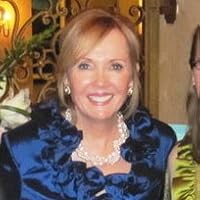
Hush Now, Baby is the story of how a little white girl climbed out of an uneasy childhood in the segregated South…on the backbone of a black woman who loved her unabashedly. A host of African-American women permeated Southern families. One of those stalwart women was Eva Aiken, a central figure in the author’s life from her birth…until Eva staged a sit-in at the girl’s wedding.
The story captures the glorious early years of the Lowcountry South Carolina family then graphically depicts its unraveling. Eva holds them together. The family and the country’s parallel struggles converge. The author lives in bubble-wrap until Civil Rights issues escalate. This story is told without pathos and with graceful restraint—the Southern way.
I don't like to put a book down before I've finished it. However, I was hardly into this book at all - maybe even just several chapters - and it felt as though I was reading a history book ... not my cup of tea! It was telling detail history of all the family members way back in time, but it just didn't hold my interest. I'd like to think that the book became more interesting further in, but I just couldn't get to there.
The majority of this memoir takes place very close to the area I grew up in. SC has not changed all that much from the time it was published, in regard to race, class, equity, equality. We don’t even have a hate crime law, because the Republican dominated state legislature refuses to pass it. The Confederate Flag flies at the Statehouse once a year, Charleston Confederates meet to defend a statue each Sunday morning on the battery. The statue of Strom Thurmond stands proudly on the Statehouse grounds. Books are being banned that teach the real history of enslavement, since it is not taught in schools—entire neighborhoods are named with the word ‘plantation’ in the title, school field trips and weddings occur at old plantation grounds.
The majority of this book is about the author’s life and family, but mentioning how Eva was so involved in it. More so, than her own biological mother. Is it any surprise, that a Black woman was expected to do all the labor? I think the author had good intentions when writing this memoir but still continued to cause harm. We don’t know much of anything about Eva—and slavery was not far behind her. Integration was not as smooth as the author was told or believes it to have been. ‘The Help Becomes Family’ shouldn’t be in the title. Angela grew up as so many of us do, knowing nothing of the pain Black folks have suffered and continue to suffer. This book is the written word of her love for Eva. Eva was given so little, but she deserved so much more.
I didn't really like this book. I read it for my book club, and it sounded interesting enough. But it just didn't really seem to be what it promised. It was supposed to be about the woman who raised her, but it really was more of a memoir of the author, and her entire family tree. Which is fine, but I didn't find most of it very interesting. Every now and then she would throw in how Eva would react to the various people and situations. But the focus was not ever really Eva. I just didn't really like the writing. I could feel her genuine love for Eva, but her stories rambled and always seemed full of unnecessary details. It was only in the last two chapters or so in the book where she started to emerge from her self admitted myopic view of the world that it gets at all interesting. I never would have made it that far if it wasn't for my book club.
I really enjoyed reading this book. I moved to S.C. when I was 13 and had no idea that blacks did not enjoy the freedoms I took for granted. There were still separate waiting rooms in the doctor’s office and separate schools. My senior year the schools integrated so it was a challenging year. I grew up in the west and was blind to what was going on in the south. My parents were my role models and they taught me to treat everyone, no matter their race, with respect and dignity. So many people still need to read books like this one. A heartfelt thank you to the author.
Excellent read, however in the beginning the who's -who, was a little bit confusing. As the book went along you came to realize who went together. I gave it five stars because I couldn't put it down. I read an article about southern white children and their black nannies back in the 50's and 60's, it mentioned this book. I was intrigued since I was raised by a wonderful African-American woman named Hannah. It was a subject close to my heart. Very well written. Thank you for sharing your Eva with us.
This book was such a fabulous read, especially for those from the low-country since many places in the book are familiar. I learned so much about the early days, about why Lake Marion and Lake Moultrie were built. Angela’s memories of her childhood, and the way things were, is historical and one everyone will learn from. She talks about the early days of the Porter Gaude private school and playing with the Whaley children in Charleston. I would recommend this book to anyone who would like to learn more about the Charleston, SC area.
Williams grew up in Lowcountry, South Carolina in the 1950s. Her family employed an African-American woman named Eva Aiken who took care of the children; one of them being the author. She spins a great yarn about her family members and their various peccadillos.
An interesting first-hand commentary on civil rights in the South in the 1950s as seen through Williams' childhood eyes and on into her adulthood.
Spending as much time in Charleston as I do I find local fiction and non fiction fascinating. This is one woman’s look at her upbringing and how to reconcile the relationship she has with her nanny with the changing times in the wider world. I really enjoyed it.
I thought I was getting a book about race relations in the south, possibly something similar to The Help. What I got was a long blog from ancestry.com. DNF.
Most of this book was like reading a high schooler's essay on "My Summer Vacation". The end was a chapter on civil rights in the 60s which was interesting from a southerner's point of view. Having grown up on the north side of Chicago and being 5 years younger than the author, I had a different perspective on the events of that time. We had a maid, Lucille. I was raised by my grandmother and she and my grandfather worked many hours and Gram needed help in our enormous home which was originally bought with 3 other families. Lucille worked for us for many years and I loved her. She took me to piano lessons on the bus and ballet lessons on the "el" when I was too young to go by myself. She put up with me following her around and being a general nuisance. When I was in college, in the late 60s, I offered to drive her home and she invited me into her apartment that was located in a huge project on Chicago's south side. The next time I offered to drive her home, she asked to be dropped off a few blocks from her home because she was told that if I showed up again, she would be beaten and she wouldn't say what would happen to me. She came to my wedding with her niece and they sat at the family table at the reception. Growing up with Lucille made me colorblind. My friends and their parents made me an activist. Had I been old enough, I would have been a freedom rider. Instead I volunteered to work in those same projects to help with reading.
Angela told us the story of her childhood with Eva. Because it is autobiographical, most of the events to an outsider are not that interesting as they are to the person telling them. While I think that getting a cat for my birthday that terrified myself and the entire family for 2 days might be a great story, I don't think that anyone else would find it as fascinating. I lost my favorite doll outside in a makeshift tent in the back yard. I went to South Haven, Michigan for vacations. These are some of the events that took place in my life, but I promise to not bore anyone with a book detailing these mundane events.
So, if you are going to read this book, try the first few chapters and then skip to the last 2. Life is short and there are many books to still read.
If you read The Help, you might be interested to read this memoir by Angela Williams who grew up in South Carolina’s low country during the 50s and 60s. Angela, and her siblings, were raised by Eve – their “help” and this memoir looks into their lives. The author pays tribute to Eve as she tells us courageously and honestly how blind she was to how blacks were treated. It took ten years for the Angela Williams to complete this work and I suspect there was a lot of soul-searching as she put her memories and feelings into words. I wonder how often she must have said to herself "How could I have been so blind and unaware?" I am close in age to the author and I think this memoir is a true reflection of the culture of that time. The dialect is spot on. I felt as if I were right there. Easy read.
Why does the Library of Congress Cataloging-in-Publication Data list this as fiction? It is really a memoir. Had an interesting discussion with a Greenwood lady who knows Angela Williams and her older sister LaClare even better. Interesting to me because of the local connection and my early life in the same time period. I don't think it was really a book about Eva, but more about the author's family -- and Angela's awakening to civil rights developments around her of which she was unaware. I disagree with Pat Conroys blurb: "With beautifully crated prose and deft narrative skill, Angela Williams has written a tribute to the remarkable woman whose love and strength shaped her entire life." If Eva was this person, Angela did not succeed in conveying it.
This book captivated me. I never wanted to put it down. Maybe due to it taking place in my little town or that I personally have attended the small Trinity Episcopal Church. I highly recommend this book.
I loved this peek into the Lowcountry, a true tribute to a remarkable woman. Thanks to Angela Williams for having the courage to tell her family's story, warts and all. I recommend this book to anyone who relishes a good Southern gothic tale and/or a story that deserves telling.
A memoir of a fractured family and the stabilizing role played by their black housekeeper/nanny. An interesting take on historic life in the South that will keep you engaged.