Captain Corelli’s Mandolin meets The Marrying of Chani Kaufman in this cinematic novel about the birth of Israel and the true story of the marriages of convenience that were arranged to smuggle Jewish women out of Nazi-occupied Europe. On the eve of World War II, a ship bearing twenty young men sets sail from the Palestine Territory toward Europe. Eagerly awaiting them on the other side are twenty young women, whom the men have never met. They have been set up in arranged marriages to enable Jewish women to escape Nazi Germany and enter Palestine without being turned back by the British. But when Yaacov Markovitch, a thoroughly unremarkable man, finds himself married to Bella Zeigerman, the most beautiful woman he has ever set eyes upon, things start to get complicated. Yaacov’s fake marriage is the beginning of a lifelong obsession, as he vows to make his beautiful bride, Bella, love him, despite her determination to break free. Their changing fortunes take them through war, upheaval, terrible secrets, tragedy, joy, and loss. Vital, funny, and tender, One Night, Markovitch brilliantly fuses personal lives and epic history in an unforgettable story of endless, hopeless longing, and the desperate search for love.
Ayelet Gundar-Goshen (Hebrew: איילת גונדר-גושן) was born in Israel in 1982 and holds an MA in Clinical Psychology from Tel Aviv University. Her film scripts have won prizes at international festivals, including the Berlin Today Award and the New York City Short Film Festival Award. Her debut novel, One Night, Markovitch, won the Sapir Prize in 2013 for best debut and is being translated into five languages.
Literatura israelense contemporânea. Obra premiada. Toques de realismo fantástico. Contexto histórico envolvendo a Segunda Guerra Mundial e a Guerra de libertação de Israel.
Não preciso nem dizer que eu comecei essa leitura com uma baita expectativa, já que ela reúne várias características que adoro em uma só obra. É verdade que as primeiras 50 páginas não me pegaram muito. No entanto, ainda no começo há uma reviravolta na história e o ritmo da leitura me prendeu. Os personagens são bem construídos e o enredo foi gostoso de ler. Senti como se estivesse acompanhando uma boa novela, com vários núcleos narrativos que se ligam por meio de romances, brigas, revoltas e, até mesmo, solidão. Uma solidão que conecta… Isso é possível?
O personagem que dá nome ao livro é Markovitch, um jovem sem graça, daqueles que não se destacam por coisa alguma. Markovitch mora em uma colônia, administrada por uma organização que luta pelo estabelecimento do Estado de Israel. A sua vida começa a tomar um rumo diferente quando, para ajudar o seu amigo a fugir de uma encrenca, é mandado para a Europa, onde conheceria sua futura e temporária esposa. Temporária porque ele deveria se casar com uma judia para ajudá-la a fugir do nazismo.
A mulher, Bela, é uma jovem linda, que atrai a atenção de todos ao seu redor. E isso talvez a tenha prejudicado, já que, ao invés de receber o divórcio assim que chegasse ao outro continente, Markovitch surpreende a todos e se recusa a deixar Bela ir. Portanto, a personagem se torna prisioneira de um relacionamento cujo objetivo era justamente o de libertá-la. A atitude de Markovitch revolta qualquer leitor, mas o que mais me surpreendeu é a forma como a autora consegue, no decorrer das páginas, despertar um tipo de compaixão do leitor para com o personagem.
Daí em diante, muita coisa acontece, enquanto os conflitos externos às vidas dos personagens continuam a todo vapor. São muitos temas abordados pela autora. O trauma e a solidão são, na minha opinião, os pontos mais fortes e capazes de fazer o leitor refletir. Para mim, um livro marcante e que merece ser recomendado!
Ecco come torna la voglia di leggere, non attraverso la constatazione di perfezioni stilistiche, linguaggi aulici, rivelazioni di grandi verità, riflessioni incontrovertibili, trame articolate e coerenti, ma solo attraverso la semplicità, la linearità della favola, le cause e gli effetti, l'istinto puro del sentire, dell'odiare e dell'amare. E tutto con lo sfondo della storia, perché quei venti uomini ebrei nel 1939 sono partiti veramente dalla Palestina per ...
Siamo in Israele alla fine degli anni ‘40. In fuga dalle rovine dell’Europa, giungono nel paese i sopravvissuti agli orrori della Shoah, col passato da esorcizzare e il desiderio di riprendere in mano la propria esistenza. In un piccolo villaggio, in cui tutti si conoscono, le storie di due amici, Yaakov e Zeev, diversissimi tra loro, si intrecciano a quelle di altri personaggi, in una trama che si snoda seguendo le loro vite, mentre il tempo rallenta o accelera al ritmo dei sentimenti, dei profumi, dei ricordi, della guerra contro chi abita da prima la nuova patria. Come un canto d’amore, amore che resiste al tradimento, alla lontananza e al rifiuto,inevitabile e indispensabile come il respiro, questo romanzo affascina con la magia della sua prosa, poetica, ironica, tenera, sensuale. Surreale a tratti come una favola, come una favola nasconde il senso profondo della vita, con lo strazio del dolore, le ferite dell’indifferenza, la paura e la speranza che si accompagnano al futuro, l’incredulità di fronte allo scorrere del tempo, che si rivela all’improvviso in una ruga, in uno sguardo spento, in una mano che trema. C’è la solitudine di una casa vuota, ci sono le risate che riempiono le stanze, ci siamo noi, con le nostre ossessioni e le nostre passioni, in un piccolo villaggio israeliano che diventa un luogo simbolico.
Fragole e sangue Mai fidarsi delle quarte di copertina: tutte, più o meno esplicitamente, propongono il capolavoro, la lettura imperdibile, l'emozione indimenticabile, il libro che vi cambierà la vita. Della Giuntina tendo a fidarmi, perchè stampa letteratura di qualità. Leggendo: “Un romanzo sorprendente e profondo che mescola vicende intime ed eventi storici, capace di raccontare con sensualità e umorismo l’infinito desiderio d’amore che accompagna le vite di tutti noi...” mi aspettavo una lettura divertente, confortata anche dalla copertina con due belle arance appena colte. Il libro è in effetti bello e coinvolgente, ma non ha nulla della commedia brillante. Parla di due amici Israeliani, dei loro conoscenti, e delle loro famiglie negli anni '40 - '70, con sullo sfondo le vicende di Israele. Riconosco alla giovane autrice l'onestà intellettuale di rendere il periodo nella sua complessità, fra la necessità di difendersi e il rischio di eccedere; l'andare a combattere il nemico e il rimanere sconvolti dalla morte di chi non poteva nuocere; il coraggio di fare l'eroe e il non saper accettare una mancata paternità. Le storie raccontate sono belle e spiegano bene, per chi non ne avesse idea, la particolare varietà umana di Israele che è un grande melting pot di gente autoctona e gente che viene da tutta l'Europa, dal nord Africa, dall'Iran, dalla Turchia, dall'America e non ha né lingua nè colore ad accomunarla agli altri, solo la religione; se pure, perchè i primi decenni di Israele sono più socialisti che religiosi e infatti la religione non viene neanche nominata. La gente sbarcava (se non veniva ributtata in mare dagli Inglesi) e non sapeva la lingua del posto: dovevano studiarsela. Per molti l'arrivo comportava un notevole shock: una volta arrivati alla terra promessa, calda e secca, c'era da procurarsi il cibo: Golda Meir faceva l'allevatrice di polli e avrebbe continuato volentieri, se il marito non avesse trovato il kibbutz insopportabile. Quindi lo sfondo storico è piuttosto realistico e apprezzabile nella sua durezza. Mi è piaciuto meno il “realismo magico”, un certo tono fiabesco alla Garcia Marquez che l'autrice adotta su alcune vicende: non mi piace e secondo me non si accorda al tono del libro. Altro che arance: carne e sangue. Anzi, fragole e sangue: Markovitch era riuscito con successo e molto impegno a coltivare fragole, invece dei datteri.
Ci sono persone che si aggirano per il mondo come se ci fossero capitate per sbaglio, come se in qualunque momento potesse arrivare qualcuno, posare una mano sulla loro spalla e gridargli nell'orecchio: “Cosa ci fai qui? Chi ti ha dato il permesso d'entrare? Prego, sloggiare al più presto”. Altre invece non camminano affatto nel mondo. Ci navigano, fendendo l'acqua come una nave sicura.
Fin dalle prime pagine, il personaggio di Markovitch, che si sente capitato nel mondo per sbaglio come mi sento io, che vive aspettando che accada qualcosa come faccio anch'io, mi ha conquistato. Questo romanzo è scritto con uno stile davvero originale, ossia un ibrido fra la tradizione letteraria est-europea del mondo yiddish (quella che va da Joseph Roth ai fratelli Singer al Malamud prima maniera, con personaggi umili e semplici, sempre definiti con nome e cognome, spesso perseguitati dalla sfortuna, sempre idealmente posti davanti a un dio severo o a un destino amaro) e il realismo magico sudamericano (da Garcìa Marquez a Amado a Guimaraes Rosa, e chi più ne ha più ne metta, quello in cui i personaggi sono travolti da passioni incontenibili ed eterne, e tutto è possibile: che un corpo umano profumi di pesche, che una casa sia fredda o calda secondo l'umore di chi la abita, che in uomo incontri la donna che ha visto in sogno la notte precedente, che dall'alito di un uomo la sua donna capisca se mente, e che il sole ci ami). C'è qualcosa in comune tra questi due filoni letterari? Mi sembra di sì: il fatalismo. Le cose vanno come è fatale che vadano, e ben poco possono fare gli esseri umani, che si dibattono nelle loro illusioni come scarabei rovesciati. Il raziocinio e la logica e sono del tutto assenti. E come vanno a finire le cose? Come sempre: come in fondo già sappiamo.
Si potrebbe immaginare che non siano invecchiati. Persino esigerlo. Persone del loro calibro non dovrebbero invecchiare. Ogni volta che il tempo manda verso di loro una mano rinsecchita e distruttrice, la mitologia respinge il colpo. Loro no. Loro non possono invecchiare. Yaakov Markovitch persevererà nel suo amore e nel suo peccato fino alla fine dei tempi, e l'amore e il peccato resteranno freschi come il primo giorno. Bella sarà sempre la donna più attraente che lui abbia mai visto, e il suo odio per Yaakov Markovitch resterà intatto. Zeev Feinberg e Sonia seguiteranno a litigare a gran voce e ad amarsi a voce ancora più alta. E il vicecapo dell'Irgun rimarrà in eterno il vicecapo dell'Irgun, senza mai diventare il capo dell'Irgun. Sì, si potrebbe certamente presumere che non siano mai invecchiati. E invece invecchiarono. Non successe di colpo. Non succede mai di colpo, è proprio qui la sua forza. Ci dedichiamo a bazzeccole – allevare i figli, portare a casa uno stipendio, due pasti al giorno, e quando rialziamo la testa siamo vecchi.
Inoltre per due volte compare, certo non nominato ma lampante, il nume tutelare di Chagall, laddove i personaggi vengono travolti da un vortice di dolore e passione che li solleva da terra (letteralmente? idealmente? chissà) e li fa volare sui campi, sui villaggi, sulle mucche, magari stringendo tuttavia la mano dell'amato. Lo stile, in questo romanzo, è tutto: se provate a raccontarvi la trama, scoprite che la vicenda è inverosimile, che procede a zig-zag e si conclude in modo incongruo; non importa, la scrittura fiabesca e incantata dell'autrice, la sua grazia a tratti umoristica a tratti malinconica, è sufficiente a renderlo più che piacevole.
Una notte soltanto, Markovitch. Per una notte dormiamo insieme come marito e moglie.
L'amore ai tempi del neonato Stato d'Israele. Un bel romanzo, coinvolgente e intenso che, nel contesto storico (molto ben reso) dei primi anni della creazione dello Stato d'Israele (dalla fine della seconda guerra mondiale agli anni '60, più o meno) indaga tutte le sfumature dell'amore attraverso le vicende dei protagonisti. Un mix di ironia, leggerezza, introspezione e storia. Gli ingredienti sono ben dosati e la lettura non risulta mai noiosa, pesante o superficiale. Quattro stelle e non cinque perché non ho gradito l'aspetto favolistico dato ad alcune vicende... profumo di "realismo magico", che non è propriamente la mia tazza di tè. Comunque una bella lettura.
Extremely uneven but quite curious; I'd cautiously recommend it.
*** Удивительная книга израильской писательницы, о которой я до этого ничего не слышала, а ее роман "Лгунья" тем временем уже переведен на русский язык.
Яков Маркович занимается контрабандой оружия и ходит в ночной дозор — самые подходящие занятия для человека, чье непримечательное лицо все моментально забывают. Его друга Фейнберга, напротив, забыть довольно сложно: его восхитительные усы — предмет зависти мужчин и обожания женщин, он приходит к дамам в мечтах, а к избранным приходит в поле, в нарядных панталонах и усами кверху.
Впрочем, некоторые дамы и сами не прочь прибежать к Фейнбергу, что не совсем нравится его избраннице Соне и совершенно не нравится мужьям некоторых дам. Не нравится так сильно, что кушать не могу и достаю кинжал.
Чтобы уберечься от кинжала, Фейнберг и его непримечательный товарищ в составе рабочей группы отправляются в Европу — женитьбой спасать от нацизма евреек. Совершив такой вполне мирный подвиг, думают друзья, вернемся на родину и заживем прежней, а возможно, даже лучшей жизнью. Но скоро сказка сказывается, а у жизни, как вы догадываетесь, на молодцеватых мужчин и сказочно красивых евреек свои планы.
"Всего одну ночь, Маркович" — роман совершенно неожиданный и первые сто страниц прекрасный настолько, что я навыделяла оттуда страниц десять цитат (увы, все погибли в пучине дачного интернета). Его сказительный тон, мягкий юмор и ловкое сочетание волшебства с былью напоминают то Луи де Берньера эпохи латиноамериканской трилогии и "Бескрылых птиц", то похождения бравого солдата Швейка, то почему-то Дона Камилло Джованнино Гуарески (кстати, я посмотрела, что книги писательницы чрезвычайно популярны именно в Италии). Можно сказать, что начинается все как чудесный авантюрный роман, нежный и захватывающий. Первые главы я без шуток читала до трех часов ночи под одеялом с телефоном, и это при том, что сон в моем домохозяйстве сейчас самая ценная из валют.
Дальше, увы, начался некоторый сюжетный бардак, складывалось ощущение, что автор сама немножко не поняла, что делать с героями и зачем они вляпались именно в эти странные истории. Ближе к концу повествования, за 10% до финала, старые персонажи и вовсе забрасываются почти на полуслове, а появляются новые, на которых читателю, если честно, все-таки наплевать.
Тем не менее! Я, как сентиментальная дурочка, твердо уверена: если я дочитала до конца и уж тем более в финале всплакнула — читать стоило, и буду читать автора еще (хотя героиню по имени Белла вместе с автором иногда хотелось стукнуть побольнее). А уж первые сто страниц и вовсе перечитаю, чтобы заново наделать выписок :)
Una mini-epica che narra quaranta anni di storia di Israele attraverso le vite di due amici, Zeev e Markovitch, delle lori mogli, dei vicini di casa e di chi si trova a incrociare il loro presente. Mini-epica perché il piglio narrativo ha qualcosa tra il favolistico e l'immaginifico (le recensioni lo paragonano al realismo magico sudamericano, ma mi sembra che ci siano ben altri più antichi modelli a cui si potrebbe fare riferimento, tipo le Mille e una notte) ma molto, molto collegato a sentimenti reali, terreni, carnali. La struttura narrativa è ben congegnata, mi sono trovata per le mani un romanzo che "si faceva leggere" (cosa sempre più rara, più leggo più sono delusa da banalità cervellotiche spacciate per sperimentalismo), e che mi ha incuriosito su quel luogo, quelle esperienze, quella realtà. Curiosità che mi ha portato a riprendere in mano Eskol Nevo.
Happy to be the first one to announce, Turkish edition will be available in 2018, by my humbly translation. This book has been so much instrumental in my career and my life, as of a global citizen trying to understand the world.
DNF - No more nights, Yaacov Markovitch! This book felt like an illness ...to the point that it was making me utterly miserable. So even though I am a devout believer in finishing what one begins - for my health, I had to abandon ship on this fable. Life is too short. I am in search of a novel that will not speak incessantly about vaginas and milky, white breasts.
Véspera da Segunda Grande Guerra, por motivos diversos, um grupo de jovens judeus partem do território palestino rumo à Europa, a fim de contrair casamento com jovens judias de modo a possibilitar a elas a fuga para aquele que seria o novo lar do povo judeu.
Narrando, pois, dois amigos que partem na missão, fugindo da fúria de uma traição, Markovitch e Feinberg embora amigos, são a completa antítese. O primeiro comum, silencioso, não detentor de atenção e o segundo barulhento, corajoso, apaixonado por tudo, são os protagonistas que vão levar o leitor a um passeio acerca do início da ocupação judia no território palestino, narrando desde o embate com árabes, contrabando e assassinatos, até as paixões mais destrutivas que vão se postar em seus caminhos.
Com a recusa de Markovitch em conceder o divórcio à mulher que se casa em prol de salva-la, sendo essa a mais bonita de todas mulheres que já havia visto, uma sombra se assenta tanto na vida de Bela como de Markovitch; escapando de uma guerra, outra se avoluma quando o passar dos anos não é capaz de demolir a ideia do capturador. Com inúmeros apelos e tentativas, nada parece surtir efeito para a mudança do estado de Bela, e enquanto se aprisiona com Markovitch, toda uma vida se desenvolve à sua volta.
Desde a incapacidade de Rachel em silenciar o som da guerra e da perseguição aos judeus pelo nazismo, até o cheiro inexplicável de laranja que Sônia exala, a escritora compõe um retrato de uma terra que sempre esteve a brigar por ser liberta da conquista, narrando, assim, desde a determinação do povo expulso da Palestina frente ao avanço judaico, até o desejo dos judeus em dominar uma terra que não os queria ali. É, portanto, de tal forma que Gundar-Goshen narra a anomalia do momento, a conquista de uma terra, e a usurpação de outra em uma excelente obra. Tive uma boa leitura.
לילה אחד מרקוביץ היה יכול להיות ספר מצויין, לולאי התעקשות הסופרת להערים תילי תילים של מילים מיותרות בעלילה לא קיימת.
בקליפת אגוז, הספר עוסק באחד יעקב מרקוביץ, דמות סתמית ושולית, שיוצא יחד עם חברו זאב פיינברג לאירופה להינשא לנשים "על הנייר" כדי להצילן ולהביאן לארץ ישראל.
אותו מרקוביץ, נישאר לבלה, האישה היפה ביותר שראה מימי חייו וכשהוא מגיע לארץ, הוא מסרב להתגרש ממנה. מכאן ואילך העלילה נסובה סביב חיי הזוג מרקוביץ והזוג פיינברג (בניגוד ליעקב, זאב התגרש מהכלה שנשא על הנייר ונישא לאהובתו סוניה) בישוב היהודי המתפתח וצומח.
נכון, ישנם קטעים שכתובים יפיפה בספר. נכון, מידי פעם מבליחים צדדים שלא הכרנו (ואני לא בטוחה שהוא עצמו הכיר) בדמותו של יעקב מרקוביץ. אבל צריך להיות סופר גאון כדי להחזיק ספר שלם על שום כלום עלילה ורק עם קטעים שכתובים יפיפה.
דמותה של בלה מרקוביץ לא מתפתחת מעבר לסירוב שלה להישאר נשואה ליעקב מרקוביץ. כל נסיונותיו להפשיר את הקרח ולספק לה קורת גג ופרנסה נתקלים בחומה בצורה. למרות שמרקוביץ אינו צדיק תמים ואינו מלאך, קשה להזדהות עם הדמות הסרבנית של בלה שבמשך שנים רבות אינה מכירה תודה ליעקב מרקוביץ וזאת אף על פי שחזרה לחיות בביתו לאחר גלות של שנתיים בבית המשורר שאיתו חייה.
גם דמותה של סוניה לא נהירה דייה כך שהבחירות שהיא עושה נותרות בלתי מוסברות. שלא לדבר על העובדה שזאב פיינברג חוזר עם תינוקת מאירופה וסוניה וזאב מגדלים את הילדה כשלהם וזאת מבלי להבהיר בינהם את עלילות זאב פיינברג שהובילו לכך שחזר עם תינוקת.
והכי חרה לי הוא גורלו של הדור השני, דור הילדים שסופג מהלומות מהסופרת על משקל העיקרון אבות אכלו בוסר ושיני בנים תכהנה. מה קרה אי אפשר לתת לדור הילדים איזו נחת? ילדים חייבים תמיד לשלם על חטאיי הוריהם? צפוי ושבלוני ומאכזב.
סהכ קריאה נחמדה. בשליש האחרון ישנה ירידה באיכות הכתיבה וכבר לא חוויתי עונג מהתרגילים הסגנוניים ואפילו מצאתי את עצמי משועממת לפרקים.
Comprato a bookpride dietro consiglio dell'editore, "Una notte soltanto, Markovitch" è un romanzo che racconta la nascita dello stato di Israele in maniera originale e "laterale", raccontando le vicende di alcuni personaggi che non hanno fatto la storia, ma vi hanno partecipato, o combattendo, o emigrando o andando alla ricerca dei nazisti imboscati alla fine della Seconda Guerra Mondiale. Il tono del romanzo è fiabesco e quasi magico, i personaggi sono insoliti e sopra le righe e ci si affeziona a quasi tutti. Le prime 100 pagine sono fenomenali, però poi il romanzo si avvita su se stesso, come se l'autrice non sapesse come uscirne e affastella situazioni e avvenimenti, ma non è più così affascinante e anzi diventa noioso. Finale un po' meh e tirato via.
One of the best books I've read in years. Gorgeous, moving writing that made me laugh and cry. I particularly loved the backdrop of kibbutz life pre/during the founding of the state of Israel. This book really captures all the challenges of post Holocaust Jewish identity. Highly recommend!!
Loved the writing. Liked the characters. A somewhat tragic tale that points out that our lives are affected not only by the choices we make, but also by where and when we live our lives out.
זהו ספר ביכורים מיוחד במינו.. מזכיר במשהו את סגנונו של מאיר שלו אבל זה לא מאיר שלו… בכל זאת מדובר בסופרת מחוננת ובעלת דמיון רב. את עיקר ההנאה שאבתי מחלקו הראשון של הספר כאשר בחלק השני נראה שהיא נוטה לחזור על עצמה ולהתפזר.. גם לא חסרים בספר הזה דברים שאינם הגיוניים בעליל אבל גם כך הוא על גבול הריאל-פנטזי אז נסלח לה על זה. בסה״כ מאד נהניתי וממליץ לקרוא.
I can’t decide precisely why this didn’t work for me. It’s written like a folk tale or a parable, which might be one reason. It’s just all tell little show, which makes the big emotions, big blows, big moments feel uneventful and fall flat. The characters are unsympathetic, which means that I didn’t particularly care what would happen to them. It was written by a woman so it’s sort of hard to understand the implicit sexism and misogyny in the way the author makes you feel (or seems to want to make you feel) about the characters. It was just confusing. Was I supposed to root for Markovitch here? He was holding an innocent woman imprisoned in matrimony with him. Fuck that guy. Seriously.
I am guessing this is meant as a symbolic story though, not meant to be read literally. I am guessing because the meaning was not apparent to me, and I didn’t enjoy it enough on its surface level to continue reading.
ספר נפלא. רומן היסטורי-בדיוני, המתחיל לפני קום המדינה ומסתיים עשרות שנים לאחר מכן. הספר מחולק לשלושה חלקים: לפני, בזמן ואחרי (וכן אפילוג). הספר מתחיל מתיאור חברותם של שניים: מרקוביץ' אדם ללא כריזמה ובלתי-זכיר לחלוטין ופיינברג, בעל קול רועם שפם מסולסל המתחילה כאשר מרקוביץ' מציל פעמיים את חייו של פיינברג, משם הם יצאו למסע מעבר לים בשליחות "הארגון" כדי להנשא לנשים יהודיות בחו"ל (ובכך לאפשר את עלייתם ארצה) ולהתיר את נישוא��הם כאן בארץ. מכאן תסתעף העלילה ובאות גם יתר הדמויות המרכזיות בספר, סוניה אשתו של פיינברג, בלה שלה נישא מרקוביץ' ואיתם אפריים סגן מפקד הארגון והשוחט ואשתו. העלילה נודדת בין המושבה לעיר, בין ישראל וחו"ל, בין מלחמה ושלום (והטראומות שנמשכות) בין אהבה ושנאה, בין בני זוג, בינם ובין האדמה, יחסי הורים וילדים ועוד ועוד. הדמויות עוברות שינויים מטלטלים וגם אני מצאתי את עצמי "מטולטל" שוב ושוב. הסגנון של הספר הוא היפר ראליסטי-פנטסטי (חישוב על ספריו של מאיר שליו על החלקים הפנטסטיים שבהם ותעלו דרגה). דיונים, שעד אתה איני מבין איך צלחתי, ברטיבות הואגינה של הנשים השונות בספר; אישה שריחה תמידית ריח תפוזים; שפמו של פיינברג שמשתנה לפי מצב רוחו; נשים בעלות עיניים דומות הקוראות זו את מחשבותיה של האחרת וכו' - ועם זאת התיאורים כואבים, רגישים ומציאותיים מאוד. באחד הקטעים היפים בספר עולה השוואה בין אי-אהבתה של אישה לבעלה למערכת היחסים שבין היהודים לארץ ישראל (כיצד היא מסרבת לחיזוריהם ומענישה אותם שוב ושוב והם נאחזים בשולי כותנתה בתקווה שיום אחד תשיב להם אהבה ותראה אותם באהבתם). נהניתי מכל רגע והצטערתי להפרד ממנו.
Não é o tipo de livro que consigo dizer um simples "gostei" ou "não gostei". O começo me incomodou e fiquei pensando em largar, mas daí continuei e achei excelente. A escrita é bem evocativa (parabéns ao tradutor) e a trama é daquele tipo que nos leva a pensar no que a vida e as escolhas fazem com as pessoas. O encaminhamento dá aquele gosto de A Visita Cruel do Tempo, da Jennifer Egan.
Cartea primește de la mine mai curând 3,5*, dar cum nu există posibilitatea...
Imaginați-vă un G.G. Marquez expandat, care tocmai a descoperit realismul magic și nu se mai poate abține de la a-l folosi din belșug, la fiecare paragraf.
Unele construcții “magice” îi ies autoarei, altele nu! Din nou, răspomenita (și, oficial, inexistenta) literatură feminină. Roabe de lirism, avalanșe de metafore & comparații prelungi, forțate poetic, pe care scriitoarea cu greu pare să le fi putut stăvili, foarte mulțumită fiind - aparent - de dânsele...
Cu toate acestea, mă veți crede dacă voi mărturisi că romanul m-a acaparat și chiar mi-a plăcut - în liniile sale mari?
Marquez a făcut mulți pui, fără voia sa, dar slavă Domnului că el - căci de aia fu genial - și-a strunit bine tehnica și n-a căzut în păcatul excesului ca Gundar-Goshen.
Oricât ar fi de solid firul epic și de indubitabil talentul autoarei, dulcegăriile lirice îmi fac rău la bilă. Cu excepția numită David Grossman, alt dulceag, apucătura asta am întâlnit-o până azi doar la romanciere! Ar trebui scrise cărți de teorie literară despre fenomen!
Recomand cu căldură cartea asta tuturor femeilor. O să o devorați garantat! N-o spun neapărat condescendent: dar voi - unele - chiar aveți un “organ” intern ce vă face perfect capabile să gustați din plin stilul ăsta debordant, fără să vi se aplece.
E ca atunci când mănânci cu poftă un întreg tort excepțional la gust, impecabil ca formă, ce sfârșește însă prin a-ți cădea greu.
Să mai pomenesc un fapt ciudat: excelentă traducerea, dar plină de greșeli de tipar... tipăritura! Am văzut că lector era Dan Sociu. Inadmisibil de multe greșeli de scriere. Pare că de la jumătatea volumului încolo, traducătoarea a obosit - începe chiar să încurce numele personajelor între ele.
“Lector” de formă, probabil, Sociu. Nimeni nu mai citește drafturile primite de la traducători? Dacă traducătorul e maniac al corectitudinii, norocul nostru, dacă nu - Dumnezeu cu mila. Corectorii și lectorii din redacții sunt degeaba, doar cu numele?
A really great read full of interesting insights into the inner psychological workings and motivations of each character. Despite the harsh realities of the background to the birth of Israel and the protagonists, the author managed to keep the tone light and soft, for which I am rather grateful. Enough depressing books have already been written about this period of history so I approached this book sceptically at first. It took 3 sentences to convince me that this was something entirely different. A tale of people, not israel or history. Deeply psychological and intriguing.
I thought that moving to Israel was the way for a Jew to be able to be just a person and not a symbol.
Maybe now (?), but not so back in those earlier years. Not according to One Night, Markovitch. Recently arrived from their prior homelands in Europe, these immigrants are elements of a fable, and if I didn't know exactly what the fable is, I could nevertheless feel its fablehood, and not knowing did not interfere with this being an engrossing read.
Fruit-flavored Jews?
The loss of Europe.
Loves that could not resolve loss nor stanch longing.
That which could not be resolved magnified, and visited on the children.
After tragedy struck, I did wish she had surprised me in the denouement.
Ayelet Gundar-Goshen can write men, men who love one woman to distraction: monogamous men. Men that a woman could love.
Yet this book continued with a level of sex and violence not too different from the gangsters in The King of Warsaw (which I had finished just before reading this one). Without the sadism, though. Or the avarice, or desire for power.
Could the point of the fable be to make others see and feel what it was like?
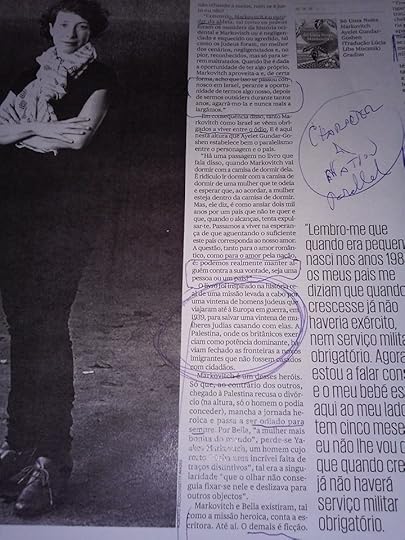
Now published in Portugal, it’s a fictional story based on true facts. In 1939 around 20 male Jews went to Europe on a mission: to save around 20 women (Jews). Palestine under the British domination, had closed borders to ships with new immigrants, unless they were married to Jew citizens. And so Markovich is one of those 20…, who’ll meet and marry Bella. Upon arriving to Palestine, unlike the others, he refuses the divorce.
The author is quite critical on present-day Israel; she suggests reality became different from the intent of the founding fathers. “The nation which Theodor Herzl and other Zionists dreamt about has been transformed into another reality”. That reality implies: “living midst the hate” , “compulsive military service”, “ authoritarianism”, “permanent insecurity”, “censorship from the inside”, fear and the ghosts of “Nazi Germany”.
These notes are taken from an interview the author gave to the Portuguese newspaper Publico/Ipsilon of 16th June 2017.
One of the best books I have read this year so far and since not many days are left for the year to be over I will consider myself lucky if I can get another book of the same caliber this year. This was one of those books which makes you feel afraid, afraid of reading continuously that this will be over fast. A bit humorous in the beginning and very touching & serious as it develops. The author has without doubt conveyed what she meant to say. A book I will say to be read or rather studied in order to grasp the feelings of characters fully. The author, who has exceptional literary talent, will definitely touch your heart. If you can get the book and read it, consider you have done a favour to yourself. All I could see in the book was love throughout, if not for someone it was for something. And personally for me one lesson I learned from this book is that time is limited and so I should be more selective about books I read henceforth.
Sunt carti irosite pe mine, care au aparut in momentul nepotrivit si sunt carti precum aceasta, care vin cu onestitatea lor un pic naiva, cu vulnerabilitati si emotii schimbatoare, cu personajele lor care se razgandesc de atatea ori, incat ar putea parea neverosimile unui cititor mai tanar si cu mai multe certitudini. O carte-viata, in traditia "Romanului rusesc" a lui Meir Salev si a "Povestii despre dragoste si intuneric" a lui Amos Oz. Cu cea mai neingrijita redactare pe care am vazut-o vreodata si cu o scriitura mult mai putin cizelata ca a lui Amos Oz, dar nimic din toate astea nu poate stirbi emotia povestii.
Esse livro foi indicado pela minha analista quando eu falei que estava em busca de mais mulheres autoras. Ela acertou em cheio na indicação. O primeiro e premiado livro de Ayelet Gundar-Goshen narra a vida de personagens cujas historias são atravessadas por eventos-chave do século XX como a Segunda Guerra e a fundação do Estado de Israel. Os capítulos curtos fazem suas 400 páginas passarem voando cheias de sarcasmo e pitadas de realismo fantástico.
את החלק הראשון ממש אהבתי. הוא היה סקסי, ומדליק, וסוחף, והכתיבה נהדרת, אבל אחרי זה דברים התחילו להתדרדר. העלילה התחילה להיות עמוסה מידי, לא מספיק מעניינת, מתארת המון אירועים ופרטים - ולא ברור לשם מה? ואיך הם קשורים ותורמים לסיפור המרכזי? וכך זה נמשך עד הסוף. הכתיבה אמנם באמת נהדרת, אבל לא ממש הבנתי את הפואנטה של הספר הזה.
I loved this book. A beautiful story which reminded me of the magical realism of Laura Esquivel and Isabel Allende's early work, as well as the Israeli writers Meir Shalev and Shifra Horn, but this time taking place during the formative years of Israel.