In ‘Heat’, we meet several generations of the Kresinger family and the legacy left by the mysterious Pearl. In ‘Water’, a futuristic world is imagined and the fate of a people threatened. In ‘Light’, familial ties are challenged and characters are caught between a desire for freedom and a sense of belonging.
Heat and Light presents an intriguing collection while heralding the arrival of an exciting new talent in Australian writing.
Ellen van Neerven (they/them) is an award-winning author, editor and educator of Mununjali (Yugambeh language group) and Dutch heritage. They write fiction, poetry, and non-fiction on unceded Turrbal and Yuggera land. van Neerven’s first book, Heat and Light (UQP, 2014), a novel-in-stories, was the recipient of the David Unaipon Award, the Dobbie Literary Award and the NSW Premier’s Literary Awards Indigenous Writers Prize. van Neerven’s poetry collection Comfort Food (UQP, 2016) won the Tina Kane Emergent Award and was shortlisted for the NSW Premier’s Literary Awards Kenneth Slessor Prize. Throat (UQP, 2020) is the recipient of Book of the Year, the Kenneth Slessor Prize, and the Multicultural Award at 2021 NSW Literary Awards, and the inaugural Quentin Bryce Award.
4★ What a surprise! I chose to read this for a challenge asking for a book of Australian Indigenous fiction, which this most certainly is. Ellen Van Neerven is a talented young Aussie author, of Mununjali and Dutch heritage, whose stories began appearing in journals, and then one was expanded to begin this book.
The stories feature mostly young Aboriginal girls, many of whom are trying to find how they fit into their families, their mob, their culture, and—just to throw another spanner [monkey wrench] into the works—their sexuality, which is mostly same-sex attraction. So it would be quite a challenge even for a seasoned writer, let alone a young one like van Neerven.
There is a fair bit about fair skin, too. Lighter family members may be tempted to pass for white in major cities rather than stay home where everyone knows where they come from. Eventually, the pull of country is too strong for many, and they come back home.
Van Neerven’s done a great job. I chose this thinking it was a novel, and was pleased to discover otherwise, since I’m a real fan of shorter works and short stories. There’s a particular skill to catching a reader’s attention and curiosity by suggesting before and after stories without actually telling us.
The book is in three sections, the first is HEAT, and although these are individual stories, they are about members of the same family, mostly based around young girls.
It opens with a girl in a pie shop.
'I have something for you. . . . This was your grandmother's. She worked here.'
'No,' I said. 'My grandmother was Marie. Passed now, but she's my grandmother.'
'Sister', the woman behind the counter said. 'That was your grandmother's sister.' She told me a story, starting with my grandmother's real name, Pearl.
The first time Pearl Kresinger was taken by the wind we were both twelve.
The wind of the grandmother blows through all of this section of the book.
“When the weather turned this way they were reminded of the thin structure they lived in. The plates in the cabinet shook for three minutes. Griffin moved quickly to shut every window in the house, so what resulted was a closed feeling, a whirling sound that haunted a part in Marie’s consciousness, an old anxiety, not forgotten.”
Pearl is heavily pregnant and moves in with them. Marie is a natural carer. She says, “I knew the wind would bring you.”
“A short time after they married, Marie heard her father was getting close to returning to the early. As the eldest daughter, she would be the one to look after him while he died.”
Now that Pearl has arrived, Marie again assumes responsibility, this time for her sister.
“She was rattled by Irma’s voice at the door. ‘Mum, you gotta come. Aunty is havin’ a baby out the front.’
Pearl was in the currents of contractions outside the house. She was kneeling directly in line with the front door, facing the street. Marie and Irma got her down on the ground, one hand on either of her shoulders. Her breath was citrus and smoke. The water on the ground sizzled from the sun. Pearl’s eyes widened and Marie held on to her. No cars went by and no one saw them, but at the same time the valley saw them. The open sky fingering their skin.
This was where the sisters had been born, in the shadows of the ironbarks, the spot where their women had given birth for a continuum of years.”
For readers unfamiliar with Aboriginal lore and law, there are helpful references here and there to indicate how relationships are governed. Where they are boy-girl stories, the families are quick to check that the budding romances are acceptable according to skin group, so that there’s not inappropriate intermingling of families.
As the oldest culture in the world, it deserves more positive attention than it gets. There’s nothing any more special about the world’s other cultures that I can see, and a lot to commend the indigenous approach to country and relationships.
Full marks to van Neerven for an interesting book. Some of the writing is uneven—wonderful in many places, a bit awkward in others—but that will pass, and I look forward to her next efforts. There’s more about her here. https://ellenvanneervencurrie.wordpre...
I really loved this! I especially liked Water, a long sci-fi story, and in general, the way Van Neerven writes about the disruptive, transformative, unpredictable impact of desire. So many people try to convey this and so few succeed as she has.
Update 14/7/15: I'm reading reviews for this and a lot of them are really homophobic! Like, stuff like "why is there so much lesbian sex, I didn't get it, it was so weird". I dunno, why is there so much straight sex in fiction??? Sorry your relationship with your sexuality and imagination is so stunted that you're horrified by lesbian mangrove spirits -_-
The experimental mix of literary and speculative fiction is brilliant, as are the incredible contemporary characters that draw on ancient Indigenous themes. Loved it.
I'm probably going to be labelled a homophobic racist as a result of my rating. Don't really care, if I am.
The lesbian sex is fine - in fact, for me, it was the beauty in this series of short stories. I have no issue with only lesbian sex in the book; for me it took nothing away from the reading experience.
However, only a very few are actually stories. This is the significant problem. If you are a highly skilled writer, then writing a fragment will be such that you will feel fulfilled at the end of that fragment, but I never did. Even some of the longer stories felt they needed another page or so to give a sense of rounding. Of the three subsections, the last was the most annoying. It just didn't hold and some of the fragments here are just plain dull! I love maybe a clever description of a scene, or an emotion, or anything, but they felt like I was reading a longer Twitter series of statements. I have read more interesting descriptions on wine bottles than in the subsection Light.
The novella Water is by far the redeeming piece written. A clever piece of environmental activism along with Aboriginal mysticism. I loved the allegory of the plant people - yes, I worked out what they actually were. Heat also has redeeming points - the overall connecting narrative is interesting, but again there were at least one fragment that was hollow.
So- why all the accolades & chest thumping on the cover?? An award is won & I began to wonder what the pool of entrants were like. Was it so specialised that only one or two people applied & the board felt committed to handing it out to the best of the bad bunch?? I think being an award so obscure I have never heard of it before, made me think that the cover praise was from one entrant to another. It didn't win me over for either authors doing the ululations.
So- if you are a big fan of Aboriginal Lesbian fiction, get out right now & go buy this one. I doubt there is going to be 2nd printing and I see this one being remaindered shortly; nor do I feel we will see a 2nd book written by this author.
This was great. Queer First Nations short stories about so many different things. Family, identity, violence, art. I loveed Water, a speculative fictional take on an alternative reality for Australians (First Nations and non-FN alike).
Another book that's been on my list for years after I first heard about it in uni.
This has made me want to read more of Ellen Van Neerven, and more indigenous authors. Some parts of this read like a novel, and other chapters are just loosely connected short stories. All are beautifully written, and left such vivid impacts. The range is incredible from a moving piece about the messy dynamics of a family navigating mental illness, to a short story about a town where stories are a form of currency. Almost different genres, and different worlds, but they all fit so well in the same book.
With this type of fiction I can find myself feeling a little confused, or lost with all the different jumping around between different characters in different timelines, and maybe even different worlds. I find it's best to just let myself just drift along feeling a little lost instead of trying to 'get' every single reference that's on the page. I'd argue you usually end up 'getting' a lot more out of this by just diving in and enjoying it.
One of the first books in ages that I've finished and felt tempted to immediately re-read just to pick up on some of the loose threads I'm sure I missed. Would highly recommend!
"Heat and Light" is a complex book which through a series of stories gives impressions of indigenous life in modern Australia. I'm reluctant to reach firm conclusions on only one reading, but the lack of traditional structures in the book gives a feeling of disconnection from time. The characters seem to float into experiences, their connection to life being family and/or a relationship to the setting. "There had to be something still with me, my father's words, the years we camped with the other kids and mob from all over." The search to belong, to another, to the land or especially to family is the motivating force and links the tales as characters experience their needs in different ways. ' "What would you say you are? And where do you come from?"/ She looks at me. 'Can you answer that about yourself?"' There are few settled relationships and much uncertainty in the lives shown. The stories are engaging and worthy of a second read as so many of the sentences deserve strong attention. "It's a hard decision, to gulp up sleep or stay awake for the morning light." It's not a hard decision to recommend this book. I look forward to more of Ellen Van Neerven's work.
I am really excited about this book. Here is a strong new voice in Australian literature. Some of these stories will sit in me forever. Excited to see how assured and lyrical these stories are.
For the most part, I loved these elegantly crafted short stories. Strongly indigenous Australian, queer, south-east Queensland writing.
For me, the standouts were the first few stories, under the heading "Heat". They had me from the first story: "The first time that Pearl Kresinger was taken by the wind we were both twelve." There was a surreal beauty to this story that meandered through the following interconnected stories about the same family.
I also enjoyed the longer dystopian story "Water".
The collection fell away for me in the final stories that made up "Light". These were shorter and some were quite baffling--I simply didn't "get" them.
I first got this book from my local library and returned it unread (out of time). Then, unknowingly, I borrowed it again from a different library. And then, I found it on my Kindle. Obviously, this was a book I REALLY wanted to read.
Ellen Van Neerven has presented an eclectic mix of stories for her debut fiction ‘Heat And Light’. Part mythical, traditional storytelling and part contemporary narrative, Van Neerven’s writing is sharp, sensual and modern. Winner of the David Unaipon Award in 2013, the stories are presented in three parts – Heat, Water and Light, and although each of the parts are very different, there is a general thread of cultural and sexual identity that snakes through the entire work.
Through five linked pieces ‘Heat’ unravels the story of the Kresinger family, from the mystical dreaming story of Pearl through to the present-day world of her granddaughter Amy. Two styles of storytelling spun almost seamlessly. Does desire and need drive each of the generations or are they cursed, destined to be captives of the wind, their sexuality controlled by the wind men; shaped by family and inheritance and cursed by those who have gone before.
‘Water’ is a futuristic foray into the politics of Aboriginal land rights and cultural cleansing. Daring and confronting, the dystopian story sees Australia, 2022, in a new era of reconciliation. The President has declared the ‘Australia 2’ land project in the guise of advancing native title and all things Aboriginal appear to be ‘in vogue’, commodified. But everything is not as it seems. When Kaden is employed as a cultural liaison officer she is given the task of relocating a new creature, part person, part plant, known as the ‘sandplants’. As she becomes involved in their life, she also uncovers the real intentions behind the new government policies. Her connection to the land is renewed and the outcomes are life changing.
The first two sections are short novellas in form, whereas the final section ‘Light’ is a fragmented clutch of short stories that lay bare the family and social dynamics of Australia’s marginal societies. There is a push-pull in each of the stories as they search to reconcile their sense of belonging, through their sexuality, heritage, family or place. The stories are raw and real; where love and violence sit side by side. The final story of the set ‘Sound’ is shocking and tender, questioning family ties, love and loyalty and leaves the reader questioning all three.
‘Heat and Light’ doesn’t follow standard structure and I felt that combining the three might have diminished their strength. There is also a self-indulgence in the writing that detracts from the power of the collection; however Van Neerven is a strong writer who can bring characters to life and is prepared to experiment with style and form. Once this ability is harnessed she will be a brave new voice for Australian writing.
Heat and Light by Ellen van Neerven is a collection of three stories, linked by some common themes (more on that later). I’ll be frank, I didn’t love it.
The first story, ‘Heat’, explores several generations of one family, with the characters darting in and out of the story at different stages in their lives. It’s clever, intriguing and gives the reader glimpses of the key players from different perspectives. I wanted this story to go on, delve deeper, show more of the characters as they aged.
The second story, ‘Pearl’, is set in the future and, without giving it all away, is about a disconnected scientist having lesbian sex with a mutant plant person. I think I got that right. Yeah… Not really sure what to say about this part of the book but if you have ever wanted to read about plant people and their relationships, this is the story for you.
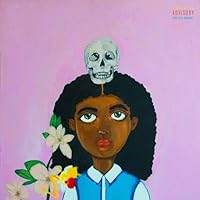
The final story, ‘Light’, is more appropriately labelled as short stories within a short story. Some of them worked, others didn’t. The stand-out relates to the image used on the cover of the book and equally good was the story about a girl, her fish-and-chip-cook brother and a dog – both leave a strong and lasting impression.
So, themes and short story collections – which comes first, the themes or the collection? Do authors have particular themes that they want to explore in different ways, hence short stories? Or do they write a bunch of stories, then tinker around the edges of theme to create a cohesive collection?
I don’t know the answer but in the case of Heat and Light the themes (Murri* people and their place in society, and lesbianism) felt like they’d been an afterthought in some stories. More specifically, the lesbian element was overworked to the point where I expected every adult female character to be just a page away from lesbian sex. And the problem of the uniting theme then is that instead of ‘uniting’, it becomes predictable. There will be readers who will scoff at the fact that I used the word ‘predictable’ in a review of Heat and Light. Because lesbian sex with a mutant plant person. Fair enough. Maybe I just didn’t get it.
A beautifully written collection of stories bound together by the recurring themes of indigenous and sexual identity that are impossible to describe in one simple review. The futuristic 'Water' will dazzle your imagination.
The first 'Heat' looks at the legacy of the Kresinger family, their history and trauma. The 1st chapter, 'Pearl ' was incredibly powerful as the protagonist learns of her legacy.
The second section 'Water' is set in the future were the government decide to relocate aboriginal people to islands in Queensland. The plan is hindered by 'sandplants', a group of green plant/ human like beings. Kaden gets the job to talk to these beings and give them a formula. Her father was native to this country & she can't ignore the connection she feels here.
The last part 'Light' is a collaborative of contemporary short stories were identity and sexuality are explored.
Short story collections are really hard to rate. I really liked a few of these especially “Water”. But for the majority of the book I had no idea what was happening and the stories never really had a resolution, they would just abruptly end and that wasn’t satisfying to read
This is quite an interesting book, split into three sections. The first two, I really enjoyed, though I have to admit, I didn’t quite “get” the third one. Still, the writing is gorgeous and this is a fabulous debut novel.
In Heat, we meet several generations of the Kresinger family, and see the effects of the matriarch, Pearl, on her descendents. In Water, we see a dystopian Australian future, where an ancient spirit still thrives, and in Water, we see the effects of familial ties on a struggle for identity.
In these stories, aboriginality, sexuality, and womanhood all intersect. These three themes are not usually dealt with all at once and it was really interesting seeing them explored together. Water was my favourite of the three stories, perhaps because it took the form of a genre I prefer over the other two, which were more literary and contemporary. It also dealt with issues of displacement and race, using a metaphor that was , while fairly obviousk still nuanced and never heavy-handed. Water was also more linear in its storytelling, while the other two parts are more fragmented, jumping between characters and between time periods.
The characters in all three stories read as genuinely Australian, and genuinely aboriginal (from my, admittedly limited, experience). The writing style is really beautiful; it flows really naturally and never feels like it is trying too hard (apart from maybe that fragmented style). As I said earlier, I didn’t really get the third part quite as much. It did seem more disjointed than the other two pieces. I read in some other reviews that this part actually tied in with the first, but if that is the case, I missed the connection.
Ellen van Neerven is definitely an author to keep an eye on. She has a great way with words and a way of exploring complex issues without feeling too pretentious or over-the-top.
(This review forms part of the Australian Women Writer’s Challenge for 2016. Click here for more information.
This was a interesting book that I chose to read because it was set in Brisbane (where I live) and it was an indigenous author, and sadly I have not read a lot of books from indigenous authors so I thought it was about time I did.
There are three stories told in this book. They are all from an indigenous perspective and deal with all matter of things from family, to trying to find your culture/ identity when you have been away from family, sexuality, violence, friendship, love and so much more.
I particularly loved the story "Water" which had a bit of a paranormal feel to it and was set in the islands off the coast of Brisbane.
I read and article about the author (http://www.sbs.com.au/topics/sexualit...) in which she identified as queer indigenous, and this does show through the stories. I felt some of the reviews I read about this book were a bit rough as they were basically saying that they didn't like or were uncomfortable with the lesbianism in the book! Seriously? There are zillions of books with straight sexual relationships in them, perhaps go back there or don't be so judgey!
All in all it was confronting, different, interesting and full of emotion.
A very different book which for a change the dust jacket accurately describes. The first part is a series of stories of the members of the Kresinger family. The second part is 20 years ahead where plant creatures are discovered and the third part a series of short stories.
The writing is very unusual in flipping between scenes, aboriginal legends, family ties, mysticism, the feeling of being lost, of being an outcast of the white world and aboriginals who are outcasts within their own clan. The main characters are strong independent women who struggle with being different.
I enjoyed the first part. The second part was brilliant - the government trying to entice Aboriginals to start a new country on the islands off the Brisbane. The plant creatures are the impediment so the government attempts to kill them. But the local Aboriginals know the plant creatures are their ancestor spirits. An original and very thought provoking piece. The third part has stories as short of two pages - the stories were a bit of a mixture for me.
A short story collection spilt into three parts, the middle being one story, the other two a cluster of stories which flowed into each other within each part. Stories of identity, family and love connections, and blistering commentary on the micro impacts of colonialism.
The writing is just sublime. Several times I stopped reading just to calculate how old Ellen was when they wrote this. Such wisdom and craft! Such deserving of the prizes this collected. They are an automatic writer purchase for me, and I see they are releasing another collection in May!
Really good. Almost every one of these short/long stories is a satisfying world unto itself. I love stories that take me out of my middle-class inner-suburban version of Australia, and this very much did that. And the hints and splashes of speculative, fantastical worlds were great. If there is ever a longer version of the story with the horned killer camels, I will read it in a heartbeat: utterly intrigued.
An atmospheric poetic short story collection that lingers long after reading it. 'Water' is my favourite own voices f/f short story in this collection due to the futuristic focus as shared by an Indigenous Australian heroine. I really appreciated her reflections on the future and on being in between cultures too.
*CW Notes: A few other short stories (Pearl and Hot Stones) explore the impact of rape and racism.
4.5 stars for the extended story in the middle section, 'Water', a fantasy/dystopia/ on a future Australia - mystical, imaginative, believable.
3-4 stars for most of the other stories. The characters were always engaging and I wanted to know what was happening next....some of the stories were more satisfying than others.
This is a 3 from me really, but I didn't want to bring the author's rating down because the book had some great characters and some great moments. Unfortunately it was too fragmented for me. It felt like many short stories stitched together, especially in the first and third parts.
She’s been around a while, has Melissa Lacashenko, publishing laudatory novels since 1997. The other, Ellen van Neerven, also an accomplished poet, is the new kid on the block as far as indigenous fiction is concerned. In their works we meet the Kresingers and the Salters, with both taking us on some journey.
‘Seriously,’ I thought to myself, ‘plantpeople, a new seaweedy species of ‘humans’ emerging from the mangroves of an island off the coast of Queensland. This is not my thing at all.’ But it was. I continued and I’m glad I did. For me the section ‘Water’, of Ellen van Neerven’s ‘Heat and Light’, was the stunning highlight. Set in the future, but in many ways taking us back to the past, it’s a contrast to the contemporary nature of the bookends, ‘Heat’ and ‘Light’, as we meet generations of Kresingers in linked vignettes. None, although exhibiting quite glowing wordsmithery, attracted me to the extent of Kaden’s story. She’s a young liaison officer to those studying, read subduing, the new species. They are trying to pave, read clear, the way for a development project. A relationship grows between her and Larapinta, one of the supposed ungendered plantpeople. The treatment of the ‘specimens’ hark back to our black, black history which gives, to this day, such discomfort to Australians of British descent. It is brave and adventurous writing for van Neerven and the collection won the NSW Premier’s Award for 2016.
We mightn’t have plantpeople, but we do have talking totems, crows and sharks, in ‘Too Much Lip’ by Melissa Lacashenko. I don’t know about too much lip, but the plethora of f-bombs and c-words were much too present for my normal taste. It does, I guess, make the novel ‘real’. We all know the type – people who open their oral orifices to produce sentences in which at least one word has to be an expletive – otherwise their standing as hard men or women would be lowered. If the awardees of 2019’s Miles Franklin can live with that, then so can I. The author has produced a rip-roaring yarn and it’s a worthy winner.
When sassy Kerry Salter roars back into her home burb, to rejoin her family, as the patriarch is near departure, she discovers the Salters are just as dysfunctional and disparate as when she left them. She comes to escape, as well, from some heat for misdeeds in her previous location and is firmly of the belief she’s gay. Boy, is she in for a surprise – and not only with her proclivity. When she discovers the plan the devious white local mover and shaker, Jim Buckley, has for a river island sacred to the Salters, she and the rest of her family are up for a fight. There’s Pretty Mary, her mother who, when the going gets tough, takes to her fruity lexia. There’s brother Black Superman, a Sydney-sider , as well as brother Ken, too, a said hardman with an explosive temper. Add to this more unique characters in the extended family and the only one who’s missing is a sister who did a runner many years back.
There’s never a dull moment with the collection of rellies as with the tome. This, as well as ‘Heat and Light’, indicates that the literature of the first people of our country is as strong as ever in the age of #blacklivesmatter.
She says she will take me to see the farm where she lives and show me her orange trees. They are the biggest oranges, the size of basketballs and they taste like love.
4.5 stars
very warm and affecting ... loved the prose loved the actual narratives ... some stories felt too short and/or were less memorable than others but ellen van neervan does very well at establishing character + setting + emotion i think. various parts made me realise and think about my own sense of unbelonging in a strange and unexpected way, strange because apart from maybe 'Water' this book does not really linger on political commentary but rather the situations and day-to-day lives of various characters are shaped by a specific ongoing colonial violence which i have not experienced. even the circumstances driving rural flight (+migration) are very different to the kind of forced displacement at work in these stories and i am also keenly aware that i am a settler here so there were moments that resonated but across a very different context. anyway really enjoyed <3
Fascinating book, especially when analysed deeply - we're introduced to multifaceted and richly flawed characters, the search for identity, family and purpose.
I really liked the imagery throughout - particularly what was used to describe Pearl in the first story, and in some of the other stories that form Heat - which ended up being my favourite collection in the book. There's also a few examples of intertextuality in Heat which are so clever.
It's also interesting to watch the writing styles change from Heat, with all stories having clear starts and ends, compared to Water: a great sprawling novella, flowing and free-moving - bearing resemblance to its title.
But I didn't know how to feel about the stories in Light, though. After liking Heat and Water, I'm not quite sure why I found them harder to read.
Dan and Mich, very interesting writer. I had her on my to read list before the QCAA list cane out.
She is definitely talented. Her characters' voices are alive and throbbing with aches and dreams. She makes indigenous families' connectedness with each other and with country seem real: (for once) not contrived. Her places are mostly Hervey Bay, Brisbane, Moreton Bay. I can see why this made the Eng/Eng Lit(?) list. However, I don't know if we could do the whole book as I don't know how mature our kids are in terms of handling the amount of lesbian sex and lust that she describes. Would be interesting to have someone else read it and see what you think.