"No one writes a better crime novel than Charles Willeford" Elmore Leonard THE BLACK MASS OF BROTHER SPRINGER tells the story of Sam Springer, a drifter novelist who meets Jack Dover, the retiring Abbot of the Church of God's Flock. Dover's final official act is to ordain Springer and send him off to serve as pastor of an all-Black church in Jacksonville, Florida. Springer soon becomes entangled in the city's growing civil rights movement . . . and with the church deacon's earthy young wife, Merita. The Washington post calls this darkly humorous novel by Charles Willeford, one of the great crime writers of the 20th century, "his masterpiece." This new edition is introduced by James Sallis and contains Willeford's previously unpublished play based on the novel.
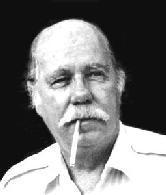
Charles Willeford was a remarkably fine, talented and prolific writer who wrote everything from poetry to crime fiction to literary criticism throughout the course of his impressively long and diverse career. His crime novels are distinguished by a mean'n'lean sense of narrative economy and an admirable dearth of sentimentality. He was born as Charles Ray Willeford III on January 2, 1919 in Little Rock, Arkansas. Willeford's parents both died of tuberculosis when he was a little boy and he subsequently lived either with his grandmother or at boarding schools. Charles became a hobo in his early teens. He enlisted in the Army Air Corps at age sixteen and was stationed in the Philippines. Willeford served as a tank commander with the 10th Armored Division in Europe during World War II. He won several medals for his military service: the Silver Star, the Bronze Star, two Purple Hearts, and the Luxembourg Croix de Guerre. Charles retired from the army as a Master Sergeant. Willeford's first novel "High Priest of California" was published in 1953. This solid debut was followed by such equally excellent novels as "Pick-Up" (this book won a Beacon Fiction Award), "Wild Wives," "The Woman Chaser," "Cockfighter" (this particular book won the Mark Twain Award), and "The Burnt Orange Heresy." Charles achieved his greatest commercial and critical success with four outstanding novels about hapless Florida homicide detective Hoke Moseley: "Miami Blues," "New Hope for the Dead," "Sideswipe," and "The Way We Die Now." Outside of his novels, he also wrote the short story anthology "The Machine in Ward Eleven," the poetry collections "The Outcast Poets" and "Proletarian Laughter," and the nonfiction book "Something About A Soldier." Willeford attended both Palm Beach Junior College and the University of Miami. He taught a course in humanities at the University of Miami and was an associate professor who taught classes in both philosophy and English at Miami Dade Junior College. Charles was married three times and was an associate editor for "Alfred Hitchcock Mystery Magazine." Three of Willeford's novels have been adapted into movies: Monte Hellman delivered a bleakly fascinating character study with "Cockfighter" (Charles wrote the script and has a sizable supporting role as the referee of a cockfighting tournament which climaxes the picture), George Armitage hit one out of the ballpark with the wonderfully quirky "Miami Blues," and Robinson Devor scored a bull's eye with the offbeat "The Woman Chaser." Charles popped up in a small part as a bartender in the fun redneck car chase romp "Thunder and Lightning." Charles Willeford died of a heart attack at age 69 on March 27, 1988.
Honey Gal is the first Willeford novel that I ever read. How did I discover Willeford? An Australian warehouse security guard who reported illegal immigrants to authorities recommended this book to me on a movie forum. I have since lost touch with him. Serves me right, because I clearly want to discover dangerous literature over meeting real people or keeping in touch with them. But I narrated this brief online tryst to show that great art is often consumed by people who are not writing pompous reviews on Goodreads. Willeford is the greatest author recommendation that I have received in my life. The expensive copy I ordered was a bad reprint of the original publication with a crappy black cover that had at its center, the original cover in a small square box. An amateur could have done a better job of the font and spacing in the text inside. The whole thing was unattractive. But there was nothing wrong with the stuff on the pages. It hooked me in allright. A dangerous book like this does not deserve a normie review. I do not expect too many likes for this one.
Other reviewers say Willeford is taking down race relations and religion. But is he? I believe Sam Springer, an accountant, is out to have an adventure. The book was quite descriptive about the food that Sam ate. And his animal passions for a woman of another race. Willeford understood that ultimately every man simply wanted to land a hot piece of ass. And eat good food. How is this satire? It is just reality. Deep in his heart, every man longs to escape his present quarters which includes his lawfully wedded wife.
I remember the leaked videos of Hindu godman Swami Nithyananda, furiously changing TV channels and later rolling around on a bed with the actress Ranjitha. Hahahahha! Swami Nithyananda is still around delivering glorious gibberish. Come on o book reader, you are not as decent as you pretend to be. That is all that Willeford is trying to point out. The joke is not on religion or race relations. The joke is on you, you morally superior Goodreads reader and review writing prick.
Sam Springer, a smooth talking, white, wannabe writer cons his way in as minister at an all black southern church and becomes an unlikely civil rights champion. It would be easy to denounce him as a scoundrel, yet he has redeeming qualities. Most such people might be morally conflicted, but Springer seems to have few moral qualms. He's a free spirit who has little tolerance for commitment, is prone to idleness and is happy to let the tide of life sweep him where it will. A satire of religion and race, comical and absurd but also weighty and consequential. There are few authors that could pull this off, especially with Willeford's fluid, whimsical style.
Started this last night. This is a must read but requires patience.
It's hilarious and occasionally violent ...a couple of scary close-calls for our suddenly main character who suddenly finds himself leading a 1957 era Civil-Rights-era protest and engaging in Civil Rights activism.
Very bizarre, comical, potentially offensive as the "N" word is tossed around freely. That Charles Willeford- what a cut-up!
This evening, after finishing the novel, I read Don Herron's entry on this novel. Very interesting and very funny background.
Originally published in 1958 as Honey Gal of all names, this casual existential tale of the white Brother Springer escaping his wife, failed career as a writer and his past in Columbus, Ohio by accepting ordainment in a church he doesn't believe in and preaching to an all black congregation in Florida in the days of the Civil Rights Movement is a truly enjoyable piece of entertainment featuring some of those trademark Willefordisms any casual reader of the man will have come to notice.
Sam Springer is an inherently good man with a good thing going in smooth talk, a penchant for idleness and a complete lack of driving force in his life. He is pretty much your typical Willeford character and nothing that he does really surprises you in that sense. I spotted some similarities with some of the Chester Himes Harlem Cycle novels I've read and rather more interestingly Springer's desire to live as easily as possible called to mind Robert Heinlein's famous character Lazarus Long who inadvertently worked harder than he ever would have in trying to do as little as possible in every task he was ever assigned.
It's a hardboiled little tale of greed, lust and deception that provides the reader with existential questions without putting the thoughts in the head of the protagonist, pure 50s pulp gold, and it even has interracial relations and violence to boot.
Published in 1958 as Honey Gal Put out in the 1980s as this, its original title. This must have been shocking in the 50s. Hilariously tears down religion. Psychotic, but makes its point. But then it gets deeply into segregation. Yet continues to be psychotic. Like often with Willeford... nothing is obvious.
Willeford is a favourite of mine, his crime writing has a gritty style to it that is difficult to compare to anyone else.
This, one of his early novels published in 1958, is of particular interest.
The narrator and protagonist, an unsuccessful writer with a failed marriage, scams his way into a post as a white Pastor shepherding a black congregation in Jim Crow era Jacksonville, Florida. He’s written more as an opportunist than a militant racist and yet he uses his position to do some crappy things, which is still racist.
Before I continue, it is necessary to say that this is written as a biting satire of organised religion, and a send up of civil rights through the white perspective.
What’s clear, is that though the Reverend Springer comes over as more of an opportunist than a blatant racist, he is still painted as a pretty despicable character. He misuses his position, and he is a racist by association at the very least. Though, in the last part of the novel, he takes a flight to New York with a woman from the congregation he had been chasing, and shows her how different the attitude to race is. His short time amongst the Jax congregation has perhaps changed him.
It was only published after a change of title. The publisher objected to this one, to which Willeford suggested ‘N word’ lover, also rejected, then published as Honey Gal.
It’s significance should not be under estimated. It was one of the first novels to depict the civil rights revolution that followed the Supreme Court's ruling in Brown v. Board of Education ruling, that State laws establishing segregation in public schools were unconstitutional (1954).
Yet, it bears the hallmark of Willeford’s best; his black humour about which he said he just wrote the truth, and that they are neither wholly plot driven nor character driven, but have an eccentricity to them which provides all the fun.
A lot of Willeford fans like this one but I thought it was crap. Once you get past the short punch line (phony white minister takes over a black church and leads them) there's nothing much going on here. No big payoff, no character development to speak of. I'm surprised Willeford wanted this one published. He's a great writer but this wasn't funny or involving. It was the equivalent to sitting through a bad movie just waiting for it to end so you could say you saw it all the way through. I think I sold my copy.
i liked the description: lurid tale of a preacher saving an entire congregation. he saves every one except one...
good enough for me...onward & upward.
ha ha ha ha!...the cover is great...kindle version...but they use what must have been the cover of a paperback, yay ago...a man in white shirt/tie...a woman, barefoot, dress...a haystack behind them. yay! boy howdy!
this at the top: he was white. she was beautiful--and bad.
this at the bottom: a starkly naked novel of sin and segregation
yeah...i thought i read something about a black preacher? i dunno... and... a price on the cover= $00.35. heh! 35 cents.
"a beacon first award winner"
also...this was 1st published around 1958...w/a different title, and there's info at wiki related to that...the black mass of brother springer...and apparently, the publisher at some point rejecting willeford's title, asked for another...the nigger lover he suggested, also rejected...a phrase that is used more than once in the story...as it plays upon the rosa parks story
story begins:
softly--i didn't want to waken merita--i eased the window up as high as it would go and inhaled the aroma of ammonia, stale food, discarded socks, and some air that wafted lazily up the air shaft. less than three feet away i could see into another hotel room, almost the same as mine, and observe the heavy breathing of an old geezer sleeping like the only man left in the world without a conscience.
and here we go...as the song has it...again!
time & place *sometime after 1954...when the present abbott took over the monastery *story opens at the anderson hotel, on the edge of harlem in new york city, & then it backtracks to begin following sam springer...the anderson is the 3rd hotel they tried before they got a room..."no room at the inn" *church of god's flock...and the kindle has what i assume is an amusing typo--the kindle has had mistakes like this and i wonder how they happen? a misreading of one program's type? simple typos? i dunno...but it has the "church of god's hock" heh!...or another example: "comer" for "corner" *a year-old project house in an area of greater miami known as ocean pine terraces *the thrifty way finance company *tanfair milk company, columbus, ohio, previous employer of sam *beacon storage company *john adams junior high school...wife's school *orangeville, florida, location of the church of god's flock monastery, population 603 *greyhound bus station *a save! chain gas station *a movie theatre that the abbott dover was at...in lincoln, nebraska *soldier's home in washington...where the abbott will go when he leaves the monastery *fort ord...from a character's past *green lobster, in miami, restaurant where sam took virginia *trent...small place on the way...to jax *dr. jensen's office, 71714 n. tremaine street *jackie's bar-b-que...owned by jackie linsey, one of the trustees *golden chevel club...where rosie does three sets a night *kern's funeral parlor and special ambulance service *afro hotel *a drugstore *the jensen residence, part of a double duplex *the southern baptists of saint john church *city bus stop at the corner of lee and broadway in downtown jax *a flat-nosed, green-and-white city bus or two *ed price's garage *montgomery street...flagler park *a telegraph office *white springs...atlanta...post office *international airport, atlanta...international airport, new jersey *airport cafe
characters *sam springer...who morphs into the right reverend deuteronomy springer...previously a novelist from miami, florida, previously an accountant from columbus, ohio, now a minister of god's flock, jax, florida, his one published novel, no bed too high, zenith press *merita...the wife of another...she is described as a "negro woman w/a latin appearance." she was merita wells, prior to her marriage to dr. jensen, dentist in jax...and is now merita jensen *alias of mr. william johnson...at the anderson hotel *hotel clerks *mr. louis carlisle...manager of tanfair milk company *his secretary, mrs. burns *virginia, sam springer's wife *next door neighbor in florida, a trust officer at the citizen's bank *an elderly gentleman in a grey wash-and-wear dacron suit...on the bus *station attendant, a young man in his late twenties...as the save! station *abbott dover, right reverend jack dover...at the monastery, took over in 1954 *dover had a pet snake while in the service, name of mary lou *right reverend cosmo bird of birmingham, alabama...founder of the church of god's flock, and the man who started the monastery *1st abbott, a white man by the name of terence norton *a nigger girl came along and sat down (abbott dover's words) *a former teacher in the audience, two women friends of his mother's, a dentist, and several boys that he knew (abbott dover) *some pickers...in the past, the monastery grew oranges, etc *dr. fred jensen, jax, florida, a dentist, heads up the board of trustees at the church of god's flock...married to marita, who will not bear him children--she knows how to keep that away--and he is 22 years older than her *two roman catholic priests at the green lobster *a negro boy polishing squash *reverend wannop...passed on to meet his maker...previous minister *jackie linsey, one of the trustees *his wife, mrs. linsey *mr. clyde caldwell, 3rd trustee of the church *guest ministers from the abyssinian church of lambs, the truth baptists of the infant, jesus, and the afro-cuban missionary society *combination cook/maid named ralphine...springer's help in jax *rosie durrand, choirmistress, "dressed in a pair of green slacks and a pink blouse" heh! *six young girls...the choir, i presume *mr. & mrs. kern...church members...he is also a minister, the church of jesus's rock *a young negro and his girlfriend...both sixteen...want to marry *tom the ragman...church member who hasn't attended *toby harris, hotel clerk at the afro hotel *the fountain girl at the drugstore, ellie may *jim lyle, proprietor of the drugstore *ruthie...the jensen's maid *dr. theodore heartwell, the head of the jax colored church league *mrs. bessie langdale...a kind of rosa parks *her oldest married daughter...her grandson, robert *reverend warren hutto *dr. harry david *right reverend jason mccroy, pastor of the church of the divine spirit *his ten-man choir *several bus drivers, one named roy...policemen...reporters...one a mr. dick ames from the jax daily advertiser *ames tells springer about john, a "nigger servant for twenty years" *tommy heartwell, dr. heartwell's giant-sized son *several instances of white men...white women...negroes...waiting at the bus stops...one white man named mr. sawyers *a young girl in pedal pushers and a tight orange sweater *eddie price *corwin...represents the jax intertransit omnibus company *springer says at one point "my sister was run over by a car when she was nine years old" *mr. keene...mentioned by name by corwin...his higher-up *girl at the telegraph office *an investigator from the international colored advancement society in atlanta...mr. fred grant, chief investigator *a kindergarten teacher...to help bessie work on her speech *a negro station manager *volunteer workers....several of dr. hertwell's female church members *slow-moving pedestrians *a young buck...mad at ralphine for the worthless ju-ju she gave him against the v.d. *an angel of the lord...(springer's story to jensen) *an elderly woman...brought springer a barbecued pork sandwich *a dispatcher seated at reverend hutto's desk *the driver was a thick-bellied negro, and a sausage roll of fat hung loosely over the back of his collar *four men flew out of the parked cars and began to run *station attendant *a white waitress...waits on springer and merita *salesmen....guards... *toward the end...springer says his first name is judas...judas d springer *a male negro...a prime specimen of american man *two teenage puerto rican girls
this idea is present in a number of stories i've read a feeling of unreality, almost impossible to pinpoint, that made me feel like an observer watching someone else do very foolish things, amusing things, that were somehow unimportant to the real me.
and here is another from the story: the rest of the time i seemed to be outside myself, an observer, an anonymous member of a great movie audience watching some new kind of comedy on a life-sized screen, wondering how the plot would turn out in the end.
plus: in willeford's story, Pick-Up, there exists a similar description, harry jordan, the eye-narrator of that piece, his state-of-mind at the midway point of the telling
some unusual words at play *"set of sticks"...manger of the thrifty way finance company's words for springer's furniture *"a plug of brown mules" *"burpies"...that the abbott performs...some sort of calisthenic, a term familiar to both the abbott and springer from armed service days *"geedus"...as in "a pile of dough in nigger property in pratt city, and he put most of the geedus into establishing more churches."...words spoken by abbott dover *"give him something besides a cotton string for a backbone. amen." *color described thus: "the shade of a two-day bruise on the tender side of a woman's thigh"
some books mentioned the bee-eye-bee-ell-ee...although willeford, too, uses the word revelations...i've seen that so much that i wonder if the final book of the bible isn't plural, like so many use...or what?...genesis thirty-two, twenty-four the plumed serpent d.h. lawrence thomas merton paperbacks the golden bough sartre's, being and nothingness kafka's, the trial henry miller's tropic of capricorn notes...from under the floorboards...dostoyevsky
update, finished, 8:32 p.m. e.s.t. 27 dec 12, thursday evening an okay story...not blown away...not bored to tears...much to like...very little to dislike...although even the dislike should be liked--like some continuity errors...i pound nails...on occasion, i bend one...so...it is still nice to read that others make mistakes, willeford among them...like the revelations mistake...
but there was another...a character's name introduced into the story w/o the pov-narrator working for it...meaning...the name shouldn't have been there, but it was...and one error, merita is identified as "merita springer"...and springer is identified as "john springer" at one point...another continuity error?
t'would appear so...he was sam springer at the get-go
An interesting little novel, originally published in the late 50's, which helps to explain the nature of the writing and story. If you're sensitive to language (especially the derogatory "N" word), perhaps skip this one.
Essentially, I viewed this story as an exploration of a narcissistic, Machiavellian character that has elected to pursue whatever his ego needs / desires at the moment, thinks on his feet, improvises, and of course, will ultimately not find fulfillment from his actions. Nevertheless, Willeford's writing is entertaining and, despite the implausibility of the entire book, the story moves along briskly. Aside from a social commentary on race relations and prejudice, especially in the South, there's not much of serious consequence here. Just a story that will help pass time for some, enrage others, and stimulate others to read more from this author.
What a crazy crime novel this is! The Washington Post supposedly called this Charles Willeford's masterpiece, but it's not (that's "Miami Blues" or "The Burnt Orange Heresy" or maybe "Cockfighter"). What it is, though, is a fairly unhinged look at religion, viewed through the lens of pulp fiction.
The narrator is a scoundrel named Sam Springer who had a job as an accountaint and hated it with a passion. He writes a pulp novel that brings in a little money so he convinces his Midwestern wife to leave Ohio with him and move to South Florida so he can devote himself to writing. But once he gets there, he doesn't have much to write about. Meanwhile he grows bored with his wife, who talks about nothing but how much better things were up North.
One day he spots an item in the local paper that tells how a Central Florida monastery is closing up and the real estate being sold. He tells his wife this is his chance to score another great story idea, then he buys a one-way bus ticket to that town. The one-way ticket is a clue to his real intentions -- he does not plan to return home, ever.
At the monastery he meets an ex-military man who says he's the abbott. The abbott is a white man, like Springer. He explains how the demonination had wanted the monastery to produce both white and African-American ministers but because the leaders of the denomination are in Alabama they have lost control over what goes on there. He says he's assigned ministers to all the churches but one, an African-American church in a town Springer calls "Jax" but appears to be Jacksonville. Once the abbott takes care of that chore, he can sell the real estate with a clear conscience because there are no more monks.
Springer springs at the chance to become a phony minister, and so the abbott gives him an ordination certificate and a black suit with a backwards collar and sends him on his way. Springer rides the bus to Jax, and soon learns how powerful it is for people to think he's a minister, despite the fact that he doesn't believe in anything, much less God.
So far so good. This is a con man story with a bit of Old South racial and sexual complications mixed in, and a fun ride for a while. What spoils the believability of the book is what happens inside the church that Springer has been assigned to lead. The first time he takes the pulpit, he gets off to a bad start but recovers -- and suddenly he's a powerful orator in the mold of Billy Sunday and Billy Graham, even though he apparently never saw an evangelist before. He plays the avenging angel in the Sunday morning service and then the gentle redeemer in the evening service, and those two performances convince everyone that he's really a man of God.
If Willeford's intent was to mock the believers in the congregation, he fails. They all seem like sincere people, even the ones who sin and must seek forgiveness. One funny part occurs when something Springer conjured up just to spice up his sermon turns out to be true and he has to counsel a young couple who come to his door seeking forgiveness.
Soon Springer had gotten involved in a big civil rights battle, the lone white man advising a group of black ministers on how to run a bus boycott while also entertaining financial offers from the white racists on the other side.
Then, to complicate things even further, he falls in lust with a deacon's shapely wife and plots how he can run away with her. Here, too, believability suffers as Springer depicts himself as such a golden-tongued deceiver that he's able to convince the deacon that it's God's will that he impregnate the wife.
The ending of the book, bringing together these two threads, feels extraordinarily rushed although it does carry the usual Willeford irony. In passing, Springer notes that this has all taken place in the course of a single week. A WEEK! If only Willeford had let it stretch out to a few more days, maybe it would have been a tad more believable. I guess he was hoping we'd take all the unbelievable stuff on faith.
NOTE: Although Goodreads says I read this book four times, and that I read the paperback edition, both of those statements are false. I read the Kindle edition and three times Kindle thought I was done reading the book for some reason and automatically listed me as finished on Goodreads, and I can't find a way to get Goodreads to change either one.
Although strong on the usual Willeford formula that I know involving scarily capable sociopaths achieving goals on whims and ruining everything around them in the process, the plot is pretty bold as it deals with the protagonist becoming the white leader of an all black congregation in 60's Jacksonville, Florida. He then spearheads a charge to boycott the segregated bus lines raising hundreds of dollars a day. He then also discovers the young, impetuous and anti-religious young wife of one of his flock. Well, you don't need a calculator to figure out what happens next. The Black Mass of Brother Springer is clever because not only does Springer take over as the leader of the all black church, but it refers to the cancer-like mass of indifference pointed out to him by one of the better written characters Abbott Dover. Dover explains that too much religion is bad because it makes one miserable and none at all makes one too happy. But with Springer there is nothing at all in his heart, which makes him the worst possible candidate to lead a church. Dover has other great lines on love/ authority/ writing and a great anecdote about movie theaters. But I digress. I think as far as the time and place of the novel, the race relations are handled bluntly but honestly as Willeford perceived them. The really shitty people get exposed and in the end the tragedy is left purposely vague. It didn't bother me or stick out badly. In the end however, it's just another character study albeit with an interesting new setting and plot. I don't think I'd recommend it as a starting point for Willeford though, not until you read some of his more charismatic and arguably less evil ones.
First-person noir about a phony preacher who's in it because he thinks it will be an easy gig. (Turns out he's wrong.) He's also a classic "writer who never writes" and is always "looking for time to write." The crimes are small time, making his descent into the abyss slow and easy. The ending fits perfectly. Now I'm off to read more Willeford.
Undecided on whether to rate a 2* or 3*. Half stars would be perfect…
I have enjoyed all of the other Willeford novels I have read so far, but unfortunately didn’t enjoy this one as much as I would have liked. Of course the writing was good but unfortunately the story didn’t grasp me.
Érdekes könyv, több szempontból is. A sztorit első szám első személyű elbeszélő meséli, de a motivációi viszonylag homályosak a legvégéig, inkább csak a motiváció hiányát taglalja. Vicces a hitetlen fehér lelkész főszereplő egy teljesen fekete gyülekezet élén, bár néha elég valószínűtlen, mennyire pöpec imákat rögtönöz nulla vallási háttérrel. Örültem, hogy erős befejezést sikerült írnia a szerzőnek, fájt volna, ha nem igazán fut ki semmire a sztori.
I can't get enough of Charles Willeford. His books defy genre, defy expectation, and go places such books are not supposed to go. It would be limiting to call him a crime novelist or pulp novelist, but what else to call him? In any case, this wild, wooly little book follows a third-rate white author who comes upon an opportunity to be a preacher in an all-black church in Civil Rights Era Florida. He's not a believer by any means, but he figures that he can collect a good salary, cough up two sermons every Sunday, and spend the rest of the time working on his second book. When he gets there, however, he enters into flimflammery of another kind, using a Rosa Parks-like incident to unite other parishes in a bus boycott, all while funneling donations to the cause into an account in Atlanta. He also looks to steal a worshiper's hot-to-trot wife while he's at it. This whole crazy scenario starts with our hero opening his first sermon by talking about the life of Franz Kafka, and it gets more fevered from there. Good stuff.
A year ago, Sam Springer left his stable (if uninspiring) job as an accountant to become a novelist. Now, he has left his wife in order to become an ordained minister of a small black church in Jax, Florida. It's not that he believes in God (he doesn't!), it's just that he figures the pay is good and the work easy:
"Most ministers are smarter than ordinary people, and the only real difference is, they are a lot lazier. The stuff they put out in the pulpit is entirely different from what they believe… If they are really good, they get into the big pay brackets like the revival circuits. In fact, the less a minister believes, the more effective he is when he talks about religion."
Over the course of one eventful week, the Right Reverend Springer is about to discover how wrong he is. Whether he's organizing a grass-roots civil rights bus boycott, trying to collect bribe money from racist white city leaders, or seducing the young black wife of one of his parishioners, he is about to work harder than he ever has in his life!
This book failed to connect with me, but it is hard to say why. I liked the premise, and I enjoyed the author's prose and his cynical ironic view of the world. I think the problem may be the book cannot decide if it wants to be a pulp noir, an existential literary exercise, or an outright social parody.
It was first published in 1958 by Beacon Books under the title Honey Gal. It was marketed as a sex book (despite having no sex scenes). The cover featured an interracial couple with two tag lines: "He was white. She was beautiful--and bad" and "A starkly naked novel of sin and segregation".
It was republished in 1989 by Black Lizard Books under the author's preferred title. By this time, Willeford had become a popular crime writer, and this early book was hailed as a "masterpiece" by at least one mainstream critic.
The novel is fairly consistent in its relentless mockery of religion, especially the Pentecostal fire-and-brimstone variety common in southern black churches. Despite the main character's assumed, casual racism (such as when he sleeps on a bus while his black lover is forced to stand all night because it is illegal for her to deprive any white person of a seat), the book itself does not spare its punches when depicting white racism.
Its attitude towards the Civil Rights movement is a little more mixed. The NAACP comes off as mildly corrupt and self-serving, but local black activists are generally sympathetic. They are portrayed as sincere and well-intentioned, except insofar as they are easily duped by their religious superstitions.
The interracial romance angle provides a reason for Springer to eventually leave town and wrap up the story, but otherwise its primary purpose seems to be selling that original cover for Beacon.
As usual, Willeford's imagery is memorable. Here were two of my favorite lines:
"As she unpeeled the Renolds Wrap from the chicken, a maddening aroma filled my nostrils. The outside of the chicken was a beautiful color-the shade of a two-day bruise on the tender side of a woman's thigh."
She was "a perfect thirty-eight, and most of the thirty-eight was in the long evenly matched breasts, not in a thick, meat-padded back."
The book reminded me somewhat of Frederick Buechner's Book of Bebb. Both feature charismatic but ungrounded protagonists searching for meaning in life. Willeford's humor and social commentary has more bite, but they both have high awareness of and tolerance for human frailty.
The Black Mass of Brother Springer is a tough book to classify…or even recommend. A biting satire of organized religion, a send up of civil rights through the white gaze, a testimony on the consequences of fragile masculinity. There’s a lot going on here for such a short book.
The book’s writer Charles Willeford is one of my favorites. He writes crime novels with a unique voice that’s tough to compare. No less than Quentin Tarantino has said that Willeford is the biggest literary inspiration for his movies and I get it. Though stylistically they’re both quite different, Tarantino uses Willeford’s dialogic framework for repartee and monologues.
I liked much of this book; it’s tautly written and while I didn’t get a sense for the main character, I didn’t feel like I was supposed to as Willeford seemed more interested in telling the character through the story instead of vice versa. The story itself is just tough to stomach. The main character, a lazy writer, scams his way into a gig as a white Pastor shepherding a black congregation in Jim Crow era Jacksonville, Florida. He’s written more as an opportunist than a militant racist and yet he uses his position to do some crappy things, which is still racist.
Willeford himself writes with some sympathy towards the plight of black people at this time, even though Rev. Springer does not share it. He doesn’t think black folks should be treated the way they are but he doesn’t see how it’s his problem to solve. I get that, but when the plot makes it his problem (in a literal sense), I’m not sure I can accept “Well, it’s all just a grift” as an excuse. I know this was published in 1958 and going hard on the racism of that era is sometimes a sign of “faux wokeness.” Still…I’m not sure it works.
Read this if you’re a Willeford fan and have a strong stomach for such things. But be warned.
I don't have the energy to write a review, so here's a few thoughts on the novel:
* As Springer is searching, somewhat unconsciously, I feel like the book is searching as well. It flirts with many ideas but ultimately abandons almost all of them. Was that intentional?
* Was the book trying to make a point? I often felt it was trying to comment on race-relations, but the stance the novel takes ended up indifferent.
* Surprisingly light on violence, but that's a good thing here - When the violence comes, it has a certain impact because of it's scarcity.
* Great pacing in the last 2/3rds.
* What is it with this genre and the trope of a gorgeous woman who want to screw the protagonist as soon as they meet?
* It was entertaining as hell.
* It doesn't belong in the Noir Hall of Fame (is that a thing? That should be a thing.) but it's a good and quick read for anyone who likes the genre, or generally pulpy fiction from the middle of the 20th century.
* Why in the blue hell doesn't Hard Case Crime reprint Willeford? It seems like a no-brainer.
* Speaking of which, t's a shame that it's so hard to find a decent copy of this book. I read the edition published by blackmask.com which no longer exists. It boasts a plain, ugly black cover with the original cover art in a very small square amid the darkness. On the bright side, Wits-End books has came out with a (kind of pricey) edition under the title The Black Mass of Brother Springer. I haven't seen it in person, but it's probably your best bet if you want a physical copy.
* My eyes burn. I'm tired. It's 4 AM. Jesus, why am I awake?
Charles Willeford's The Black Mass of Brother Springer is reminiscent of Patricia Highsmith's Ripley novels with his amoral and whimsical main character, a white man who becomes the pastor of a black church in Jacksonville, Florida named Deuteronomy Springer.
He seems to act against his character when he organizes a boycott of the local bus system for forcing black passengers to sit in the back, but then, in a short time, things get a little hot for him when he raises the ire of local white racists who start gunning for him. What better than to run off with the young wife of an elderly black dentist and hotfoot it to New York?
I have read a number of Willeford's novels and regard him highly, especially for his Hoke Moseley novels.
Widely praised as Willeford's masterpiece, I have to disagree. The Burnt Orange Heresy is a much stronger book, not least for its characterization: Reverend Springer feels like a more watered down version of that book's protagonist.
It's still an interesting, profoundly cynical book. Willeford captures racism, white privilege, and white contempt quite sharply as a sociopath ditches his wife, stumbles over a job preaching, and then stumbles into the bus boycott movement. The book is most interesting when Willeford dissects casual, day-to-day racism, not least in his own protagonist.
Still, it's more a curiosity than anything else, and probably only interesting for Willeford completists and crime novel fans.
Charles Willeford is a truly existentialist American writer - without being high-brow. And that’s the virtue of him and his books. He would only get better at it with time (as in the “Cockfighter”), washing away the need to prove his cleverness, though he is clever. He creates characters other writers of the period simply aren’t able to - in a snap of a finger. And for all his finesse, Hemingway himself lacks Willeford’s humor. I don’t believe anyone would read this book and not look at D. H. Lawrence’s and Emily Brontë’s books without contempt for them being phonies.
Nem krimi. Nem tudom mi, de nem az. Talán az egyházi személyek bizarr karikatúrája, Springer testvér személyében, aki prédikál meggyőződéssel, de vallási meggyőződés nélkül. És akkor még e mellé kapunk egy kis 50-es évek Amerikáját, négerekkel, déliekkel, polgárjoggal, és egy csipetnyi rasszizmussal, és mindezt egy gátlástalan, intellektuális ember szemszögéből, aki mindenkit csak átver. Mégis szórakoztató a maga módján, csak nem kell komolyan venni.
I've read a fair amount of Willeford, and was thrilled to find a title I didn't know in my library. I guess there's a reason this one didn't get reprinted much- it's just so-so. The "Black Mass" of the title refers to a white preacher in the 1950s stationed at a "Negro church" (get it? Black mass? haw haw) and the slang of the characters in the book will probably make most modern readers uncomfortable. If you're new to Willeford, read the Hoke Mosely books instead.
Another winner from Willeford, this one taking down preachers and religion and racists, told with Willeford's typically straightforward, observant style by another of his typically unsavory, amoral narrators. Good times.
A salacious title for a mostly non-salacious book. The publisher tagged a moniker to the book that is not even actually noted throughout the book. This Willeford