
What do you think?
Rate this book


256 pages, Paperback
First published March 1, 2014




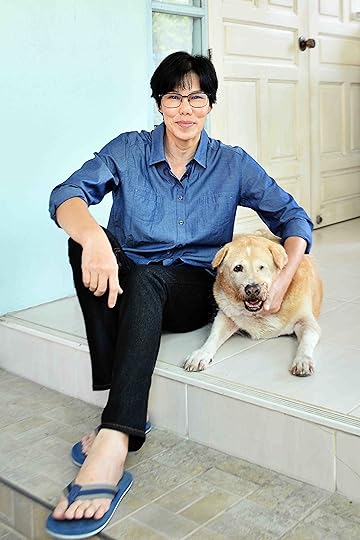
In Thailand, Pimwana is not thought of as a feminist writer. Rather, she is called a “genderless” writer because, to many, her work reads as if it could have been written by a man, a far cry from the romances Thai readers traditionally expect from female authors. - translator Mui Poopoksakul*In the Arid Dreams English language translation collection it appears that the translator Poopoksakul has accentuated this statement by selecting a majority of short stories that are written from a male point of view. These stories however are still examining male – female relationships or dynamics in which the female role is often dominant, be it as the object of desire or power or of a quest.

The world has farmers, and I'm a good farmer. But right now I'm an elevator attendant, even though such a job shouldn't exist in this world. Is it so troublesome to lift your hand up and press a button that they have to pass this task off to someone else, someone who could do so many other things?
—pg 58, The Attendant
Chitbundit also pointed out that the political activism of poor women (who, in her ballpark estimate, make up eighty percent of the Thai female population) tends to go unacknowledged as a feminist struggle, even though at the grassroot level, women, more so than men, are the driving force behind efforts against policies that directly threaten the livelihood of their communities, such as those controlling land use and natural-resource allocation that leave farmers landless. As she put it, “Women in the lower class will say, ‘It doesn’t matter whose last name I use, as long as I have enough money to take care of the mouth and stomach, as long as I have land to make a living off of.’”
—Mui Poopopsakul


