Everything Grows in Jiddo’s Garden is the story of a young Palestinian girl and her Jiddo—her Grandpa!
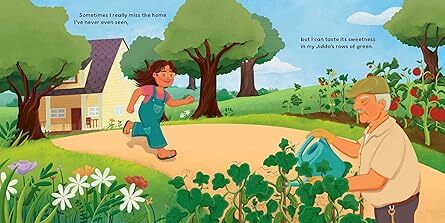
Jiddo’s garden is a wonder. In it grows so many amazing things—to see, smell, and taste. But helping him to tend the garden teaches this young girl about even more than fig trees. It gives her a chance to discover just who she is.
Many years ago, like so many Palestinians, her family was forced to leave their homeland. But Jiddo shows her how, until they can return, tending a garden can connect them to home—and to each other!
This heartwarming debut picture book by Jenan Matari explores themes of displacement, belonging, and an enduring connection to the land. With stunning illustrations by Aya Ghanameh, it’s a poignant celebration of love, identity and hope.
"Everything Grows in Jiddo's Garden" by Jenan Matari, illustrated by @ayaghanameh and published by @interlinkbooks is a sweet, powerful Palestinian story that's absolutely worth getting!
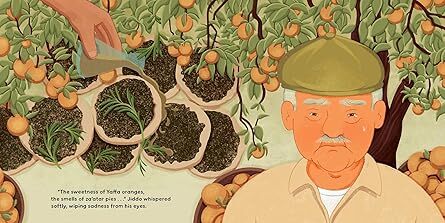
Jiddo's green thumb yields figs, tomatoes, and cucumbers galore, but a sadness always lingers. When he's asked about it, he shares the story of his own Baba's beautiful garden in Palestine... a garden that that they were forced to flee during the Nakbah.
Between the rhymes and Aya's beautiful illustrations, this story both celebrates Palestinian joy through their connection to the land, and touches on the painful occupation that they continue to resist today.
This book is *very* child appropriate, highlights Palestinian culture through lovely visuals, and reinforces a deep connection to Palestine. It's also a wonderful way to encourage kids to get gardening themselves, and discover the joys of nature. (Also I loved this book bc it reminded me of my own grandfather in his garden!)
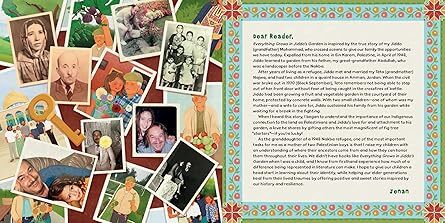
This sweetly illustrated 32 page rhyming book starts off introducing a little girl living in one place, and having a home in Palestine that she has never been to, but loves. The book then becomes pretty universal with her and her grandfather talking about what grows, his "green thumb superpowers," and the magic of planting small trees that change and produce. The pages then add in more Arabic words of what is grown, and then when Jiddo is drying his eyes recounting why he had to flee his home and his roots, I too, found I was emotionally invested in light of everything current and past, and the simple words weaving a heartfelt story of family, connection, and home. I do wish that there was some Islam in the text or illustrations: a dua, a plea to Allah swt, a hijab on a main character not just on background memories, but there is not. There is also nothing overtly political or named in the text. The backmatter does discuss the Nakba without naming names and highlights the author's inspiration, but inshaAllah nothing that will get the book banned or kept off shelves. The rhyme and cadence are pretty good, it doesn't feel overly forced, but when reading aloud in a group, as always, I suggest practicing a few times to make the flow consistent.
The book starts with a beautiful spread of a mother and daughter looking through a photo album, and imaging going to Palestine one day, the subsequent pages show how Jiddo's garden helps bring Palestine to them. The "sour green janarek plums," "crunchy green khiyar," and "plump red bandora." Mama makes warak enab and Teta sings for more.
One day the little girl wonders how her Jiddo learned to grow everything and he shares that he learned from his father how to care for the land. She then wants to know why they left Palestine, and he says, "our land was taken from us...and our family had to flee." The hope is to return, the illustrations show the key to their occupied home being held on to, and reinforces the symbolism that Palestinians are like seeds that will flourish wherever they are, reaching toward the light.
The book contains a glossary with words written in English and in Arabic script, and an author's note in the backmatter with presumably personal photographs of the author and her family. I read a digital ARC and look forward to release day for my preorder to arrive.
This book is a small celebration of gardening, family traditions, and cultural memory. It features the Palestinian names of the foods being grown and the dishes prepared with them, helping introduce young readers to both language and culture through everyday experiences. The story is written as an homage to the author’s grandfather, who learned gardening from his own father, a Palestinian refugee.
Along the way, the book gently introduces children to the concept of displacement and refugee experiences, while also showing how traditions, food, language, and family stories can help people maintain connections to their homeland across generations. The illustrations are colorful and inviting, adding warmth to the story and helping bring the garden and meals to life.
Beyond its celebration of gardening and family, the book offers young readers an accessible opportunity to learn about Palestinian culture and experiences in a thoughtful and age-appropriate way.
I do love the connection to family history and how it plays out in a garden far away from where the Grandfather who tends the garden once lived and learned his skills. Sharing memories, stories, and the fruits and vegetables of the garden allows for some Arabic language and culture to be included. Illustrations are lovely and show the closeness of the family and the grandfather's respect for the earth and all that it provides when tended well. There is family history which includes the war in the late 40's around Jeruselum and then again in the 70's in Jordan that led to the family relocating twice. It is only a small place and likely will not distract children as they read. I wish there had been recipes included for some of the dishes described in the story.
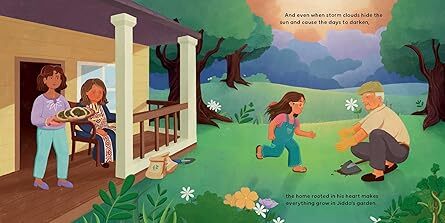
I too had a grandfather who accomplished magical gardening things, in a tiny space behind their house in Brooklyn. Like this Jiddo, he shared this love of growing and of food with us. Matari's words inspire wonder: "And even when storm clouds hide the sun and cause the days to darken, the home rooted in his heart makes everything grow in Jiddo's garden." With a full palate of color, illustrator Ghanameh incorporates symbols - the key to the lost house, the poppies, and much more, for readers to point out to the listeners. There are some real family photos at the end, too.
An outstanding picture book about Palestine, the Palestinian diaspora, and the profound connection of Palestinians to their land, all told through a simple, subtly rhyming story about a child and her Jiddo's garden. Beautiful.
A lovely and tender story about a young girl and her grandfather. He creates a garden that feeds the whole family, and when she asks him why, he tells about his history and having to flee from his country. Readers learn about both the grandparents' journey to be where they are. Brightly colored illustrations capture the harvest and the emotions. Don't miss the informative text at the end.
A beautiful love letter to family and traditions as well as a remembrance of a home taken from its Indigenous people forcing them to become refugees. It is somber, yet hopeful and emphasizes the importance of intergenerational connections. I, too, hope that Palestinians are one day able to return home. A must read.
Great book that touches on the history of Palestine without getting “too deep” my almost 3 year old loved seeing the pictures and reading the Arabic words for the vegetables. Hopefully one day we can all make it back to Palestine. 🇵🇸 🍉