This extraordinarily wide-ranging work represents a new departure for contemporary literary theory. Author of Beginnings and the controversial Orientalism , Edward Said demonstrates that modern critical discourse has been impressively strengthened by the writings of Jacques Derrida and Michel Foucault, for example, and by such influences as Marxism, structuralism, linguistics, and psychoanalysis. He argues, however, that the various methods and schools have had a crippling effect through their tendency to force works of literature to meet the requirements of a theory or system, ignoring the complex affiliations binding the texts to the world. The critic must maintain a distance both from critical systems and from the dogmas and orthodoxies of the dominant culture, Said contends. He advocates freedom of consciousness and responsiveness to history, to the exigencies of the text, to political, social, and human values, to the heterogeneity of human experience. These characteristics are brilliantly exemplified in his own analyses of individual authors and works. Combining the principles and practice of criticism, the book offers illuminating investigations of a number of writersSwift, Conrad, Lukacs, Renan, and many others-and of concepts such as repetition, originality, worldliness, and the roles of audiences, authors, and speakers. It asks daring questions, investigates problems of urgent significance, and gives a subtle yet powerful new meaning to the enterprise of criticism in modern society.
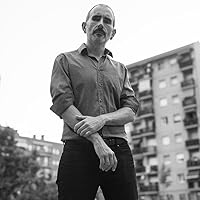
(Arabic Profile إدوارد سعيد) Edward Wadie Said was a professor of literature at Columbia University, a public intellectual, and a founder of the academic field of postcolonial studies. A Palestinian American born in Mandatory Palestine, he was a citizen of the United States by way of his father, a U.S. Army veteran.
Educated in the Western canon, at British and American schools, Said applied his education and bi-cultural perspective to illuminating the gaps of cultural and political understanding between the Western world and the Eastern world, especially about the Israeli-Palestinian conflict in the Middle East; his principal influences were Antonio Gramsci, Frantz Fanon, Aimé Césaire, Michel Foucault, and Theodor Adorno.
As a cultural critic, Said is known for the book Orientalism (1978), a critique of the cultural representations that are the bases of Orientalism—how the Western world perceives the Orient. Said’s model of textual analysis transformed the academic discourse of researchers in literary theory, literary criticism, and Middle-Eastern studies—how academics examine, describe, and define the cultures being studied. As a foundational text, Orientalism was controversial among the scholars of Oriental Studies, philosophy, and literature.
As a public intellectual, Said was a controversial member of the Palestinian National Council, because he publicly criticized Israel and the Arab countries, especially the political and cultural policies of Muslim régimes who acted against the national interests of their peoples. Said advocated the establishment of a Palestinian state to ensure equal political and human rights for the Palestinians in Israel, including the right of return to the homeland. He defined his oppositional relation with the status quo as the remit of the public intellectual who has “to sift, to judge, to criticize, to choose, so that choice and agency return to the individual” man and woman.
In 1999, with his friend Daniel Barenboim, Said co-founded the West–Eastern Divan Orchestra, based in Seville, which comprises young Israeli, Palestinian, and Arab musicians. Besides being an academic, Said also was an accomplished pianist, and, with Barenboim, co-authored the book Parallels and Paradoxes: Explorations in Music and Society (2002), a compilation of their conversations about music. Edward Said died of leukemia on 25 September 2003.
I had a similar experience with this essay collection as I did with Said’s seminal work Orientalism, to wit, I only understood about one sixth of it. Said is definitively not writing for a general audience, as is obvious from passages like this (from Swift’s Tory Anarchy):
“Furthermore, the tautology text-pretext-text is not questioned because the pretext is shown to inhabit the text on a different spiritual, temporal, or spatial level (anterior, more profound, interior); the critic’s job is therefore to assemble pretext to text in a new order of simultaneity that eradicates the difference between them – so long as one has a transcendent principle of convertibility at hand that transforms the differences.”
Bro. BRO. What?
It doesn’t help, of course, that I’ve read barely any of the primary texts covered in the essays – one by Conrad and one by Swift and that is it. None of which is the fault of literary criticism in general or Said in particular. Do I consider that this area is purposefully obfuscating and not saying a great deal when you drill down? Sure. Do I respect the hustle? Also yes. Here are my notes.
Introduction: Secular Criticism
4 types of liteary criticism: journalism, academic, literary appreciation, literary theory. Expertise is a service sold to the central social authority (see also: the traison des clercs). Literary criticism has a principle of non-interference in historical and social world. It has isolated textuality from circumstances. This coincides with a world shift to the right since the 1980s.
The World, the Text, and the Critic
Language has two opposing characteristics: unchanging versus contigency. The interplay between text and context provides meaning. Critique is usually considered secondary to the text. Ethnocentrism is the authority of certain values over others; this can be counteracted by essays on literary criticism.
Swift’s Tory Anarchy
Barthes defined an ‘écrivant’ as someone who writes about subjects that exist, and an ‘écrivaine’ as someone who writes about writing as the subject. Writers write into a future that doesn’t exist yet?
Swift as Intellectual
Philosophy: people can’t improve, bodies are disgusting, enthusiasm is dangerous, yay the Church. Said feels Swift hasn’t had due literary attention.
“What Orwell takes no account of then is ideological consciousness, that aspect of an individual’s thought which is ultimately linked to sociopolitical and economic realities. Swift is very much a part of his time: there is no point therefore in expecting him to think and act like a prototype of George Orwell since the cultural options, the social possibilities, the political activities offered Swift in his time were more likely to produce a Swift than an Orwell.”
Swift is a reactionary and also an agitator, which is necessary to stir readers out of mindlessness. According to Gramsci, ‘organic’ intellectuals pave the way for social change, but ‘traditional’ intellectuals conserve the way ideas are already produced (eg schoolteachers). Generally the text is important and the critic secondary; Swift resists this. His technique is to become the thing he attacks.
Conrad: The Presentation of Narrative
There is a gap between words saying and words meaning that is widened by the talent for writing.
“Loneliness, darkness, the necessity of writing, imprisonment: these are the pressures upon the writer as he writes, and there is scarcely any I have read who seems so profligate in his complaining.”
The context of what is said is not as important as who says it and why.
“My argument in short is that Conrad’s writing was a way of repeatedly confirming his authorship by refracting it in a variety of often contradictory and negative narrative and quasi-narrative contingencies, and that he did this in preference to a direct representation of his neuroses.” I have NO IDEA what this means.
On Repetition
Vico: what humans do is what makes them human; what they know is what they have done. Does repetition enhance or degrade a fact? (Unclear.)
On Originality
Creating is primary; critique is secondary. Modern writing is dissatisfied with traditional ‘units of interest’ eg text, author, period, ideas (!!). Telling, not the story, matters. Foucault: literature is a copy, experience is original, history links the origin to the present.
Roads Taken and Not Taken in Contemporary Criticism
Function: what a text does, as a system. Avoid ‘greatness, worth, etc’. Critic isn’t for the general public; it’s a specialised function. Contemporary criticism assumes relationship between text and society is taken care of by traditional scholarship. What role does critical scholarship play in the production of literary work? Criticism creates its subject matter. Its purpose is the multiplication of critical discourse. There’s a connection between a great work and its priority; sometimes, it’s novelty. No text is finished because every reader’s opinion can extend it.
Reflections on the American ‘Left’ in Literary Criticism
Maximalist: literature expresses only itself. Minimalist: literature is about nothing. Any authority in modern society is derived from the state. According to Gramsci, culture gives the state something to govern. Culture’s strength is its variety and plurality. Culture serves authority not because authority represses it, but because it is affirmative and persuasive. It’s not analogous to police, it’s a separate endeavour. The responsible technocratic intellectual is opposed to the value-oriented intellectual who challenges authority. Works validate the culture and maintain authority. Culture selects the ‘good’.
Criticism Between Culture and System
Reading and understanding a text involves a high degree of interpretation. How do we know what we know? Derrida: reading a text it what’s in it for the reader. Foucault: power, claim on actuality makes visible the invisible. D: the text hides something. F: this can be revealed. Replace the tyranny of direct reference with dedefinition and anti-referentiality. F: regularising collectivity called ‘the discourse’ is the subjugation of individuals to authority. The novel has evolved from a biography eg Tom Jones to writing about writing itself. D: big words like God mean nothing without little ones like ‘is’. Texts permit misinterpretation. Is writing simply the reflection of thought or voice? (No.) D; difference between original and representation is intrinsic to language, not an added quality. Language is not just the end of representation but the beginning of something else: writing. F: culture isolates its opposite and valorises its authority. Discourse didn’t disappear but became invisible.
“Whereas Derrida’s theory of textuality brings criticism to bear on a signifier freed from any obligation to a transcendental signified, Foucault’s theories move criticism from a consideration of the signifier to a description of the signifier’s place, a place rarely innocent, dimensionless, or without the affirmative authority of discursive discipline.”
Non-recognition of the act of will is unrecognised by the deconstructor. F: all knowledge is contentious and so is all criticism.
“Criticism cannot assume that its province is merely the text, not even the great literary text. It must see itself, with other discourse, inhabiting a much contested cultural space, in which what has counted in the continuity and transmission of knowledge has been the signifier, as an event that has left lasting traces upon the human subject.”
Travelling Theory
Sharing ideas requires a point of origin, a distance traversed, acceptance or resistance, and accommodation. Criticism can be: as a servant of the text; safeguarding or subverting the canon; detached from the sociopolitical world; or criticising or analysing language. Lukacs asserts that capitalism transforms everything into disconnected and alienated atoms. ‘Reification’ is the capitalist quantification of assigning market value to everything. No social system is so dominant that it has unlimited strength. Theory is untidy; failure to realises this leads to ideological traps. No reading is neutral or innocent. There is always something that lies beyond the reach of dominating systems.
Raymond Schwab and the Romance of Ideas
“What we would regard as calamitous were in his eyes just one more chance to learn something.”
Scholars are the heroes of culture because you first wish to know and then organise what you know.
Islam, Philology, and French Culture: Renan and Massignon
I took nothing from this except that Renan is sketchy, which I already knew from Orientalism.
A visitor from another world would surely be perplexed were he to overhear a so-called old critic calling the new critics dangerous. What, this visitor, would ask, are they dangers to? The state? The mind? Authority?
I have read hundreds of pages yet did I understand much? Probably not. I think reading this kind of books would be a much better choice after graduating and actually learning theory.
Thought-provoking essays, some now more relevant than others (originally published in the 80s). Has put me on to Raymond Schwab and Louis Massignon. Has good analyses of pitfalls in both Foucauldian and Derridean criticism. Some good observations on Swift and Swift criticism. And some very insightful and prescient things to say about the dangers of academic hermeticism.
Challenging? Yes, plus equal parts entertaining and critical and celebrating. Such fun reading this.
This is essentially three open-ended books in one spine: a Dagwood Sandwich of Lit Crit, Lit Crit criticism, and criticism of Lit Crit criticism.
Eddy Said knows how to flex, as the youths say, and when he’s not effusively praising Foucault or Raymond Schwab (both of whom will find a spot on my to-read list) he’s casting Shade at Derrida or scoffing at the same Foucalt for different reasons.
A favorite passage, regarding Foucault:
Recently, for example, he has been celebrated by Ian Hacking as a kind of hard-headed alternative to the too-backward and too-forward looking “Romantic” Marxists (which Marxists? all Marxists?), and as a ruthlessly anarchistic opponent of Noam Chomsky, who is described inappropriately as “a marvelously sane liberal reformer”. Other writers, who quite rightly see Foucault‘s discussions of power as a refreshing window opened on to the real world of politics and society, uncritically misread his pronouncements as the latest thing about social reality. There is no doubt that Foucault‘s work is indeed an important alternative to the a historical formalism with which he has been conducting an implicit debate, and there is great merit to his view that as a specialized intellectual (as opposed to a universal intellectual) he and others like him can wage small scale guerrilla warfare against some oppressive institutions, and against “silence” and “secrecy” (244).”
Alas, there is a typo halfway through and pobody’s nerfect but dang it, Eddie! Even proofreaders need proofreading.
American Arab Literature History Professor Edward Said's "The World, The Text, The Critic" is one of the best books which conceptualizes "the world" in the relation with the human being with the concepts of literature history. Edward Said suggests to see "the world" with its relation to "the text" which reflects "the world", but not without the role of "the critic". Edward Said's three staged describing "the writing process" can be useful to improve more exactly comprehensing the literature production. In the literature history, we can see this three staged process of writing in the different poetry, prose, social scientific works. (In Homeros' in the ancient Greece, in Dante's in the medieval Italy, in Cervantes' in the 18. Century Spain, in Dostoyevski's in the 19. Century Russia, in Balzac's works in the 19. Century France, or in Gorki's in the 20. Century Russia, in Mann's in the 20. Century Germany, in Mishima's in the 20. Century Japan, in Moravia's in the 20. Century Italy, in Saramago's in the 20. Century Portugal).
this was dense as hell 😭 but at its core a summation of how ethnocentrism, the state, and structures of power engage with the world of literary criticism. clearly written for an academic audience, so it's pretty abstruse at times, but i like that Said is unafraid to engage across political dimensions within the literary space (and indeed interrogate what these political dimensions are, how they were formed, and if they are even useful). as a layman, a simple reader of books, i feel like the critical arguments were a little beyond me but i am inspired to question my beliefs about "good" literature, so yay to that !
Incredible book--one that tries to think about what it means to deal with writing, to read or write something--to be a critic within the world and figure out to do with texts. Just a pleasure to be in the (written) presence of Said's thinking.
Un libro excelente para conocer a otro Edward Said, uno menos interesado en el orientalismo (aunque el concepto se asome) y más orientado a la figura del intelectual. A través de una serie de ensayos pertenecientes a diferentes momentos (pero que Said sabrá unificar gracias a una brillante introducción), en el volumen advertimos la ambivalencia de un autor que pasó del entusiasmo hacia la "french theory", que influyó notablemente en el mundo académico estadounidense durante los 70, a la defensa de un humanismo amenazado por las corrientes postestructuralistas. Merecen especial atención sus textos en torno a Swift, su afortunado concepto de la mundaneidad y sus opiniones sobre filiación y afiliación.
i could do without the last couple of essays - addenda to Orientalism - but his discussions of the strengths and weaknesses of different philosophers and literary critics are quite illuminating.