Tales of risk and danger, suffering, disease, horror, and death. Tales, also, of courage and dignity, hard work, and human endurance in the face of hostile nature and the frequent brutality of men. And tales flavored with piquant touches of humor and bemused irony.
These are the stories of the Uruguayan writer Horacio Quiroga, here presented in an important compilation of thirteen of his most compelling tales, sensitively selected and translated by J. David Danielson. Author of some two hundred pieces of fiction, often compared to the works of Kipling, Jack London, and Edgar Allan Poe, Quiroga set many of his stories in the territory of Misiones in northeastern Argentina, the subtropical jungle region where he spent much of his life.
Included here are stories from Los desterrados (1926) often said to be his best book, as well as others from Cuentos de amor de locura y de muerte (1917), Anaconda (1921), and El Desierto (1924). The publication of this selection marks the first appearance in English of all but two of the thirteen stories.
Quiroga here presents a wide range of characters: parents and children, servant girls and prostitutes, landowners and lumber barons, foremen and laborers, natives and immigrants, in stories pervaded by a vision of life that is elemental, incisive, and essentially tragic. The Exiles and Other Stories shows the versatility and skill that have made him a classic Spanish American writer. It complements and illumines The Decapitated Chicken and Other Stories, selected and translated by Margaret Sayers Peden, also published by the University of Texas Press.
Horacio Silvestre Quiroga Forteza was an Uruguayan novelist, poet, and (above all) short story writer.
He wrote stories which, in their jungle settings, use the supernatural and the bizarre to show the struggle of man and animal to survive. He also excelled in portraying mental illness and hallucinatory states. His influence can be seen in the Latin American magic realism of Gabriel García Márquez and the postmodern surrealism of Julio Cortázar.
I really like this guy, I can see how he became (as I gather) a pivotal figure in South American literature. Like Kipling without all the uncomfortable imperialism, with an earthy, authentic understanding of the Argentinian/Brazilian frontier, and the desperate men who inhabit it, or who inhabited it some century back. There are some pulpy thriller type stuff here, almost Robert E Howard like (except that Robert E Howard never went anywhere or did anything) but there’s also some reasonable social critique, and a lot of nightmarish stories about the sort of men who go vagabonding and get lost in out of the way places and drink themselves to death or find some other means of suicide. There’s nothing explicitly impossible in most of these, but you can see how his hyper-realism (I don’t think I ever read a writer who had so many stories which end with the narrator dead) was an influence on later generations of magical realists.
“Misiones, located at the southern edge of a rain forest which begins there and ends in the Amazon basin, provides a haven for an array of human types whom one might reasonably accuse of anything whatsoever―except being boring.”
These stories take place in the aforementioned Argentine province of Misiones. Bordering both Brazil and Paraguay, it is a transitional space on the margins of all three countries and as such, is populated with people living on the figurative margins of society. In these stories you meet loggers, charcoal makers, distillers, day laborers and their overseers, fathers trying to hold their families together and more than a few bandits. Life in Misiones is brutal and violent and it shows on the faces and bodies of all of these characters who have the mental and physical scars attesting to their shattered dreams as well as limbs. These are people scraping out existences for as long as they can while others simply welcome death. For as one character says: “ Anyhow, not much is lost if you go to the grave . . .” All written in the first thirty years of the 20th century, these stories in many respects feel like the spiritual predecessor to the marginalized characters that will later come to populate the short stories of writers like Raymond Carver, Carson McCullers, and Kenji Nakagami in the pain, despair, and dignity they display in hopeless situations. Whether they knew of Quiroga or not I don’t know, but the men in his stories would be right at home with any of theirs. All this being said, despite the brevity and beauty of the writing (and it truly is amazing writing) these are difficult stories to read. Yet for the person willing to go and live with these characters for a few pages and give them the time that the society around them rarely did, there are rewards to be had.
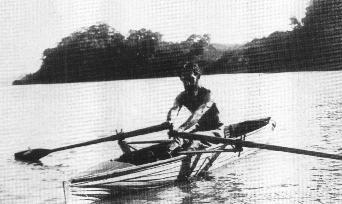
The man in the boat, Horacio Quiroga, is one of the most fascinating characters in 20th-century literature. A settler in the jungle frontier along the Parana river, where the borders of Brazil, Argentina and Paraguay meet, he was also a pioneer of the Latin American short story, many of his tales coming out of his hard-lived experience of frontier colonialism. Thanks to his physical and spiritual distance from the capital, he never became part of the Buenos Aires set, always swimming at a crooked angle to the literary mainstream. Instead, I find him to be closer in spirit to other explorer-chroniclers of the colonial experience, Maugham in particular, with whom Quiroga shares an extremely jaundiced view of human frailty and inconsequentiality. But there is something else to Quiroga, which I think derives directly from his decades of digging mud in the humid selva (Maugham was always a footloose rover by contrast, and no mudsplash ever besmirched his dandified outfits, I'm sure!). No, what is distinct to Quiroga is an authentic sympathy with the subtropical jungle, its landscapes and riverscapes, its native peoples, plants and animals, which was not always old Will's forte.
Others have brought up Kipling and Conrad, but I find the former to be especially wide of the mark. Quiroga had nothing remotely similar to Kipling's racial superiority complex, as should be evident from his depiction of native Indians as fundamentally equal to the European intruders. In Quiroga's telling, European migrant labourers are chewed up just as cruelly by the maw of colonial capitalism, they die off from disease and debility just as fast as the Indians, possibly even faster. His attitudes to the economic exploitation of land and labour are quite without ambiguity, and there is also enough evidence in these stories of what his views were on the natural despoliation that took place all along the mighty Parana. These are short stories of a cruel beauty, perhaps none more so than the story of Candiyu the log-fisherman and his pursuit of a gramophone record. Everything that I mention above comes together in this tale, and for me thus far, it is the quintessential Quiroga story. That last page alone, on the turbulent Parana at night, is worth the price of entry.
13 stories published 1908-1929, of colorful characters of Argentina's northeast frontier: loggers, charcoal burners, yerba mate plantation workers, liquor distillers. And their colorful deaths.
Not all of these are among Quiroga's best, but if you want to transport yourself to Misiones--with its outlandish characters, obsessive industrial projects, and untamed nature--there's no better way.
Qué gran narrador que es Quiroga. Me encantaría volver a visitar su casa en San Ignacio, Misiones, con sus trastos de taxidermista y sus animales de hojalata contando a viva voz los Cuentos de la selva.