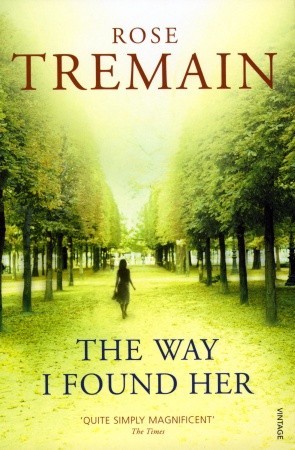
This is the summer that Lewis Little, precocious thirteen-year-old, is spending in Paris with his beautiful mother, Alice, who is translating the latest medieval romance by Valentina Gavrilovich, the bestselling and exotic Russian émigré. This is the summer that the bewitching Valentina beckons from her sofa, and Lewis discovers an exquisite new world filled with passion and intrigue, set against the alluring backdrop of Paris. But when Valentina disappears and Lewis takes it upon himself to find her, wondrous secrets suddenly turn sinister. This is the summer that Lewis, caught in a bizarre and dangerous romance, is about to face head-on the perilous force that transforms children into adults.
Dame Rose Tremain is an acclaimed English novelist and short story writer, celebrated for her distinctive approach to historical fiction and her focus on characters who exist on the margins of society. Educated at the Sorbonne and the University of East Anglia, where she later taught creative writing and served as Chancellor, Tremain has produced a rich body of work spanning novels, short stories, plays, and memoir. Influenced by writers such as William Golding and Gabriel García Márquez, her narratives often blend psychological depth with lyrical prose. Among her many honors, she has received the Whitbread Award for Music and Silence, the Orange Prize for The Road Home, and the National Jewish Book Award for The Gustav Sonata. She was shortlisted for the Booker Prize for Restoration and has been recognized multiple times by the Walter Scott Prize for Historical Fiction. In 2020, she was appointed Dame Commander of the Order of the British Empire for her services to literature. Tremain lives in Norfolk and continues to write, with her recent novel Absolutely and Forever shortlisted for the 2024 Walter Scott Prize.
Twenty pages in and I am beginning to see and feel the new world around me. The dusty mansard, the view over the roofs of Paris, the summer heat and discovering Paris with the dog, or rather being lead around the dog’s favorite places while “attached” to the other end of its leash. And of course the fascinating Valentina, her smell, her touch and her stories. If ever I had any doubts about Rose Tremain‘s writing, this book, despite not being the highest rated at all, restored my faith in her. A thirteen year old English boy, Lewis, travels together with his mother to Paris for the summer. During their stay, he is supposed to be brushing up on his French, while she will be translating a novel that is still being written by the Russian-French novelist, Valentina Gavrilovich. For the process of translation to run as smoothly as possible, Lewis and his mother will be staying in Valentinas spacious apartment. While his mother sets to work, Lewis is assigned an attic room where through a round window he can observe the roofs of Paris. Since nobody has time for him his days aren’t particularly exciting. There are few opportunities to make new acquaintances so he gladly accepts every unexpected or unorthodox opportunity of company instead. His new acquaintances will include Dider, a roofer-existentialist who passes his round window on the way to his work, Baba the cleaner from Benin who cleans Valentina’s apartment every day, and although not human but still a company, Valentina's beautiful dog Sergiej who is such a glamorous creature, that Lewis on the walk with him feels like Arthur Miller with Merlyn Monroe, where it is the dog that is the impersonation of Merlyn… And then of course, there is Valentina herself, who seems to like the boy and visits him in his room to talk, and to help him with his own attempts at translation. As the story progresses, Lewis falls head over heels for the charismatic Valentina. His imagination feeds him images and ideas suitable for a much older person, and he dreams of being able to be her “knight in shining armor” who saves her from some incredible danger. By the time the story riches it‘s unexpected and sad ending I am emotionally quite exhausted. I don’t know if the premise of this book is what I will remember long time from now, but I am quite sure that I will remember the characters and my feelings of involvement in their lives. I admit that I was rather reluctant to begin with. What would I be doing in a thirteen year old’s head, after all? But I started reading anyway and kept on because it wasn’t bad at all, and after a while I found myself so deeply involved that I just couldn’t let go. Rose Tremain has managed to lure me into this boy’s life, and keep me within to the end despite my reservations, which leaves me confused and quite impressed at the same time.
This novel turned out to be such a disappointment. Initially, I felt drawn to this story. The writing didn't seem bad and the characters were promising enough. The premise was pretty good: A thirteen year old boy named Lewis travels to Paris with his beautiful mother Alice. His mother is to translate a novel while Lewis perfects his French. The two of them will stay in an apartment of a wealthy French writer of Russian descent (Valentina) whose novel Alice (the boy's mother) is to translate. Immediately, the boy becomes smitten with Valentina.
We never learn why or how because the author doesn't really care about character development or giving us some background information about the main characters. Yes, the novel does go on about Valentina and her past at times, but even she remains a mystery. As for the boy's mother Alice, she doesn't seem a real character at all. She disappears all the time and the interaction between her and Lewis seems odd and natural. I get that Alice has something to hide, but you can't just leave a character unfinished like that. The dialogues feel very unnatural and the boy protagonist sounds and talks like an intelligent forty year old women. Yes, a woman! His speech patterns are distinctly feminine, Lewis sounds like an eloquent middle aged lady who is prone to passive aggressive patterns in her speech. Lewis like pretty much everyone else in this novel is not a well developed character. It was hard to sympathize with him because Lewis is never explained to us. We do get to know what Lewis is thinking and doing, but it is very awkward most of the time because he sounds like an adult and yet he is supposed to be thirteen. When another character disappears, Lewis decided to investigate. The police and everyone just let him do that and answer all his questions. How does that make any sense? Would you let a thirteen year old boss you around? Moreover, Lewis' fantasies about Valentina were unpleasant to read and there was altogether too many of them. His relationship with Valentina puzzled me. Does he have some kind of mental problem? Does he have issues with his mother? What makes him form such an unnatural attraction? At times it seemed to make sense because he might be looking for a mother figure, but altogether Lewis doesn't make much sense. If Lewis was seventeen, the novel would have been more credible (but not significantly better because there are so many things wrong with it....).
The plot of this novel is a disaster. There are a lot of hints but nothing much happens. Towards the end it seems like things will get interesting, but the ending really disappointed me. Hardly anything interesting happens in this one and the ending makes little sense and feels rushed. A boy and his beautiful mother go to a foreign country. One immediately assumes something interesting will happen. At first it did seem that it will, but soon I discovered that just isn't the case. To conclude, I really didn't like this novel. The only thing I liked about it were a few clever sentences, but on overall this book just doesn't make any sense.
No. This could be a question of personal taste and what I’m willing to overlook – or not – but in the end…no. There are so many things wrong with this book that it’s hard to know where to start. So, at the possible risk of offending the army of Rose Tremain fangirls (and boys), let me begin.
The narrator of the story, Lewis Little, is a 13-year-old boy taken to Paris by his mother, who’s a literary translator, to live in the house of a Russian émigré author of medieval romance novels. Here is where I began to have problems with the story because none of the three have any discernable personalities that can be used to understand the interactions. (In fact, it’s the optimistic father back in Devon who comes in a little clearer through his letters; he was the only one I felt for because Lewis seemed to hold him in such low regard.) Starting with Lewis might be the best because here we have the mind of 13-year-old boy seen through the eyes of a late middle-aged author who apparently has NO CLUE as to how an early adolescent male mind works; having once been an early adolescent boy myself, the dissonant notes rang out like a piano falling down a flight of stairs. His fantasies, connections and even the profanities just didn’t fit. What particularly got to me was his obsessive crush on the vain, zoftig middle-aged author, Valentina. His erotic fantasies about her made no sense at all; this is not to say that she couldn’t be attractive to him and maybe enter into his dreams but I saw nothing in her that either encouraged him or gave him reason to plan a seduction. Boys that age fantasize about classmates, not their mothers; older women intimidate them, plain and simple. On top of that, we’re given no information about Valentina that could explain the attraction, apart from being draped in an exotic air of past tragedies. She does or says nothing that could possibly justify his feelings, no type of coquetry. She seems to see him for what he is, a child. Lewis’s mother is secretive and preoccupied although we never really find out with what because Lewis is telling the story and there’s so much he doesn’t understand; she tells him about frictions with Valentina and she disappears for entire days, leading Lewis to suspect an affair, but she’s neither developed nor are her actions explained. It’s all vague.
Now to the unbelievable plot points. There’s a mysterious disappearance and Lewis turns into a miniature Sherlock Holmes, with a grand inspiration from the French classic, “Le Grand Meaulnes” by Alain-Fournier. (If you haven’t read it, don’t worry; it’s very good and centers around a mystery involving a party and a young woman.) The part that stretches credibility is how 13-year-old Lewis is able to order everyone around, including the French police and hospital authorities, to gather information to solve the mystery, then get in and out of trouble as in some juvenile adventure story. It all becomes ridiculous and instead of being caught up in the mystery, I just wanted the book to end. Thank goodness, it did but with a sort of melancholy reminiscent of the end of “Le Grand Meaulnes”.
I think that whether you like this book or not depends largely on whether you’re charmed by Lewis and his courage, or just irritatingly spoiled and stubborn. I didn’t particularly like him but I didn’t like most of the other principal characters either. The book reminded me of “The Mystery of the Dead Dog at Midnight” (which I didn’t like much, either) but I could empathize, at least. With Lewis, no, and with this book, even less; adieu, Rose Tremain, darken my door no more.
The Way I Found Her is a very unusual and thrilling novel. A thirteen year old boy spends the summer in Paris while his mother works on the translation of a French novel by a beautiful Russian emigre. The story of the summer is told through the eyes of the boy who is both highly intelligent and imaginative as well as being driven by his rampant hormones into falling in love with the beautiful Russian.
That the author knows Paris like the back of her hand is evident for her accurate location descriptions but the great strength of the novel is in the descriptions of the main players, an ensemble cast of individuals, each with his or her own strengths, weaknesses and attractions.
To say more would give the game away. This is a very good tale.
David Lowther. Author of The Blue Pencil, Liberating Belsen and Two Families at War, all published by Sacristy Press.
I’m very, very torn on this novel. It is a coming-of-age story told by Lewis, a thirteen-year-old boy from Devon who spends a summer in Paris with his mother Alice, a translator for Valentina, a Russian-born French writer of medieval romance novels. For the first half, the book is a sweet and atmospheric tale that follows Lewis through the streets of Paris, the people he meets, his thoughts, emotions and sexuality of a boy becoming a teenager, as he almost immediately develops a crush for attractive and charming Valentina. This part of the novel offers a beautiful evocation of a Parisian summer, occasional insights into human nature and the difficulties of growing up, consideration on language and a literary framework that goes from Lewis’ reading of Le Grand Meaulnes and Crime and Punishment to places that also have literary resonance (ie. Mention of the street where Maigret used to live).
After a sudden plot twist, the novel turns into a (rather unremarkable) detective story, and the implausibility of its ending left me enraged. Realism isn’t necessarily what I’m looking for in a good story, and in fact I’m not entirely sure of how credible Lewis is as a thirteen-year-old – precocious doesn’t even begin to cover it. I felt utterly betrayed after closing the book. It was like going from slowly savouring a delicious dish to being forced to stuff your face without being able to taste anything. This is the reason why I’m giving it 3 stars, but I did enjoy Tremain’s beautiful prose a lot, and this will certainly not be the last book of hers I read.
Another magnificent novel from the always reliable Rose Tremain.
I've read a few by her and whether she is writing from the perspective of a 17th century physician, an east European economic migrant, an aged Wallis Simpson in the throes of dementia, a transgendered woman, a boy growing up in post War Switzerland, or, in this instance, Lewis Little, a precocious 13 year old English boy visiting Paris with his mother, she is always utterly convincing. What an incredible writer. So diverse but, no matter what her subject matter, she writes so beautifully and evocatively.
The less you know about the plot the better, suffice to say it is unexpected, original, and - whilst a tad implausible - it's a complete delight.
The Way I Found Her is “deliciously enjoyable”, according to The Times newspaper. Forgive me – I don’t want to sound prudish – but I don’t find descriptions of a 13 year-old boy having sex with an overweight woman in her mid-40s quite as palatable. In fact, the more I think about it the more I’m astonished that there was no calling out of this work at the time of publication. If the protagonist had been a 13 year-old girl and she was partnered by a fat middle aged bloke I am sure the critics might have taken a very different tack. The word delicious would certainly not have featured. In the early pages this work does have some charm and the writing, as you would expect from Tremain is good. However I’m still baffled as to why Tremain wrote this. There’s nothing the least bit entertaining about the sexual abuse of children. An unpleasant, ill-judged novel.
Set in Paris, it is a beautiful kind of reverse Lolita tale of a young boy falling in love with an older woman. He spends his summer in an attic of a gorgeous apartment in Paris, learning the language by reading Dostoyevsky's Crime & Punishment in French, and walking around the city on his own as his mother translates books for their host, Valentina. Dramatic, touching, and full of beautiful sorrow, this is a book to remember. Like the literary equivalent to 'Some Velvet Morning' by Nancy Sinatra & Lee Hazelwood.
My least favourite Rose Tremain to date, bit disappointing as I'm usually a big fan. First part was a bit repetitive and I nearly gave up, then it unexpectedly turned into a very different story but somehow I never quite believed in the narrative or the characters.
There is much in this story that is autobiographical. After her father walked out of her family Rose Tremain was sent to a dismal boarding school in England, and then to a Paris finishing school by her Francophile mother for a year before she planned going on to university. However the headstrong and wilful teenager instead enrolled at the Sorbonne. In this novel a headstrong and precocious thirteen year old, Lewis Little, leaves his father behind one long hot summer and travels to Paris with his with wild and unstable, sexually promiscuous mother. Here Lewis develops an infatuation for a forty-two year old Russian emigre romantic novelist.
The atmospheric background to the story in the cafes, boulevards, bookshops and ateliers of Paris is captured concisely but then the novel veers off into magic realism as Lewis, who is busy developing his second language by translating the unfathomable "Le Grand Meaulnes", (called by John Fowles "the greatest novel of adolescence in European literature" ) and becomes embroiled in a mystery of his own.
Lewis Little experiences similar confusion to that of seventeen year old Augustin Meaulnes as he escapes from his boarding school and wanders into the forest where he chances upon a beautiful teenage girl, and becomes infatuated by this beautiful vision of loveliness. Both boys wander 'off piste' and become obsessed by older women and develop sexual fantasies in pursuit of their obsession.
For me after a promising start this degenerates into a disappointing read as the range of improbable events, not to mention the utterly irresponsible parenting, are irritating and so the inspired detection by the juvenile protagonist is not only implausible ( but then that is 'magic realism') but also just so painfully slow and too far fetched.
This is one of my all time favourite reads. I was completely captivated by the narrator, Lewis, and his coming of age drama. I don't want to say too much more because I don't want to spoil anything, but having just felt quite disappointed with The Road Home because it seemed to me the characters were too cosseted, and that Tremain was running ahead and smoothing their way the whole time, I'd have to say that The Way I Found Her was a much, much braver book.
I finished reading it at five in the morning and was so utterly bereft by the ending that I had to go wake my husband up to tell him about it. (Luckily, he's a good sport...)
As stated, this is about a precocious 13 year old boy living in Paris with his mother, a translator, and the writer she works with. Let's just say I did not buy the concept from the start. Felt false. I understand you must give a writer some latitude, but she used all my suspension of disbelief in the first 10 pages. This was not a 13 year old boy in that book--it was an adult woman wanting to endow a boy with traits almost never seen in a child then just call him precocious to say it is possible. I did finish it to see how it ended. Sigh.
There are very mixed reactions to this book but I found it absolutely captivating Plot, characters and the Paris setting just perfect. I love that every novel by this author is so different.
*Spoiler Alert* what I liked: The prose flowed very well and I enjoyed the description of Paris. It was also very funny in places. I loved the bits with the dog. Valentina was an interesting character.
What I disliked: the crude descriptions of the thirteen year old narrator masturbating. It just didn’t work. It pulled me out of being immersed and I’m not a prude one bit, but it really put me off the narrator. The lipstick scene was particularly grim. The flowery prose didn’t have room for that kind of harshness. It didn’t make it edgy or gritty like it might in an Augusten Burroughs book...
I found it bizarre that when he finally has sex (or was abused???) with a forty year old woman, who is his romantic obsession, he barely reacts or reflects on it afterwards. That whole scene made for uncomfortable reading...
Also the only things that really caught my attention, intrigue wise, were left in loose ends...this caused an anti climax big time. What about the plagiarism thing with Gricho? What about Alice and Didier? What about Violette’s future?
The Meaulnes part kept coming up again and again but didn’t add anything. Maybe I should read that book and I’ll understand the connection better, but really I shouldn’t need to...the author should’ve introduced it in a more relevant way
The truth is by the end I barely cared about this spoilt kid who can’t possibly be a precocious 13 year old. How would this teen have so much authority with everyone including the police?
Ironically, the book includes a paragraph that explains how you can’t enjoy a book unless you like the characters. Well I didn’t really like Lewis...
This entire review has been hidden because of spoilers.
I have very mixed feelings about this book. At times it compared with anything written by this brilliant author and at others it became rambling and boring. I'm all for the odd description of a dream, but this book overdid this device. The descriptions of Paris were great to begin with, but these also became a little repetitive. The development of the main plot is interesting when thirteen year old Lewis sets himself a quest because of his adolescent adoration for the voluptuous Valentina, with whom he and his mother are staying for one hot Parisian August. But the last hundred pages could have been halved to better effect. There is a fascinating undercurrent about plagiarism and a cute use of this in this novels' narrative. A good story that could have been better.
This is billed as a coming of age story, but in fact, the main character, at age 13, already has an extraordinary (if not entirely unbelievable) maturity. What kept me going was the quality of the writing. The story was unusual and interesting enough, but there were numerous situations in which the plot felt sluggish and bogged down in detail. The mystery element kept prodding me forward in anticipation, but the outcome did not entirely satisfy.
This was not a novel that left me wanting more. Even so, I credit the author for her beautiful prose, as other reviewers have already mentioned. "The Way I Found Her" was my first novel by Rose Tremain. I will give her a second try.
This is a classic example of "don't judge a book by its cover". It looks like a trashy piece of fluff, but it is so NOT. It is the deeply moving (and painful) story of a pivotal summer in the life of an adolescent boy. If you want light reading, don't choose this; but if you want something unique and memorable, this is a book for you.
I thought this was a wonderful book and I loved the character of Lewis. It's about growing up and the transition from child to adult. Tremain does this tremendously well. Using Alain-Fournier's Le Grand Meaulnes as her touchstone and quotation piece, there is an unreal quality to Lewis' experience of Paris, his own sexual awakening and the events he lives through.
For at least half of the book I was half-convinced that Lewis' vivid imagination had run away with him. Rather like Meaulnes in Alain-Fournier's book who searches for the lost domain and never finds it again, in that book I was convinced that it had never existed, and similarly that what had happened to Valentina was easily explainable and not at all what Lewis suspected.
Other reviewers have called this a surreal book, a magical realism book but I think both terms are inaccurate. Childhood and puberty from the adult point of view are unreal states we barely remember. They are indeed a lost domain. Extraordinary writing from Rose Tremain who knows exactly what she's up to throughout every sentence.
After recently discovering a love for Rose Tremain's writing I have started to read more of her work. This is my least favourite so far but I still found a lot to enjoy in this book. The writing is amazing as usual and full of Tremain's humour, excellent observations and well developed characters. I think this book would have benefitted from having more than one perspective to tell the story. We only see events through the eyes of Lewis and, as young teenager's tend to be, his attitude is quite self-involved and, at times, arrogant. Having the whole book told from his perspective was a bit too much for me and I would have loved some chapters from Alice or Valentina's viewpoint too. I also found the final third of this book quite farcical and it really changed the tone of the story. While this didn't live up to the other books by Tremain I have read, I am still very keen to read more.
Having very recently read and been impressed with Tremain's "The Road Home" I decided to tackle another of her novels. However, for me this one is far less successful.
This book centres around a 13-year-old English boy from Devon, Lewis Little, who along with his mother Alice, a translator, is invited to spend the summer holidays in Paris with popular medieval novelist Valentina Gavrilovich, whilst his father stays in England. Alice is there to work on Valentina's latest novel but Lewis is there to improve his French language skills.
Alice's work leaves Lewis with a lot of free time on his hands but no real friends to spend it with and he soon becomes captivated by his much older, voluptuous hostess. When Alice appears to start an affair (it is never proven conclusively) Lewis begins to focus all his attention on to Valentina lusting after her imagining them as lovers.
One day Valentina suddenly disappears and Lewis is convinced that she has been kidnapped. Turning super-sleuth Lewis attempts to rescue his first love rather than leaving it in the hands of the authorities which is what his mother prefers. The police initially believe that Valentina has been coerced into returning to her homeland of Russia by an old boyfriend who had recently been in the city. Lewis however, does no believe this theory and aided by Valentina's next door neighbour, Moinel, follows a different tack. When Lewis apparently gets too close to the truth he too is kidnapped and shares captivity with Valentina in an adjoining room all the time becoming ever attached to her as he tries to devise an escape talking non-stop with her through a hole in the wall until it all reaches a fateful climax.
Therefore this novel is part mystery, part romance and part adolescent fantasy. Now whilst on the whole I enjoyed the author's writing style and admitting that it had some amusing and touching moments for me overall it did not really gel. Without wanting to appear overly sexist I feel that this book would have been better if it had been written by a man who had actually lived through and had some of these teenage male fantasies because somehow I just did not feel that Tremain quite got Lewis's character quite right. In contrast I quite enjoyed her portrayal of Valentina and the frosty Alice. Overall an OK read but missed the target IMHO.
A precocious 13-year old British boy, in Paris with his mother for the summer while she works on translating a romance novel by a popular French-language writer, goes through many emotional mood swings: he rethinks how he views his parents, especially his mother; he falls in love with the Russian expatriate romance novel writer; he imagines his mother having an affair with the young workman who repairs the roof of his apartment building in Paris; he has sent to him the GI Joe figure that he played with as a kid; he gets himself kidnapped along with the novelist. It is all, in the end, rather a bunch of hooey., though up through the last section, Lewis (or Louis, in Paris) is an amusingly deadpan voice. I liked, sort of, the early sections, and sort of as amused by Lewis's reactions to Paris, to walking the dog around the city, to his interest in getting up on the roof and looking out over the rooftops around him. I liked the way he described his red-haired mother. I could hot see why he got so involved with Valentina, the novelist, and the whole kidnapping episode was rather stupid, and came to nought. I will remember Lewis in his attic room in Paris, looking out the little round window, and then climbing out on the roof. I will remember the walks around the city, the metro rides out to Defense, his conversations with Didier the roofer and the African maid. I will likely also remember his captivity in the kidnappers house in the country, the least effective part of the novel.
Rose Tremain always delivers a cracking good yarn - and "The Way I Found her" doesn't fail to please, as usual.
OK, the premise of an extremely sexually aware 13-year old boy may be a little far fetched - but if you want reality, watch soap operas. If you want a damn good story with strong characterizations, insights onto the human nature and an allround entertaining read - then you'll probably enjoy this book.
No two Rose Tremain books are the same - the settings (both geographically and historically), the characters and the moralities are always different. What doesn't change from book to book is her ability to deliver a compelling story - and her consistency shines through again in this offering.
I was drawn to this book when I heard it was about a English boy, Lewis Little, who goes to France with his mother, a translator, and becomes interested in the book Le Grand Meaulnes, which is one of my favorite French novels. However, the parts about Lewis's fascination with Le Grand Meaulnes are quick and disappointing, and the plot deteriorates into Lewis's larger, hormonal fascination with Valentine, a neighbor, who mysteriously disappears about halfway through the book. The plot deteriorates into a dark story about the disappearance and culminates into inappropriate sexuality. Very disappointing, in my opinion. Didn't care for it.
And then, after only a moment or two, I hear her laughter and a feeling like happiness comes into me and is mine.
Last line from The Way I Found Her by Rose Tremain. I’d read The Colour by Rose Tremain a while ago and because it gradually won me over, I thought I’d try another one of her books. The Way I Found Her was a drag through the fantasies of a teenage boy. None of the characters captured my interest and I couldn’t finish this fast enough. Tremain’s saving grace is that she can write well; just wish she’d picked a more interesting subject matter this time around.
A thought provoking, memorable read. I have loved every Rose Tremain I have read. Strangely all the way through I thought I had read this one before. And more than probably I had, when it was first published - but then I was a different me then! This time there was so much to say that I haven't time to do that now - but maybe I'll come back and edit this later. In the meantime, I would recommend it as an excellent read - with wonderful settings in Paris and insights to Russian history - and an ending that will leave the reader wondering.
From the beginning I didn't like Lewis and his thoughts ok he was intelligence but he killed Valentina by his stubborn and loving her I knew it when he forced her to escape from the roof that smth bad is going to happen.He was acting older than his age if he let the job to the adults nothing would happend to Valentina..at the end he was remembering her and smile! he thought that she belong to him !
The 2nd book in a row I have read that’s narrated by a 13 year old boy living in upper class Paris! This one was written intelligently and I could identify with this precocious (slightly ASD?) boy and his engaging coming of age story. However, the storyline becomes bizarre and has an unsatisfying end.