Jump to ratings and reviews
Rate this book

Mother Russia

Rate this book

A riveting thriller about crime and punishment in Soviet-era Moscow.

Like the Arkady Renko novels of Martin Cruz Smith, Robert Littell's masterful Mother Russia transports readers back in time and behind the Iron Curtain to experience the extremes of Soviet society. Robespierre Pravdin is a black marketeer who prowls Moscow's streets and alleys hustling wristwatches. Wishing only to survive in a city suffocated by paranoia and schizophrenia, Robespierre manages to make a tidy profit and stay under the state's radar-until, one day, he meets the woman called "Mother Russia" and becomes ensnared in the Byzantine and profoundly dangerous game of politics. This is another darkly engrossing pageturner from the bestselling author of The Sisters and The Defection of A. J. Lewinter.

256 pages, Mass Market Paperback

First published November 29, 1978

6 people are currently reading
161 people want to read

About the author

Robert Littell

47 books440 followers
An American author residing in France. He specializes in spy novels that often concern the CIA and the Soviet Union. He became a journalist and worked many years for Newsweek during the Cold War. He's also an amateur mountain climber and is the father of award-winning novelist Jonathan Littell.

Ratings & Reviews

What do you think?
Rate this book

Friends & Following

Create a free account to discover what your friends think of this book!

Community Reviews

5 stars
21 (16%)
4 stars
51 (39%)
3 stars
34 (26%)
2 stars
16 (12%)
1 star
7 (5%)
Displaying 1 - 19 of 19 reviews
Profile Image for Darwin8u.
1,843 reviews9,055 followers
August 11, 2023
"He suffers from the cult of personality without the benefits of having a personality."
- Robert Littell, Mother Russia

description

One part Karl Marx, one part Groucho Marx, with a bit of Kafka ground in good for good measure.

I'm getting closer to being a completist with Robert Littell. It looks like he's got another book in the wings, so I'm now working into some of the less read areas of Littell's large espionage & Russia collection. I guess I'm through the Littell with a Hegelian systematic logic:: thesis, antithesis and no onto processing the synthesis. Or said differently, if I was exploring a famous Bosch triptych, I'd be squarely in the Garden of Earthly Delights.

Mother Russia starts absurdly. The protagonist, Robespierre Pravdin, pale as death, is typical (and at the same time atypical) of the hustlers you found inside the Soviet Union during the 70s and 80s. He is constantly on the move trying to make a buck ("the buck never stops") in the blat and decay of Moscow. He operates with a disability. He can't shrug (which is almost a necessity in the Soviet State).

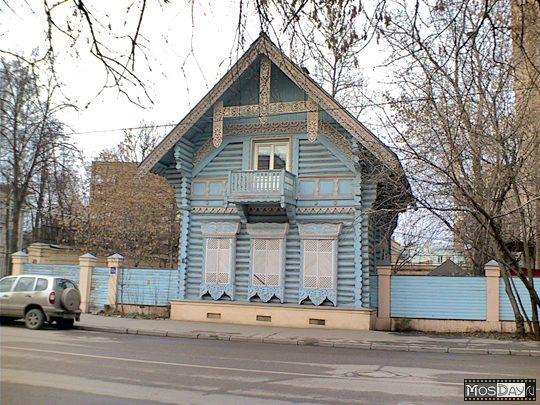
He finds himself one day, living in the attic of the last wooden house in central Moscow. He shares this house (it almost gives me Jean-Pierre Jeunet's Delicatessen vibes with just a hint of Eisenstein), with Mother Russia and her three parrots "waak waak, rev-lutions are verbose", his love interest Nadezhda, an old general, and several others. Let's just cover the plot by saying between trying to pitch the commercial idea of Q-tips in Russia, Pravdin, is trying to both hide and expose evidence of a crime against the people of the Soviet Union, so that he can help both Mother Russia and lovely Nadezhda, while keeping both the State and the Druse at bay. He still finds time to crash official parties "What are we here? Literary? What we are is theoretical physics."

But the novel doesn't end with absurdity. The last 10 percent (a tithe to the actual whatthefuckerydarknessthatisabsurd) feels a lot closer to Kafka's The Castle or Koestler's Darkness at Noon. It is dark, depressing, and gets a little lift at the very end thanks to a sewing machine.
Profile Image for Brian.
184 reviews
January 25, 2014
Mother Russia manages to be tense and gripping without relying on over the top, outrageous events. Authors who can make a story exciting by just telling a good story are rare. Patrick Rothfuss is another who comes to mind. That's the best thing about Littell's books. They're just good, interesting stories. This one also happens to have a shocking ending (which is ruined a bit by the postscript). Mother Russia strikes an authentic tone in its description of Communist Russia, which strengthens the story and heightens the tension. There's nothing like a police state to generate some excitement.
Profile Image for Yves Panis.
583 reviews31 followers
March 31, 2013
Un petit bijou sur l'absurdité de la vie à Moscou sous Brejnev.
Profile Image for Tony.
1,736 reviews99 followers
July 24, 2023
I picked this up because I recognized the author's name as a writer of thrillers, and the premise of a black market hustler in 1970s Moscow sounded interesting. What I didn't expect was a farcical satire of the Brezhnev era that bursts out the gate with a ton of energy, but never really gets anywhere interesting. The protagonist's name of Robespierre Pravdin should have been a clue that this was going to be a bumpy ride -- and the motif of Don Quixote that runs through the book proves to be an apt one.

Pravdin is a wheeler dealer in illicit items and favors, bluffing his way into various ceremonial lunches and dinners in order to eat, all of which is relatively charming. But as the book goes along, he and the reader start to realize the extent to which everyone is a potential ally or threat or both. Despite the death and disavowal of Stalin, the memories and trauma of the gulags still run deep. And when Pravdin becomes mixed up in a manuscript and an attempt to reveal a renowned writer as a plagiarist (all based on the real-life controversy about Nobel prize-winner Mikhael Sholokhov's authorship of "And Quiet Flows the Don"), his fate becomes tied to the nature of truth in the USSR. What starts as a generally enjoyable madcap whirl through a cast of outsized characters starts to grow tiresome and repetitive as the book goes on. Readers who are really interested in fictional depictions of the Brezhnev era may want to give it a whirl, but others will likely find its charms lacking.
Profile Image for Yianni.
26 reviews2 followers
March 28, 2024
This book is an extremely fascinating, comedic, and tragic look into Soviet life in the 1970s. The protagonist, Pravdin, is like an alternate version of Don Quixote, a sort of wise fool who fights hopelessly against a socialist system. I found his characterization alone to be very compelling and engaging, and it really made me emotional seeing him being ridiculed and abused by his fellow Soviet citizens.

It's also the funniest book I've ever read. The amount of comedy and ridiculousness present in the narrative made it a joy to read, and made the tragedy of the story all the more impactful. However, there were a few very detailed and uncomfortable sex scenes that could've been left out or done better. But besides that, I don't have much else to complain about.

It is by no means great literature. But for a short novel by an espionage author, it is very well-done. Highly recommend this to anyone interested in the Soviet Union and dark comedy. 8/10.
Profile Image for Tammy.
91 reviews3 followers
June 26, 2017
This book captivated me in the first few pages, to about halfway through. I felt that I was missing something, and maybe I was, but the conclusion suggested to me I had understood everything just fine. The ending itself left a lot to be desired. While for the most part entertaining, the story started to just wear a bit thin. The backwards sentence structures felt gimmicky, and just became annoying. It is still worth a read, but I wish I had started with one of Littell's other books. I'm not sure I'm all that inclined to read his other work.
515 reviews8 followers
October 1, 2017
decent novel by one of the masters of espionage fiction, this one about communist Moscow.
1 review
October 20, 2025
One of those books you read once and never forget about......read it when I was 17 and up to date I stay awake thinking about it
Profile Image for Kevin.
69 reviews2 followers
December 27, 2013
I really am enjoying working through Littell's work. I've read most of these books at one time or another, but here is one I had missed. Years from now, if I cycle through his bibliography again, I hope I remember to skip this one. The lead character is a kind of Ignatius Reilly for the Stalinist era. This works for the first several chapters, but the idea gets old and never really develops into anything else. Littell's creation of - or reference to (I'm not really sure in all cases which, and wasn't quite interested enough to do the homework to find out)- Soviet departments of government is amusing for a while, but also grows old. There are certainly good moments, and one or two characters were engaging, but overall the book was tedious. One mild credit goes to Littell's ability to elevate the lowly Q-Tip to an instrument of Soviet modernity. To find the sense in that, you will have to read the book. However, you will do so without my recommendation. Littell can do, and has, time and time again, done much better.
Profile Image for Ron Welton.
261 reviews6 followers
September 18, 2021
It is absurd that the protagonist of Robert Littell's novel Mother Russia, Robespierre Pravdin has lost the ability to shrug due to a war wound, or that he should see it as "In a workers' paradise the inability to shrug is the ultimate wound." Or that he should compensate for the loss of a shrug by scrawling graffiti.
It is absurd that Pravdin's patron/protector the Druse Chuvash is also his tormenter, the KGB interrogator, Melor. It is absurd that the KGB's interrogator's name "is an acronym for Marx, Engels, Lenin, Organizers of Revolution."
It is not absurd that Pravdin, a survivor of 12 years serving an 8-year sentence in the camps, should feel constant terror of being returned.
Absurdist fiction usually requires a character without purpose in life; however, Pravdin has found purpose: to reveal a truth. For that he will suffer greatly.
Mother Russia is filled with constant surprises, biting ironies, humor, and outstandingly fine writing.
Profile Image for David Orphal.
284 reviews
January 12, 2014
So far, my least favorite of Littell's work.

There are some interesting aspects of life in the Soviet Union, the hustling, the lines for consumer goods, the governmental departments that are good.

Overall the plot is disappointingly convoluted. He uses a literary devise of circling back over earlier scenes with only slight changes to give the reader the sense that we are running in futile circles with the protagonist. The devise works, but I felt that Littell overused it to the extent that I found annoying. Littell returns to this devise in Vicious Circles with a lot more success.

The book was good enough to finish, but if I had it to do all over again, I'ld have skipped this one.


Still love Littell, though. Next, I'm going to read Young Philby. Already looking forward to it.
Profile Image for Eric Molicki.
370 reviews19 followers
July 7, 2012
Very different historical fiction piece on Soviet life in the 70's. Had some interesting twists, but was slow and tedious at times.
432 reviews7 followers
Read
February 2, 2016
interesting fiction book. a bit of a disappointing ending
Profile Image for Dennis McClure.
Author 4 books18 followers
October 3, 2019
This writer can be so good. He can also go off the deep end. Unfortunately this on3 goes off the deep end.
Profile Image for ash11x.
6 reviews
August 1, 2023
love the main character he’s just such a goofy little guy
Displaying 1 - 19 of 19 reviews

Can't find what you're looking for?

Get help and learn more about the design.