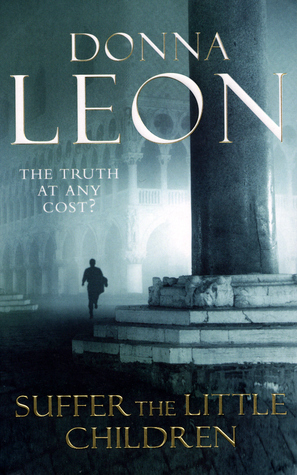
The quiet of the Venetian night is shattered as a band of armed men smash their way into Dr Gustavo Pedrolli's apartment, fracture his skull and grab his eighteen-month-old baby. And when Commissario Guido Brunetti, pulled from bis bed by the news, arrives at the hospital to investigate, no one knows why the eminent pediatrician has suffered such a violent assault. But soon Brunetti begins to uncover a story of infertility, desperation, and an underworld where babies can be bought for cash - linked with a money-making scam between pharmacists and doctors in the city. And knowledge can be as destructive as greed - certain information about one's neighbours can lead to all kinds of corruption and all sorts of pain.
Donna Leon (born September 29, 1942, in Montclair, New Jersey) is an American author of a series of crime novels set in Venice and featuring the fictional hero Commissario Guido Brunetti.
Donna Leon has lived in Venice for over twenty-five years. She has worked as a lecturer in English Literature for the University of Maryland University College - Europe (UMUC-Europe) in Italy, then as a Professor from 1981 to 1999 at the american military base of Vicenza (Italy) and a writer.
Her crime novels are all situated in or near Venice. They are written in English and translated into many foreign languages, although not, by her request, into Italian. Her ninth Brunetti novel, Friends in High Places, won the Crime Writers' Association Silver Dagger in 2000.
It’s been way too long since I’ve been in the company of Guido Brunetti, his family and co-workers. I’d forgotten how enjoyable their company was. Guido has been awoken in the middle of the night about a group of carabinieri busting into a doctor’s house, assaulting him and taking his 18 month old son. The doctor is accused of having “adopted” the child illegally. While Guido investigates, the women in his life are up in arms. How could a child have been taken from his family and placed in an orphanage? The trademark Leon humor is here. She’s no fan of politics or government bureaucracy. I liked that this isn’t the typical murder mystery. There are two investigations - the child trafficking and another that involves possible money making scam involving pharmacists. This isn’t a fast paced, high action story. Like a good meal, it’s meant to be savored. The story’s ending was heartbreaking. I listened to this and I adore David Colucci as the narrator.
Suffer the Little Children, the 16th book in the series and we are taken back to the sights, smells, sounds and the life warm-hearted, insightful, and honorable Commissario Brunetti's beautiful and secretive city, Venice.
A story of the murky underworld of illegal adoption, where babies are bought for money by the rich and titled and the evil that permeates everyone involved.
The opening scene in this story is unforgettable and the book ends with the most unexpected twist.
It's been a very long time since I've read a novel by Donna Leon. For a while there I read every novel in the Brunetti series when it was released. At some stage I missed one, and suddenly Leon had written five more books without me noticing. So it was good to re-acquaint myself with the series and realise that Leon can still give me reading pleasure.
Brunetti is a refreshingly uncomplicated detective. He's not a recovering alcoholic or drug addict, he doesn't suffer from the effects of psychological trauma and his personal relationships don't interfere with his ability to investigate crime. Instead, he's happily married to the lovely Paola, he has a generally good relationship with his children, he gets along well with his work colleagues and manages his stupid and unpleasant boss with aplomb. He's also interesting, well-read, and has a taste (which I share) for good food.
Leon writes novels which are less standard police procedurals and more reflections on human nature, discussions of ethical dilemmas, commentaries on corruption and inefficiency in the Italian bureacracy and political system and love letters to Leon's adopted home, Venice. She writes lucid prose and creates interesting and memorable characters. As with all crime fiction, readers of her novels benefit from an ability to suspend disbelief and accept a certain level of implausibility in the narrative. In this novel Leon has Brunetti - and other characters for that matter - do things which are not very believable, but as a seasoned reader of crime fiction I could glide over that particular issue without too much difficulty. All in all, it was great to be back in Venice with Guido Brunetti, walking through the city with him and wishing I was sharing his delicious meals. Closer to 3-1/2 stars than 4 stars, but still a most enjoyable read.
When I listen to music, much of what I listen to carries a lot of weight - Cecil Taylor, Dvorak String Quartets, Son House, Lester Young, and Joseph Spence have visited my ears fairly recently. But there are times when I need a break, and that's when, say, music like Jesse Hill. early John Cale, or Sonny Burgess can hit the spot. Recently, I was in the library, perusing the mystery section, looking for some good lighter fare, and Suffer the Little Children beckoned to me. It seemed like an intriguing choice, with subject matter I know little about - Venice, real Italian food - but it turned out to be a bit of a dud. To begin, it's not a mystery; It's a police procedural. That's not a deal breaker for me, but it turned out to be a mediocre police procedural, with only the occasional interactions and banter between Guido and Paola, husband and wife, as saving graces. Donna Leon has written many books, so she evidently has a large audience. I don't plan to read another Commissario Brunetti novel, so I don't include myself in that audience.
This Brunetti installment has almost everything: descriptions of hospital attendants drinking grappa! a new history for Brunetti to read! discussions on the state of Italian government! a far-right fascist as part of the plot! contemporary racism in Italian society! What it does not have: a cohesive mystery. Never change, Donna Leon.
In theory, Brunetti and the Venetian police tangle with the Carabiniere over an adoption scandal, while Vianello investigates pharmaceutical fraud in digital medical records. The cases intersect in some surprising ways, and there is no real resolution - . Mostly, this book is enjoyable because all of the Brunetti elements are turned up to 11, including:
- Signorina Elettra crying because the paving stones (masegni) have been torn up and shipped to Asia to make a profit ("I am crying because I am Venetian") - Vianello competing with Signorina Elettra for the most hacker cred, and successfully pronouncing the "h" in "hacker" - Several instances of switching from Veneziano to Italian - Long descriptions of the spiked coffees that Brunetti orders at all hours of the morning - Endless (legitimately endless) jokes about the Carabiniere captain's boots, which make him look like an old-timey cavalry officer - Beautiful descriptions of dinners and "pick-up lunches" that include Brunetti complaining while drinking multiple glasses of wine
What a beautiful return to Leon. I am excited to read the next.
4.5 stars really. Beautifully plotted, incredibly sad. There are some slow moments midway but the interweaving of the characters is marvelous.
Upon re-reading- 5 stars. A bit of slowness is forgivable and the depth of feeling the father feels for his small adopted son is unforgettable. As is the revulsion we feel for his father-in-law, leader of the far right Lega Doge party, and our sympathy for Brunetti as he feigns agreement to get information. But I am getting too close to a spoiler here. This one is a must-read.
This was my favorite Brunetti series so far, I have read about half of them. Mostly, out of order, btw.
But this one has excellent interplay with the Italian laws re child placements and adoptions etc. Lots of good snooping to ferret out the reality. Elettra has to do some acting and undercover too. I love when she (just a secretary?) gets into the mix.
Donna Leon really knows Venice and can write a good mystery for locale ambiance, character development and continuity, physical description. And not for plotting as a core pivot or any speed in action. That's not what this series progression is about.
This has been added after I read nearly 20 of the books for this series. If you'd want to pick 4 or 5 best from the last 10 when the characters have become more defined and are now at their most nuanced to the communications between them (all the prime players and the relatives) and the hierarchy that exists, I would pick this particular #16 and also Beastly Things as two of those 4 or 5. They are, IMHO, absolutely the cream of the crop and representative of the best of the series.
Donna Leon has surprised me this time. In this book and in another of hers in the series, About Face, she has really challenged her readers by breaking the mold of a plot that includes a wrong, the search for a villain, and a satisfying resolution.
Two cases, seemingly different, dovetail into a dangerous swerve. Insufficient information leads one man to suspect another. Brunetti had done the investigation and had decided to hold the information close to his vest...but he knew the truth. Since there was no way to 'fix' the wrongs done, he decided not to pursue the case to spare all involved. He tried to keep the victims from experiencing more distress, but that lack of complete information led one victim to his own [wrong] conclusions.
Suffer the Little Children (Commissario Brunetti #16) Donna Leon
This has a different feel, compared to most other Commissario Brunetti novels. There is no 'bad guy' that Brunetti has to find and capture. Here we have a variety of small-time, mean-spirited, self-centered individuals who do not seem to care who suffers, including children and loving, devoted parents.
Otro libro de la saga Brunetti, el tema vuelve a tener como eje la denuncia social al sistema social y político italiano. Una toma de conciencia a las adopciones ilegales, a las ventas de personas, al fraude farmacéutico y médico. Y lo que más me gusta esos paseos por los barrios de Venecia, las comidas y bebidas locales. Muy entretenido.
This was a first for me in many regards. My first Donna Leon book (by extension my first Brunetti), my first foray into the mystery genre, my first police protagonist, my first story set in the realworld, and so on. Ergo, I expect the following to smack a little of the kind of delight only to be found in naivety and ignorance, so take it with a pinch of salt (or a few sachets, whatever suits your taste). I'll get this out of the way first; this is an intelligent read. The option of jumping a few lines, even if by accident, carries the inevitable snare of dooming oneself to turn back, pages - sometimes even chapters - later, scanning for what was missed. The narrative is dense, adhering well to Vonnegut's Fourth Rule, yet at the same time feels no urge to take the reader by the hand and guide their every footstep; instead trusting that, like Commissario Brunetti, you will figure it out by yourself. While this may seem like high expectations, given the man's profession, his accessibility as a character allows one to quite easily walk in his shoes, and see the world through his eyes. The plot itself, without giving spoilers, is an autonomous machine. It spends the entire book gathering bits and pieces of itself, and then only later begins to weld them together, with the final rivet going in at the final line of the final chapter. There is no added drama, no embellishment, no mention of any of the characters celebrating or congratulating each other (an echo of the realworld, I would hazard); all of this is in the subtext. Leon does not insult the reader's intellect by spoon-feeding how the characters feel, as you the reader are doing all the feeling for them. I recommend this book to anyone with a reasonable IQ and two working hands, but I myself will be taking a break from this genre for the present. As I've made clear above, this is not the fault of Leon, but after finishing this story set in what I presume is a faithful depiction of Venice, I find myself craving something a little more ... escapist. Still, for those who have had their fill of such things, if only for the moment, go out there, and pick this up. Like any good story, it takes its time, and is all the more satisfying in its conclusion for it.
I read this book because it was a selection for my book club, many of whom had visited Venice or other parts of Italy during the past year.
I know there are a multitude of Donna Leon fans who will vehemently disagree with this review. However, this book did not deliver on the potential for the story's premise. I felt let down at the end of the book - not because of the ending but because the book seemed shallow, the characters lapse into stereotypes. If I'd not read at least one earlier book with these characters while they were still being developed, I would have been lost.
That said, there are some great discussion questions raised in this book. (Stop reading here if you have not read the book.) The children are taken from loving parents and put in orphanages - is that moral? What is the right thing to do that prevents the lawbreakers from benefitting but doesn't punish the children? A pharmacist uses personal information from medical records to stop what he considers immoral behavior - telling secrets to fiances, spouses, mothers. The question: If you know a secret about someone, where is the line at which it's OK to share that secret because of its impact on someone else?
This entire review has been hidden because of spoilers.
Brunetti investigates the invasion of a pediatrician's home by another branch of law enforcement. The doctor, who acquired a baby illegally, faces multiple charges, most of which are suddenly dropped. Brunetti's investigation, however, connects with his colleague Inspector Vianello's investigation into pharmacy fraud. I missed the normal interaction between Brunetti and his family members in this installment. Their presence in a few scenes leaves the reader hungering for more. I also noted fewer descriptions of meals--both at home and in restaurants. Leon always includes social justice issues in her plots, but her outcomes tend to show how the system works rather than achieving the result true justice demands. (3.5 stars)
ugh. was there a crime? wasn't there a crime? do we need to spend 200 pages finding out that no crime was really committed? really? for a murder mystery-type genre book shouldn't there be a crime??
4 sterren - Nederlandse paperback Commissaris Brunetti raakt betrokken bij kinderhandel wanneer de carabinieri een inval doen in het huis van een gerespecteerde kinderarts en zijn vrouw. Dit zet een hele reeks aan gebeurtenissen in gang die vreemd genoeg niet leiden tot strafbare feiten, maar die wel schrijnende misstanden blootleggen. Kinderspel is wederom een geweldig goed geschreven whodunnit van Donna Leon. 'Verslavende serie' staat achterop het boek en dat klopt helemaal! Geweldig ook dat ze onderwerpen als corruptie gewoon opvoerde in het verhaal. Ze neemt wederom geen blad voor de mond.
Pleased this library audio came available via overdrive as David Colacci's narration makes the story take on a life of its own. Truly enjoyable hours spent today in Venice as Guido Brunetti pursues solutions and unravels political knots surrounding adoptions...
From the shocking opening scene to the surprise conclusion, this is a police procedural that will entertain with an engrossing story exploring the pain or parental bonds, misguided morality, and issues regarding the privacy of medical records. My first encounter with Commissario Brunetti revealed him to be an intelligent, compassionate, and introspective investigator who understands the need to balance the light and dark elements of existence. While he may stop to enjoy a delicious lunch or indulge a bottle of wine over dinner, this doesn't mean he won't also spend a sleepless night mulling over the complexities of a case. To her credit, although author Donna Leon portrays Brunetti as such a noble figure, she also does not shirk from exposing his mistakes(regardless of how well-intentioned) that culminate in tragedy. Moreover, she provides Brunetti with a team that are equally skilled in their own right and who don't mind taking the initiative. This is further complemented with Brunetti's appreciation of their talents, somewhat of a rarity in many detective series. It also merits mentioning the civil antagonism Leon emphasizes between the regular Italian police and the Carabinieri, a branch of the police that this reader was previously ignorant of. Curiously, it also seems that the reputations of the Italian Press and social grapevine are both well founded as they repeatedly figure as sources of intel for Brunetti and his team. Overall, this was a thoroughly enjoyable read not only for a masterfully developed plot, but for the indelible images it imparted on its final page.
Another in the Commisario Brunetti series. I still love the characters in this series. Brunetti, his wife Paola and his children, the men of the precinct especially Inspector Vianello and, of course, the lovely Signorina Elettra. She delightfully plays Brunetti's emotional mistress as they pretend to be a couple who desperately want a baby in an attempt to infiltrate a baby buying scheme.
Unfortunately, this was not one of Leon's best. The plot starts out very well but then wanders and never seems to fully develop. Even the food, which is usually a highlight, isn't all that interesting and the usual meanderings of Commissario Brunetti around Venice weren't all that interesting. It rained most of the time and everybody was depressed by the case and the weather. The characters had to carry the whole load which they do. I like these books because everyone in them is just so normal. They love their city and each other. They like their jobs but they grumble and gripe just like real people. They aren't driven by rage or vengeance-seeking. So, a less than perfect book won't lessen my pleasure in this series as a whole.
It's always a civilised pleasure to be back in Venice in the humane company of Brunetti. This book is in some ways more about the background and build up to a crime than it is about solving one and the novel almost leaves you with the question of where the greater crime has been committed. It is a sad book in many ways but as Brunetti investigates his life goes on in its usual routine with his wife Paola and their family life of shared meals, wine and books, which add warmth and normality to a dark story.
I tagged this one as one of my favorites among Donna Leon's Brunetti series, as much for his inner voice as he works and walks around his city as for the solving of the crime (more, really). She hasn't disappointed me yet.
I always enjoy dropping into the world of Commissario Brunetti of the Venice Police Department. It's warm and comforting, filled with great characters, interesting scenery, usually interesting sounding food and oh yeah, a nice mystery. Suffer the Little Children by Donna Leon is the 21st book in the series and the 14th I've enjoyed. I've not read in any particular order and it doesn't really matter. Of course, I sometimes drop in on Brunetti's family when the children, Chiara and Raffi are younger that in the previous book, but it's ok. They're still wonderful people to visit with.
So, in this story, a pediatrist and his wife are invaded by the Carabinieri, the Italian federal police. This happens while the couple and their young child are in bed. Doctor Pedrolli, not realizing they are police rushes to defend his family, knocks down one of the police and is clubbed by them in return. Brunetti is brought into the case by his Sgt, Viannelli, who reports from the hospital about the attack. Pedrolli is unconscious and under guard. Their baby has been taken by the Carabinieri.
It turns out that the Carabinieri have conducted a number of raids around Italy. They are investigating a group that sells babies to families who are childless. Brunetti's boss, Patta, is upset because it appears they did not advise the Questura (Venice police) that they were operating on their turf. He wants Brunetti to look into this situation... sort of on the quiet.
Along with this investigation, Viannelli is also working a case involving illegal billing by pharmacists and doctors who are operating with the city's computer system, making fake appointments, etc. Of course, Signorita Elletra, Patta's secretary and regular confidante and assistant to Brunetti and Viannelli assists. She is a woman of many talents.
These are the basic cases. It's all fascinating and complex. Brunetti and Ellatra will make a visit to a fertility clinic in Verona, pretending to be a childless couple looking for help, with fake records provided by her sister. Brunetti spends time with his family, but is distracted by both cases. But we still get to spend time with them, sharing their conversations, meals and just listening to the interactions between Paola and Brunetti. She is always a source of logic and a great sounding board... and in this case, a source of information.
I found this particular story quite depressing, especially the conclusion. As in most cases, the resolution is somewhat up in the air but still satisfying, even if quite sad. Donna Leon is always a great writer. She tells an interesting, well-crafted tale and I always enjoy wandering into the Brunetti's lives. (4.0 stars)
I continue to enjoy Donna Leon’s series with Commissario Brunetti. However, I do find the mysteries featuring children, such as this one, harder to enjoy.
This was a great listen. Donna Leon doesn't often offer up happen endings with this series, although Brunetti and his family and associates are an amazing cast of characters, which is why I keep listening, but this one, especially, left me down. Still an excellent story and David Colacci is still the most wonderful narrator for this series. I only listen to these on audiobook because he's that good.
This entire review has been hidden because of spoilers.
An excellent story from Donn Leon. In this 16th story about Commissario Brunetti, the good police officer investigates the suspected assault of a respected pediatrician.But as he investigates further what he finds is a twisted type of evil where men make decisions that they have no business making and by doing so, ruin the lives of others. You will find it hard to put this book down and the ending is a true twist totally unexpected.
My main frustration with this book is that it doesn't seem to know what it wants to be. Is it about the clash between two branches of the police? An international crime ring? Maybe it's a polemic about the hateful xenophobia of the right-wing extremists most countries in the West now seem to have? Or it could be a discussion of the moral imperative. The ending was too abrupt and I found it unsatisfying.
I thought it was ok. The story started as a tale about children for sale but ends up a lot more complicated than that. The story moves around a lot and incorporates a lot of different elements so you do need to stay on your toes.
Quick read. Only 3 stars because the author usually ties all the loose ends up, but in this one she leaves a pretty large one untied. I won't include a spoiler by describing it, just my disappointment.
2007; #16 Adopted infant 'stolen' in the middle of the night from pediatrician father & very wealthy mother. Hmm mother doesn't seem as upset at the loss of little boy as father. Brunetti and Lorenzo Vianello with Signorina Elettra Zozzi's computer help delve into case and find stories of infertility, desperation & violence. All this including moneymaking scam between pharmacists and doctors. Do they ever find infant? I really enjoyed this book/story