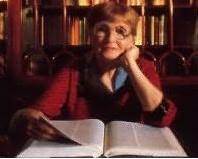
Catherine Cookson was born in Tyne Dock, the illegitimate daughter of a poverty-stricken woman, Kate, who Catherine believed was her older sister. Catherine began work in service but eventually moved south to Hastings, where she met and married Tom Cookson, a local grammar-school master.
Although she was originally acclaimed as a regional writer - her novel The Round Tower won the Winifred Holtby Award for the best regional novel of 1968 - her readership quickly spread throughout the world, and her many best-selling novels established her as one of the most popular contemporary woman novelist. She received an OBE in 1985, was created a Dame of the British Empire in 1993, and was appointed an Honorary Fellow of St Hilda's College, Oxford, in 1997.
For many years she lived near Newcastle upon Tyne.
Not sure why this says audio cassette now. For clarity I read a hardback book. I actually started reading this some months ago but put it down as I was not enjoying the short stories at all. They felt twee, old fashioned and of a world which was nothing to do with me and of no interest.
However I recently picked it back up again (probably only because it’s a book club read) and read all 10 stories very quickly when I had time on my hands. I’ve got several theories as to why I did this: the last book I read has changed the way I look at this one, or, “it’s a book club book, I should give it a second chance”, or, just being in a different state of mind because of different things happening around and to me. Or maybe a mix of all these things.
Catherine Cookson is nowhere near my favourite author (and I dislike being told, as on the cover of my book “Britain’s best-loved storyteller” as if I HAVE to like her) but this book was easy to read when I just needed a quick easy read that I didn’t have to think about.
Catherine Cookson was not just an enjoyable storyteller she often wrote very gritty novels with humour and pathos with lots of social realism of the times she sets these short stories and will mostly give the reader a happy ending or in these cases a sort of resolution of their individual circumstances. Catherine Cookson was expert at dissecting human behaviour and in exploring the motivations of her characters whilst engaging her readers in this process, which then invests the reader in the outcome of her stories.
Very enjoyable reading and I wished there had been more of these short tales.
Cookson makes writing look so easy. She adopts such magnificent turns of phrase evoking time periods and social types. She brings us dialogue that instantly conjures the speaker via dialect and tone. This collection of short tales is diverse in as much as it covers the 1920s to the 1980s but the themes of human loneliness, timidity, lack of confidence, redemption and potential for cruelty run through them all. I particularly enjoyed the tale of purchases in the lingerie department of a large store - Pretty Woman came to mind as the sniffy staff feared the worst from their dishevelled customer. The opening line is so deft in its conveyance of such detail so quickly: "Miss Robson moved from one high heel - not stiletto, they were not allowed in the department - to the other:" A quick read over two sessions with no "sensitivity censorship" thankfully. There are some wonderful expressions from times past, things that would be frowned upon today but which make the stories seem so authentic. Dame Catherine wrote over 100 works, a handful published after her death in 1998. It is no wonder her material is still being enjoyed today and many stories have been made into TV dramas.
A four because I did enjoy the reading, though I found the writing style a touch florid for my taste. I recognise it is very much of its time, so would not mark it down for that. I got a little tired of the wonderful men prepared to wait for brow beaten women themes, or stupid men not recognising the value of their women. And then young couples fighting against their stubborn parents. I suppose it reflects the romantic and family orientated nature of her writing. But hackneyed comes to mind - and exploitation of materials after death follows up. I recognise myself in the one set in 1983 but find it hard to believe that there were that many people with such hardened attitudes in 1983. It was a good exploration of the subject which was topical at that time. I must also admit a prejudice in that I've been educated into appreciating a different style of short (currently modern) story where themes are broader and endings less complete, and she is no Checkov or even Katherine Mnsfield. But it is hard to judge these stories in her context.