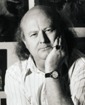
Joe Sandingham, a down-and-out ex-British Lieutenant living in a seedy Hong Kong hotel, struggles to maintain hope and trust and obliterate from his memory the horrors of his years in a Japanese prison camp
It took 3 attempts to read "Hiroshima Joe". My persistence paid off as, once I got into the main character, Joe Sandringham, and the rich descriptions of Hong Kong in the '40s and '50s, I was compelled to keep on reading. I thoroughly enjoyed this book, not only as a former resident of Colonial Hong Kong, but also as a history enthusiast. I attended the same high school as Martin Booth in the early '60s (King George V school in Kowloon). Hence, the fine geographical details were particularly endearing to me. I thought it was very clear of Martin to write himself into the plot - as the young boy, David Merriton, early on in the novel. If you've read "Gweilo", Martin's autobiography and last book, you'll see that he did in fact meet a down-and-out ex-British soldier nicknamed "Nagasaki Jim" who was also staying at the Fourseas Hotel in Waterloo Road, Kowloon, in the early '50s when 7 year old Martin was living there with his parents. "Nagasaki Jim" was taken as a PoW after the fall of Hong Kong on Christmas Day 1941 and was incarcerated at the Sham Shui Po prisoner camp before being trans-shipped to Nagasaki on board the Lisbon Maru in October 1942. Obviously, this is the basis of "Hiroshima Joe". At times, it was disturbing to read about the atrocities of war and the pitiful life of an opium addict, however, this was somewhat offset by reading about the strong bond of friendship between Joe and a benevolent Japanese civilian, Mishima-san. No doubt I'll re-read this book and once more savour the fine details and engaging plot. Sadly, Martin Booth passed away at the age of 59 in 2004 after an 18 month struggle with brain cancer. His spirit lives on in such brilliant books as "Hiroshima Joe", "Gweilo" and many, many others.
This book is what reading is all about. From a Japanese civilian who, at great risk, helped Allied POW's in a camp outside of Hiroshima, whose son died a drafted kamikaze and whose wife in the Hiroshima bombing- "Joe," he said, "I am sorry for what my people did to you and your people; just as you will one day be sorry for what your allies, the Americans, did to the Japanese people. Never forget that it is men who are mad, not nations. Men make wars. Nations do not. Leaders do- who need never fight but send others to die. Politicians are the corrupt ones. They decide but it is we, the common men- the innocent people of the race- who act for them. And suffer in their place." How blind and stupid and hateful and arrogant we remain. How we relish the fear.
Having been very moved by 'Industry of Souls', and 'Adrift in the Oceans of Mercy' , both books by Martin Booth, I tracked down a copy of 'Hiroshima Joe' on the internet . I found the writing and content of the book very good if rather harrowing. Martin Booth writes with great sensitivity and humanity about the bond that can form amongst people during extreme hardship, and the after effects of war on ordinary citizens. The story is set between Hong Kong in the 1950's, and Japanese prisoner of war camps both in Hong Kong and the outskirts of Hiroshima during the second world war. My only criticism of the book is there is a lot of ,to my mind, unnecessary, geographical detail describing the streets of Hong Kong in the early stages of the book. I know that Martin Booth spent his childhood there, and it was as though he was reliving the streets of his childhood. this was one of his earlier books, so perhaps his sense of timing and plot development was not quite as sophisticated as his later novels. That is the only reason this book did not rate a 5 stars from me.
A talented writer, beautiful color and descriptions. I picked up the novel because it takes place around East Asia, where I lived for more than a decade. So the topic is close to my heart.
The magic breaks when he moves into topics he doesn't always understand well. Gay men do not lust after boys any more than straight men lust after underage girls. A plot twist probably meant to be dark and creepy came off worse -- ugly and repulsive. His descriptions of life in Hong Kong were wonderfully evocative, accurate and felt right on the mark. But descriptions of life in Japan left me feeling he hadn't actually met many Japanese people. Trust me, ritual suicide is pretty rare.
But I stuck to the novel until the end, not because I liked the characters. The beauty of his writing and curiosity about how he'd take on historical events kept me reading.
Hiroshima Joe is a great achievement in historical fiction, which while following the story of one fascinating man, ties together the fall of Hong Kong, Japanese POW camps, the destruction of Hiroshima, post-war Hong Kong and opium addiction. However, It is also a deeply engaging personal story of pain, survival, love and dignity. The author manages to pull off a sometimes difficult structure, where each chapter alternates between wartime and post-war events in the life of the main character.
One of my all time favorite book! From the last days of the battle for Hong Kong in December of 1941, to the POW camps first in Hong Kong and later in Japan, to 1951 Hong Kong, we follow the story of Joe and how the war effected him...Recommend reading Booth's 'Golden Boy' which goes hand and hand with this.
The kind of books one can come across serendipitously when randomly browsing used bookstores online. Martin Booth, a British novelist who sadly passed away in 2004 after a struggle with brain cancer, was an author whose work I would have otherwise probably never encountered. His most famous works were in the past, and this one especially, from the mid-eighties. But, based on the intriguing synopsis, I got myself a couple of his works, and it is Hiroshima Joe which I picked up finally to have a go at first.
At first glance, the old, tattered paperback looked like it would pose an imposing task. The small print and the dense language took a bit of time to get into, but once I was sucked into the post World War 2 world of Hong Kong, I was hooked for the rest of it. It is a deeply felt, sensory overload, which is also damningly saddening in its depiction of war and its effects (and aftereffects) on everyone, irrespective of ‘victors’ or ‘losers’. For ultimately, the book suggests, no-one wins. This story focuses particularly on one of those nominal losers, a former soldier called Sandingham.
Sandingham was a former Japanese POW, caught in the fall of Hong Kong and transferred to the Japanese slave camps including, with devastating finality, the one on the outskirts of Hiroshima. When the book opens in 1952, he is eking out a miserable existence on the sidelines of society, living permanently behind on his rent in a hotel and stuck in a dizzyingly bottomless haze of opium addiction, thievery, and doing odd jobs for a gangster in Kowloon City called Francis Leung. Obviously haunted by what he has seen and unable to get out of the pull of his memories, he has become something of a joke in the eyes of many around him as a not quite right in the head Englishman called Hiroshima Joe. The tale then goes back and forth in time to the period in the war which leads up to his capture and imprisonment, interleaved with sections in the book’s present timeline of 1952, before eventually finishing up with a poignant coda in 1985.
The war years are described with vivid detail, including the fear and helplessness the probably doomed soldiers face in the face of mounting pressure from the Japanese forces. Sandingham’s time is especially delicate considering his closeted love affair with a fellow soldier in his platoon. His eventual capture comes in the face of irredeemable loss and the subsequent conditions of the POW’s, including the diseases, the starvation and the hopelessness is communicated remarkably well. For some reason, as he himself says during the course of the book, Sandingham survives the camps, punishments and the treacherous journeys till he eventually finds himself in the final camp outside Hiroshima where a horror worse than what he had seen till then awaits.
It would not be a spoiler, considering the name of the book and the character, to suggest that the bomb dropped in Hiroshima plays a major part of the climactic struggle that Sandingham faces. The utter desolation and depravity he observes in the immediate aftermath of the attack is not easy reading and could prove to be a trigger for the uninitiated. But the writing is heartbreakingly effective, and it manages to convey the despair and hopelessness he feels in the human condition that his predicament in post war Hong Kong becomes believable. Also, this is the year that the visionary Christopher Nolan’s Oppenheimer (based on the inventor of the atom bomb) is coming to the big screen and I can’t wait to compare (or contrast) the approaches and the philosophies of this book with that potentially massive film.
Booth’s writing, in both wartime and in 1952 Hong Kong is sensual and impressively descriptive (perhaps excessively so at times) of the time and place the story takes place in. This may also have resonance in his own childhood, which, I am read to believe, he passed a big part of in Hong Kong, even staying in a hotel with his parents for a while where he reportedly did come across an unbalanced former soldier, an experience similar to the one the boy in this story, David, has; someone whom Sandingham tries with increasing desperation to befriend. But, whether there are autobiographical elements or not, the story and the lessons of history he tries to impart are universal in their relevance. War endures. As a poignant dialog that his unlikely Japanese friend in the camps, Mishima, tells him as the complete destruction of Hiroshima lies around him - "Joe," he said, "I am sorry for what my people did to you and your people; just as you will one day be sorry for what your allies, the Americans, did to the Japanese people. Never forget that it is men who are mad, not nations. Men make wars. Nations do not. Leaders do- who need never fight but send others to die. Politicians are the corrupt ones. They decide but it is we, the common men- the innocent people of the race- who act for them. And suffer in their place."
To what end does our arrogance and ridiculous notions of honor for a flag blind us? And to what cost? A timeless question posed by what should be a timeless book.
I read this 1985 novel in the mid-1990s while fascinated by all things historical to do with Asia. It tells an exceptionally gritty story of an ex-Japanese POW who happened to be held in a camp near the site of the first atomic bomb. Now scrounging out a hand-to-mouth existence in Hong Kong running errands for a sinister drug dealing racketeer, the novel flits back and forth from its 1952 setting to Joe’s past with a fellow soldier who was his lover but was killed during their stay in the prison camp.
Unfortunately, more than a quarter century later, I find it has left no real lasting impression on or memory with me.
Sad story, that could be tale of so many men who were POW under the brutality of the Japanese and the despair that followed so many of them after the war! At times over descriptive and I nearly gave up pleased I Did not, could have done with some editing. Enjoyed the story of an British Officer, a closet homosexual, a man who suffered so much as a POW and continued to suffer in peace time as he existed his days living in HK, his wits keeping him alive just.
This is one of the greatest books I have ever read. It is an incredible achievement by Martin Booth. The characters, the rawness of the story and events make this such an enjoyable read. The brutal realities of war and the fight of the human spirit are very well detailed in a story that flows effortlessly. Highly recommended.
closer to 3.75 :-) I enjoyed this book and got quite caught up in the story but a lot of overly-long scene-setting descriptive passages. Maybe that was the style in the 80's :-) or maybe it was supposed to evoke something I missed- I found it a bit Tolkienesque and took me out of the story rather than making the location more evocative. Otherwise an engaging and well-told story.
Deeply touching, at times disturbing, thought-provoking and profoundly sad, as it describes the horrors of war as experienced by an Englishman, captured during the occupation of Hong Kong and shipped of to Japanese prisoner of war camps.
"Even though it was so changed, he knew that under its veneer Hong Kong was still as it had always been, with its tiny crowded streets and food stalls, its temples and alleys, its throngs of people and never-ending state of motion."
"Joseph Sandingham Died Christmas Eve 1952 –He saw what no man should be made to see; he died fearing what we all must fear.”’
Martin Booth is an amazing writer, very descriptive, careful and tender. Our book group had read Industry of Souls several years ago and looked up his other fiction for another fix of his writing. This book had a similar effect on me--weeping at the end. Maybe it's the redemptive acts of his tragic characters.
Just can't get into this. The quote on the front says "in the tradition of Slaughterhouse Five" but seriously, I'm just not seeing it. I'm disappointed, because I was really hoping to enjoy this. The writing is good but I couldn't get into farther than the first part.
A brilliantly written book. One of my favorites, though also one of the most painful books I have ever read. The characters and the scenes are so real, so alive, that they stayed with me for days after I finished the book. And when I read the last page, I was weeping.
Probably...no, this is the most depressing book I have ever read but it is up there with one of the best I have ever read. Beautifully written. A heartbreaking story.
The harrowing, yet riveting, story of how the misfortunes of war reduce an intelligent, caring man to a shambling, opium addicted, wreck. Highly recommended.