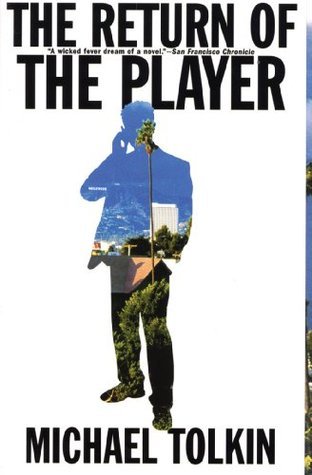
This review is a twofer: Michael Tolkin’s Player and its eventual sequel Return of the Player, and the rating is of the pair.
Player started so boringly that I almost quit - it looked like it was about office squabbling and/or money-maneuvering, neither of which gets much traction in my mind. But I’m glad I hung in there, because the book is very funny, albeit somewhat weird. It’s “about” a lot of things, and the one I’m particularly interested in is the question of how it happens that despite having all the money and power in a given domain a person still screws it up and produces a wretched product (see the U S Senate, for example). Player’s domain is movie-making, and even though I don’t watch them, for some reason I find information about the inner workings of the movie-making machine fascinating. It’s simultaneously funny and horrifying and disgusting to watch as random small events and petty jealousies and above all, the urge to retain power, determine the nature of the output. Of course this applies to all human institutions, from the UN to the local school board, and perhaps it is part of Tolkin’s purpose to it to illustrate that. If so, he’s done a good job.
Return of the Player is a different story, and a less intelligible one. As is often the case with satire, you have to understand its object to appreciate (or even “get”) the joke, and I don’t. It’s less about movie making and more about Jewish people, very rich people and people who live in isolated mansions off Mulholland. Return has some of the original book’s main players; a significant element is a ménage à trois of three of them. There’s detailed sexual behavior between just about every combination of two characters in the book. Once they get their clothes back on many are also fixated on what they believe to be the imminent end of the world (by which I think they mean Beverly Hills and Bel Air). There are, however, some very good lines. For instance, describing a wealthy area’s crumbling schools, he says the residents had abandoned them to “... Persians, Russians, and Asians, hard-working immigrants like most of their own grandparents, whose offense was to remind them of their own immutable vulgarity." And of the main character, musing on how he feels left out of the highest echelons in Hollywood, "He didn’t know much about Judaism, but neither did most of the Jews of Hollywood, and half of them were married to Christians or called themselves Buddhist"