Jump to ratings and reviews
Rate this book

Follies

Rate this book

Ann Beattie's Follies is a superb novella and collection of stories about adult children, aging parents, and the chance encounters that irrevocably alter lives. Beattie, winner of four O. Henry prizes, has been called "one of our era's most vital masters of the short form" (The Washington Post Book World). She is a masterful observer of domestic relations and the idiosyncratic logic that governs human lives.

In Follies, her most resonant collection, she looks at baby boomers in their maturity, sorting out their own lives and struggling with parents who are eccentric, unpredictable, and increasingly dependent. In "Fléchette Follies," a man rear-ends a woman at a stoplight, and the ripple effect of that encounter is vast and catastrophic. In "Apology for a Journey Not Taken," a woman's road trip is perpetually postponed by the UPS deliveryman who wants to watch TV in her house, by the girl next door who has lost her dog, and by the death of her friend in a freak accident. Impatient in his old age, the protagonist of "That Last Odd Day in L.A." can hardly manage a pleasant word to his own daughter, but he finds a chance for redemption on the last day of a vacation he spends with his niece and nephew.

Ann Beattie is at the top of her form in this superb collection, writing with the vividness, compassion, and sometimes morbid wit that have made her one of the most influential writers of her generation.

320 pages, Paperback

First published January 1, 2005

7 people are currently reading
166 people want to read

About the author

Ann Beattie

141 books407 followers
Ann Beattie (born September 8, 1947) is an American short story writer and novelist. She has received an award for excellence from the American Academy and Institute of Arts and Letters and a PEN/Bernard Malamud Award for excellence in the short story form. Her work has been compared to that of Alice Adams, J.D. Salinger, John Cheever, and John Updike. She holds an undergraduate degree from American University and a masters degree from the University of Connecticut.

Ratings & Reviews

What do you think?
Rate this book

Friends & Following

Create a free account to discover what your friends think of this book!

Community Reviews

5 stars
15 (10%)
4 stars
51 (36%)
3 stars
50 (35%)
2 stars
17 (12%)
1 star
6 (4%)
Displaying 1 - 22 of 22 reviews
Profile Image for Tim.
Author 8 books257 followers
March 14, 2008
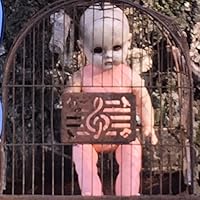
Who can keep up with Ann Beattie? How many gazillion stories has she written? Why is there a faux-looking deer on the hardcover edition of this book, and a droopy-eyed dog on the paperback edition? These are mysteries I cannot begin to fathom (Leonard Nimoy, where are you?). Nor, exactly, can I fathom how these stories work so well, how in their deceptive simplicity they lull you into a sense of plain enjoyment, then take a few unexpected turns and you wind up someplace unexpected. Favorite so far is "Just Going Out," which starts out in the first person from the perspective of an adult re-examining a series of incidents from her childhood, then breaks into the third person mid-story, and takes some very odd twists indeed. The main character is a writer, and so this switch of point of view is self-conscious but it strangely doesn't undermine the "continuous waking dream" of this story, only enhances it.
"Duchais" is also very strong in its portrayal of an eccentric professor, and the student who finds himself entangled in his life. "Find and Replace" starts off really well, with an engaging if embittered narrator whose recently-widowed mother is about to move in with her neighbor, whom she barely knows. It sags toward the end with its pivotal scenes at a rental car agency (even Beattie can't pull this off, needs to upgrade to a bigger climax). One other quibble is with her propensity to rely on musical allusions in the following formulaic way, "I drove to Venice, singing along with Mick Jagger about beasts of burden"; "Sting was on the radio, singing about fields of barley." But more than making up for it are great lines like these: "He wore a silver stud in one ear and had little, bony hands that looked vestigial."
Profile Image for Cathy.
546 reviews7 followers
January 14, 2018
Ann Beattie is one of my favorite short story writers, and this book, though not as gratifying as Park City (one of my favorites of all time), has some excellent stories. The characters in Beattie's stories are always wonderfully drawn, and placed into domestic situations to which readers can relate: a random car crash leading to an unlikely relationship, a daughter with plenty of her own problems trying to steer her elderly mother away from what she believes might be a harmful relationship, a college student who discovers some unsettling truths about a professor who seems to have an enviable life, a family dealing with a parent's dementia. Stories are peppered with addicts, an ex-spouse and child of an over-the-top PETA fanatic, a filmmaker with delusional & violent tendencies.

One of my favorite stories takes place in Charlottesville, Virginia and Beattie perfectly captures that blue blood town in wonderful passages such as these: "There were stores that sold hand-shaped imported cheeses wrapped in grape leaves, oils in handblown bottles as expensive as if you were buying great perfume, satin baby booties hardly wider than a woman's thumb. Grown women walked around in pastel-colored flats; there were the Muffies and Buffies and Fluffies (their dogs). There were the Southern boys on their lunch hour, with tasseled loafers and starched pale blue button-downs." Anyone who's been to Charlottesville will recognize the town in this rendering.

One story immerses the reader right into the middle of the craziness that is Alzheimer's: "The Rabbit Hole as Likely Explanation." Confusion reigns even in the reading and when the reader is about to give up, the author comes back to the real world and deals with all the infighting between family members about how to deal with the parent.

Beattie has mastered the art of the detail, and ties them into complex stories that are not easily summed up. When trying to tell about one of these stories to my husband, I realized it was much too complicated to explain succinctly. I finally gave up and told him he should read the story himself.

The only story that annoyed me was "Apology for a Journey Not Taken: How to Write a Story," which seems to be about how writers want to avoid writing, but how a story materializes all around them during their avoidance. Maybe? I often get impatient with writers who try to be more experimental, but then I've never enjoyed those kinds of writers and tend to steer clear of them. Luckily, Ann Beattie's stories don't veer too often into that experimental fiction territory. They're usually about people we can relate to, and the predicaments people often create for themselves.

Profile Image for Jim Manis.
281 reviews6 followers
October 21, 2020
Beattie was the quint essential New Yorker writer for several decades. Not always my cup of tea, but her skill is admirable.
Profile Image for Sasha.
108 reviews101 followers
Read
October 4, 2011
I’ve been a Beattie fangirl ever since I listened to a teacher / friend / drinking buddy’s advice: “Carver. Moore. Beattie. They’ll change your life.” Looking at my shelf: I have six books of Beattie’s in different stages of Currently Reading.

With Follies, I have been skittish. I somehow sense, peeking between the covers, that Beattie is different. Mature, yes. Now an authority on the craft, of course. Something.

I tried reading “Fléchette Follies,” the novella she sneaked in there. And then I promptly gave it up, and proceeded to her stories. That something was nagging at me.

In “Find and Replace,” Beattie zeroed in on the bored middle-aged woman vaguely fretting over her mother. Vaguely. In “Tending Something,” we’re witness to a party–and here I found vestiges of classic Beattie: the onslaught of characters. It was a meh situation, this party, and while I was reading it, I thought it was a meh story as well. But given time to sink in, I liked it a lot. That meh-ness of the party, the tension humming between old friends, some strangers:

In their early twenties, her crowd’s who’s-sleeping-with-whom? game had been preoccupying: one-night stands, affairs, betrayals confessed over vodkas on ice.


“Just Going Out” and “That Last Odd Day in L.A.” were, I’m sure, nuanced and all that shiz. But my eyes glazed over. I began to notice an almost Joycean element to the conclusions, those epiphanies. I can’t remember if Beattie had power endings in her earlier stories. It was in “Mostre” that I realized, Beattie can be boring. That thought chilled me. There’s this odd apathetic feel to the storytelling. The author distancing herself in a way that was somehow malevolent. A creepy feeling, this. For “The Garden Game,” the only notes I had were, Beattie indifferent! Some quotables, still, here and there, though:

What is childhood, except things intruding that you aren’t prepared for: facts, like unexpected guests, suddenly standing right in front of you.


Was Beattie trying to break out of the Hemingway-ish minimalism she’d perfected in the 70s/80s? The stories on the page were block paragraphs. How strange that the more words she employed, the less heart she had.

The stories I liked best–”Apology for a Journey Not Taken: How to Write a Story,” a meandering report/told story that was just so strange and lovely; “Duchais,” where a young man gets tangled in the wonky relationship of a professor and his mother; and my absolute favorite, “The Rabbit Hole as Likely Explanation,” a story about a mother getting Alzheimer’s (love this character best). Finally, pathos! I’d written in handy-dandy notebook. Pathos, and dialogue!

“A car makes you think about the future all the time, doesn’t it?” she says. “You have to do all that imagining: now you’ll get out of the garage and into your lane and now you’ll deal with all the traffic, and then one time, remember, just as you got to the driveway a man and a woman stood smack in the center, arguing, and they wouldn’t move so you could pull in.”

“My life is a delight,” I say.


Yes, the stories here were hit-and-misss. I’ve pointed out that creepy indifference Beattie regards her characters with. Three-ish out of nine stories (I am not counting that novella) had pathos, dammit, three-ish! Heart, coupled with charming wit. Sensitivity. THREE-ISH. Yeah, a less-than-ideal return to an old favorite.

I haven’t read Beattie in so long; this felt like reuniting with your favorite [cool] aunt, only to find that she’d changed, and now spent her afternoon sniffing at all the foibles–and yes, follies–of her neighbors. Goshdarnit.
Profile Image for Ruth Seeley.
260 reviews23 followers
September 15, 2011
As a long-time fan of Ann Beattie (we've very much grown up together in a literary sense, as I've read just about everything she's written as she wrote it), I caught myself admiring her always clinically incisive prose while wondering if I would be so wildly enthusiastic about her work if I were just starting to read her now or if I had started with this collection. A week after reading them, the only part of this collection I remember is the novella with which it begins (as opposed to some of the stories in The Burning House, which I read at least 20 years ago, still remember quite vividly and continue to quote to those foolish enough to listen to me).

It may not be Ann Beattie; it may well be me.... Still, not sorry to have read this collection, although I think it's inaccurate to say that she's writing about baby boomers who've grown up. I think she's writing about characters who are precisely the opposite of that: members of the boom and echo generations who instead have internalized and idealized their childhoods and are wandering through the first decade of the 21st Century wondering why things didn't turn out the way they thought they would/could/might. Most of the characters in this collection are puzzled by the fact that they've failed to make or sustain lasting connections with their parents, spouses, and children and baffled at how difficult interpersonal relations are. Somehow though they manage to be baffled in a very passive and contained way. Perhaps this quote from the story 'Just Going Out' will explain what I mean:

'That night in the attic, in Savannah, Renny realized he'd caught me by surprise, but he wouldn't embarrass me further by letting on. He was adept: the same Renny who'd clicked on emails and left, leaving me to consider them in private.

'He'd done the same gentlemanly thing in detaching himself from his own life. If it was too late and too unlikely to be one kind of explorer, he'd set off on a different kind of voyage - one that he'd record, then (how true) say that he wasn't read for a show.'
Profile Image for Bookmarks Magazine.
2,042 reviews809 followers
Read
February 5, 2009

No one can resist comparing Beattie's grown baby boomers with their younger selves__the characters who appeared in her early short story collections. Those who were once young and aimless still lack direction__only in Follies, they're much older. This time, the author has given them a past, which is refreshing, especially as they contemplate typical middle-age concerns (parents in nursing homes, children in trouble, failed relationships, etc.). Beattie's careful language and dark wit is, as always, impressive and much appreciated. Overall, the shorter pieces received mixed reviews, although one story, "Apology for a Journey Not Taken," was universally panned.

This is an excerpt from a review published in Bookmarks magazine.

Profile Image for Michelle.
254 reviews7 followers
April 3, 2007
I've been a fan of Ann Beattie's fiction and stories for about 20 years. This latest collection of stories didn't disappoint. She writes with wry wit, creating realistic, often tragicomic characters who are always intriguing.
Profile Image for Laura Slown.
72 reviews1 follower
January 23, 2009
I always have a problem with short stories. They are over too soon. I read the first story in this book and enjoyed it very much. And you can't help but love that mug on the cover. Hope to pick it up again soon.
Profile Image for Joan Colby.
Author 48 books71 followers
March 22, 2010
This is an excellent collection of stories by the acclaimed Ann Beattie. I much prefer her stories to her novels and count her among the finest currect story writers along with Alice Munro, Lorrie Moore and Jean Thompson.
Profile Image for Mythili.
433 reviews50 followers
February 24, 2007
As much as I admire her, I had trouble with the stories set in Charlottesville.
12 reviews
March 4, 2007
Enjoyed most of the short stories. They dealt with baby boomers in their maturity trying to sort out their lives and coping with aging parents.
Profile Image for Steven.
529 reviews33 followers
June 14, 2007
Fun little stories about getting older. The most memorable story involves a car crash and a CIA agent and his untimely death.
Profile Image for Abby Peck.
325 reviews8 followers
March 5, 2008
My first foray into Ann Beattie and I was soon hooked.
Profile Image for Cherie.
3,940 reviews33 followers
April 17, 2009
Eh. I don't know, I usually love Ann Beattie but I found these stories weak and unengaging.
Profile Image for Katie.
58 reviews1 follower
June 24, 2010
My first foray into Ann Beattie. I found her characters unengaging, and the stories were too sluggish(and unhappy) to keep me interested - luckily all but the first one were quite short.
112 reviews
July 28, 2011
she is one of the American short short masters. This collection includes a novella which is simply brilliant
Profile Image for Alice Persons.
404 reviews10 followers
February 5, 2016
Excellent collection of stories, including a long one, that anyone can relate to. I have always liked her rather deadpan sense of humor and the way she nails characters so deftly.
Displaying 1 - 22 of 22 reviews

Can't find what you're looking for?

Get help and learn more about the design.