When James Wood's first collection of essays, The Broken Estate, was published in 1999, the reviewers hailed a master critic. The common thread in Wood's latest collection of essays is what makes us laugh - and the book is an attempt to distinguish between the perhaps rather limited English comedy (as seen in Waugh, for example) and a 'continental' tragic-comedy, which he sees as real, universal and quixotic.
A particularly acerbic, and very funny, essay - which has been widely celebrated - deals with Zadie Smith, Rushdie, Pynchon and DeLillo; its title, 'Hysterical Realism', has already entered the phrasebook of literary language.
With its brilliant studies of Shakespeare, Dickens and Dostoevsky, Naipaul, Pritchett and Bellow, The Irresponsible Self offers more exhilarating despatches from one of our finest living critics.
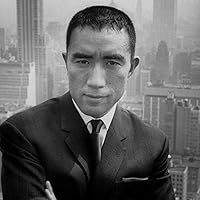
James Douglas Graham Wood is an English literary critic, essayist and novelist. He is currently Professor of the Practice of Literary Criticism at Harvard University (a part-time position) and a staff writer at The New Yorker magazine. Wood advocates an aesthetic approach to literature, rather than more ideologically-driven trends in academic literary criticism. Wood is noted for coining the genre term hysterical realism, which he uses to denote the contemporary conception of the "big, ambitious novel" that pursues vitality "at all costs." Hysterical realism describes novels that are characterized by chronic length, manic characters, frenzied action, and frequent digressions on topics secondary to the story.
Here’s the thing about James Wood. He’s brilliant, of course, and his criticism is devoid of rancor. When he makes a critical determination, he doesn’t gloat over it; he makes his point and moves on. It’s a joy to read criticism without the egomaniacal high dudgeon souring matters.
Twenty-two essays from the Durham-born finger-drumming superstar (no Wood, I won’t let that lie) and part-time Harvard professor and New Yorker hack. Wood is unique as a critic as he snipes at the level of the sentence, where other reviewers may linger on theme, imagery, context. He rolls up his sleeves for delicious close readings of all his books and will not let those tonal lurches, authorial intrusions and pesky non sequiturs lie. Often he misuses his examples: sometimes he’s diagnosing a wider malaise with technique within an author’s corpus, sometimes it seems like clever-dick point-scoring. The essay of interest to the layman in this collection is his piece ‘Hysterical realism,’ where he invents a subgenre of literature within a review of Zadie Smith’s White Teeth. Pretty gutsy stuff. Lumping Delillo, Pynchon, Rushdie, Smith and Foster Wallace together wasn’t the wisest move, but gutsy still applies, and that essay is as important and convincing as any post-postmodern theorising. As for the rest, they’re all localised to one author per piece: we have riotous excoriations of Rushdie, Tom Wolfe and Jonathan Franzen on one side, and eighteen or so giddy exhortations of his lesser-known favourites on the other, among them Italo Svevo, J.F. Powers and Monica Ali. Reading these pieces can be frustrating if you are unfamiliar with the work—either he piques your interest immensely (as in the case of Shchedrin and Bellow) or locks you out the love-in by being so damn particular. Also, Wood’s idea of comedy seems more gentle and subtle than satirical or ironical, making the humour explored in the texts often dryer than a Kenyan wheat paddy. Such is humour. Overall, an overlong but beguiling bounty.
There’s a good chunk of essays in here that don’t really seem to have too much to do with the idea of laughter and the novel but that’s fine, I’ll give Wood a pass. Two standouts for me are the chapters on Joseph Roth and Henry Green (two favourite minor writers of mine). The hysterical realism essay always invigorates. Read Wood to read better!
A book lover's book. A guide for how to read thoughtfully (and, for me, what to read next). James Wood is great. Last time I was this excited reading an author write on the subject of books it was Robertson Davies and that was a long time ago.
"A genre is hardening. It is becoming possible to describe today’s "big, ambitious novel." Familial resemblances are asserting themselves, and a parent can be named: Dickens."James Wood. Hysterical Realism
"A spectre is haunting Europe - the spectre of communism. All the powers of old Europe have entered into a holy alliance to exorcise this spectre: Pope and Tsar, Metternich and Guizot, French Radicals and German police-spies." Karl Marx. The Communist Manifesto
Both of these opening sallies conjure the ominous and share a rhythmic persuasiveness that holds reader attention hostage. Both, too, vibrate with the sincerity of deeply held belief. They exemplify what Northrop Frye has defined as High Style. Sentences that seem to come from inside ourselves, as though the soul itself were remembering what it had been told so long ago, unmistakably heard in the voice of an individual facing a mob, or some incarnation of the mob spirit. Both men argue against dehumanization, Marx in commerce, Wood in literature.
Here again is Wood, attacking the mob; outing the enemy:
The big contemporary novel is a perpetual motion machine that appears to have been embarrassed into velocity. It seems to want to abolish stillness, as if ashamed of silence. Stories and sub-stories sprout on every page, and these novels continually flourish their glamorous congestion. Inseparable from this culture of permanent storytelling is the pursuit of vitality at all costs. Such recent novels as Rushdie’s The Ground Beneath Her Feet, Pynchon’s Mason & Dixon, DeLillo’s Underworld, David Foster Wallace’s Infinite Jest, and Zadie Smith’s White Teeth overlap rather as the pages of an atlas expire into each other at their edges."
The conventions of realism are not being abolished, he continues, but exhausted, overworked. "Such diversity! So many stories! So many weird and funky characters! Bright lights are taken as evidence of habitation… props of the imagination, meaning’s toys… The existence of vitality is mistaken for the drama of vitality…Connections are merely conceptual, rather than human. It is all shiny externality, a caricature."
So smells the skunk Wood throws at contemporary, primarily American, novelists. There’s no mistaking its odor. In his essay Anna Karenina and Characterization we learn, with equal clarity, what he prefers: Tolstoy’s characters, and the comfort with which they move and live in their own skins. As with Shakespeare, "they feel real to us in part because they feel so real to themselves, take their own universes for granted." Tolstoy starts with a description of the body which fixes a character’s essence, says Wood, essences referred to repeatedly in the novel. Wood uses Tolstoyean characters as yard sticks throughout the rest of his essays to repeatedly beat the Dickens out of novels that lack human detail and dynamism.
Writing about German author Wilhelm Von Polenz, Tolstoy himself suggests that the greatest novelists love their characters and add little details which force readers to pity and love them as well, notwithstanding all their coarseness and cruelty. Chekhov, whose name is also invoked throughout Wood’s oeuvre, is repeatedly praised as an exemplar of such an author, one who resists conclusion, and loves his characters from afar.
Wood tells us with precise, bold, often unbelievably beautiful artistry exactly what is good, and how and why it’s good. Isaac Babel’s ‘atomic’ prose is unique because of its discontinuities and exaggeration. "If his stories progress sideways, sliding from unconnected sentence to sentence, then the very sentences vault forward within themselves at the same moment." J.M. Coetzee’s distinguished novels, "feed on exclusion; they are intelligently starved. One always feels with this writer a zeal of omission." "Bellow’s writing reaches for life, for the human gust." "…it is Bellow’s genius to see the lobsters ‘crowded to the glass’ and their feelers bent by that glass -to see the riot of life in the dead peace of things." Henry Green’s "fine determination not to prosecute a purpose…creates an exquisitely unpressing art, unlike any other. "
Wood’s essays typically start with pungent, seemingly incontrovertible axioms. "Fury, a novel that exhausts negative superlatives, that is likely...
James Wood is now more relevant than Harold Bloom and arguably any other literary critic working in the English language. And unlike Bloom, Wood deals effectively and coherently with fiction writers.
The Irresponsible Self has as many comprehensible insights in its 312 pages as Bloom's Genius contains in about three times as many. Has Bloom had an influence on Wood? Certainly. Bloom, for being widely published, has influenced every literary critic in the last 25 years. But Wood has moved out from underneath Bloom - and perhaps no other literary critic can say that.
Wood does a number of things better than his contemporaries. First, he understands fiction writers and what they are trying to accomplish. Second, when he catches them "writing" he takes them to task for it. Third, he continues to oppose the flabby and joyless and enormous American genre - think DeLillo's Underworld and everything Pynchon has written that is not called The Crying of Lot 49 - that Wood calls "hysterical realism". Fourth, he walks a reader through examples of great prose in specific, word-by-word treatments, which are such a refreshing change from Bloom's rambling, family-tree-of-literature paragraph sentences that invariably attribute everything to Sir John Falstaff.
But finally, Wood is best when writing parodies and analogies. Check out this priceless excerpt from Wood's treatment of the second book of Cervantes' Don Quixote:
"A rough analogy of the action in the second book might go like this: Jesus Christ is wandering around first-century Palestine trying to convince people that he is the true Messiah. It is a difficult task, because John the Baptist, instead of preparing the way for the Messiah, has claimed that he is the true Messiah, and has gone and got himself appropriately crucified on Calvary. Since many people have heard of John's death and resurrection, Jesus finds himself being skeptically tested by his audience: can he perform this and that miracle? Moreover, when Jesus hears that John has been crucified on Calvary, he decides to prove his authenticity by changing his plans: he will not now be crucified on Calvary, but will instead travel to Rome to be eaten by lions. Tired, disillusioned, deeply saddened by the unexpected explosion of his greatest dreams, he sets out for Rome with his dearest disciple and right-hand man, Peter. But Peter, taking pity on him, gets together with some of the disciples and convinces Jesus that he should give up this Messiah lark, and should retire to somewhere nice, like Sorrento. Jesus meekly obeys, arrives in Sorrento, and immediately falls sick and dies, though not before renouncing all claims to divinity and announcing his convinced atheism."
Of all the the things literary criticism has tried to do with Don Quixote in the last three centuries, it has been an awful long time since anyone has written an account as original as all that.
These essays, written mainly in appreciation of “the secular and comic nature of modern fiction”, include ample helpings also of the religious (‘Dostoevsky’s God’, ‘J.F. Powers and the Priests’) and of the utterly uncomical ('Coetzee’s Disgrace’). All to the better, I think, since I’ve never been able to grasp Wood’s devotion, published elsewhere, to religious matters. But I've been curious to learn what he has to say about the comic. In most essays his attention falls chiefly on humorous empathy, even pity, in fiction. Rib-tickling comedy makes no appearance in this book, leaving me in doubt about the appropriateness of its sub-title ‘On Laughter and the Novel’.
It was gratifying to read Wood’s appreciation of Giovanni Verga’s hitherto neglected writings, as well as to read his balanced yet in the end biting critiques of the anything-but-neglected fiction of Jonathan Franzen, Tom Wolfe, Don DeLillo and Salman Rushdie.
The works of Saul Bellow (“probably the greatest writer of American prose of the twentieth century”) he finds enchanting and makes a wide inventory of them to show us why he's such a big fan of Bellow. Evidently Wood didn’t get the memo from a couple of female critics, one of whom categorized Bellow (along with Roth, Updike, Mailer) as radically self-absorbed and thus one of the Great Male Narcissists, and another critic who assigned Bellow (in the same all-male line-up) to the brotherhood of Phallocrats.
But along with other readers posting comment here on Goodreads I found the essay ‘Hysterical Realism’ a real gem. What stood out for me was its fingering of Dickens's overwhelming influence in postwar fiction -- to its detriment in that Dickens “licenses the cartoonish, coats it in the surreal”. On reading this, a light went on in my head about Jorge Amado’s Tent of Miracles whose two-dimensional, almost cartoonish characters were a disappointment. [ My review: https://www.goodreads.com/review/show... ]. Wood’s insight is right on the money: Amado’s fiction suffers from too much Dickens!
Not quite sure why I found this book so much less interesting than his previous book that I couldn't get all the way through it.
Firstly, The thesis of The Broken Estate - the inability of author's like Herman Melville to believe in God and the tragic sense of loss that results - surprised me because it seemed so radically unfashionable. The Irresponsible Self lacks such a big, unifying, arguable claim. (What's funny as I type this is how Wood's thesis sounds like Harold Bloom's Gnosticism - man separated from his God.)
Secondly, while dazzlingly intelligent, the prose doesn't feel smooth and flowing. I don't feel like I'm dragged by a current. The intentional shifts in sentence length keep bringing me up short and taking me out of my reading rhythm.
Thirdly, the tone shifts within paragraphs. He is in the text reading, then outside the text, offering judgement. These judgements aren't pithy and funny as in a Pauline Kael review. They're pedantic. And if we disagree, we tend to dismiss them, because Wood's proofs seem in the end to rest on subjective taste, just as mine do. For example, he attacks modern novelists with the example of Dickens on page 185 writing: "Yet in Dickens there is always an immediate access to strong feelings which . . . lets us enter them. Mr. Micawber may be a caricature . . . but he feels and he makes us feel. One recalls that very passionate and simple sentence in which David Copperfield tells us: 'Mr. Micawber was waiting for me within the gate, and we went up to his room, and cried very much.'" Wood's may be right in arguing that Dickens is far superior to DeLillo, Rushdie, Pynchon, and Zadie Smith, but there is nothing in Wood's paragraph that convinces me that is the case.
Fourthly, he repeats himself and it gets boring. For example, the Tom Wolfe chapter on A Man in Full opens like a whirlwind, completes its argument vividly and concisely, then continues on reiterating the same point for 9 more pages. Norman Mailer's review of the same book in The Time of Our Time, just as long if not longer, tells more of a story and ends up going deeper. I doubt Wood likes Mailer, but Mailer takes the bout in Wood's own ring.
Maybe there's a lesson from literature Wood needs to learn. Perhaps literary criticism should tell a story.
Very satisfying and – as ever with James Wood – sparklingly intelligent (it probably calls for a second read, really). If you want to become a better reader, James Wood is your guide.
The essay on Hysterical Realism is an absolute must for anyone who’s wondered why they’re left cold by Zadie Smith. The skewering of Tom Wolfe is very funny and a little cruel. The essay on Saul Bellow gives more insights into why Bellow is just so darn wonderful. And it’s so satisfying to read that Chekhov - the short-story-writer-Chekhov, that is – again and again emerges as the founding father of so much that is real and human in modern fiction (he’s never given enough credit in English, that fellah). Must dig up some Henry Green and V.S. Pritchett soon.
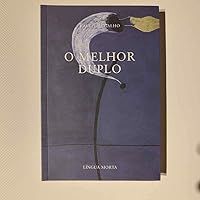
1. Escrever sobre livros debate-se com uma dificuldade essencial, sobretudo quando se trata de discutir uma obra inteira, um autor, ou qualquer coisa que tenha saído das bancas há mais de um mês. É que é muito pouco provável que o livro escrutinado esteja tão presente na cabeça do leitor como tem de estar na de quem escreve sobre ele. Como toda a citação tem limites (por este ponto de vista, a crítica perfeita seria a transposição completa do livro para dentro do ensaio) quem escreve sobre livros vê-se sob a dupla obrigação de analisar uma coisa ao mesmo tempo que a representa, resumida numa imagem bastante - sendo esta a única forma de tornar perceptível a visão que se pretendeu apresentar sobre algo que o mais provável é nem lá estar. Isto é o cão, diz o crítico. É deste modo, talvez se lembrem. Ora o que é interessante neste cão, não sei se repararam, é que tem o pêlo verde. Wood faz este truque muito bem. 2. Wood, quer queira disfarçá-lo quer não, ainda é do tempo da Jane Austen. E tem dificuldade em entender tudo o que se afaste muito do modelo, convencido que a ficção tem ainda de ser sobre o humano e o particular, sem acesso a objectos menos óbvios. É por isso que não entende e junta obras que não são comparáveis em mérito, como no celebérrimo ensaio sobre o realismo histérico, em que confunde Wallace e o Underworld de DeLillo (very good stuff) com a mediania de Zadie Smith e Franzen. Ou que se entusiasma com alguma da ficção trazida de culturas tradicionais da common wealth, que ainda podem usar à vontade as complicações do casamento como tema. Tirando isso (ou mesmo juntando isso), é um mimo.
Poetic and pungent. Comedy, religion and secularity, fiction and reality, and stream of consciousness are all central concepts that are repeatedly drawn out for discussion. Wood's strong emphasis on the author’s voice not overshadowing the character’s voice is a prerequisite for grasping most of the ideas in the collection.
(Read another version, which hasn't appeared in Goodreads yet)
me encanta leer a james wood, sobre todo cuando destaca cosas buenas (las más difíciles de ver y expresar) y no tanto cuando sus ensayos son meros derribos pero una sola mujer en todo el libro? es una broma?
Wood is a confident critic and I enjoyed these essays generally and his willingness to champion the underdog and dismiss the overhyped (goodbye Tom Wolfe). I think I wished for something more overarching on comedy - maybe he said it in the earlier essays and I just had forgotten by the time I got to the end. His intro does talk about the religious, the comedy of correction and the secular, the comedy of forgiveness. The book is about the latter.
My to-read list is getting a little full of things I add when James Wood praises them, then become unlikely choices once the sheen of his praise is removed. At least he's not as bad as Vivian Gornick. Salammbo? Diana of the Crossways?!
Anyhow, he's great. I like his love but I love his hate.
I'd agree with Richard. James Wood is smart. And he avoids most of them hyper-academic compound words, which makes this book actually enjoyable to read.
I might be wrong about this, but since James Wood started writing for The New Yorker, I find his reviews easier to read. Definitely easier than the essays that appear in this book.