
What do you think?

Hussein: An Entertainment
A glittering adventure set in India at the height of the British Raj. The New York Times compared this book to Kipling's Kim and called it "a gorgeous entertainment." Of this early work, published when he was in his early twenties, Patrick O'Brian writes in a foreword: "In the writing of the book I learnt the rudiments of my calling: but more than that, it opened a well of joy that has not yet run dry." The story is about a young mahout―or elephant handler―his childhood and life in India, and his relationship and adventures with elephants. As a boy, Hussein falls in love with a beautiful and elusive girl, Sashiya, and arranges for another of her suitors to be murdered with a fakir's curse. The dead man's relatives vow vengeance. Hussein escapes and his adventures begin: snake-charming, sword-fighting, spying, stealing a fortune, and returning triumphantly to claim his bride. All of this is set against an evocatively exotic India, full of bazaars, temples, and beautiful women―despite the fact that O'Brian had never been to the East when he wrote the story.
240 pages, Paperback
First published January 1, 1938
About the author
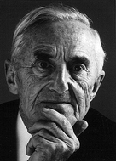
Patrick O'Brian
162 books2,515 followersPatrick O'Brian was an English novelist and translator whose reputation rests above all on the Aubrey-Maturin novels, a twenty-volume sequence set during the Napoleonic Wars. The books follow Captain Jack Aubrey of the Royal Navy and Stephen Maturin, his friend and ship's surgeon, whose Irish-Catalan background and scientific interests complement Aubrey's practical naval outlook. Beginning with Master and Commander, the series combines historical events with fictional adventures, preserving the outcome of real history while placing its protagonists within the action. O'Brian's command of period language, naval terminology, medical detail, and maritime practice gives the novels a convincing sense of nineteenth-century life, while their humor and the evolving relationship between Aubrey and Maturin provide their emotional center. The series became a long-form narrative in which professional duties and private lives develop continuously across successive voyages. O'Brian's literary career began remarkably early. Writing as Richard Patrick Russ, he published his first novel, Caesar: The Life Story of a Panda-Leopard, as a teenager, followed by animal stories collected in Beasts Royal. His novel Hussein: An Entertainment appeared in 1938 and received critical attention. After the Second World War, he adopted the name Patrick O'Brian and continued publishing fiction, including The Last Pool, Testimonies, and The Catalans. His early naval novels for younger readers, The Golden Ocean and The Unknown Shore, already contained elements that anticipated Aubrey and Maturin. He also became a translator from French, producing more than thirty English translations, including works by Simone de Beauvoir, Henri Charriere, and Jean Lacouture. His nonfiction included biographies of the naturalist Joseph Banks and the painter Pablo Picasso, whom he knew in Collioure, France. O'Brian lived in Wales after the war before moving with his wife Mary to Collioure in 1949. Their collaboration was important to his working life, with Mary assisting him in research and preparing his handwritten manuscripts for publication. O'Brian wrote by hand throughout his career and resisted modern writing technology. His literary breakthrough came unusually late. Although the Aubrey-Maturin books had a modest British following after their first appearance, their American revival in the early 1990s, led by W. W. Norton, brought sales and recognition. The novels eventually sold millions of copies and attracted devoted readers well beyond the age group normally associated with historical adventure fiction. O'Brian received the inaugural Heywood Hill Literary Prize in 1995, an honorary doctorate from Trinity College Dublin, and a CBE in 1997. His reputation was complicated when British media revealed details of his early identity and first marriage, matters he had kept private. Despite the controversy, his fiction remained central to his legacy. His unfinished twenty-first Aubrey-Maturin novel was published posthumously, preserving both handwritten pages and typescript. His manuscripts, notes, and research materials have since become part of major literary collections. His influence is also reflected in the continued readership of the novels and the 2003 film Master and Commander: The Far Side of the World, which drew primarily from The Far Side of the World while incorporating material from elsewhere in the series.
Ratings & Reviews
Friends & Following
Create a free account to discover what your friends think of this book!
Community Reviews
Displaying 1 - 18 of 18 reviews

June 18, 2017
Bottom Line First: Hussein is a first novel by a soon to be master story teller
Patrick O' Brian, not his real name would become famous for seafaring historical adventures- a world wherein he had no first person experience. In Hussein he builds an adventure story around a Muslim mahout surviving in the British Raj. O'Brian had no first-hand knowledge of any aspect of this world. The result is believable and entertaining (it is subtitled `an entertainment') but not yet the product of a master. Hussein is highly recommended for Patrick O'Brian fans. For a first time exposure to his work or for young adult audience it is a better than average read. The story has a number of exciting turns, reverses and complexities but the style can be too dry
Patrick O'Brian is best known for his much later Aubrey/Maturin adventure novels. These are books about life in Nelson's Navy. After O'Brian's death it would come out that almost everything his fans had been told about him was not true. His name, Irish heritage, and experience of life at sea, all of this was not true. None of this became a scandal because of his ability to immerse his readers in an authentic feeling historic period and he telling has withstood challenges to its essential validity.
Hussein is listed as his first published novel. Here he is writing about a world that existed in fact and one wherein he had no first-hand knowledge. His lead character is a young Muslim elephant mahout. He is slightly more educated than most of his fellows and the adventures he will face will test his abilities to learn and excel in skills including snake charmer, cheetah trainer, story teller and farmer. He will live more by wits than morality. As is classic in these kinds of stories, his goal is wealth and the hand of his beloved.
Hussein will live adventures similar to the more famous stories of the Arabian nights, but with no occasion for djinns or magic lamps. There are fakirs, aged hermits and other people believed to have magical skills, but the reader is not required to believe along with the more superstitious characters in the stories. This results in novel that includes a richer variety of characters and therefore a believable environment.
Also missing is the more elaborate and often exaggerated lavishness of the 1001 Nights story cycle. At times I felt that O'Brian was writing something like the 1001 Nights as told by Hemmingway. The result is that the narrative while engaging and charming can be somewhat sparse and flat. How much of this is due to the undeveloped state of the author's skills and how much was a deliberate effort to pare down the style is not known.
Patrick O' Brian, not his real name would become famous for seafaring historical adventures- a world wherein he had no first person experience. In Hussein he builds an adventure story around a Muslim mahout surviving in the British Raj. O'Brian had no first-hand knowledge of any aspect of this world. The result is believable and entertaining (it is subtitled `an entertainment') but not yet the product of a master. Hussein is highly recommended for Patrick O'Brian fans. For a first time exposure to his work or for young adult audience it is a better than average read. The story has a number of exciting turns, reverses and complexities but the style can be too dry
Patrick O'Brian is best known for his much later Aubrey/Maturin adventure novels. These are books about life in Nelson's Navy. After O'Brian's death it would come out that almost everything his fans had been told about him was not true. His name, Irish heritage, and experience of life at sea, all of this was not true. None of this became a scandal because of his ability to immerse his readers in an authentic feeling historic period and he telling has withstood challenges to its essential validity.
Hussein is listed as his first published novel. Here he is writing about a world that existed in fact and one wherein he had no first-hand knowledge. His lead character is a young Muslim elephant mahout. He is slightly more educated than most of his fellows and the adventures he will face will test his abilities to learn and excel in skills including snake charmer, cheetah trainer, story teller and farmer. He will live more by wits than morality. As is classic in these kinds of stories, his goal is wealth and the hand of his beloved.
Hussein will live adventures similar to the more famous stories of the Arabian nights, but with no occasion for djinns or magic lamps. There are fakirs, aged hermits and other people believed to have magical skills, but the reader is not required to believe along with the more superstitious characters in the stories. This results in novel that includes a richer variety of characters and therefore a believable environment.
Also missing is the more elaborate and often exaggerated lavishness of the 1001 Nights story cycle. At times I felt that O'Brian was writing something like the 1001 Nights as told by Hemmingway. The result is that the narrative while engaging and charming can be somewhat sparse and flat. How much of this is due to the undeveloped state of the author's skills and how much was a deliberate effort to pare down the style is not known.
July 13, 2013
A rather more realistic version of Kipling's "Kim," the narrative follows a young 19th Century Indian named Hussein and his quest to marry the woman he loves. And while that sounds very romantic, the story and character are more than slightly jaded by the protagonist's willingness to commit murder, but living in the reality of the time and place, the author brings to life, warts and all, the Indian subcontinent at the time the British were slowly consolidating their hold on it.
From an author best known for his characters of Aubry and Maturin, this was an early and quite different literary effort, but inevitably an enjoyable one, told (I read) in the form given by an Indian story teller in which judgement is to be suspended and the tale to be accepted as just life happening as it always does. While it didn't have the depth of the author's later works, it still had that texture that makes all of O'Brian's books such a pleasure to read.
From an author best known for his characters of Aubry and Maturin, this was an early and quite different literary effort, but inevitably an enjoyable one, told (I read) in the form given by an Indian story teller in which judgement is to be suspended and the tale to be accepted as just life happening as it always does. While it didn't have the depth of the author's later works, it still had that texture that makes all of O'Brian's books such a pleasure to read.
July 7, 2008
Sort of convoluted, and the hero might have been more sympathetic if he didn't keep accidentally killing people. Well , when you're beating the crap out of them and they die it's not entirely an accident. The elephant was pretty cool.

April 24, 2020
I can't say I know how I came to possess this book. A bout of illness while sheltering at home brought it into my lap after carrying it for years, being a great fan of O'Brian's writing. Having recently finished reading (or listening to) the Aubriad, I was sorry to have to set aside his wonderful work, and Hussein seemed like just the thing to scratch the itch without just starting the whole series over again. I have known good friends to do so as many as eight times; I am not ready to make that kind of commitment, given the many books I yet long to read. But let me be clear: a life spent exclusively with O'Brian would not be such a bad life. I continue to be surprised by the quantity and variety of writing this wonder-worker produced in his lifetime.
I devoured Hussein in a single fevered day, unable to put it down despite my fatigue and other sources of physical discomfort. It has been a long time since a book was able to capture my attention in this way. I should have written a review immediately upon completing it, as I have since devoured several more books and its original effect is now lost. What remains is O'Brian's ability to conjure an imaginative experience and a delight that feeds and strengthens the imagination in its most wide-ranging form.
Ever since Caitrin Keiper's essay "Do Elephants Have Souls?" prompted me to read the classic The Dynasty of Abu, I have retained a remote, mostly literary fascination with the elephant, and of course a novel like this only intensifies that gratifying secondhand curiosity. Hussein is possessed of the gifts of the born mahout, and the large part of his adventures are sustained, even driven by the character of Jehangir, a bull elephant that is as wily and wise as any Hindu fakir--and far less easily moved by coin. Literary types are interested in seeing this early novel as a point along the line of O'Brian's development as a novelist, and I'm sure it can offer them sights of interest; many of the same tropes of espionage, wild chases, storming a redoubt against all odds, and mighty windfalls of gold are all present here, to great effect. So too, O'Brian interjects a number of great stories that Hussein or others tell to their gathered audience--creating interludes with a similar effect to the lore of El-ahrairah in another great British story, that of Watership Down. In fact, this novel strikes me as a unique blend of the easy globetrotting of Kipling, and the mysterious faerie-like quality of Roald Dahl's short stories (especially The Wonderful Story of Henry Sugar and Six More).
This little-known novel will soon be a staple coming-of-age gift to the young souls I know. I heartily recommend it to all in search of a worthy story to fill these times of enforced malaise.
I devoured Hussein in a single fevered day, unable to put it down despite my fatigue and other sources of physical discomfort. It has been a long time since a book was able to capture my attention in this way. I should have written a review immediately upon completing it, as I have since devoured several more books and its original effect is now lost. What remains is O'Brian's ability to conjure an imaginative experience and a delight that feeds and strengthens the imagination in its most wide-ranging form.
Ever since Caitrin Keiper's essay "Do Elephants Have Souls?" prompted me to read the classic The Dynasty of Abu, I have retained a remote, mostly literary fascination with the elephant, and of course a novel like this only intensifies that gratifying secondhand curiosity. Hussein is possessed of the gifts of the born mahout, and the large part of his adventures are sustained, even driven by the character of Jehangir, a bull elephant that is as wily and wise as any Hindu fakir--and far less easily moved by coin. Literary types are interested in seeing this early novel as a point along the line of O'Brian's development as a novelist, and I'm sure it can offer them sights of interest; many of the same tropes of espionage, wild chases, storming a redoubt against all odds, and mighty windfalls of gold are all present here, to great effect. So too, O'Brian interjects a number of great stories that Hussein or others tell to their gathered audience--creating interludes with a similar effect to the lore of El-ahrairah in another great British story, that of Watership Down. In fact, this novel strikes me as a unique blend of the easy globetrotting of Kipling, and the mysterious faerie-like quality of Roald Dahl's short stories (especially The Wonderful Story of Henry Sugar and Six More).
This little-known novel will soon be a staple coming-of-age gift to the young souls I know. I heartily recommend it to all in search of a worthy story to fill these times of enforced malaise.
June 5, 2020
A fun tale
Hussein is a fun read by the masterly author of the Aubrey/Maturing series. It is not the highest literature, but it shows early traces of the charming language that O'Brian will use in his famous novels.
Hussein is a fun read by the masterly author of the Aubrey/Maturing series. It is not the highest literature, but it shows early traces of the charming language that O'Brian will use in his famous novels.

June 3, 2024
O'Brian's Life #2
Eight years after his first book O'Brian returns with this somewhat entertaining yarn, which never reached great heights, but as he is still finding his way as an author it does have some good moments.
Eight years after his first book O'Brian returns with this somewhat entertaining yarn, which never reached great heights, but as he is still finding his way as an author it does have some good moments.

October 28, 2018
What an adventure. The first half is almost a collection of short stories with the same main character, but the second half is linked and moves more quickly. The stories are great fun!
June 16, 2025
hardback - You won't be disappointed if you liked Kim and The Jungle Book, for O'Brian had to have been inspired by them. It's excellent.
January 1, 2014
Patrick O'Brian's Aubrey series has been on my to-read list for over a decade. I have been in a mood to switch genres lately and now I can't wait to get started. Of course the first book of the series was not at the library last time I was there so I picked up Hussein. This is the first Patrick O'Brian book I have ever read. It is the first book O'Brian ever wrote. I have learned that it is not fair for me to judge an author by their first book. I believe I have nixed some able authors from my list over disappointment in their first book. That is not the case with O'Brian as I am still very much compelled to read Master and Commander.
I'm in a bit of a turmoil about Hussein. My favorite part of the book was this line in the one page foreword written by Patrick O'Brian in 1999, the year before his death - "in the writing of the book I learnt the rudiments of my calling: but infinitely more than that, it opened a well of joy that has not yet run dry." It all started here for O'Brian. He explains that this began as short fiction for an Oxford University annual, but was received with such enthusiasm and support for expansion that he lengthened it into a novel - an entertainment. I appreciate that O'Brian acknowledged his limitation and attempted to dissuade readers from taking this work too seriously by calling it an entertainment, not to be construed as a representation of the people and culture of India, a country that he had never visited at the time he wrote this book. But then that was my problem with the book.
There is nothing wrong with this story. It is entertaining and well written. Had I been able to suspend the idea that this was a yarn written by an untraveled Brit in 1938 when England ruled India, this could have, in fact, been a tale on which I could have been carried away. Unfortunately I was not able to suspend the nagging thought that this story lacked legitimacy and as a result I had the most egregious experience that reading fiction is a waste of time.
I am thrilled that O'Brian "found his calling" when he wrote this book. As the story rolled out, I was inspired by the discovery of the new author spinning Hussein's tale. If only I could find that calling myself.
I'm in a bit of a turmoil about Hussein. My favorite part of the book was this line in the one page foreword written by Patrick O'Brian in 1999, the year before his death - "in the writing of the book I learnt the rudiments of my calling: but infinitely more than that, it opened a well of joy that has not yet run dry." It all started here for O'Brian. He explains that this began as short fiction for an Oxford University annual, but was received with such enthusiasm and support for expansion that he lengthened it into a novel - an entertainment. I appreciate that O'Brian acknowledged his limitation and attempted to dissuade readers from taking this work too seriously by calling it an entertainment, not to be construed as a representation of the people and culture of India, a country that he had never visited at the time he wrote this book. But then that was my problem with the book.
There is nothing wrong with this story. It is entertaining and well written. Had I been able to suspend the idea that this was a yarn written by an untraveled Brit in 1938 when England ruled India, this could have, in fact, been a tale on which I could have been carried away. Unfortunately I was not able to suspend the nagging thought that this story lacked legitimacy and as a result I had the most egregious experience that reading fiction is a waste of time.
I am thrilled that O'Brian "found his calling" when he wrote this book. As the story rolled out, I was inspired by the discovery of the new author spinning Hussein's tale. If only I could find that calling myself.
July 25, 2011
A rags to riches fairy tale set during the British Raj about a mahout who gets the girl in the end after a grand series of adventures, most of which are somewhat incredulous where suspension of disbelief is required. Stories within stories is classic Arabian nights. 'Great game' conspiracies got abit convoluted towards the last bits. Would've worked better as a children's storybook - with lots of pictures.
January 3, 2015
This book wasn't bad, but it just didn't have the same appeal as O"Brian's other books. It was his first novel, and was written nearly 80 years ago. This was before independence, when India/Pakistan were still part of the British Empire. Furthermore, in the introduction O"Brian says that when this was written he had never been to India. The result doesn't exactly feel dated, but it does feel like an old, somewhat simplistic view of the world.

December 4, 2016
A charming tale with lots of exotic flavor. O'Brian's descriptions of animals, especially the elephant Jehangir, are marvelous, but his characters are pretty flat. Still, I'm happy I found this very early work by one of the world's greatest historical fiction writers.

January 15, 2008
Wonderfully written and a beautiful story

March 31, 2008
I'm quickly running out of POB books to read, ain't I? ONOEZ! A fun read, but a bit pointless.

September 18, 2008
A fun romp about a boy and his elephant. And who doesn't love a novel about an elephant? Especially one written by Patrick O'Brian.

Read
July 27, 2011Cute. A fun, low-stress read for a busy student like me :)

October 27, 2015
I did not appreciate the advice given to Hussein, in the ending, about how to treat the woman he was going to marry. What can I expect, when the author was probably a misogynist.
This entire review has been hidden because of spoilers.

November 10, 2019
A sharply humane and wry tale, with a magnificent blend of bright cynicism, rich story-telling and intrigue. You will almost feel Captain Aubrey and Maturin being born here.
Displaying 1 - 18 of 18 reviews