PART ONERussia’s Social Development and Tsarism Russian CapitalismRussian CapitalismThe Peasantry and the Agrarian QuestionThe Driving Forces of the Russian RevolutionThe SpringJanuary NinthThe Strike in OctoberThe Creation of the Soviet of Workers’ DeputiesOctober EighteenthWitte’s MinistryThe first Days of the “Freedoms”The Tsar’s Men at WorkStorming the Censorship BastiliesOpposition and RevolutionThe November StrikeEight Hours and a GunThe Peasant RiotsThe Red FleetOn the Threshold of Counter-RevolutionThe Last Days of the SovietDecemberSumming UpAnnexesThe Proletariat & the Russian RevolutionOur DifferencesThe Struggle for PowerOn the Special Features of Russia’s Historical DevelopmentPART TWOInstead of a Preface to the Second PartTrial of the Soviet of Workers’ DeputiesThe Soviet and the ProsecutionMy Speech Before the CourtThereBack
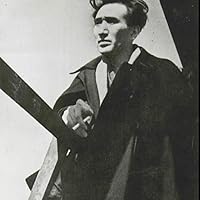
Russian theoretician Leon Trotsky or Leon Trotski, originally Lev Davidovitch Bronstein, led the Bolshevik of 1917, wrote Literature and Revolution in 1924, opposed the authoritarianism of Joseph Stalin, and emphasized world; therefore later, the Communist party in 1927 expelled him and in 1929 banished him, but he included the autobiographical My Life in 1930, and the behest murdered him in exile in Mexico.
The exile of Leon Trotsky in 1929 marked rule of Joseph Stalin.
People better know this Marxist. In October 1917, he ranked second only to Vladimir Lenin. During the early days of the Soviet Union, he served first as commissar of people for foreign affairs and as the founder and commander of the Red Army and of war. He also ranked among the first members of the Politburo.
After a failed struggle of the left against the policies and rise in the 1920s, the increasing role of bureaucracy in the Soviet Union deported Trotsky. An early advocate of intervention of Army of Red against European fascism, Trotsky also agreed on peace with Adolf Hitler in the 1930s. As the head of the fourth International, Trotsky continued to the bureaucracy in the Soviet Union, and Ramón Mercader, a Soviet agent, eventually assassinated him. From Marxism, his separate ideas form the basis of Trotskyism, a term, coined as early as 1905. Ideas of Trotsky constitute a major school of Marxist. The Soviet administration never rehabilitated him and few other political figures.
I should have read this years ago. An account of the 1905 Revolution, starting with the development of Russia, from which the Permanent Revolution springs, the events of January, the strikes in October, November, military risings, a and finally the insurrection in Moscow in December.
Trotsky is outstanding as a writer, not just in giving the facts and drawing the conclusions but in weaving in the details of human incidents and stories that bring to life a revolution that brought into its sweep huge masses.
It also contains marvellous appendices, including Trotskys speech from the dock at his trial as chairman of the St Petersburg soviet, and his diary account of his journey into and escape from exile.
While an excellent account of the events of the 1905 Revolution in Russia, this piece is marred by the political attitudes of Trotsky that haunted his analysis for his entire career: that is, a Menshevik attitude towards the peasantry and the absurdity of "permanent revolution."
In the introduction, Trotsky summarizes the theory of "permanent revolution" as the idea that an irrepressible conflict between the proletariat and peasantry necessitate that the dictatorship of the proletariat exert all possible effort to extend the revolution. From 1917 to 1922, the USSR did this. It was defeated by the fact that the international situation and the material conditions would not allow it. Trotsky never formulates an answer to this defeat, and merely repeats that it is a must. This is antithetical to the proletariat-peasantry alliance.
This attitude continues throughout the work. The peasants movement respond weakly to the developments in Moscow and Petersburg. This, of course, correct, but why? Because the Social Democratic policy towards the peasantry was weak. The only ones truly agitating among them were the Socialist-Revolutionaries. Trotsky's continuing attacks upon the peasantry as a revolutionary force are disproved by both the events of 1917 in mobilizing the peasantry in service of the Revolution, as well as that in the Third World such as China, Vietnam, Cuba, Nicaragua, etc.
In the 25th Chapter, Trotsky demonstrates that fatal flaw of his: he alone is correct, and everyone else is wrong. He turns his intellectual guns upon his earlier allies, the Mensheviks, and correctly critiques their incorrect attitude towards the 1905 Revolution. Yet, he also turns his guns upon Lenin. While a footnote says this conflict is of no importance, it certainly is! Trotsky emphatically rejects Lenin's characterization of the next Russian Revolution as a "revolutionary-democratic dictatorship of the proletariat and the peasantry." Trotsky mischaracterizes this relationship as one where the proletariat is subordinated to the peasantry, whereas anyone who reads Lenin's works on the matter knows that it was the peasantry who was to be subordinated to the leadership of the Social Democrats and the proletariat, similar to Mao's conception of the new democratic revolution.
This work is very important, both as a historical work correctly narrating the 1905 Revolution and its event, and as a political work delineating the political differences between Lenin and Trotsky that Trotsky and his ideological adherents would like to bury and ignore.
This book helped me remember what a great story-teller the old man is.
(Of course, he was still in his mid-20s when he wrote the book; he was only 26 when he was elected head of the first Petrograd Soviet, as my co-worker pointed out.)
This book shows how a revolution works through a series of stories from the Petrograd strikes, the mutiny on the Potemkin, and the Moscow insurrection of 1905.
Rosa Luxemburg's the Mass Strike is a good companion because he does not touch at all on the economic strikes of the spring and summer of that year, nor does he draw the connection between these economic strikes and the political strikes that preceded and followed them.
The last two chapters were the most surprising and fun--a travelogue-style account of his exile and escape from Siberia.
haymarket edition has a lot of back matter that includes details of his trial and a very literary account he wrote of his exile, impressions of the russian peasantry in the remote parts of the countryside. really good
It feels weird to give 1905 a rating….I can only give my own impressions of the book, I would never pretend to be able to quantify the influence that Trotsky had on future generations as a theorist, historian, and revolutionary.
I started reading 1905 after finishing To the Finland Station, a historical overview of the thinkers and revolutionaries that culminated in the October Revolution. In that book, I learned for the first time that there had in fact nearly been a Russian Revolution in 1905, but it was snuffed out for various reasons. This came as a shock to me, and reminded me that historically, revolutions don’t just happen one day, they take countless failed attempts before they even come close to grasping victory.
This was the first book I read by Leon Trotsky, and it was about time, as I frequently identify with Trotskyists when trying to figure out where I stand on the intellectual left. I was not disappointed, as Trotsky is an insightful historian, but also a sensitive storyteller, and understands how to balance the important details of the revolution with the grand sweep of history.
1905 details the condition of the Russian empire at the turn of the century, its economic development, its decaying power structure, the massacres and strikes leading up to the revolution, the mass mobilizations and street uprisings of the revolution itself, and the court case and subsequent exile of Trotsky, the alleged leader, that followed it.
At times the historical references to specific politicians and Dumas and all that get a bit hard to follow, but the valuable takeaways lie in the familiarity of the power struggles that take place. A decaying social order, made obsolete by rapidly changing economic conditions, decides to cling to power using the only means it has at its disposal - brute violence. A liberal opposition emerges, supported only by the terrified rich and short-sighted poor, which attempts to reach a compromise between autocracy and democracy. This flimsy opposition is constantly humiliated, but also carted out as the only alternative to the existing repressive state. Meanwhile, a truly progressive movement begins bubbling up from the depths of the factories, mines, and countryside. It can’t agree on everything, but one thing it has in common is that the existing order cannot be reformed, only overthrown, and it’s up to the people, not their leaders, to do it.
Not all elements were familiar. The details of Tsarist campaigns to provoke pogroms that resulted in the death of thousands of Jews and ethnic minorities foreshadow the brutal century that was to follow. And the efforts of revolutionaries to win over the military are surprisingly effective, in a way that would be unimaginable with the ideological uniformity of modern armies.
What I found most interesting were the development of worker councils in factories all around Russia - these “soviets” debating and agreeing on demands, strikes and tactics of the revolution. Trotsky portrays these as emerging organically, the obvious form of democracy which grew where no other legitimate form existed. The power they had to bring the country to its knees with a nationwide strikes makes our modern unions seem laughable in comparison.
Trotsky doesn’t write historical propaganda, after all, this book details a revolution that ultimately did not achieve its aims, and he clearly explains each strike that collapsed or resulted in a schism. But it is clear throughout that he believes his idea of a scientific and ethical world will prevail. The final lines of the book encapsulate this confidence: “Forward, forward, always forward”. His world never quite came to being, and he was assassinated for opposing those who snuffed it out. I look forward to reading his later work to understand how his ideas changed when the revolution finally came.
I read the .pdf of this book available online at the Trotsky Internet Archive. The transcription seems like it was simply scanned without any proofreading or editing. Some numbers, letters and even entire words appear as punctuation. Words are missing, or transcribed improperly rendering the meaning confusing, or non nonsensical, in places. I would recommend either buying or borrowing a book version of 1905.
Aside from that, this is an excellent book if you like politics and/ or history. Trotsky wrote this after the revolutionary events of 1905 in Russia. Trotsky would become a leading light of the October revolution of 1917 which inaugurated the first workers state in history. The Soviet system which took power in 1917 first arose in 1905, organized by striking workers to coordinate their activities. Leon Trotsky, activist, theoretician and organizer (then in his twenties) played a critical role in the Soviet. In the last days he became its official secretary and this book is a culmination of his experience in this role.
In the book he chronicles the revolutionary events of 1905 from the perspective of the revolutionary masses, through a lens of Marxist dialectics and Historical Materialism. He elaborates on the historical and economic development of Russia as key to understanding the tasks set by the revolutionary workers, peasants and military personnel of Russia in 1905. The theory of Permanent Revolution is explained within this context, and Trotsky's argument against the two stage theory of the revolution held by other leaders of the Social Democratic party at the time, including Lenin as the leading light of the Bolshevik faction within that party, held. At a time when Marxism and other Socialist perspectives were normative on the left Trotsky was considered an adventurer. Events would prove him to be the most consistent defender of a Marxist perspective on the issue of revolution in Russia.
This book is an invaluable insight into how he developed his analysis and why it is a critical addition for contemporary Marxism. The revolutions of 1905 served as a "dress rehearsal" for the successful revolution of October 1917. At that time Lenin, having come over to Trotsky's perspective (persuaded in 1917 by experience of events which Trotsky is able to foresee and explain in 1905) called for "All Power to the Soviet" setting the stage for the building of socialism, in Russia and internationally.
This book is an engrossing political look at the 1905 Russian Revolution (which was ultimately unsuccessful in overthrowing the tsar). The first few chapters (I think first 5) are a difficult read, but are very important economic and historical background.
It has been said that in revolutionary times, hours can be more important than years previous and this book describes that flow of the working class. From the forming of the St. Petersburg soviet to its functioning (it was more of an administrative body, coordinating the actions that the workers throughout the city were taking). Then also the reasons for the lack of success. A must read!
To understand how the proletariat came to power in 1917 in the Bolshevik Revolution, it is imperative to understand how the older generation learned from its' mistakes in the Revolution of 1905.
The last two chapters dedicated to his escape from exile was much more excited me. As if it's a short story written by any Russian writer, rather than a diary of Russian political expellee.
Había buscado este libro, en castellano, durante décadas, finalmente hube de peregrinar hasta la librería del CEIP en Riobamba, Buenos Aires, y valió la pena.
Trotsky empieza el libro describiendo -de manera acuciosa y con claridad científica- las particularidades del desarrollo del capitalismo en Rusia. La principal característica de este desarrollo, en un extenso país atrasado, fue que la evolución del capitalismo no siguió el mismo derrotero que los países de Europa occidental, en los cuales los artesanos de los burgos tuvieron tiempo de conformarse como clase capitalista. En Rusia dicho desarrollo fue impuesto al primitivo imperio de los Zares por el capital industrial y financiero europeo; por tal motivo no hubo tiempo ni capacidad para desarrollar una clase capitalista, liberal y democrática. Pero al ocurrir ello, se produjo el inusitado evento de la concentración de grandes masas de proletariado industrial y metalúrgico en la capital Petersburgo y Moscú, entre otras.
El desarrollo del capitalismo en Rusia puso las bases para el carácter permanente de la revolución. Al no existir una burguesía democrática con tradiciones parlamentarias, y ante la incapacidad de ésta incipiente clase capitalista en constituirse como tal y liderar la revolución burguesa contra la autocracia, ese vacío de dirección fue ocupado por el proletariado y sus organizaciones, dándole un carácter socialista al procreso revolucionario en curso. Lenin hasta las Tesis de Abril, no reconocería ésta característica.
La creación del consejo de diputados obreros (soviet) con representantes electos democrática y directamente por los trabajadores de cada fábrica, fue uno de los gigantescos pasos que ha dado la humanidad, y aunque éste fue disuelto, la revolución derrotada y sus líderes perseguidos y deportados, quedó la experiencia como ensayo general para la revolución triunfante de 1917. No hay forma de poder más democrática que el soviet, por su carácter de clase y por sus mecanismos de toma de decisión y rendición a cuentas. Las "Town Hall" de los gringos podrían ser un embrión de organización de este tipo.
La primera parte del libro discurre a través de los acontecimientos históricos y el análisis de las acciones que tuvo que efectuar el soviet, como la huelga general política y los piquetes de autodefensa armada contra las provocaciones y asesinatos de las bandas monárquicas como los cien negros. Es bastante emotiva la parte donde cuenta la unidad con los soldados y el levantamiento de la flota roja, y de cómo se consiguió la libertad de prensa y cómo es que los miembros del soviet ocupaban imprentas para editar la prensa del soviet. Así como también las lucha por la jornada de las 8 horas que en muchas fábricas fue impuesta por decisión del consejo de sus trabajadores. Finalmente no se ganó la jornada de la 8 horas para las masas, pero se ganó a las masas para las 8 horas.
La segunda parte trata del juicio al soviet de Petersburgo, y el viaje de Trotsky hacia la deportación y su novelesca fuga en trineo con un crónicamente ebrio guía ostiako por la helada tundra. En esta segunda parte se reproduce el discurso de Trotsky ante el tribunal que monta una acusación de conspiración y levantamiento insurreccional contra los miembros del soviet. En una brillante proclama, Trotsky demuestra lo infundado de tales y termina reconociendo que ellos no preparaban una insurrección sino más bien se preparaban para la insurrección. Muy ilustrativo para diferenciar al marxismo proletario del guerrillerismo pequenoburgés campesinista maoista o el mesianismo de tipo cristiano del castro-guevarismo.
Simpática edición de los camaradas argentinos del CEIP de esta genial obra de León Trotsky. Incluye un extenso anexo con diferentes artículos y publicaciones hechos en esa época en relación a la Revolució Rusa de 1905. Una diferencia saltante es que en ésta edición en castellano los anexos de Trotsky son enviados al final de la segunda parte a diferencia de la inglesa en la cual se ubican al final de la primera. Hay un anexo omitido (que es contado como el capítulo 27 en inglés) que consiste en una réplica de Trotsky a Pokrovsky acerca de las características especiales del desarrollo histórico de Rusia, siguiendo la línea de pensamiento expuesta al inicio de ésta revisión.
An account of the 1905 Russian Revolution as written / published in about 1908, so before the “true” revolution of 1917. More engaging than I would have supposed for a history book, but still not the easiest to understand because I’m missing a ton of context. I’d like to read more about this period and the cold war to get a better understanding of the whole time period.