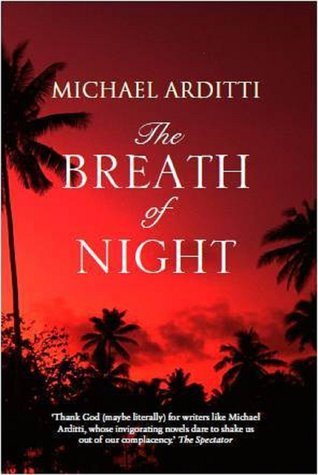
Julian Tremayne is a missionary priest in a remote Philippine village during the Marcos dictatorship. After championing the Communist rebels, he finds himself imprisoned for the murder of a local military commander. Three decades later, following his own mysterious death, a cult develops around Julian and there are calls for him to be made a saint. When Philip Seward is sent out to investigate on behalf of Julian's family, he is drawn into a labyrinth of vice, violence and corruption where nothing and nobody are what they seem. Enriched by a gallery of engaging characters ranging from priests to prostitutes, GIs to gangsters, tribesmen to terrorists and street children to Imelda Marcos, Michael Arditti's outstanding new novel is at once a gripping psychological thriller, a challenging moral mystery and an unforgettable voyage into a dark and exotic landscape.
“First the priests arrive. Then the conquistadores.”
----James Clavell, a British novelist, screenwriter, director and World War II veteran and POW
Michael Arditti, an English writer, has penned a thoroughly riveting thriller The Breath of Nightthat takes the readers not only back in time but also to a beautiful and exotic destination of the world, Philippines, where a young priest travels to Manila to find out exactly what happened to his would-have-been-uncle-in-law, who went to Manila to become a priest and years later getting killed on the hands of a communist party.
Synopsis:
Julian Tremayne is a missionary priest in a remote Philippine village during the Marcos dictatorship. After championing the Communist rebels, he finds himself imprisoned for the murder of a local military commander. Three decades later, following his own mysterious death, a cult develops around Julian and there are calls for him to be made a saint. When Philip Seward is sent out to investigate on behalf of Julian's family, he is drawn into a labyrinth of vice, violence and corruption where nothing and nobody are what they seem. Enriched by a gallery of engaging characters ranging from priests to prostitutes, GIs to gangsters, tribesmen to terrorists and street children to Imelda Marcos, Michael Arditti's outstanding new novel is at once a gripping psychological thriller, a challenging moral mystery and an unforgettable voyage into a dark and exotic landscape.
One slight correction, this story is not a psychological thriller, it's more of general mystery or rather say more of a historical fiction.
Philip Seward reaches Manila on request of his dead girlfriend, Julia's, mother, to investigate the death of Julia's Uncle Julian who went to Philippines in the late 70s to become a priest, which he becomes successfully but on this journey he not only gets involved with the teachings of Christ and local folklore, but also gets involved with Philippine's fragile and corrupt politics, that had given him instant celibacy among the local people of Philippines. But he was then arrested by the local authorities on a false crime against him, later he had to return to his country England and when he again went back to Manila, he was killed by the communist rebels, till then people have noted miraculous sightings of Uncle Julian.
The story sways between two time frame one in the recent years and another in the late 70s/80s era, where the past is depicted through Julian's letters addressed to his mother and father in England, and the present time moves with Philip's investigation of the past. Although at times, it will take bit time for the readers to adapt from one time period to another as each of the chapter stretched it's wings deep into the roots of the story.
The writing style is articulate with a steady pace. The narrative is engaging and free flowing and is layered with Philippine language and vocabulary. The prose is nostalgic as Philip moves right along with Julian's each historic moment in his life mentioned through his letters. With the use of impressive words in to the storyline, hence it will feel like reading a literary novel rather than reading a thriller.
The characters are etched out with perfection and vividness. Both Julian and Philip somehow felt similar with their beliefs and thoughts and with their outlook on the negative/corrupt things of life. Philip is determined and at times his witty narrative will keep the readers connected to this character which the author have strongly developed by laying out his past and present in front of the readers. Julian is fine one with some strong beliefs, always reflecting as well as living by the missionary rules and teachings.
Julian and Philip both together brings out the dark side of this exotic country which was left paralyzed not only by the war but also by it's own corrupt people. And this is where I felt the book put me off since I expected the descriptions about Philippines would be vivid like a painting instead the author chooses to show his readers only with the grim side. The background might not be the strong aspect of the book, but the author manages to blend in with local Philippine culture, language and food habitat to layer his storyline. And yes at times, I could smell the sweetness in the air of Manila.
There are lots of other supporting characters those are localities of Philippines and they keep the funny side up in the story, not only that they even brought out the real color and story of Philippines, how they are surviving amidst of poverty.
There is mystery which keeps on building till the end until the author surprises the readers with a strange climax that honestly I did not see it coming and it felt satisfying in the end with such a revelation. The story might not have been able to captivate me, but it surely did compelled me to pay a visit to Philippines.
Verdict: Historical fiction fans will love to read this book and if you want to taste an exotic destination, the do grab a copy of this book.
Courtesy: Thanks to the author, Michael Arditti, for providing me with a copy of his book, in return for an honest review.
Literally thrilling. This is as good as any thriller and yet by a 'literary' writer - and the story enthralls and engages and yet it makes you think.
So, is he good or is he bad, you decide then? Posh priest is murdered in the Philippines and equally posh family go and look into the whole sad tale. And it becomes like a Graham Greene book with twists and turns and our young hero ends up with a cast of characters that lead him down the garden path - well, the rubbish dumps of the poor. It has Imelda Marcos, it has death, poverty, the rich, and descriptions of the bizarre life of the island. And a terrific twist at the end.
Worth every penny and you can't say that of many books now. A good book, plain and simple.
I want to begin by saying that no matter what I say about this book do not be put off reading others - Arditti is a very interesting and extremely good writer who I have enjoyed reading since I came across (by accident) his first collection of stories.
Also, if you continue reading this review, there will be things that are 'spoilers' so if that bothers you stop reading.
This is a story about a priest who goes off to work in another, poor country as a type of missionary, abandoning a more worldly career in the church, dedicates his life to helping his poor parishioners, eventually disappears and is presumed dead, is believed by many of the poor who knew him and those who didn't to be a saint, and then his rich and powerful family back in England sends an investigator out to discover 'the truth', which he does, but it is a truth that nobody wants, let alone welcomes, and is of course thoroughly buried.
All of that should be enough to make a fine novel and a gripping story - and Arditti is the only writer I know who can tackle the sorts of topics and moral problems that were once the bread and butter of writers like Graham Greene and make them real, contemporary and true. Unfortunately this book isn't one. A priest from a wealthy country and background who goes to a poor country with a right wing government fighting a Marxist guerilla insurgency and discovers the reality of his religion amongst the poor and the powerless is too much of a cliché even for Arditti. If you want to read an excellent novel dealing with those issues, and based on real events, read 'November' by Jorge Galan.
My big problems with this novel is that it is set in the 1980s which was a period when the Catholic Church under John Paul II seemed to be revitalised and relevant. Even the Church of England got in on the act of 'moral' arbiter with the tragic-comic episode of Terry Waite 'negotiating' for hostages as the dupe of Oliver North (all that probably means nothing to anyone not over fifty but I can only recommend you Google things). By the time the 1990s was over the Catholic Church was seen not as a leader in the moral rebirth of the world but the facilitator predatory pederasts on a grand scale via organisations such as the The Legionnaires for Christ. But by 2013 too much was known about how far back and how world wide the moral and ethical tot went. The time for simplistic novels like this past. Not even Graham Greene could have continued to write as he did.
I have been harsh about this book and its story but it is a reflection not only of how much this book failed to engage me but how much more I expected from it. I could not honestly say don't read this book, but certainly if you don't like it try some of the author's other works and not only will you not be disappointed but I would wager you might greatly enjoy them.
A top-notch literary thriller. Like Heart of Darkness, the novel journeys into a mysterious country (in this case, the Philippines) to find a larger-than-life character: missionary and martyr Julian Tremayne. Treading the fine line between Conrad’s horror and Dickens’s melodramatic social conscience, Arditti succeeds in fostering empathy through a hard-hitting fictional commentary on modern Christianity.
Full review in December 2013 issue of Third Way magazine.
This book took me the longest time to get through of any book I have given 5 stars to. It is classified as a mystery but it is really a questioning of theology and in particular the teaching of the Catholic Church, and what role they play in regards to government policy. Particularly when the government is behaving opposite to catholic teachings. How complicit is the church with what the government is doing, and what role should the church play. The story is about Julian Tremayne a British priest in the Philippines, who began grounded in the teachings of the Catholic Church yet witnessed and experienced the worst of the Marco's regime. The priest is said to have had saintly qualities and even been able to perform miracles. The priest ends up being killed and his family is tired of waiting for the Catholic Church to recommend sainthood, so they hire a family friend to travel to the Philippines to learn everything he can about the priest. Great books develop slowly, and great British books tend to develop really slowly. Not because they are boring but because of the layers of complexity woven through the story. This book has two parts to each chapter, the first part is told in letters sent by Julian back to his wealthy well connected family back in Britain the second part of each chapter is narrated by the family friend sent to the Philippines to seek the truth. This was an excellent book, not because of the mystery but because of the questions it raises.
A man is sent from England to the Philippines to collect evidence about a deceased missionary priest whose family hopes he'll be made a saint. A mystery story exposing corruption and injustice, described as a psychological thriller that didn't get exciting until towards the end.
A book set in the Philippines that goes where not many contemporary British writers have ventured…
Set in the 1970s / 80s (the era of the Marcos dictatorship) and the current day, the book – in alternate chapters – follows the progression of Father Julian from priest sent out as a missionary from the UK to the Philippines and Philip, his would-have-been-nephew-in-law (had his niece not been killed in a car crash…) who has been dispatched by the family to Manila to try and speed Julian’s passage to sainthood…there being several tales of miracles having been performed by the priest.
Julian’s chapters are written as letters home to his mother and father. The device works well. Philip’s are written as conventional narrative. Sometimes (just sometimes…) a little hard to remember exactly where one chapter closed off as you return to that half of the story fifteen pages later. But that is a niggle. Julian’s chapters tell the story of how the innocent and earnest priest from England was increasingly shocked at the feudalism and corruption in the Philippines – and at the acceptance by the Catholic Church of such practices. The senior members of the arch diocese were all prepared to turn a blind eye to the resulting extremes of poverty. Julian was perhaps a little like the Anglican Archbishop of Canterbury and the Catholic Archbishop of Westminster who have both spoken out in recent weeks about the government’s welfare reforms and their impact on the poor. Not a popular position to espouse with those in authority… The Breath of Night goes right to the core of the relationship between church and state – and shies away from nothing.
Julian develops into a passive, and then active, sympathiser with communist guerillas. Eventually he is deemed to have been shot by them (no one quite knows why) and his body is later found.
Philip’s journey of discovery is just as dramatic. He is assisted in his quest by Max (an aging and effete business associate of Julian’s family) and by his driver, Dennis – go go dancer and generally ‘dodgy’ person. The trail leads to gangland, prostitutes, and the rubbish tips of Manila – even to prison. He receives false tips, and tip offs, as he searches for what really happened to Julian, what his secret underground life was all about, and whether – indeed – he did actually perform any miracles.
The story builds to what was, for me, an unexpected denouement. Unexpected, but in no way disappointing.
The Breath of Night is a very hard book to classify. It is full of larger than life characters and events. It is at times actually very funny – but also very serious in its subject matter. The Philippines, both current day and in the 80s, is painted as a moral maze where everything is not quite as it seems to be – and corruption, and its consequences, are rife. It poses at least as many questions as it answers – and not much distinction is drawn between the Marcos years and the present day… only the actors are different. I doubt Arditti is very popular there…
It is a book that I thoroughly enjoyed – and have thought about quite a lot since I finished it.
Honestly I tried, but I just couldn't get into this book. I felt no connection to the characters, and I did not find the story carried me along. I was hoping I would but no such luck.
Lessons from fiction – Part 3: The role of institutions in alleviating the poverty trap
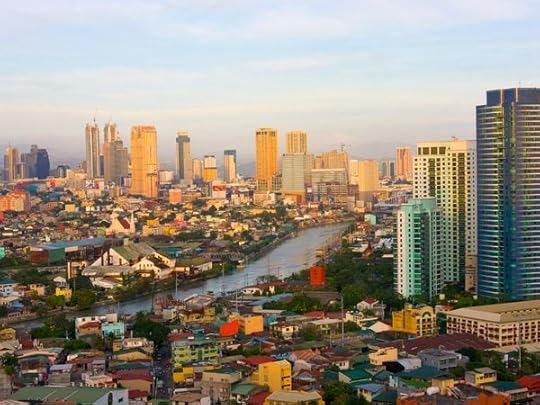
Manila
My one liner: The Breath of Night by Michael Arditti digs deep into the Philippines, its culture, people, and politics, to give us a thorough examination of the conscience and appetite of the Church to help the poor and disenfranchised through armed struggle. A morality tale that sits in the grey area between good and evil.
This is the third in an occasional series, Lessons from Fiction, which I publish on my blog. The Breath of Night is a new book by English author Michael Arditti. It has been promoted, sorry, reviewed, extensively in the mainstream media already, such as the Spectator, the Independent, the Scotsman, the Telegraph, the Guardian, and even the Daily Mail Online. With such revered Thought-Leadership behind it, I was curious to see what all the fuss was about.
Arditti raises important questions about the role of the Church and whether it should be more overtly political. In this article I would like to explore that suggestion. My conclusion is that economic intervention is more effective than political intervention and I have put some numbers around one of the examples in the novel to illustrate the point.
If you have travelled extensively in developing countries (is it ok to use that expression any more ? I still like “Third World”, but that’s definitely off limits now), you will feel the smells, the sounds, the taste, the moisture, the “vibe” of Philippines, even if you haven’t been there, because it is just like all those other countries you have visited.
“The pavement was almost as tricky to negotiate as the road. Ahead of them a man, wearing nothing but shorts, soaped himself nonchalantly as if he were in his own bathroom. To his left, three men played cards on an oil drum surrounded by a jeering an gesticulating crowd; to his right three women sat stirring brightly coloured stews an bubbling pots of rice while their children frolicked at their feet, perilously close to the wobbly stoves. All around them were stalls selling food, drink, scarves, T-shirts, sunglasses, lighters and pirated DVDs.”
Scratch below the veneer of the (faux-)colonial hotels and malls catering to the whims of the newly-minted Global Traveller, and you find an incredibly complex society.
Or, I should say, “societal structure”. An anthropological order that existed long before the colonial masters arrived and departed and continues to survive long after the arrival of “independence” and “democracy”.
“Nothing in this country is the way it looks. You think that because the Filippinos have Spanish names and speak English that you understand them. Big mistake !”.
In Arditti’s model, there are essentially five main actors and somehow, like spheres rotating around a central gravitational force, they seem to maintain an equilibrium with respect to each other: the Elite Landowners, the Masses (workers in the cities and workers on the land, if they can get work), the Government, the Church, and the “communist” Freedom Fighters.
Revolutions and overthrows of the incumbent government come and goAquino for Marcos, in the period covered by the book), but not much really changes:
“The most notorious Marcos ministers have been removed, but by and large the faces in both the Senate and the House of Representatives remain identical. The army has been granted immunity for all its crimes during the State of Emergency”
Basically the Elite Landowners, control everything, and maintain their power structures through the tacit or not-so-tacit government of the day.
The personification of the landowner is the haciendo, the proprietor of the hacienda farm estate, acquired originally by the conquistadores. The haciendo plays a benevolent role in society, because he provides work for tenants on his farm:
“Don Florante is reputed to be one of the more enlightened landlords. He takes a paternal interest in his tenants, advancing them money for seeds and tools, selling them cheap rice during droughts, and standing as godfather to their children (which, here, involves far more than remembering them at Christmas and birthdays).”
And the tenants themselves recognise, accept and even embrace their own role:
“The farmers have a sense of indebtedness that goes way beyond indenture. They feel an almost mystical bond to the haciendos”
Which is unfortunate, because economically, not surprisingly they are stuck:
“The share tenant is vulnerable to the proportion of his harvest due to the landlord, and the leasehold tenant to a fixed rent that takes no account of the all too frequent crop failures.”
I was fascinated by this statement, and since this article about lessons from fiction I would like to alight from the train here and just look into this a little it more: we will return to the Church and the Freedom Fighters later.
Let’s analyse the above tenancy arrangements by putting some numbers on them. These are unresearched assumptions, but they should give us a flavour of what’s going on. I would be very happy to hear from readers who would like to challenge the assumptions or to provide better data to feed into the models.
Imagine a household which is a tenant on the hacienda, and which is a family of 5. They harvest the land and for say four months of the year it produces an income. Based on the Philippines’ 2011 GDP per head of $2,400 I have assumed 3 productive members of the household, so a total of $7,200 produced by the household during the year. Assume that the household’s monthly expenses are $2 per person per day and 30 days per month. Thus the monthly expense is $2*5*30 = 300, or $3,600 per year.
What happens under the first version described above, where the landlord takes a percentage of output ? Let’s assume the landlord takes 45%. Why have I chosen this number ? Well, without doing detailed research I have made the following assumption. It just so happens that at 45% the household is just about able to make some savings at the end of the year, amounting to $360. The landlord is the one with all the information: if he sets the percentage too low he is not maximising his profit; if he sets it too high, the tenant has no incentive to work hard. The tenant works the land in the Hope that he will put aside a meagre amount every year, and one day his family will be able to afford an education, or a life in the city. The landlord is the one dispensing the Hope.
And indeed it seems to work. Look at Chart 1. Lo and behold every year the household’s wealth increases, up to a respectable $4,320 after Year 12.
Chart 1
But that’s not the whole story. What happens if the crop fails ? Again, this is somewhat unresearched, but let’s assume one total crop failure during the 12-year period. And let’s assume that there is a 75% probability of this happening, ie one total failure in a 12-year period (I did dig around a bit for some agricultural data, and I believe that’s not an unreasonable assumption). And let’s say that this failure occurs in year 7.
What happens to our tenant household ? Well, on the one hand their savings will be wiped out, and the household will be put into debt. Let’s assume that they can borrow the money, but will need to pay an interest rate of 50% pa (a reasonable assumption, I think). Look what happens to their finances in Chart 2. Ouch. By the end of Year 12 our household is over $6,000 in debt.
Chart 2
So to re-iterate, although our model family has the Hope of steadily increasing its savings, in fact under our assumptions it has a 75% chance of ending up $6,000 in debt at the end of 12 years !
Is it any better for the tenant to adopt the second model, and pay a fixed rent ? Suppose the landlord charges a fixed rent of $250 per month, regardless of output. In this case, the wealth accumulation is even better, there is more Hope for the tenant. Chart 3 shows that the family accumulates $7,200 at the end of Year 12:
Chart 3
How lovely.
But look what happens (Chart 4) when there a crop failure. The rent still has to be paid, so an even bigger liability is incurred when the Year 7 income disappears. And the debt spiral at 50% pa interest rates take the household to a whopping $15,000 in debt by Year 12, although you would imagine they will have been evicted into destitution long before that.
Chart 4
Some Hope indeed that is being dispensed by the haciendos. More like the Hope that people have when they walk into a casino, when in fact the odds of coming out with any money are so overwhelmingly against them.
In the novel Arditti examines in depth the role of the Church within a society such as this. Julian Tremayne, a Catholic priest of mid-ranking English aristocratic blood, leaves his home country in the 1970s and sets out for the Philippines to take up a posting there as parish priest. Over time, his pastoral duties bring him into contact with exactly the type of people described in the example above. Initially he plays the role that is expected from him, preaching to the congregation according to local custom, and providing food, shelter, medicine and money for those in extreme need. In this role he is very much part of the Church Establishment, which above all wants to maintain cordial relations with all factions in Philippine society.
However, over time, Julian develops a closer relationship with the country’s Freedom Fighters, the New People’s Army or NPA, who are engaged in violent and revolutionary struggle against regime of the day (first Marcos, then Aquino). At first it is logistical support that Julian provides (e.g. transport and shelter). But he struggles increasingly with his conscience and feels that the Church as an institution should engage actively in the freedom struggle:
“Poverty and oppression endanger the soul [of the rich] along with the body [of the poor]. A woman whose children are starving may break the seventh commandment, just as a man driven mad by tyranny and injustice may break the fifth. So as a priest, I’m obliged to concern myself with the here and now as much as the hereafter; indeed, the two are inexplicably linked. If a priest is to stand in the person of Christ, he can’t avoid being political.”
Hence he becomes more actively involved with the NPA (it is ambiguous as to whether he actually engages in any acts of violence or terror) and is eventually murdered in 1989.
The novel’s other protagonist is Phillip Seward, a young and out-of-work Art Historian, who has an emotional connection (you need to read the book to know why) with Isabel, the niece of Julian Tremayne, and her husband Hugh (who happens to also own a trading company that has extensive commercial interests in the Philippines). Isabel was particularly close to her uncle Julian.
Isabel manages to persuade Hugh to bankroll an assignment for Phillip to the Philippines to report on an investigation that is underway there into whether Julian satisfied the requirements for being declared a saint. Progress on the investigation has been painfully slow and Isabel feels that Phillip would be able to provide an objective view as to what is going on, and maybe to speed it up a little.
The story flips between Phillip’s 21st century induction to the country, as he uncovers Julian’s story, and the Julian’s letters, which tell his own story 30 years earlier.
Arditti wants us to question the role of the Church, and whether it should proactively align itself with revolutionary causes. Is the Church by definition a political institution that must fight to prevent poverty as well as treating its symptoms ? Certainly in previous centuries, both the Protestant and Catholic Churches have been more explicitly combative.
The author himself seems not sure of the answer:
“I think that’s what Julian objected to. He didn’t want a world that was split into masters and servants. No, he and his friends wanted revolution. They were terrorists, even if they had no guns – and believe me, there are many who swear that they did. Suppose they had succeeded, what then ? They get rid of Marcos and end up with Mao or Pol Pot. Do you think the people would have been happier with that ?”
Amongst all this ambivalence about political intervention, may I suggest an alternative route for institutions with the means, such as the Church. That is, that rather than pick political fights which may lead to worse outcomes and more destruction, such institutions can provide real economic assistance.
Let’s go back to the example that we analysed above. The astute reader will have noticed what the real problem is (actually, there are two – answers on a postcard, please). The real problem is the interest rate that the household pays when it goes into debt.
A somewhat topical issue on which the Church of England has recently expressed a view as well. Now, look what happens if the tenant can have access to cheaper credit, say at an 8%pa interest rate. Chart 5 applies this to the first example (tenant paying a proportion of output), but I assure it works for the second type as well.
Et voilà ! A steady recovery back to prosperity.
Chart 5
This is the idea behind micro-finance, and there is no reason why the Church (or indeed any other religious institution) could not deploy its considerable balance sheet to become a serious micro-finance lender, not just in developing countries, but also in more developed markets.
Now that really would be putting its money where its mouth is.
Michael Arditti is a remarkable novelist, and this is a remarkable novel. He is remarkable, because he writes seriously about faith, and the problems it brings. The novel is remarkable because it takes us deep into situations which most of us will only know intellectually - the crass juxtaposition of flaunted wealth and extreme poverty in the Philippines with all its ensuing corruption, forced depravation, violence and tragedy; and the never-ending question of how Christians should react once they have become aware of these injustices. In the context of the Catholic church, the contrast is between those who collude with the authorities and preach patience in this world with a reward in heaven, and those who are called to take up arms (metaphorically and sometimes literally) to create justice here on earth. The surprise ending leaves us with questions about the reliability of the various narrators - which is a pity, as I think Michael Arditti is too good a writer to have to rely on such a device.
This has been the first book in a while that I have truely enjoyed. A story set in the Philipines, where Philip Seward investigates the life of Julian Tremayne, a priest during the Marcos era. The story contains three points of view about what Julian really was like - each differing subtly or not so subtly from the others - and the book leaves the reader to decide for themself what they think, and which account is the true one, if there is such a thing.
This is the kind of historical fiction I enjoy: taking advantage of real history, but inserting fictional characters into it who fit into their world. I cannot, of course, vouch for the accuracy of Michael Arditti's picture of the Phillipines, but what I can say is that it has sparked my interest and entertained me.
A good story, though the chapters are a bit long and it's a little politically charged! I'm left confused about whether it's based on a true story or is pure fiction.
The story might have become more interesting, engaging and even suspenseful later on but the writing was so lacklustre that I gave up after a third of the book.
After the death of his fiancee Julia in a car crash, Philip Sawyer travels to the Philippines at the behest of her family to investigate the death of Julia's uncle Julian, a Catholic priest who died 30 years earlier, in suspicious circumstances. His aim is to provide support for the canonisation of Julian, whose devotion and ability to perform miracles has been heavily supported (if anecdotally). Philip is thrust headfirst into the underbelly of Filipino society and, as a classic 'innocent abroad', provides an extraordinary and vivid account of the wealth, extreme poverty, corruption and oppression of the country, interwoven with the increasingly disturbing letters of Julian himself, sent to his family in the UK. As the various mysteries surrounding Julian begin to unravel, the story builds to a powerful crescendo that not only forces Philip to confront his own faith (or lack thereof) but to question the certainties upon which he has built his life. Julian's own 'journey' is integral to this, and begins to form an intensely moving and intelligent moral examination of a culture whose religious aspirations are contradictory and often at odds with a society so riddled with abuse, corruption, inequality and confusion. At the same time, this book portrays a country with an evocative sort of beauty and an exquisite sense of hopefulness that transcends the lust that pervades it on every level. This is a gripping book, drawing in the reader and holding him/her there to the unexpected ending. Beautifully written, highly original, confrontational, thought-provoking and unremitting but, above all, hugely readable, The Breath of Night will hold you in its power and leave you thinking long after its final words.
There are two stories in this novel and two protagonists. One is Julian, a priest in the 1970s and '80s, trying to practice Jesus's teaching in an unfair society; the second is Philip, researching the priest's life thirty years later. From an interview in The independent: Talking about his last novel, The Breath of Night (2013), which was set in 1970s Philippines (he actually met Imelda Marcos while researching it), Arditti explained that “both [characters] are trying to do what’s right, within the confines of their own upbringing, and when faced by a world that they find it hard, initially, to relate to”. I found the modern story weaker and less interesting than the historical one, although it does give plenty of detail of life in modern Philippines. Julian's story is told through some letters and a few witnesses Philip manages to find, I would have liked more.
I’ve just finished The Breath of Night by Michael Arditti. It is a wonderful book and a very sensitive interpretation of religious feelings and the interplay of reality and fiction. Julian Tremayne scion of an old English landed family and a priest may or may not have displayed signs of a saint. His stay in the Philippines was certainly controversial and he may or may not have supported or joined left wing guerrillas. Hapless Philip is send to the Philippines by Julian’s sister and her husband to speed up Julian’s beatification and he is clearly out of his depth. In this country where nothing is what it seems, even a lovely girl may well turn out to be a boy, or more importantly betray you. Fascinating writing and I recommend The Breath of Night by Michael Arditti
Michael Arditti is always worth reading and this is no exception. It is set in the Philippines of thw 1980s and twenty years later. It is told by alternating narrators the letters home from of the priest in 1980s - Julian Tremane and bu Philip Seward who goes out to the Philippines to investigate his death and the possibility of him being beatified. The changes in Julian particularly are well drawn and the mystery of what he became and how he died are both convincing and gripping. It is not a cheerful read, the Philippines has a long and troubled history of exploitation in various ways both by outsiders and by native born politicians.
Wow, what an incendiary book about the Philippines during the Marcos regime and after! The constant shift between time frames work well, as it shows so clearly 'plus ça change...' and the afterword is a masterpiece in apologetics. I hope, for the sake of the Filipinos, that the situation has improved a bit since the period described. The Catholic church, landowners, foreign powers don't come out of it unscathed either. An interesting political book, with very vivid (and harsh and poignant) descriptions of daily life.
Set in the Philippines. Dual voices and dual times, one of a British catholic priest who turns revolutionary while on mission there in the 1970's and the other is a British nonreligious young man being paid to explore the possibility of declaring the priest a saint by the priest's family in the 21st century. Learned a lot of new vocabulary words with this one! A good historical exploration of an exploited nation and its people by the powerful.. .
A British journalist goes to the Philipines to investigate the case of a proposed canonization The role of the Church, State, corruption in both, freedom fighters and day to day lives of rich and poor are explored. Nothing is black or white. A well written - sort of a "thoughtful thriller " --- if there is such a thing.
A compulsive story, set in the nightmare world of the Phillipines. Very well told, complex, both about faith and about a nation and society so different and strange compared to our own. Well worth the time.