Jump to ratings and reviews
Rate this book

A Woman of the Future

Rate this book
These notebooks, diaries and papers were found among the effects of Alethea Hunt, and are reproduced by kind permission of her father. We publish them without alteration. Many of the pages contain no hint of the date of writing, but we believe, from the handwriting, that those dealing with her childhood and infancy, and some of the explanatory and reflective pages, were written after she began to find evidence of her change.

Some pages had the year of her age on them and were arranged in chronological order. Where she left headings we have shown them; where not, we have used the first phrase or so of her notes. We have no idea of where she wanted to insert her various general remarks, so we have placed them throughout in the order in which she left them.

349 pages, Paperback

First published January 1, 1979

2 people are currently reading
116 people want to read

About the author

David Ireland

14 books26 followers
David Ireland was born in Lakemba in New South Wales in 1927.

Before taking up full-time writing in 1973 he undertook the classic writer's apprenticeship by working in a variety of jobs ranging from greenkeeper to an extended period in an oil refinery.

This latter job provided the inspiration for his second (and best-known) novel, The Unknown Industrial Prisoner, which brought him recognition in the early 1970s and which is still considered by many critics to be one of best and most original Australian novels of the period.

He is one of only four Australian writers to win the Miles Franklin Award more than twice

He was appointed a Member of the Order of Australia in the Queen's Birthday Honours of June 1981.

Ratings & Reviews

What do you think?
Rate this book

Friends & Following

Create a free account to discover what your friends think of this book!

Community Reviews

5 stars
12 (14%)
4 stars
30 (35%)
3 stars
17 (20%)
2 stars
20 (23%)
1 star
6 (7%)
Displaying 1 - 16 of 16 reviews
Profile Image for zed .
620 reviews161 followers
April 3, 2017
Ouch! I have read 4 other novels by the author and have loved them. Two had won the Miles Franklin award and in my opinion are classics of Australian literature. A Woman of the Future also won the Miles Franklin so with that my expectations were high. But........ I found this astonishingly tedious at times. As usual there is the challenging thought provoking prose, the usual dark and satirical humour and the comments on society that make the author so attractive when at his best. The satirical use of those of us that are the Frees and those of us that are the Servers is a brilliant concept that differentiates societies classes. But it is the long winded pointlessness of long tracts of the book that kills the idea off for me. The second half of the book goes a touch over board on the act of sex as well. This book was released in 1980 and may have had impact back then but today less so. This was not meant to be a prudish comment. It is just that in todays day and age the shock value is less than it once was. I wonder if this book would even get shortlisted for an award such as the Miles Franklin nowadays and may have been "of it's time". Oh well cant win them all and will not stop me digging into the rest of the authors oeuvre.
Profile Image for Lisa.
3,820 reviews489 followers
December 14, 2023
The late David Ireland AM (1927-2022) wrote his award-winning novel A Woman of the Future in a very particular moment in time...

All of us who were young women in the seventies had a series of unforgettable moments when we broke a gender-based psychological, social or legal barrier.  For me, these moments ranged from the trivial to the momentous: when I wore a 'pantsuit' for the first time; when I refused to make tea for the boss at work; when I asked The Ex for 'his' car keys after I'd got my licence; when I rejected the purdah of the Ladies Lounge and had a much cheaper drink in the public bar; when I demanded to know why I couldn't apply for a job that I'd been acting in for months; and when my boss negotiated with the Premier and his Deputy to allow me to continue working in the public service after I'd got married despite the regulations... He was white with exhaustion when he came back and told me the news.

Me? I took it for granted.  My newly minted sense of self had assumed that approval was a foregone conclusion since it was none of their business whether I was married or not and the justice of women's rights was inalienable.

Only much later did I realise that he could have just as easily have waved his uppity young clerk goodbye... and I wouldn't have been able to do a thing about it.

The thing is, as David Ireland shows so brilliantly in A Woman of the Future, in the 60s and 70s nobody knew what the outcome of the women's movement might be.  We were all making leaps of faith, large and small, one after the other.

(One great leap of faith for women was in 1901, when men voted to give women the vote in the newly federated Australian parliament.  No one knew then how that would work out either.  But as historian Clare Wright concludes in You Daughters of Freedom (2018, see my review) women used their vote to make Australia the most progressive nation on the planet in the era before WW1. It's a pity that's not the case any more.)

A Woman of the Future has some confronting aspects, and Bill's dismissive 2015 review at The Australian Legend prompted a riposte from Bonny Cassidy in 2018 at The Sydney Review of Books. But I see A Woman of the Future as a book that lends itself to all kinds of readings, all of which may be equally valid.

Or not:
They said: the series of events in the mind cannot be understood as a coherent pattern, only as observed, separate, even fragmented parts of a jumble.  You cannot say: This inventory can be totalled and has such and such a meaning: all you can say is: it is there. (p.326)


A Woman of the Future is a very slippery novel. I read it through the lens that interested me most, i.e. as an exploration of the issue signalled by its title: what might a woman of the future be?  What might happen when parenting adapts to new ideas about gender roles and expectations?  How will the children — boys and girls — behave? What will they be like as adults?  How will men react to the challenge to their authority? Do sexual relationships adapt?  Or not...
What made us not know? Why were we uncertain of our identity? Surely other races, other times, other people were born knowing exactly what they were and where they fitted in. (p.287)
Alethea Hunt is the subject of a parenting experiment in a partly recognisable world.  Her mother has withdrawn from her expected role entirely and has abandoned all domestic responsibilities to her husband who thrives at domesticity.  Alethea claims in this purportedly posthumous collection of her writings to be able to remember her life in the womb and very early childhood when her mother's love was overt, but now in this inversion of roles Mother is more like the stereotypical father who is absent at work.  She spends most of her time in her room writing, recording minute day to day observations. A diarist of her times?  It's not clear: I kept thinking of Casaubon labouring away on his meaningless magnus opus... and yet, such momentous change was worthy of documentation, surely?

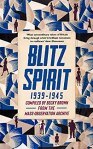
(The brains behind the Mass-Observation Archive during WW2 thought so, and so did those behind the persistent requests for us to record our pandemic experiences for posterity. Which I ignored, for reasons explained in my review of Blitz Spirit (2020), compiled by Becky Brown.)

In a sustained metaphor for the metamorphosis of society, Ireland introduces Alethea's school companions and neighbours in a social hierarchy of Frees and Servers.  In an ironic inversion of the usual dystopias, the Frees are mutants who engage in meaningless work to keep them busy while the Servers are the professional class, selected at the conclusion of school to qualify for tertiary education and real work.  The mutants grow peculiar changes in their bodies: a plank emerges from a man's body and becomes a coffin; a boy who is gradually solidifying into a sculpture takes care to arrange his all-important appendage to be impressive; a child whose feet adhere to any surface is allowed to roam the classroom at will and becomes a competitive runner.

It is Alethea's metamorphosis, however, that is the main subject of the book.  Raised not to be a 'girl' but as an equal, she explores her world with enthusiasm.  In class, she confounds the stereotype of the disruptive boy student, and her curiosity extends to sex.  In multiple discomfiting episodes, she inverts the notion that 'girls play at sex to get love and boys play at love to get sex'.  She and the other girls don't care at all about love...
There was a great demand for our bodies.  We girls didn't put all that much value on what our bodies represented: they did that.  We simply went along with it.  We were necessary; it brought advantages. Little things, it's true, but little things were all that males could give.

In truth, those little things — the dinners, the sights, the money, the drives, the gifts, the sexual exercise — were all they had to give.   (p.284)

With the advent of The Pill, anything else was flushed away.  

Alethea cannot be bothered with pandering to the male idea of what an attractive girl looks like.

To read the rest of my review please visit https://anzlitlovers.com/2023/12/14/a...
Profile Image for Geoff Wooldridge.
927 reviews1 follower
July 27, 2018
I simply loved this unique and controversial Australian novel, winner of the 1979 Miles Franklin Award.

It has been suggested that such a frank and uncompromising novel might not even be published today, let alone win such a prestigious literary award, but I'd hate to think that publishers are so staid and risk-averse that something so unique and insightful would be overlooked and unable to find a market!

The titular woman of the future is Alathea Hunt, and her story is told in the first person, presented as a series of notes or diary entries, documenting the life of this remarkable girl from conception to the age of sixteen.

Alathea is an unusual and intense girl, not always particularly likable, with plenty to say. She is highly intelligent, athletic and healthy, and is a high achiever at school both academically and in various sports. She is artistic in both visual and written mediums, to a level that draws frequent praise from her teachers and others.

But she is brash, questioning and challenging, has many visions and thoughts about what her adult life might be like (her withdrawn mother insisted from the beginning that Alathea would be someone special), and she has little tolerance of others.

Her natural curiosity leads her to examine her father's penis in fine detail when the opportunity presents, in scenes that are both unsettling and awkwardly humorous, and she also finds pleasure in the examination of her own developing body.

And, when she reaches a certain age, she experiments with sex - relentlessly and indiscriminately.

It is the extensive and frank sexual content that makes the novel so controversial and distasteful to some.

Alathea's descriptions of her sexual encounters are mostly matter-of-fact, bleak, detailed but anything but titillating. She is mostly emotionally removed from what is happening to her body.

Despite her willingness the grant sexual favours to almost any boy or man who asks, she is also gang-raped on at least two occasions in scenes that are disturbing and chilling.

Despite her sexual proclivity, what Alathea wants, and cannot find, is love. She just wants to feel loved, and when she finally feels something that might just be love, she considers it an illness.

Ultimately, Alathea scorns boys and the whole male race, except for her father. She considers men stupid for thinking they have won some sort of conquest or prize when a woman shares her much sought-after body, but Alathea understands that sharing her body involves giving nothing of her real self. Men are losers in her transactional view of sexual congress.

Through Alathea, Ireland has plenty to say, although not at great length on any particular topic, about Australian culture, and particularly that of youth, although many themes are universal. He touches on class differences, multiculturalism (in a way that was ahead of his time), the Australian love for coastal living and disdain for the interior, the world of work and, of course, sexual politics.

He refuses to moralise strongly about any of these things, just pointing out ironies and quirks, and he especially never judges Alathea's thoughts, actions and behaviours.

At times, the novel strays into the world of the surreal, with repeated anecdotes about individuals who have various plants or animals growing out of their bodies. If I have a criticism, I think Ireland went to this bizarre well too many times.

Alathea Hunt might be precocious, promiscuous, occasionally intolerant, but at heart she is like every other girl striving to grow up to womanhood, understand life and its challenges, dealing with doubts and trying to understand her place in a world that is still dominated by stupid men.

And certainly, Alathea Hunt is not easily forgettable. She is a literary character that will stay with me for a long time.

I found this novel, written in the 1970s, at the tail end of the first wave of radical feminism, just as relevant in today's #MeToo world.

David Ireland is, I think, one of Australia's finest ever writers, who has been sadly overlooked and undervalued. Many thanks to Text Classics for resurrecting some of his out of print works for modern readers.


9 reviews
January 6, 2017
A Woman of the Future is a both a multilayered political screed and an extended version of the aristocrats joke. It rewards the patience and curiosity of the reader.
Profile Image for Roger.
530 reviews23 followers
January 27, 2026
What a strange book. A bildungsroman with a difference for sure. I've been meaning to read some David Ireland for a while - I have had this book, as well as The Unknown Industrial Prisoner and The Chosen floating around my house for years , but when the urge to read Ireland finally overwhelmed me, it was A Woman of the Future that first came to hand.

A Woman of the Future is the story of Alethea Hunt, told by herself through a collection of notes, poems and anecdotes which she collected before her disappearance (this is explained in an "editor's note" at the beginning of the book).

This collection describes Alethea's life in an Australia set in the future, where most things are familiar, but some things are decidedly strange. For example some people have things growing out of their bodies - sheets of paper, a cannon, a coffin, flowers, etc. If this happens it means the person is ineligible to join the class of Servants - those who have jobs, run society, and see themselves as superior to the Free, who don't have to work, but if they do it is at menial tasks. The Servants refer to the Free colloquially as "Ids" - short for idiots.

Alethea seems destined for greatness - that's what everyone around her thinks. As she progresses through her schooling she is consistently good at everything, and enjoys her superiority. She is particularly pleased to be better than the males she encounters, either physically or mentally.

Which brings me to a big paradox in this book - Alethea succumbing to the ubiquitous sexual exploitation that occurs throughout. She is raped, bought and sold by boys, and seems to have sex with anyone who desires her (which is everyone). She does this initially to see what sex is: what it is in that contact that gives men the power to control women and society in general. She soon realises that the act is more a release for the man rather than the women (except occasionally), and that it is women who have power over men in the sexual sphere. Alethea eventually develops a kind of disgust toward men, yet still submits to their desires.

Her search for greater truth leads her to contemplate her country. The absurdity of people worshipping 200 year-old artefacts in a country with tens of thousands of years of human habitation. The abiding mystery at the "dead heart" of the continent. The sneering of Europeans at the lack of culture in Australia when, as Alethea points out, European culture doesn't extend much beyond great cities even in Europe.

As she matures she begins to realise that what she is seeking is not only greatness, but love - to love and be loved. Her sexual adventures become a search for love, but all she finds in men is lust and possessiveness, except for her father, the one sympathetic figure in the book. He loves Alethea fully and unconditionally, as he does Alethea's mother, his wife.

Alethea's mother is a figure aloof, watchful, always writing notes (for what purpose we are not told). In the characters of Alethea's parents, the message that it is women that are superior seems to be reinforced, even though it is Alethea's father who does all the work in the family, both financial and domestic. He often questions his life choices, but always encourages Alethea to achieve the greatness that he believes she has.

As the book progresses, the time of the examination which decides whether one is a Servant or Free approaches. Alethea wonders how those that "fail" reconcile themselves to that fact, even though she strongly believes that the intelligent should be superior to the average (the fact that there are awards for sports and music but none for academic achievement is often an irritant for Alethea as she is growing up).

In the last few pages, Alethea realises that she is changing: not like others, but fully transforming. She leaves home, and the last page of the book (another "editor's note") informs us that she has disappeared, possibly transformed into a leopard.

As I stated at the beginning of this review, this is a very strange book, and while there are definite themes, I'm not sure I've grasped them all or fully understood those that I have recognised. One of the main themes is the relationship between men and women. The graphic nature of the sex scenes certainly has shock value, but I think it goes to show that this thing which seems to have such power is nothing more than a messy effluxion of fluids that is at heart meaningless. The power women have over men, emotionally and spiritually, and their failure to use that power, is noticeable throughout the novel. Alethea discovers her power, and it's not only sexual in her case: but she can't bring herself to exercise it. In the end she finds that she can't be bother with males at all.

Love is at the heart of the novel. Alethea is constantly dissecting her parent's affection for her and each other. She accepts her father's love as a given, and wonders whether her mother has lost the ability to love. Alethea wonders whether she can love - her sexual exploits are an attempt to find love as she tries to decipher whether boy's professions of love are more than mere attempts to gain sexual favours. She develops a theory that women only love men after the men have professed love for them. By the end of the book she is coming to the realization that she would trade greatness for love - is that the weakness of women, when men think they can have both?

A Women of the Future won both the Miles Franklin and Age Book of the Year awards when it was published (despite one of the Miles Franklin judges describing the book as "literary sewage"). I did wonder if this book was written with prize-winning in mind: it has a sniff at times of confected-ness in its shock value and literary depth.

It is worth spending a little more space on the style Ireland has used. As mentioned earlier, the book is constructed in a series of short (mostly less than a page) vignettes: either notes, extracts from school assignments, or poems. The "editor's note" mentions that they may not be in chronological order, but the story begins at Alethea's birth, which she describes as if she can remember it, as she does her earlier years; but all written in the same style (no indication in the writing of a developing intellect - she has emerged fully-formed).

The episodic nature of the writing means the reader takes a while to piece together Alethea's world and the strange-but-familiar world of Ireland's future Australia, but once the reader enters and orients themself, they get carried along with the flow of Alethea's experiences and thoughts, joining her in trying to decipher the world and people around her.

I'm still deciding whether I actually enjoyed A Woman of the Future. Self-consciously not a "standard" novel, I'm not sure whether the style chosen is as effective as it could be. David Ireland was seen as a major Australian novelist in the 1970s, mentioned in the same breath as Patrick White. He has since faded from the scene, and it's not clear that his works will last in the long term (although Text Classics re-published his major works 10-15 years ago). It's also not clear to me whether, based on my experience reading A Woman of the Future, I will read any more David Ireland.

Check out my other reviews at https://aviewoverthebell.blogspot.com/
10 reviews
May 23, 2017
There is a good book within this book, but it is tiresome to get at it. The last third is far more engaging than the previous two thirds as the mise en scene vignettes (which are often dull, repetitive or frustratingly silly) recede and the narrative of the titular character, Alethea Hunt, woman of the future, takes off. Much of it concerns Hunt's sexual awakening and exploits but it is rarely titilating and the satire of this section often hits home. For a reader interested in Ireland, I wouldn't start here as the novel is terrifically uneven.
Profile Image for Amy Martin.
14 reviews
Read
June 30, 2011
Not really holding my interest at the moment. Finally done. I only finished this because I kept hoping it might finally get interesting. The premise was sort of interesting. But really, I shouldn't have bothered.
Profile Image for Dean.
7 reviews
May 12, 2013
i didnt really understand it, but i can see why not many women liked it
Profile Image for Peter.
323 reviews155 followers
February 18, 2025
The book I read before this one was Lust by Elfriede Jelinek. In my review I deplored Jelinek’s seemingly (to me) counterproductive and nihilistic rantings about exploitation of women by men. I made the point that I had abandoned the book before the author had a chance to talk about incest and worse. After Jelinek’s brutalist onslaught I felt I needed something much more subtle and intelligent. Who better to turn to than my recently discovered author David Ireland, he of the Australian masterpieces The Unknown Industrial Prisoner and The Glass Canoe. You won’t believe this but “A Woman of the Future” turned out to be yet another dystopian imagining of a future in a post-sexual revolution setting, complete with not-so-subtle incestuous and paedophile overtones. Apparently I was deaf to the hint in the title when I started this book! In any case, all of Ireland’s books are experimental and I believe this book, which won the Miles Franklin Literary Award in 1979 (Ireland’s 3rd), was the first Australian effort on this thorny subject. Maybe it was interesting and revolutionary in 1979 but time hasn’t been kind to it in my opinion, and it just appears crass and ugly now. I felt that even Ireland’s politics let him down, though definitely not his irreverent and humorous style! Anyway, I ditched the book about half-way through - albeit with a heavy heart…
Profile Image for Noah Melser.
179 reviews7 followers
January 28, 2025
1st person fragmented epistolary vignettes novel of a girl in a dystopic Australia of rigid class structure, human disfiguration and sexual obsession. Australia is bleak here. In Glass Canoe he does this too but the scene feels richer and clearer there. This was just dry and indulgent and lazy in development of atmosphere and place, although it at least goes beyond common Aus lit tropes. Cassidy defends it through finding allegory and meanings and critique but the oppressive voice and bluster, without much subtlety, never really appealed. Heavy ego writing here.
1 review
August 28, 2018
I didn't read much as a child but at 18 I started reading anything i could lay my hands on. This book was among a handful of books that turned me into an avid reader. It was quirky and adventurous and it stretched the imagination in a way that many books don't. It's been almost 40 years and I don't remember the plot at all, but I do remember the buzz that it produced in my brain.
Profile Image for Amber.
69 reviews
November 12, 2015
Not many books like this come along in your life. It's incredible really, written in an incredibly literary, artful way and loaded with bizarre metaphors, absurd human growths, grotesque and surreal depictions and a healthy, ravishing analysis of the structure of society. It's also full to the brim with sex, and sex of the disturbing sort, to be honest. It's pretty confronting and some of it isn't pleasant reading either. But this is a phenomenal book, even if the second half of it overdoes the sex somewhat, and I'm astonished that David Ireland disappeared somewhat after winning the Miles Franklin with this and other titles. Worth reading, pretty damn screwy. You're not likely to forget it quickly.
Profile Image for Sean.
383 reviews1 follower
May 16, 2016
Miles Franklin winner from 1979, Age book of the Year 1980, what could go wrong ? Well have you ever heard of it ? It showcases the very worst of 70's self-indulgence. Simplistic politics - tick, dystopian world - tick, objects growing out of people - tick, a sick-bag of pointless quirky characters - tick. Just don't bother. I couldn't even be bothered getting to the "confronting and controversial" the "abrasive" or the "epic". Epic fail ? only saved from single star result as the grammar was nice and the occasional image was well structured.
Profile Image for Ariella.
66 reviews4 followers
January 5, 2014
The strange imagery is an original metaphor for the oddness of being a teenage girl and discovering sexuality, self and independence.
Displaying 1 - 16 of 16 reviews

Can't find what you're looking for?

Get help and learn more about the design.