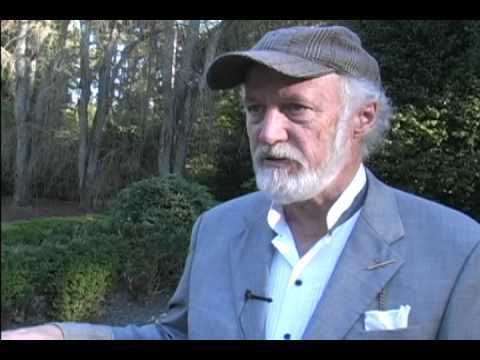
Through memorable language and bawdy humor, Gurganus returns to his mythological Falls, North Carolina, home of Widow. This first work in a decade offers three novellas mirroring today’s face-lifted South, a zone revolutionized around freer sexuality, looser family ties, and superior telecommunications, yet it celebrates those locals who have chosen to stay local. In doing so, Local Souls uncovers certain old habits—adultery, incest, obsession—still very much alive in our New South, a "Winesburg, Ohio" with high-speed Internet. Wells Tower says of Gurganus, "No living writer knows more about how humans matter to each other." Such ties of love produce hilarious, if wrenching, "Fear Not" gives us a banker's daughter seeking the child she was forced to surrender when barely fifteen, only to find an adult rescuer she might have invented. In "Saints Have Mothers," a beloved high school valedictorian disappears during a trip to Africa, granting her ambitious mother a postponed fame that turns against her. And in a dramatic "Decoy," the doctor-patient friendship between two married men breaks toward desire just as a biblical flood shatters their neighborhood and rearranges their fates.
Gurganus finds fresh pathos in ancient between marriage and Eros, parenthood and personal fulfillment. He writes about erotic hunger and social embarrassment with Twain's knife-edged glee. By loving Falls, Gurganus dramatizes the passing of Hawthorne’s small-town nation into those Twitter-nourished lives we now expect and relish.
Four decades ago, John Cheever pronounced Allan Gurganus "the most technically gifted and morally responsive writer of his generation." Local Souls confirms Cheever’s prescient faith. It deepens the luster of Gurganus’s reputation for compassion and laughter. His black comedy leaves us with lasting affection for his characters and the aching aftermath of human consequences. Here is a universal work about a village.
Since 1989, Allan Gurganus’s novels, stories and essays have become a singularly unified and living body of work. Known for dark humor, erotic candor, pictorial clarity and folkloric sweep, his prose is widely translated. Gurganus’s stories, collected as “Piccoli eroi”, were just published to strong Italian reviews. France’s La Monde has called him “a Mark Twain for our age, hilariously clear-eyed, blessed with perfect pitch.”
Fiction by Gurganus has inspired the greatest compliment of all: memorization and re-reading. The number of new critical works, the theatrical and film treatments of his fiction, testify to its durable urgency. Adaptations have won four Emmy. Robert Wilson of The American Scholar has called Gurganus “the rightful heir to Faulkner and Welty.” In a culture where `branding’ seems all-important, Gurganus has resisted any franchised repetition. Equally adept at stories and novels or novellas, his tone and sense of form can differ widely. On the page Gurganus continues to startle and grow.
Of his previous work “The Practical Heart”, critic Michiko Kakutani wrote in the New York Times, “Masterly and deeply affecting…a testament to Mr. Gurganus’s ability to inhabit his characters’ inner lives and map their emotional histories.” The Atlantic called the same work, “An entertaining, disturbing and inspiring book—a dazzling maturation.” Of “Local Souls”, Wells Tower wrote: “It leaves the reader surfeited with gifts. This is a book to be read for the minutely tuned music of Gurganus’s language, its lithe and wicked wit, its luminosity of vision—shining all the brighter for the heat of its compassion. No living writer knows more about how humans matter to each other. These are tales to make us whole.”
Gurganus’s first published story “Minor Heroism” appeared in theNew Yorker when he was twenty six. In 1974, this tale offered the first gay character that magazine had ever presented. In 1989, after seven years’ composition, Gurganus presented the novel Oldest Living Confederate Widow Tells All (Sue Kaufman Prize from the American Academy of Arts and Letters). This first book spent eight months on theNew York Times bestseller list; it became the subject of a New Yorkercartoon and remains a clue on “Jeopardy” (Names for $400). The novel has been translated into twelve languages and has sold over two million copies. The CBS adaptation of the work, starring Donald Sutherland and Diane Lane and won and a “Best Supporting Actress” Emmy for Cecily Tyson as the freed slave, Castalia.
Along with Oldest Living Confederate Widow Tells All, Gurganus’s works include White People, (Los Angeles Times Book Prize, Pen-Faulkner Finalist) as well as the novel Plays Well With Others. His last book was The Practical Heart: Four Novellas (Lambda Literary Award). Gurganus’s short fiction appears in the New Yorker, Harper’sand other magazines. A recent essay was seen in The New York Review of Books. His stories have been honored by the O’Henry Prize Stories, Best American Stories, and The Norton Anthology of Short Fiction. Gurganus was a recent John Simon Guggenheim Fellow. His novella Blessed Assurance: A Moral Tale, from White People, has become part of the Harvard Business School’s Ethics curriculum. The work is discussed at length in Questions of Character (Harvard Business School Press) by Joseph L. Badaracco.
Born in Rocky Mount, North Carolina in 1947 to a teacher and businessman, Gurganus first trained as a painter, studying at the University of Pennsylvania and the Pennsylvania Academy of Fine Arts. His paintings and drawings are represented in private and public collections. Gurganus has illustrated three limited editions of his fiction. During a three-year stint onboard the USS Yorktown during the Vietnam War, he turned to writing. Gurganus subsequently graduated from Sarah Lawrence College where he’d gone to work with Grace Paley. At the Iowa Writers’ Workshop, his mentors were Stanley Elkin and John Cheever. Mr. Gur
The United States has been blessed with many southern writers who capture many aspects of the American South. Among the most recent of these writers is the North Carolina native Allan Gurganus who achieved fame with his 1989 novel "Oldest Living Confederate Widow Tells All." After not publishing a book for over a decade, Gurganus has now published a collection of three novellas with the evocative title "Local Souls". As was "Confederate Widow", "Local Souls" is set in a fictitious town in eastern North Carolina called "Falls", population about 6,800. The residents of Falls are known as the "Fallen".
The three novellas in the book each take place in Falls, but they tell separate stories with largely different characters. The stories have common themes including, most importantly, the nature of place. The stories are about people who reside in Falls for most of their lives, although they often also spend time elsewhere. The town is itself the character as Gurganus describes fully its residential areas, rivers and lakes, schools, churches and businesses, and most of all people. The three novellas are each set in the late 20th Century. Each story concerns the effect of modernization and instant communication upon a small seemingly remote town. He is particularly concerned to describe changing gender expectations and roles and the omnipresent pressure for success in school and the workplace. The author is clear eyed with none of the sentimentalization of the TV program mentioned in the title of this review. Still, the book shows broad sympathies for his people and their fallibilities and idiosyncracies. The novellas deal with change and with hidden sexual secrets.
The recipient of a Gugenheim Fellowship and a member of the American Academy of Arts and Letter, Gurganus writes beautifully. The text is clear and precise while full of meaning and suggestion. Characters are well-developed. The reader has a sense of being in the places Gurganus describes and knowing them for a long time. The writing changes imperceptibly in mood from the humorous to the tragic. The overall tone is serious and dark with love for place and people. I will discuss each novella briefly in what follows.
The first and shortest novella is "Fear Not", named after the nickname of its primary character. This work is set as a story within a story as the author-narrator sees a man and an older woman very much in love at the local high school musical and wants to learn their story. At 14, Susan, or Fearnot, witnessed the death of her father in a freak boating accident, in a boat owned by her father's best friend. In a moment of weakness, Susan gets pregnant by the friend and the baby is immediately put up for adoption. Later, she marries an ambitious young physician and has two children. The couple live in Atlanta, and Gurganus offers much detail about the life of young professionals in a large southern city. Susan cannot resist thinking about the fate of her earlier baby. The novella builds and Susan's life changes in a startling way as she learns about her past. The narrator observes: "Same events that overwhelm Greek dramas live on side streets paying taxes in our smallest towns."
The second novella, "Saints have Mothers" concerns a difficult relationship between a mother and the narrator, Jean, and her daughter, Caitlin. The mother is overbearing, overprotective, and self-centered, reminding herself of every opportunity of her high IQ, which rises at each mention, of a poem she published when 19, and of how opportunity has unfairly passed her by. She also is proud of the high intellectual, artistic, and humanitarian gifts of young Caitlin, who has been accepted at Radcliffe. Caitlin has the opportunity to spend the summer before college in Africa. Late one night, Jean receives a mysterious phone call stating that Caitlin has drowned. (Each of the three novellas involve water accidents.) The story develops showing how the egocentric mother goes about preparing for her daughter's funeral with, again, twists in the denouement. The self-centered mother is the primary character of this tale with the town and many of its residents receiving strong depictions.
The strongest of the three novellas is the finale, "Decoy". It is a long work that develops slowly. The novella opens with an extended meditation about people who stay in place in a town such as Falls for their entire lives as opposed to those who come to live elsewhere. Of the three works, "Decoy" includes the fullest depiction of Falls, its places, and residents. Of the many characters, the two that stand out are the narrator, Bill, a successful owner of an insurance agency, and his physician, Dr. Roper. The story covers much of the lives of both men and their families. Bill moved to Falls at age 8 with his ambitious father, Red. Both Bill and Red have congenital heart diseases which strongly point to short lives. They come under the care of Roper. When Roper retires from medicine at 70, he becomes brilliantly successful at a second career, carving artistic decoys of ducks. When Roper is about 80 and Bill 60, a serious flood destroys the prosperous residential section of Falls along the river carrying off Roper's decoys. Gurganus tells a multi-layered, hidden story about friendship, town life, and frustrated sexuality. Bill cryptically observes of the story: "You might say: people who love something too much, live at greater risk. And yet, that's bound to be the one sane way forward. Surely our determination to never lose what we've made to love, that, in itself, means an early sort of decoy death." The long slow development of the story and its depiction of place and character, is more important than the ultimate resolution.
"Local Souls" is a worthy addition to the literature of the American South. The themes of the book have a feeling of universality tied to a specific place.
Ugh. Could not finish even though I was 2/3 done. The author seemed more interested in impressing us with his ability to turn a phrase than he was with creating real characters or a story we could get into. I was impressed by his wordplay, so much in fact I could never get beyond it and into the story. Very slow and repetitive too.
I was looking forward to this collection of novellas. I love the novella form and it's not easy to find writers who can work well in the form. I'd never read Gurganus before, so I didn't know his style, his voice. I'd been told he was a very poetic prose writer. What I found, wading through the three pieces, was a style and voice that was irritating and too often self-consciously "stylish." The author's use of dialog was what tripped me up the most. I can't say if it is Gurganus' style to write dialog in staccato patches, because I don't know his other work. What I found throughout the book were lines like "Went to store. Bought paper. Read it." I may be exaggerating here, but the author seemed to want to trim away any verbiage that might be considered "extra." It felt choppy, and every time I encountered it, I stumbled, and instead of noticing the story itself, I was forced to contemplate the style instead. The stories are not very compelling. The third novella felt endless, and I had to force myself to finish the book. Perhaps these would have been better short stories. As they stand, they feel stretched a bit too thin.
Local Souls published on September 23rd. I read a review copy so some of my comments may not reflect the finished work. My sincere thanks to Liveright, W.w. Norton Publishing for providing the e-galley and for Joe Foster of Edelweiss for his recommendation.
Rarely do I read reviews before formulating my own comments. In this case I wanted a bit of insight as I was having difficulty describing this read. I was totally enraptured by the whole but didn't know quite how to explain why or the book itself. I'm generally not a fan of short story or novella and wondered if Local Souls was for me. I always feel like I'm missing something, like everyone else gets it and I'm left scratching my head. I needn't have worried in this case. I got it and got it loud and clear but how do I gain your interest if I can't quite explain it.
We have three stories, linked together at least by their location, Falls, NC. Each is told from the viewpoint of one character who expertly fleshes out others in their family and/or the town. I feel like I am in the head of the narrator, and get a strong understanding of their thoughts and feelings. Some of what is told is very painful and made me wince for the character. One I just wanted to shake.
Fear Not the first, begins at a play which the male narrator is attending to see his godson perform. He, this narrator , has just sent his long worked on manuscript out in the mail and is a bit at odds as to what comes next. A couple sits next to him. They seem a bit different than most regulars at these school plays, not quite the right age, not quite as jaded as most who've been to numerous productions by their offspring over the years. They seem delighted to be here and delighted by each other, touching and whispering, very at ease in their knowledge of the other. The narrator and the couple talk a bit before the play begins, spend some time chatting during intermission and generally hit it off well. The narrator is intrigued. Who are they? and what of them? As he learns their story he fills us in, telling us first that the story he is about to relate is mostly true. Soon he tells us the story is 80% true. Either way, it's an excellent tale, with passages both visually stunning and beautifully rendered.
The second story, Saints Have Mothers was the one that blew me away. The narrator here is a mother of somebody. That is how she thinks of her daughter; a somebody. It is a story of a mother's worse nightmare and the one that made me wince. I'll say nothing more except that I loved it.
The last, Decoy, is told from the perspective of a man and his doctor and their long history together and in the town. Good, not as compelling as the first two but worthy just the same.
In the three stories we get a true sense of Falls, NC. It is a small town, 6000+ residents, sounding much like the community I live making me feel right at home.
Nothing extraordinary in these lives, but the ordinariness of theselocal souls is what makes them special.
My favorite quote (Fear Not): "many routes to joy. Most of them: detours"
Runner up (Saints Have Mothers): "Men are so simple, they think women are!"
and lastly (Decoy): "My body gave signs it itself wanted to retire. From any strenuous further use."
All taken out of context but I love them so.
One reviewer felt this outing did not live up to the author's usual standards. I couldn't say as I've never read him before but if this is a mediocre collection, then I truly need to read more. Gurganus is the author of the acclaimed Oldest Living Confederate Widow Tells All. Haven't read it. Better put it on my list.
This collection left me with many questions and wondering Why am I reading this? until I reached the third, and by far the longest, story, "Decoy". Here is where the author's agenda of "local souls" finally and truly hit home for me after the quirky and somewhat unsatisfying opening stories of "Fear Not" and "Saints Have Mothers". I should amend that to say that "Fear Not", while definitely quirky, was not as unsatisfying for me as the second story...but perhaps if I were the mother of a pretty perfect teenage daughter I'd be better able to relate.
As for the final story, it exists on many levels of family, friendship, community, pseudo-community (the artifice we build up around ourselves and call our life). It runs from childhood to old age and deals with all manner of life events in many ways as Bill Mabrey (Jr) contemplates the life he has been (lucky) to have due to the rather odd luck of his father.
Gurganus shows a very fertile imagination and writing style, much of which I appreciated but some of which was a little beyond my interest. I am interested in trying him again as I found his voice in "Decoy"to be so compelling.
Imagine a small Southern town where everyone knows each other and on the surface, it's a beatific, innocent place. A visitor might look around this town, named Falls, North Carolina, and see happily married couples, successful children, thriving businesses, and churches of every denomination. Okay, now scratch the surface. What do you see? Everything isn't as perfect as it seems. That is the subject of these three loosely connected novellas by Allan Gurganus.
Three novellas, one small town. The plot summaries sound good, but it's a long, sloooow read.
• "Fear Not": When Susan was 14 years old her father accidentally died in a horrific, very public way at the hands of his lifelong best friend, Dennis, who is also Susan's godfather. Dennis, the married father of three, is wracked with guilt—just consumed with it. Susan is grieving. Her mother has checked out mentally having witnessed her husband's death and takes to her bed. Dennis spends a lot of time alone with Susan, and before you know it, he gets Susan pregnant—and she's only 14. What happens to her in the ensuing years is the soul of this heart wrenching story.
• "Saints Have Mothers": Caitlin Mulray is a bit much. She is a high school junior who is perfect. And I mean perfect: Kind to everyone (and she's a teenage girl!), brilliant, musical, talented in every possible way, and gorgeous. She is also compassionate, working tirelessly with and for those who have less. The summer before her senior year, she goes to Africa to teach. While she is there, something horrific happens that sends her mother reeling, as well as her father and stepmother in California, her twin 11-year-old brothers, and basically the entire town of Falls, North Carolina. She is, after all, their golden girl. This melodramatic novella is written in the first person by Caitlin's less-than-perfect mother, Jean, who is having an identity crisis all her own. It's a difficult story to enjoy because Caitlin and Jean are tough characters to like.
• "Decoy": Bill Mabry has a bad heart—so bad that it was diagnosed as a ticking time bomb when he was just a child. But the small town of Falls, North Carolina has one of its own as the favorite physician, and Doc has sworn to care for Bill with great care and keep him alive. Told in the first person from Bill's point of view, this is a love letter to Doc and life in a small town. All is well, almost idyllic, until tragedy strikes Falls when the normally placid river overflows its banks after a hurricane, causing death and destruction.
This is a slow read. Yes, the stories frequently drag, getting bogged down in mindless details. But it's more than that. There is something about the writing that makes it difficult to read at times. Hence, three stars.
Anyway. The southern voice with which Gurganus charmed me in 'Oldest yadda yadda widow' turned overdone and cloying here. It's like Reynolds Price' (Price's?) work; after a while you want to say just QUIT IT WITH THE SOUTHERN AUTHOR SHIT.
I only made it through two of the three novellas before calling it quits. The first novella left me kind of cold but the second, 'Saints Have Mothers' was adorable. Hence the three stars. Sentences like this one: "Hard to explain how she often enters the room like delayed news of some Democratic victory". Priceless. And the story resonated with me a little not because I am mother to a saint, what with not having any kids at all, but I married one, and there are similarities. Crazy story, beautifully written.
So, glad I checked it out of the library, happy I didn't buy it. Not gonna be lining up for the next Gurganus, but not mad at him either.
Marvelous storytelling, compelling characters, beautiful language (its own, and it asks you to bring your whole self into the process of reading and understanding). Read this southern Book and be amazed at the possibility of prose to render for you whole, complete, contradictory and breathing people. The mother in Saints Have Mothers is one of the most fully portrayed women I have ever seen in fiction. "Decoy" is subtle, thorough, and full of every kind of longing. Completeness like this doesn't come along every day in fiction. A wonderful experience to engage in it. A full work of art from an artist at the crest of his powers. Not to be missed.
There's a certain timelessness to Gurganus's prose. This book was written less than 10 years ago, but the small town characters that inhabit it could be of any decade from the 1950s onward. He is a master of the profound narrative aside (a lot of knowing nods as you read his stories), and writes first-person female narrators as well as any contemporary male author I'm aware of. This is a trilogy of novellas about the residents of his mythical "Falls", a North Carolina town of 7000 people whose every story the author seems intent on eventually revealing in his prose. The first two novellas were considerably pacier and more impactful than the final one, which, to me, seemed about 50 pages longer than it needed to be to achieve the desired emotional effect. Still, a worthwhile read.
The Widow book is one of my favorites of all time so I was excited to read this. I liked the first and last story and hated the second one. I don't recall when I have despised a character as much as the daughter in that. Gurganus' writing style did a bit too much for me in this one. It was often distracting instead of humorous.
I liked this book a lot, but gave it only three stars. Here's why: In the first novella, I felt lost. I didn't understand the relationship of the couple at the high school play to the story that follows of FearNot and her eventual quest to find the baby she gave up for adoption. In the second novella, I found the resulting conflict between mother and daughter to be too over the top and the ending (which I won't give away) to be unbelievable. I did, however, find the mother character a hoot -- very funny. The third novella did entrance me. If that had been the only story, this would have rated a fourth star. The beautiful story of a man's life and his attachment to his doctor and later neighbor held my attention throughout. The writing is eloquent. As a 66 year old I can relate to the sadness of growing old and its attendant heartache, regrets and the body and mind's changes. A very beautiful story indeed. BTW: I heartily recommend Gurganus' earlier work (The Oldest Living Confederate Tells All), which is fabulous.
I got this as an ARC and it neatly contains three odd and peculiar home town tales by the author of" The Oldest Living Confederate Widow Tells All"... This time I think there's a bit too much... I found myself lagging through the 2nd and 3rd stories hoping they would end a little faster, but Allen Garganus is quite the tale weaver nonetheless. the first story was heart wrenching, and every abandoned Childs dream come true.... and a little disturbing....the second,(saints have mothers) reminded me of " the monkeys paw" done New England style, was,far too long and a bit too out there, voo doo that you do not too well....for me. The third("decoy") was creepy all the way around, and I wasn't sure to what or whom the title refered to, odd and unusual in a icky way... if it had been edited a bit tighter, I would have probably loved it! But I'm not sure. its sure to be a success, however...!
This review is difficult to write because the reasons to not like it are entirely accurate. By the end of the final novella, I realized the point of these stories was antithetical to most writing out there. The point of the style was the way these people live: slowly like the river named Lithium, which much thought to all possible interpretations of the point, and absorbing the completely unexpected into lives such as these, where the unexpected must be examined so as to explain at least why it should have been expected. These stories are not for everyone, and not to be read in a rush. If you wish to understand, then read slowly in small doses and meander on the stream of these tales. It was pleasurable in small (five pages or thereabouts) quantities. The characters were well drawn. The writing and style were strong enough that when I stopped for a day or two, I did not have to go back and re-read passages.
I finished Local Souls this morning and immediately thought about posting something about it because I admire it so. Imagine my surprise when I came to the site and realized it's been such a long time since I've added a book to my shelf or written about one. Yes, I have read books in the last couple of years but (apparently) not one that moved me so much as this one because of Allan Gurganus's craft, insight, and authenticity. There are three novellas in Local Souls, and each one engaged me more that its predecessor. Linked by the rich interiority of the central characters and by geography, the stories cohere nicely at the same time the narratives explore hidden spaces in these local souls. Tomorrow night, I'll have the pleasure of hearing Allan Gurganus speak about his work, which will be a secondary gift only to reading these indelible stories.
loving it! A.G. is a MASTER of: inner dialogue, in perfect fragments, clipped the way we think, and irony, and dry (very) comedy. The (mostly ordinary, with a touch of quirkiness) characters' self-observations, without embarrassment, refresh each page. The sketches of someone or something - a string of words placed just so - with a tendency toward understatement, yield a perfect description with a hint of mystery. My brain yells "I want more!" like a kid who doesn't want their favorite story to end. I'm trying to pace myself to savor these fine tales!
Three novellas, all beautifully written, but none that have really stayed with me. Still- a tour de force of writing with insight, wit, and a deep understanding of what makes human’s tick. The last story, Decoy, went on a bit too long for me. But at the same time, it’s the one that felt most real. The longing was palpable: for passion, for connection, for meaning and recognition. And the overriding metaphor of the decoy was subtle but powerful.
Local Souls contains three novellas all unified by the small North Carolina town in which they are set. This is one of those rare novels that so expertly captures true human thought and emotion and is able to successful move it to the printed page. Local Souls is a book that both men and women will enjoy and would be a great book club selection.
Allan Gurganus is an imaginative and Southern writer with an authentic voice. Don't let the sometimes quirky syntax keep you from reading "Local Souls!"
Author of the 1980s best-seller, 'Oldest Living Confederate Widow Tells All', Allan Gurganus sets his new novella collection 'Local Souls' in the fictional, small farming community of Falls, North Carolina, (pop. 6803). The first two novellas barely reference the town itself, but in 'Decoy, the third and final novella in the set, we come to understand Falls has history and character.
For starters, it's in the 'Smoking Section' of the state where there are tobacco crops and old tobacco money still powering the local economy. Churches there outnumber the car dealerships, 'sex means married sex -- and that's okay' and the good citizens like to 'worship their doctors and diagnose their clergymen'. Everyone is proud of their homes. Those of the wealthiest run parallel to a babbling river dividing prime real estate from country farmland. During the summer cocktail hour the husbands and wives of Riverside, dry martini in hand, flow from kitchens into their backyards to socialize and gossip with their neighbors. The 'bible believers' who choose to stay and bond with each other in this piece of 21st century Americana -- not running off to live someplace bigger (Atlanta) or smarter (Chapel Hill) or hipper (Virginia?) -- are Gurganus' 'local souls', the 'Fallen'.
Though perhaps over-long, 'Decoy' turns out to be the best of three stories by a wide margin. Its subjects -- the limits of friendships, the masked rigidity of social class and the unbridgeable social distinctions between the gifted and ordinary -- are low-key, understated and here made to reflect how passage of time is measured most deeply by changes in the lives of our friends and neighbors. 'Decoy' looks outward into the community, fulfilling the promise of locality inherent in the book title.
Be forewarned, though, the other two novellas look inward, could easily have been set in a Falls like Niagara or Wichita, and focus on characters bent towards deviant passions ('Fear Not') or frenetic narcissism ('Saints Have Mothers'). In a sense, they are returning-home tales, one about a missing 'prod-i-gal' daughter far from her family, the other a young-adult son finding his birth mother; each comes spiked with a wicked twist. Souls may be bared here, but if you spot them transmigrating to your neck of the woods, you might want to head off the other way.
Mae West and the Queen Anne Turret
One of Red's favorites, the Queen Anne Turret
'Decoy' is easy sitting-on-the-front-porch storytelling, alternately jokey and reflective, shuffling back and forth across decades, noting public events, citing neighbors and landmarks. The tale begins sequentially with the early history of 'Red' Mabry, son of a Carolina tenant farmer, scraping by in depression-era Carolina as a hard-working construction and landscape contractor fixing barns and clearing rural croplands. When his truck one day breaks down in town along Falls River Road, Mabry wanders off into a stand of residential houses surrounded by 'the greenest luxury', discovering a new exciting world of architectural design and commodious, gracious living. His son, Bill, the narrator of the story, envisions how the young Red, still a teenager but with a sharp eye for detail, might have assessed his find at that transformative moment:
(He) had never glimpsed lawns acres wide. Grass here meant to be a kind of moat. It would keep your white house hid-back awninged in blue eye shadow. A row of riverside houses looked shapely but hard to please. They were bay-windowed, big-fronted as Miss Mae West. Like Mae, they posed uphill, terraced onto hips...Young Red noted folks driveways flagstoned, then bar-bent U-shaped. One brand-new LaSalle convertible sat parked out front, keys left right in it. (He'd) fallen hard...Mabry hoped to someday spring himself (and any future kin) from sharecropper's usual, a rabbit-box of a country shack.
By the time he's married and has the toddler Bill in tow, Red's still living in that tin-roof shack but he has picked up a few townie customers, as well as a townie bug for the satisfactions of gracious Southern living. Bill tells us his Dad often talks a 'blue streak' about the engineering of the Queen Anne turret, the charm of Falls rich people, their houses and the 'tree-cover'. New words like 'glade', 'mitered', and 'half-timbered Tudor' enter his vocabulary. The townies, reasons Red, look healthier than the country brethern because they've doctors, not vets, attending them. When a rich customer dies and leaves Red a bequest, the bow-legged 'hic' is able to finance a nice starter family house on the river, as well as a country-club membership. As for Bill himself, he will attend college at University of North Carolina as a straight A student and return dutifully to the Falls' fold, a 'local soul', settling down, at the advice of his doctor, to the sedentary life of a married insurance salesman, with children, ready to share his father's dream-come-true in the quiet out-of-the-way Southern community.
The Desirable Attributes of Class
In one respect, Red's story takes a unique angle on a familiar theme from a different era. In the first decades of the 20th century, numerous novels about class decried the excesses of materialism (John Dos Passos, 'U.S.A.') and the naked ambition of the social climbers (F.S. Fitzgerald's, 'The Great Gatsy') or concentrated on poor folk in the context of a institutional struggle, the corporations and banks on one side, the people and the populist movement on the other (Steinbeck's 'Grapes of Wrath'). Today, we're mostly 99 percenters, big-tent Middle Class, made to feel proud of our cultural preferences, whether it be c&w or hip-hop; few writers now lean toward examining affluence, not as a destructive force, but as a pathway to cultural enrichment. No one wants to be a snob; the Gershwin tune is on the same footing as the Jay Z rap. Here, with 'Decoy', Garganus the contrarian posits upward mobility as a kind of romance, the hayseed boy wooing the young lady of refinement and grace. Mabry had taken the detailed measure of both the hard-scrabble life in the country and of the civilization in town and knew what was better. Garganus gets us rooting for him to reach up to the next rung on the ladder.
'Decoy' is as much Bill's story as Red's, though. For Bill, the challenge lies not with attaining the American dream, but with the formless uneasiness that comes from living it. Do his self-deprecating jokes and cautionary manners come from a failure to assimilate as a 'Local Soul' or are they due to an undefined lack of character and ambition? Gurganus tantalizes with suggestive hints that never quite crystallize as certainty (a good thing). Neither the hero that leaves town or the stranger that comes to it, Bill acts the role of the long-time civic booster while secretly seeking a more authentic public and private life for himself. If his father wanted only a change in class, Bill desires class with a nuanced, more personal meaning. But does he feel worthy of it?
The answer begins and ends with the enigmatic figure of Marion Roper, family doctor, another local soul but with an aristocratic bearing and a common touch. After returning to Falls from Yale Medical to practice medicine, the Doc takes on the Mabrys as special cases when he clinically diagnoses Red and Bill with familial hypercholesterolemia, a serious artery-clogging genetic affliction, claiming lives in early middle-age. The doctor rules out strenuous activity, insists on weekly checkups and swears to the Mabrys he'll stay current with the latest cardiac-care and pharmaceutical advances to help them (we should all be lucky enough to have such doctors). Red praises Doc to strangers and everyone in the community seems to have a good story about him. When the Bixby male twins extend an underwater pool prank to the very edges of death by drowning, the doctor arrives on the scene, lines up poolside their unresponsive bodies, and performs life-saving CPR, in tandem, on each of the boys. With the kids out of danger, the mother embarrasses herself by giving the Doc a long sensual kiss as thanks, Roper replies with his best bedside-manner: 'Marge, you're just in shock. Get those boys into a supervised bath'. What starts out for Bill as a doctor-patient relationship enlarges to a kind of social friendship, on the golf course, at the cocktail parties by the river, with a 'local hero'.
Next Generation Discomfort
Bill's narrative style, heedless of sequence, obscures the passage of the years, but as the story proceeds, discomforting details emerge. We hear from Bill that he's never felt natural in the clothing of the townie. The party invitations from the Ropers to the Mabrys fall off; the Doc becomes somewhat patronising and Bill searches his memory for offending social lapses. Even the town itself changes, new suburban malls leaching customers and cash from Main Street, the department store fashion mannequins suddenly looking un-Southern , the topless Dairy Queen just off the city limits. When Red finally succumbs to his illness with a heart attack while playing golf, Bill and Roper rush to the scene, but the Doc can't revive him. It's a moment full of misdirected anguish -- Roper profusely apologizing and blaming himself for Red's death, Bill horrified by the recognition he's more interested in comforting Doc than grieving for his dead father.
Afterwards Bill concludes:
I never could feel town-born. I was never a soul fully local...and not gifted with any one particular skill past trying out a million silent decencies. I found most of them had gone un-noted. Now 'stay' meant being grounded by my father's grave..I admit that my father found me noble, a naturlized Riversider...the sole surviving son and heir to the happy Earl of Shadowland
The Doctor and the Quack
Roper's class act in retirement
And then we come to the titled decoys, Roper retiring from the medical field, the doctor now as artiste, the very public figure turning to a private new-found passion for carving high-end wooden duck decoys. No longer of utility in the hunting blinds, the look-alikes are targeted for sale at big-ticket collector shows in New York City. Roper converts his barn to a studio, as much to get away from people as to work on the ducks. At a craft show, Bill, still in hero-worship mode, offers Roper a blank check for a fetching, signed model, thinking he might need to part with at least fifty grand:
Such a smile Doc gave me..."Gosh, I'm honored..I'm expected to park this particular baby with a top Manhattan collector. That way, they tell me, Woody here will be seen by certain museum folks...But I do appreciate your interest, Bill"...I stood there. The checkbook in my hand truly felt like my dick hanging out for all to see.
There will be one more humiliation for Bill, self-inflicted, and one more twist in the Roper story when a natural disaster hits Falls and Roper comes crashing down from the town pedestal. Gurganus gives us several tidbits in passing that suggest Bill's attachment to Roper may contain an element of latent sexuality. If it exists at all, it's a weak subordinate to the main theme. In the end, we find both the Doc and Mabry, now two compromised, noticeably senescent men, talking amiably, disconnected, in the shadow of death. The scene packs a wallop.
As for the other novellas, try them, if you dare. Although Gurganus' inventive language works better in 'Decoy', 'Saints Have Mothers' is a perfectly realized portrait of the 'fattening, artistically-flustrated bitch wife' and mother coming to terms with her brilliant, beautiful teenage daughter, at times equally 'flustrated', a haughty royal pain in the derriere. Much of the material here hinges on a plotting surprise that's out of character and anticipated by the reader well before it's sprung. I won't comment further on 'Fear Not', other than saying this technically sound Oedipal exercise can be likened to a story concocted by John Irving's evil twin brother on his worst day. You might like it....or you might not.
'Local Souls' consists of three separate stories concerning citizens of 'Falls, North Carolina', or in my mind, Fallen. Drowning incidents are set into motion, but not always directly from water even when water was peripherally instrumental in the character's unexpected detour down a previously invisible tributary. Respectable small town middle-class aspirations comfort everyone here in Falls, but when these characters slip beyond the white picket fences into dangerous rivers and lakes, they find either forbidden passions or discover what they've given up for safe comfortability. The narrators are practically Nameless - emphasizing their initial literary ordinary 'Everyman'. At least to me, it seemed Susan, Jean, and Bill were as diminished as people as their plain honorifics.
Fear Not
"Fearnot" Susan, who was not afraid about being herself when a small child, but after witnessing the horrible decapitation of her father in a boating incident she becomes fearful of abnormality and death. Her former unselfconscious personality is cemented into stillness when a scandal follows her father's death. The 14-year-old Susan becomes pregnant with 40-year-old Doc Dennis's child, who is also the man who was driving the boat which killed her father. The baby is quickly released for adoption while Fearnot returns to her ordinary life, having moved to another school. Her life settles into the usual conforming patterns: she marries a doctor; has two more children; she gets an MA in Russian literature (which is famous for its most volcanic family dramas). She becomes respectable, without passion, settling for a normal, dry-eyed and dull existence.
She feels her husband is "all-too-decent". However, when she decides she no longer needs or worries about supporting family values with him in Falls, she discovers she is far happier living beyond the boundaries of time and respectability, whatever the consequences.
Saints Have Mothers
Caitlin is a saint. She is a Somebody, even though she is a 17-year-old teenager. Genius smart, she believes in every left-winger issue with fervent energy, determined to make over the world environmentally and socially. Given her intellectual powers, her energy and her beauty, she is on her way to stardom and fame through acts of excessive zeal and sacrifice of comfort.
Caitlin is admired and considered blameless and shame-free in everything she does. Caitlin flies off into the sky for do-gooder adventuring, traveling in Africa to teach literacy, all the while 'blocking' her mother from a more fulfilling life.
Jean is obviously a good mother, adoring her daughter, but she is also jealous of her. . The two women fight and squabble, unable to act on their underlying affections for each other, Jean having been forced again into the back seat of Caitlin's life.
Decoy
To me, the word 'decoy' was a substitute for the word 'placebo'. Doc Roper was the town's placebo and all-seeing seer. Everyone felt as if he cared deeply for them on some level, and felt the reality of their possibilities in clarity when Doc shared his opinion with each patient. When Roper spoke, it was as if he was pronouncing facts with the wisdom and strengths of a god giving them his blessing or advice. When Roper said, "I got you", everyone felt he really did.
I think Doc was symbolically a Jesus character. People had 'nailed' him to a cross of sacrifice and love that he actually was a little reluctant to bear, but he allowed people to do it because he was a decent fellow and he loved his town of Falls folks.
The people of 'Falls' never question their pride of house, place, and kids. Unfortunately, these ordinary citizens were mostly all aging or old, hanging onto their idolatry of familiar things from the past, not recognizing any necessity to change or prepare for disaster. The apocalypse wasn't on their radar.
We each are all we have, despite the darkness and light within, and our limitations. Do we want to fully see and understand our motives, which can be a moving target as we experience life, whether we fail or succeed in our goals (if we have goals)? We often spin between opposite poles in our understanding and need, perhaps seeking at first comfort and safety, then perhaps unchartered passion, or the safety of surface mores, then perhaps turn to seek buried truths. Love isn't enough. Community stifles and restrains and traps as much as it elevates and protects. Given our dual natures, stifling isn't always bad or pursuing our desires always good.
I think this book is fantastic. Each story seems like a nostalgic memoir, until you suddenly glimpse the Gorey Id monsters hiding just out of sight from the clear, clean windows. The sentences seem jaggedly spiky to me, architecturally expressive of each character's hesitant discontent at roads not taken, while actually writing of soothing everyday continuity. It's a very adult book, as in expressing a grownup 'knowing' about people. I admired the characters very much once I realized how very human they were. It was easy for me to forgive their self-delusions and allow them their choices, given what they understood of their lives and how the world worked in the place they all wished to live.
"Local Souls" by Allen Gurganus is an intriguing collection of three novellas, each distinct in its narrative style and thematic exploration. Initially, I found myself at odds with the third novella, "Decoy." The fragmented, stream-of-consciousness storytelling, coupled with a mysterious opening, left me perplexed. The lack of clarity in direction and character focus, as well as doubts about the reliability of the narrator, made my first reading experience unsatisfactory. This led me to abandon it midway, seeking insights from other reviews to understand its appeal.
However, on revisiting "Decoy" with a newfound perspective of it being a reflection on aging and how we try to make sense of our lives and all its phases, my viewpoint shifted significantly. The novella's portrayal of a man contemplating his life as he nears death resonated more deeply upon this second reading. Perhaps my initial discomfort with the theme was influenced by personal circumstances, as I was coping with my elderly mother's hospitalization at the time.
The first novella, "Fear Not," stands out as the most accessible and straightforward in the collection. Its clear narrative and compelling storytelling provide a stark contrast to the complexity of "Decoy."
The second novella, "Saints Have Mothers," is a captivating exploration of a mother's emotional journey following the supposed death and unexpected return of her daughter. This story, with its blend of drama and suspense, was both entertaining and thought-provoking.
In conclusion, "Local Souls" is a testament to Gurganus's ability to weave intricate tales that challenge and engage the reader. While "Decoy" initially posed a challenge, a second reading with a clearer understanding of its thematic intent revealed its depth and merit. This collection, with its diverse storytelling approaches, offers a rich and varied reading experience.
This took a while for me to get through, but that’s not a bad thing. My favorite phrase in the book is, “So many roads to joy. Most of them: detours.”
The first Novela, Fear Not, tells a story of a young girl, who is separated from her son, the product of seduction by a local doctor when she was 15 years old. She has some sort of life that many with envy but when a young man shows up, she gets off her particular detour to add a motion to what seems to have been a flat life. the second story, Saints Have Mothers, absolutely blew me away. A catastrophe put my mother into a position where she hast to take a fuller life, much of it apparently acting or positioning, and then has that snapped away from her when the saint comes home and continues to be a Sanctimonious little teenager. They all are. The third story, Decoy, it is an examination of how one creates reality. Red does it by trying to fit into a place where he never really belong. Doc does it by being the local Wiseman and other local artist and then the local odd man out. The narrator wants to be a friend and wants to be a member of the community and wants to be good at his job but it never seems that he gets a real life, just an opportunity to mark his place at the end, he’s thinking about the farmhouse up on bricks, but he live that decoy of a life with antique furniture and the right address and a job that in the end worked out for three people: himself, the other insurance, sales person, and an old lady that people thought he had defraud it.
Some of the sentence structure I found annoying. I really like my sentences to have both a subject and a verb. In the last story that choppy structure seems to work very well but in the first two I just found it distracting.
This author takes his time break things to press. I’m going to see if there’s anything else is dropped in the last 10 years.
In Saints Have Mothers, the second entry in Allan Gurganus’s 2014 trio of novellas, Local Souls, here’s the narrator, a divorced mother of three:
“In a town like Falls, women are so country-chubby they grocery-shop at seven a.m. wearing best jewelry and full-warpaint. Everybody auditioning. But for what? And if you’re not in one of their three top schlock-reading book clubs, you feel banished. Even certain Atlantic-published writers are discounted. (The narrator had a poem published in The Atlantic at the age of 19.) One thing I lack is sponsorship. Candor can leave quite the spatial moat around a person. Intelligence should bridge such gaps. But, they smell your IQ on you. Pisses them off.”
That’s good enough, but a reader can sustain a grin for only so long. Dealing with Allan Gurganus at length is like getting stuck with listening to a non-stop talker whose only key is flippancy.
Gurganus’s problems with verisimilitude are particularly acute in Saints Have Mothers. There are writers, such as James Purdy at his best, who have the ability to transcend verisimilitude, but Gurganus is not one of them.
It also has to be said that this novella contains one of the most predictable supposed surprises ever. The narrator is presented as being bright, yet she somehow falls for something as readily questionable as a Ponzi scheme.
The first of the three novellas is somewhat better. I could barely get through the rambling shapelessness of the third novella.
I took on this book because William Giraldi spoke so highly of it in his American Audacity: In Defense of Daring in Literature. I have another book on my to-read list because of Giraldi, and after Local Souls I have hesitation about it.
When I picked this one up from my library, I didn't realize it was a set of novellas. I haven't read many novellas, but the ones I have have been tough. I think it's kind of an awkward form -- long enough to feel a little too long but not long enough to feel like a big hearty novel you can really get into. It's like the awkward teenager phase of fiction that nobody really wants to be all that much involved with.
The first two in this collection of three, and a good half of the third, fell pretty flat for me. The words and sentences were good, but the stories didn't do much for me. They didn't seem to have much emotional freight, and so they seemed oddly sized curiosities, little exercises in building a sense of place and maybe a little sense of character. But of course knowing that the story would be chopped off pretty soon after the development had built, I had trouble really connecting with either the fictional town of Falls or its inhabitants.
Well into the final novella, Decoy, after the catastrophe that basically bifurcates the thing, the piece took a turn for the better for me, and I thought the last 20 - 30 pages were good. But, 30 pages out of 300 make for pretty slim pickings, so it's not one I'd suggest.
Author Allan Gurganus explores the lives of three residents of Falls NC in three separate novellas. All three protagonists, unlike many of their neighbors, have chosen to remain in the relative obscurity of this small riverside community, and are thus considered “local souls.”
As the reader is drawn into the narratives of each main character, other local souls, past and present, are revealed. Similarities with our own lives emerge. It is this verisimilitude that propels us forward, awaiting a final resolution to each novella.
If I had to pick a favorite novella, I’d probably choose the one entitled “Saints Have Mothers.” In this one Gurganus creates a wonderful portrait of a long-suffering mother whose do-gooder daughter, naively goes about redistributing the wealth of her community. Without giving away a turning point in the plot, a change of direction can be detected or suspected earlier in the narration, and it leads to a fresh look at the characters in the story.
Truly, these stories are immersive; the reader becomes one with the narrator.
I'm kicking myself for not making a note of how this book came to be on my radar. It's been on my to-read list for a long time, and I LOVED it. The writing appealed to me; the syntax, the word choice, the use of dialogue. It was perfect. And the plot wasn't bad. The plot was almost as good as the writing.
Set in a small town in North Carolina where everyone knows everyone and knows everyone's story or at least the rumors of the stories, we are introduced to a few of the citizens with notable stories. There are three sections and each features a different "local soul", with the last section focusing on something like a culmination of their collective stories.
The first features a couple who attend the high school play and have such a radiant affection for each other that it captures the curiosity of a new comer, who inquires what their story is. You'll be surprised by the tragedy that prefaced this glowing pair.
The next section tells the story of the perfect high school girl who is liked by everybody but has a bit of a rocky relationship with her mom. This well-intentioned, generous, but naive teenager manages to die while on a mission trip to Africa. Her distraught mother sets out to create the most memorable funeral ever imagined, incorporating many of her daughter's friends. You'll have to read the book to find out how that plays out, but I'll give you a hint: it involves a professional orchestra, a commissioned composition, and a very large check.
Last, this small town has a doctor. He knows everybody and everybody knows him. He has the perfect combination of memory, discretion, and bedside manner. Told from the perspective of a patient, a son who has inherited his father's heart disease, we get to see the doctor carry out his medical profession among the local souls, all the way to his retirement, at which point he passes his practice on to the new town doctor. Although he now busies himself making duck decoys in a studio in his riverside home, it seems to at least one patient that he's still THE doctor. It's up to the reader to decide if someone in town is crazy.
My little review here doesn't do the writing sufficient justice and I can't say too much about the plot without risk of spoiling any surprises that may be present. So, you should just read the book, ok?
Strange. And not always to my liking. And wonderful! I'm so glad I didn't give up. Three novellas each linked through location and that is all....except the location is a small small NC town (in which I would perish, and that is a 'fact').... I suppose my 'discomfort' as I starting reading was of this sense of claustrophobia of place (mine, not necessarily that characters)... but then, isn't THAT what good writing is...a transport to place, a being able to get into the place of the character.
So, good reading. Uncomfortable reading at times. A wish, at MANY TIMES, to argue the point...w/ someone!
What a skill Gurganus has in SEEING and WRITING...
I'm not sure what I want to tell you about this book. I checked it out hoping for some Fannie Flagg good ol' storytelling, and I didn'te quite get it. This is three novellas (which I didn't realize going in) all set in the town of Falls, North Carolina. In some ways they are more character studies than plot driven stories--which is fine, of course, but Gurganis abuses the metaphor and sometimes distances himself from the characters he's writing about. So, all in all, I'd give it a B-.
This is also the author of "The Oldest Living Confederate Widow Tells All," which I've never read, but I just love the title of.
Three excellent novellas, each one better than the last. Kind of like having your car break down in a small southern town, being drawn into a river of humanity and deciding to what-the-hell move there. Each page is a hard truth, a quirky insight, a comforting salve. If the Kingdom of God is here now, heaven is in the armory of Falls NC after the flood, in the leveling of equality as everyone eats hot dogs meant for the elementary school cafeteria.
This isgoing to go on the half read pile. Nothing can surpass Oldest Living Confederate Widow Tells All, but that was a more innocent time. Gurganus's voice is planted firmly in the 90s. Local Souls has some interesting characters and quirky turns of phrase but it's largely irreverent to the world we inhabit in 2023.