

What do you think?

A Pity Youth Does Not Last: Reminiscences of the Last of the Great Blasket Island's Poets and Storytellers
'The tide spreads a mantle of silk
Around the Great Blasket Island'
So wrote Micheal O'Guiheen of his beloved island home. But by 1953 the authorities had evacuated the Great Blasket and its traditions were vanishing. Micheal O'Guiheen, 'the Poet' of the book, was the son of Peig Sayers, who wrote An Old Woman's Reflections. But while that was a celebration of the good times, and her son's schoolmate Maurice O'Sullivan's Twenty Years A-Growing was a book of laughing youth, this takes the story to sombre middle age. It tells of sunny times clouded over only by unconscious intimations of mortality, not only of youth but also of an irreplaceable culture: the consternation caused by a passing comet, the drudgery of a turf-gathering expedition turning into a carefree rabbit hunt. This first and only English edition of O'Guiheen's 'cri de coeur' is supplemented by translations, from the author's own poetry, previously only available in the original.
The Blasket Islands are three miles off Ireland's Dingle Peninsular. Until their evacuation just after the Second World War, the lives of the 150 or so Blasket Islanders had remained unchanged for centuries. A rich oral tradition of story-telling, poetry, and folktales kept alive the legends and history of the islands, and has made tier literature famous throughout the world. The seven Blasket Island books published by OUP contain memoirs and reminiscences from within this literary tradition, evoking a way of life which has now vanished.
Around the Great Blasket Island'
So wrote Micheal O'Guiheen of his beloved island home. But by 1953 the authorities had evacuated the Great Blasket and its traditions were vanishing. Micheal O'Guiheen, 'the Poet' of the book, was the son of Peig Sayers, who wrote An Old Woman's Reflections. But while that was a celebration of the good times, and her son's schoolmate Maurice O'Sullivan's Twenty Years A-Growing was a book of laughing youth, this takes the story to sombre middle age. It tells of sunny times clouded over only by unconscious intimations of mortality, not only of youth but also of an irreplaceable culture: the consternation caused by a passing comet, the drudgery of a turf-gathering expedition turning into a carefree rabbit hunt. This first and only English edition of O'Guiheen's 'cri de coeur' is supplemented by translations, from the author's own poetry, previously only available in the original.
The Blasket Islands are three miles off Ireland's Dingle Peninsular. Until their evacuation just after the Second World War, the lives of the 150 or so Blasket Islanders had remained unchanged for centuries. A rich oral tradition of story-telling, poetry, and folktales kept alive the legends and history of the islands, and has made tier literature famous throughout the world. The seven Blasket Island books published by OUP contain memoirs and reminiscences from within this literary tradition, evoking a way of life which has now vanished.
160 pages, Paperback
First published February 1, 1981
Ratings & Reviews
Friends & Following
Create a free account to discover what your friends think of this book!
Community Reviews
Displaying 1 - 6 of 6 reviews

Read
September 24, 2020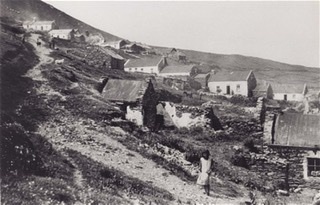
The long years have vanished and all I can see today are the old ruined houses where people used to live. I remember strong and brave men and women to be living in the houses that are, my sorrow, ruined now. Twelve houses have gone to rack, to my memory, that were at their height in my young days. Cliff grass and nettles are growing round them today.
Would it be any wonder for me to be sad, reader, that saw sport and company in those houses? All the same, I don't fault this lonesome spot, for I don't believe there is a corner in Ireland more beautiful. The sea and the rocks and the dark ravines and the mountains of Ireland are out there in front of me, with no mist over them. They are a fine sight on a day of sunshine. But they are finer again, when the winter's storm is there. The wind lifts the grey mist from their foreheads...
Micheál O'Guiheen, son of Péig Sayers.
September 29, 2026
Micheál writes in the genre of the Gaeltacht autobiography, as did his other Blasket Islanders, including his own mother—it was a genre, so much so that it invited parody. At first I was disoriented (as were other reviewers) by the bric-a-brac nature of the chapters—but these are reminiscences, as per the title. Once I got over my need for a narrative thread, I eased myself down into this long-gone world and was charmed by it and by Micheál's (and our translator's) wonderful, singsong, utterly unique language. I have snippets that enamored me—in particular I loved when a preposition snuck in where I would least expect it:
"It [sleep] stole on me in the end and I stayed there without a stir out of me until the sun rose next morning"
"I had a welcome in my heart for Caitin"
"Where they were let dance and caper"
"See His own beautiful sun-village again"
"Many the blessing went from her heart to the man who gave it"
"I ran to him and knocked a hundred shakes out of his hand "
"The little bird sings gaily on top of the rocks and the waves are for ever murmuring their lament in the dark caves"
"I ran to him and knocked a hundred shakes out of his hand"
Now having come back to the study of epic, this book feels epic both in structure and in style—simple, repetitive language, heroic epithets, circular structure, episodic content, a ancient (thus, timeless) feel. It's remarkable this was written not too long ago.
"But, my sharp, bitter grief, our friends and relations will never come back again. The empty seats will never be filled; the lovely, gay music won’t be played, the clattering of feet on the floor won’t be heard, nor the sweet, singing laughter. In their place, wild birds are nesting in the ruins that once were sweet to my heart."
"It [sleep] stole on me in the end and I stayed there without a stir out of me until the sun rose next morning"
"I had a welcome in my heart for Caitin"
"Where they were let dance and caper"
"See His own beautiful sun-village again"
"Many the blessing went from her heart to the man who gave it"
"I ran to him and knocked a hundred shakes out of his hand "
"The little bird sings gaily on top of the rocks and the waves are for ever murmuring their lament in the dark caves"
"I ran to him and knocked a hundred shakes out of his hand"
Now having come back to the study of epic, this book feels epic both in structure and in style—simple, repetitive language, heroic epithets, circular structure, episodic content, a ancient (thus, timeless) feel. It's remarkable this was written not too long ago.
"But, my sharp, bitter grief, our friends and relations will never come back again. The empty seats will never be filled; the lovely, gay music won’t be played, the clattering of feet on the floor won’t be heard, nor the sweet, singing laughter. In their place, wild birds are nesting in the ruins that once were sweet to my heart."

July 10, 2022
the clattering of feet on the floor won’t be heard, nor the sweet, singing laughter. in their place, wild birds are nesting in ruins that once were sweet to my heart.

October 6, 2011
The Blasket Islands are a group of small islands off the west coast of Ireland, only accessible by boat from the small village of Dingle. These islands are famous for having preserved the old way of traditional Irish life the longest, finally losing its battle to retain its island culture in 1953 when the government evacuated the islands, moving its aging citizens to the mainland. The controversial eviction was due to its increasing isolation (it is impossible to gain access to the island from mainland for most of the winter months). Rustic and simple life was too risky and when the younger generations numbers dwindled, opting for life in the big cities or abroad, the government had to shut down the islands.
Years before the actual deportment to the mainland occurred, the islanders gathered together to record their unique cultural history. Told in the Irish oral tradition in the Irish language and then translated into English, the islanders voted on its most prominent families, to pass on the oral history of the Blasket Islands.
Michael O'Guilheen shares his story about growing up on these mysterious, often dangerous islands ending in heartbreak as he spends his golden years exiled from his true home. The pain of age reflecting upon youth, culture fading away, and the act of upheaval from one's home is deep within this text's veins.
Years before the actual deportment to the mainland occurred, the islanders gathered together to record their unique cultural history. Told in the Irish oral tradition in the Irish language and then translated into English, the islanders voted on its most prominent families, to pass on the oral history of the Blasket Islands.
Michael O'Guilheen shares his story about growing up on these mysterious, often dangerous islands ending in heartbreak as he spends his golden years exiled from his true home. The pain of age reflecting upon youth, culture fading away, and the act of upheaval from one's home is deep within this text's veins.

February 18, 2021
If there's anything or anyone that you miss, this book will move you. There was something cathartic for me about taking in the Poet's uncensored grief - for his childhood, the people he knew who died or emigrated, and the way of life on the Blasket Islands that was being lost for good at the time when he wrote this.
No one lives on the Island anymore. My parents spent a night there in 2003 and the boat man thought they were crazy. My dad died in 2011, and I've been told the same story over and over about the wind blowing my mum's sleeping mat away (this should give you an idea of what the weather was and is like there) and him climbing down the cliff to get it, coming back up with it in his teeth.
I picked this book up because I've been feeling nostalgic, and it didn't disappoint. I wasn't sure whether to give it four or five stars. The only thing I can criticise it for is not reading like a novel (i.e. not flowing structurally) but it isn't a novel. It's a handful of recollections, and if you read it expecting that, the very short chapters and loose chronology will make sense.
No one lives on the Island anymore. My parents spent a night there in 2003 and the boat man thought they were crazy. My dad died in 2011, and I've been told the same story over and over about the wind blowing my mum's sleeping mat away (this should give you an idea of what the weather was and is like there) and him climbing down the cliff to get it, coming back up with it in his teeth.
I picked this book up because I've been feeling nostalgic, and it didn't disappoint. I wasn't sure whether to give it four or five stars. The only thing I can criticise it for is not reading like a novel (i.e. not flowing structurally) but it isn't a novel. It's a handful of recollections, and if you read it expecting that, the very short chapters and loose chronology will make sense.
January 12, 2013
Fondness and regret captured beautifully, at the same time.
Displaying 1 - 6 of 6 reviews