Propaganda narrative of President Marcos issued by the Office of the President during the Martial Law regime.
With a cool objectivity that heightens rather than diminishes the excruciating drama behind his historic decision, Ferdinand E. Marcos, President of the Philippines, narrates the events which made the proclamation of martial law—and the building of a new society—a compelling necessity of national survival. This book offers valuable insights into the rationale of martial law and the governing principles of the New Society.
President Marcos was making notes for a sequel to his first book. Today's Revolution: Democracy, when he had to take the fateful decision which launched what he calls the "September 21 Movement. "Hence, these notes, indicating not an incompleteness of vision but the pressure on the nation and the Presidency: the race for time.
But even as "notes," there is a wholeness in them, a logical consistency proceeding from the chapter on the rebellion of the poor to the final chapter on the theory and practice in the New Society, that justifies their publication for the enlightenment of the concerned citizenry and interested observers of Philippine affairs.
The author further announces two other books, Constitution and Martial Law and A Philippine President's Diary.
Ferdinand Emmanuel Edralin Marcos, Sr. (September 11, 1917 – September 28, 1989) was a Filipino politician and kleptocrat who was President of the Philippines from 1965 to 1986. He ruled as dictator under martial law from 1972 until 1981. While his regime started an unprecedented number of infrastructure projects and monuments (known colloquially as an "edifice complex'" and at great taxpayer cost), it also became infamous for its corruption, extravagance and brutality.
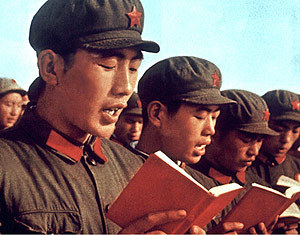
If Mao Zedong had a Little Red Book in China's Cultural Revolution, Ferdinand Marcos, in comprasion, tried to create a justifying 'bible' for his tyranny and corruption with Notes on the New Society of the Philippines.
Marcos has proven too well that his political charisma can be fully translated in what he writes. Notes on the New Society of the Philippines is no exception to that (Caution: He might win you over).
Just as his tyrannical and definitively despotic regime pretentiously stood for the mere vestiges of democracy itself, so too does this book contain what the ideals Marcos has sought to ennoble which, as history judged it to be, succumbed to nothing less than corruption and iniquity.
Aside from the standard fill of making things superficially palatable, of unfounded and unsubstantiated conclusions and the not too subtly contrived authorial biases, Notes on the New Society of the Philippines can still infallibly function as the proverbial window to the soul of one of the most remembered Presidents in the Philippines, not in a noble nor revered manner (save what could be called fundamentally fanatics in existence), but still remembered.
Let us take in hindsight what he wrote in page 50 concerning the Constitution and Martial Law.
"The Constitution therefore provides for its (Martial Law) survival in a clear, orderly and democratic manner for the instrument used is not only legal but moral in the highest sense. It places the proclamation of martial law under the Rule of Law.
This resolves the eternal moral question of Ends and Means, The Constitution, being democratic in spirit and content, does not recognize means which are not integral with, or not logically follow from, its ends, even though that end may be self-preservation itself."
And on page 127 on Martial law and its so called uniqueness.
"Our martial law is unique in that it is based on the supremacy of the civilian authority over the military and on complete submission to the decision of the Supreme Court, and most importantly of all, the people. It is unique in that it does not seek to maintain the status quo but has instead brought about radical reforms.
We all know how that turned out to be, with old Justice Teehankee(later C.J. under Cory Aquino) barely holding out, but certainly with great conviction and nothing less of the ideal.
Much can be said and deduced with these meager passages. Deductions are clear as can ever be as echoed in the annals of history.
In hindsight, this perspective relegates the human capacity in determining morality. This stand does not come in surprise. Marcos has alienated the people and these words point to his mental inclination to pursue such ends, and history sufficiently offers us more than adequate manifestations of his bearings.
And just as most writings concerning sociological and cultural matters, Notes on the New Society lies in the plain of the ideal. And if not for critically examining the facts, all would have but remained an enigma, hauntingly questioning us, what went wrong? What revelation it would have been if the ideal remained, forever to be, an ideal, but depressingly, it became a corrupted, depraved and brutally oppressive reality beyond any recognition.
This review, along with my other reviews, has been cross-posted at imbookedindefinitely
There is so many Questions surrounding this book. If we did our job to do change then the new society would work and we would be a super power in asia. It is not by the president alone but change comes within us
5 star rating is on how it was written. I'm not an apologist. I am curious about his thoughts on why he declared martial law. His idea of New Society felt out of touch. Was he not aware that it is his family & cronies excesses and plunder on why there was the rebellion of the poor? He likened the fruits of declaring martial law with Jacobin revolution... I absolutely do not agree. Then he regarded the youth who were traumatized with ML like fusspots.. I cannot.. But just dwelling on the "New Society ", that is what we dream. Just sad that even after 50 years, our country is still trapped in that old society. We almost had it, but his son won.
Read this book so you'll have a more nuanced and balanced view about the declaration of martial law. I believe Ferdinand E. Marcos was instrumental in stopping communism in the Philippines.
This is a memoir by a former Filipino president about his time in office. I think it answers 2 main questions.
1) Should we establish martial law?
According to him, it was to preserve the status quo as there were many threats that would have dethroned the government. Threats such as different political parties on the left (communist party) and right that were plotting against the government. Also there was a Muslim majority separatist region in the south in Mindandao that were plotting to declare independence.
2) How to fix the Phillipines after declaring martial law?
a) peace and order b) land reform c) educational reform d) economic reform e) social services f) political reform and gov reorganisation
Overall, good short book if you want to understand how Marcos decided on both the above questions. I had to buy this book for around 60USD because I could not find a digital version, but worth it for me.
This entire review has been hidden because of spoilers.
Gives the insights on why Marcos declared martial law and how he thought to use martial law to reform the Philippines. It sounds patriotic but this was written in the early days of Martial law. Some issues of what he mentioned are still problems as of today. I learned a lot of new jargons. It is better to read related information from other sources to validate and balance the information written here.