Henri René Albert Guy de Maupassant was a popular 19th-century French writer. He is one of the fathers of the modern short story. A protege of Flaubert, Maupassant's short stories are characterized by their economy of style and their efficient effortless dénouement. He also wrote six short novels. A number of his stories often denote the futility of war and the innocent civilians who get crushed in it - many are set during the Franco-Prussian War of the 1870s.
“Never be bullied into silence. Never allow yourself to be made a victim. Accept no one’s definition of your life; define yourself.” ― Robert Frost
I love 19th century French author Guy de Maupassant’s short stories, particularly this one. What do a German, a Frenchman, and two Englishmen on a train have in common? You’ll have to read it to find out. Short but very enjoyable!
Guy de Maupassant, the name itself sounds lyrical to me, has been on my radar for as long as I know him. During these years, I have been aware of the fact that he was one of the greatest short story authors who brought a modern sensibility to short stories so in the realm of literature, he a prominent figure too. However, I have not read it till now as I kept postponing it for one or other reasons though I read reasonably well enough about him, all these years. But today the great mingling of chance and opportunity happened and it made itself propped out of obscurity as I came upon its review by one of Goodreads’ friends- Glenn Russell, it’s my very first brush with Maupassant’s prose.
The title A Duel reminds me of what it stands for in general wherein a contest is arranged with deadly weapons between two people in order to settle a point of honor. It brings up the western bounty killings from the cervices of memory, wherein the human life goes for a toss on the indication of the tiny force of fingers- a complex ecosystem of the human body comes to a sudden halt on encounter with something inhumane. However, its relative meaning in the context of the story might be somewhat magnanimous as it involves two people representing two different nationalities which are linked by fierce animosity.
The story starts with scenes like that of a war movie with entire horizon strewn with agonies and cries of war, the ravaged fields and burned hamlets of French village are the painful attestation of the vagaries and excruciating implications of the war which resulted in the humiliation and seize of French territory by Prussian soldiers as they are scattered like locusts among the fields. Amidst this bloody humbling Frenchman, M. Dubuis, who served as one of the National Guard in Paris, is going to meet his wife and children, whom he prudently sent Switzerland before the invasion.
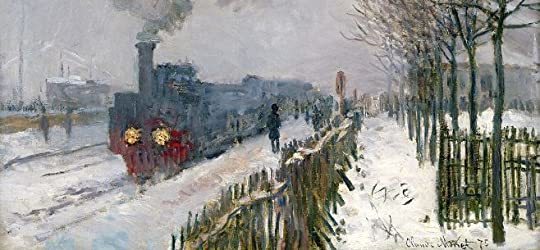
The first trains from Paris, distracted, starving, despairing Paris, were making their way to the new frontiers, slowly passing through the country districts and the villages. The passengers gazed through the windows at the ravaged fields and burned hamlets. Prussian soldiers, in their black helmets with brass spikes, were smoking their pipes astride their chairs in front of the houses which were still left standing.
Suddenly, at a village station, a Prussian soldier jumps up with a great clatter of his sabre on the double footboard of the railway carriage. His demeanor is grand as he is tall, wearing a tightfitting uniform, and has whiskers up to his eyes. The features of his face make him all the more fearsome as if he is a manifestation of the pride of his entire country as it might be swollen with on seizing the enemy’s territory. As we know, it is common with men, when in an advantageous position, or at least they think so, they boast about themselves and their ego invariably gets better of them and unfailingly mocks others as if their sensitivity shuts its eyes off then. The soldier starts the course he is destined for, with M. Dubuis, as he is obnoxiously aggressive being the victor, and orders the Frenchman to buy tobacco for him, but he refuses.
The refusal develops into a fight in which the infuriated Dubuis proves the victor as he turns around the fortune and beats the Prussian soldier with his weight. It hurts the ego of the soldier as he was representing the entire country here and he sets up a duel with the Frenchman. Apparently, the basic theme of the story is pride and honor, the patriotic feeling one might feel for his country and thereby if required, fights with all his being to salvage that feeling and image associated with it.
However, beneath the surface of this simple story, it shows some other basic features of humanity. Patriotism is one of the commonly associated with the valor of humanity. Besides, the story also talks about the impact of fear on humanity, what could happen if a man is being pushed to his core, so much so that ‘fear’ cannot anymore fear him, he may rise from the dungeons of hopelessness to suddenly spring up to the stream of invincibility with a strange drench of courage.
The tale is written in third-person narrative with a definite control over the prose which turns this simple predictable story into a saga of the heart-touching tale. The way Maupassant unveils the details of the story and the characters are launched on its surface with gradually revealing traits of their personality and then suddenly bring them to the scene with aplomb. The story talks about the futility of the war as most of the stories by the author do, infused with the uncurrent of heroism and patriotism however, the treatment author provides to his characters is resembling everyday common characters rising to uncommon heights, fueled by the sense of duty, honor, and justice. To me, the story also symbolizes the position of France, Britain, and Germany during the world war by presenting their respective citizens as the characters of the story.
It was my first read of the author and I am definitely looking forward to reading more of him, certainly his most famous stories such as The Necklace.
Nineteenth century French author Guy de Maupassant was a pioneer and master of the short story. My guess is anybody reading this review is familiar with the author’s classic tale The Diamond Necklace from high school.
Maupassant once said a good writer should aim to show true human nature in his work, the unexceptional and the everyday of people’s lives and their characters, “their feelings and passions; how people love or hate each other, how they fight each other and how they make up.”
Maupassant followed his own advice as this description fits his stories like a fine leather French glove. Even the famous German philosopher Friedrich Nietzsche proclaimed Maupassant to be a brilliant and delicate psychologist.
The Duel is a five-page master stroke of fiction. The events of the story are simple and clear enough: At the end of the Franco-Prussian war, a fat middle-aged Frenchman travels from Paris by train to join his wife and daughter in Switzerland. He shares a compartment with two fat Englishmen. At a little town, a Prussian officer enters the compartment, joins the Englishmen’s conversation and starts bragging about his killing Frenchmen and goes on to say that if he was in charge he would have burned Paris to the ground and killed every man, woman and child in France.
The sequence of events within the story are one thing but how the details of the characters and events are presented are quite another. This is where Maupassant is a master. For example, when the Prussian officer climbs the steps to enter the compartment, he does so with "much clanking of his sword." We are not surprised when he quickly starts boasting and bragging about killing Frenchmen.
I wouldn’t want to say anything more specific and possibly spoil anybody’s experience of reading, so I will turn to a general observations about one of the author’s themes: national pride. Here is what nineteenth century German philosopher Arthur Schopenhauer has to say on the subject: “The cheapest sort of pride is national pride; for if a man is proud of his own nation, it argues that he has no qualities of his own of which he can be proud; otherwise he would not have recourse to those which he shares with so many millions of his fellowmen. The man who is endowed with important personal qualities will be only too ready to see clearly in what respects his own nation falls short, since their failings will be constantly before his eyes. But every miserable fool who has nothing at all of which he can be proud adopts, as a last resource, pride in the nation to which he belongs; he is ready and glad to defend all its faults and follies tooth and nail, thus reimbursing himself for his own inferiority.”
Schopenhauer’s words have a ring of truth but Maupassant knew there are those occasions in life when we are pushed in a corner and are forced to act and react. Indeed, living in a world with people of all nationalities and cultural backgrounds, encountering conflict, confrontation and interpersonal challenges is inevitable. One can imagine how the French cheered for the story’s main character at the time when the story was published and probably still cheer today.
And what did Maupassant think, in turn, of Schopenhauer’s pessimistic philosophy urging us to stand apart and above the turmoil of everyday passions, worldly aspirations, romantic love, and yearnings of the heart? The French author penned a penetrating tale entitled At the Death Bed of Schopenhauer relaying what happened to a couple of students who sat at Schopenhauer’s death bed, a tale of black humor with a trace of mockery of those who would disdain life and the common people he wrote about with such tenderness and compassion in his short stories.
Guy de Maupassant
------------------------ On the topic of duels, here's a micro-fiction I wrote 25 years ago -
THE DUEL I've been challenged to a duel. What lead up to this duel, who knows. All I know is the musket case is open and, for some reason, we're all attired - top hats, capes, the whole works - like gentlemen out of Balzac or Dostoevsky.
What's this all about? I'm commanded to choose my weapon. I stand back to back with my capped gentlemanly opponent. We're told to count ten paces, turn, and fire. My opponents looks like such an interesting fellow, I'd really prefer to have a nice chat with him rather than shoot him.
I count my ten paces, turn, and fire my musket. I hear a whizzing over my head. My opponent's knees buckle, he he falls flat on his face.
"Good show, sir!" my double shouts.
Good show, indeed. Now is my big chance to ask what this duel was all about.
Monsieur Dubuis, a Parisian merchant, leaves the city by train right after the end of the 1870 war to join his family who had been sent to Switzerland for their safety at the beginning of the war. A big and extremely arrogant officer of the occupying Prussian forces comes into his carriage after a while and makes incessant triumphant and aggressive remarks to one and all, finally ordering Monsieur Dubuis to do errands for him. There is a fight and there is a duel.
One of Guy de Maupassant’s great short stories. The story takes place in France after the Franco-Prussian war in the early 1870s, and while it is fictional, Maupassant made it incredibly realistic. Witnessing the destruction of Paris and other cities as he travels by train to his family, the main character encounters a couple Englishmen and eventually a Prussian officer. Through a series of events including bragging and threatening France by the Prussian officer, the situation escalates. The main character, forced into a tough situation, ends up showing his patriotism.
I certainly recommend this story to any history lovers, even if it is just a brief 5-page snippet. The story is great for anyone though as it makes a valid point. By describing the destruction and desperation of Paris and other cities, especially as the Prussian officer threatens to do worse, Maupassant shows how war can hurt innocent people and change their lives. Neither Maupassant nor the main character seemed to be affected much, but the main character witnesses “distracted, starving, despairing Paris … ravaged fields and burned hamlets … [and] a station that had been burned down.” Regardless of the part everyone in France played in the war, whether they were fighting or merely supporting their families, everyone was affected.
There is still some lightheartedness to the story as the Englishmen try to remain neutral but clearly show sympathy or support to the Frenchman. Likewise, each character’s personality becomes clear as the story progresses, making it all the more realistic. All in all, it is a story worth reading.
Guy de Maupassant's "A Duel" is another Prussian related war story, taking place during their occupation of France, the occupiers many being tyrannical, this story has an especially terrible bully taking on a peace loving merchant, who has his limits too.
"The war was over. The Germans occupied France. The whole country was pulsating like a conquered wrestler beneath the knee of his victorious opponent."
"Prussian soldiers, in their black helmets with brass spikes, were smoking their pipes astride their chairs in front of the houses which were still left standing. Others were working or talking just as if they were members of the families. As you passed through the different towns you saw entire regiments drilling in the squares, and, in spite of the rumble of the carriage-wheels, you could every moment hear the hoarse words of command."
Germany occupies France, Dubuis is returning to his family after serving his time in Paris. He tries to mind his own business but a loud boisterous German makes a demand on the Frenchman who refuses and a fight ensues. The slightly out of shape businessman surprises the fit officer in beating him up. A duel is suggested by the German and Dubuis who never shot a gun before, Dubuis kills the officer. The Englishmen who were his seconds, tell him to hurry they must make the train. When the Englishmen first see the German, they are happily curious but soon see his mean streak which makes them fear such an enemy, seeing the danger in him.
"M. Dubuis, who during the entire siege had served as one of the National Guard in Paris, was going to join his wife and daughter, whom he had prudently sent away to Switzerland before the invasion. Famine and hardship had not diminished his big paunch so characteristic of the rich, peace-loving merchant. He had gone through the terrible events of the past year with sorrowful resignation and bitter complaints at the savagery of men."
"The Englishmen at once began staring, at him with smiles of newly awakened interest, while M. Dubuis made a show of reading a newspaper. He sat concealed in his corner like a thief in presence of a gendarme."
"The officer said, with a wave of his hand: “If I had been in command, I’d have taken Paris, burned everything, killed everybody. No more France!” The Englishman, through politeness, replied simply: “Ah! yes.” He went on: “In twenty years all Europe, all of it, will belong to us. Prussia is more than a match for all of them.”
“You haven’t any tobacco — have you?” M. Dubuis replied: “No, monsieur.” The German resumed: “You might go and buy some for me when the train stops.” And he began laughing afresh as he added: “I’ll give you the price of a drink.” The train whistled, and slackened its pace. They passed a station that had been burned down; and then they stopped altogether. The German opened the carriage door, and, catching M. Dubuis by the arm, said: “Go and do what I told you — quick, quick!”
“I’ll cut off your mustache to fill my pipe with.” And he put out his hand toward the Frenchman’s face. The Englishmen stared at them, retaining their previous impassive manner. The German had already pulled out a few hairs, and was still tugging at the mustache, when M. Dubuis, with a back stroke of his hand, flung aside the officer’s arm, and, seizing him by the collar, threw him down on the seat."
"Suddenly M. Dubuis, exhausted by his violent efforts, rose and resumed his seat without uttering a word. The Prussian did not attack him, for the savage assault had terrified and astonished the officer as well as causing him suffering. When he was able to breathe freely, he said: “Unless you give me satisfaction with pistols I will kill you.” M. Dubuis replied: “Whenever you like. I’m quite ready.” The German said: “Here is the town of Strasbourg. I’ll get two officers to be my seconds, and there will be time before the train leaves the station.” M. Dubuis, who was puffing as hard as the engine, said to the Englishmen: “Will you be my seconds?” They both answered together: “Oh, yes!”
"M. Dubuis had never fired a pistol in his life."
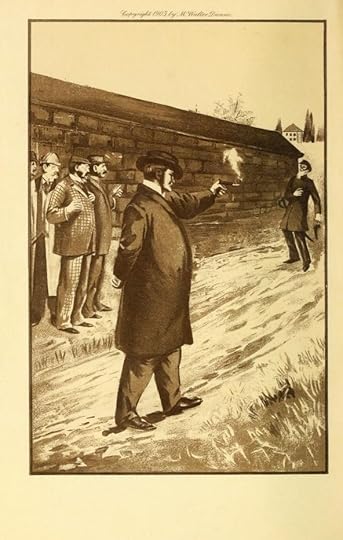
"They made him stand twenty paces away from his enemy. He was asked: “Are you ready?” While he was answering, “Yes, monsieur,” he noticed that one of the Englishmen had opened his umbrella in order to keep off the rays of the sun. A voice gave the signal: “Fire!” M. Dubuis fired at random without delay, and he was amazed to see the Prussian opposite him stagger, lift up his arms and fall forward, dead. He had killed the officer."
"The train was on the point of starting. They sprang into their carriage. Then the Englishmen, taking off their travelling caps, waved them three times over their heads, exclaiming: “Hip! hip! hip! hurrah!” And gravely, one after the other, they extended their right hands to M. Dubuis and then went back and sat down in their own corner."
Brief little interlude in the wake of war. The Prussian is boastful after his nation’s victory and the Frenchmen is crestfallen. They clash but who will live to have satisfaction?
Very enjoyable and comical story. A duel of literature with two Englishman and a Frenchman in the middle a war time situation while on a train. Very brief yet enjoyable short story that has interesting points but with a comical value.
It's hard at times, to find such well written tales that at the end there's a big smile on your face. This is one such story! As great as an amazing novella. How I love 19th century story telling. And French too. Marvellous job Guy de Maupassant. 5 stars. Wish I could give it 500+ :)
Best story in my opinion as in this author's love for nation is clearly visible .As there was a war and persian and Germans destroyed France but author was still happy to be french and just ignore the talks of Persian officer
Lorsque la guerre franco-prussienne éclate en 1870, Maupassant est mobilisé. Son père use alors de ses relations pour lui trouver un poste dans l'intendance à Rouen. Démobilisé en novembre 1871, il retire de cette guerre, qui servira plus tard de décor au récit de "Boule de Suif", un profond sentiment anti-militariste.Le royaume de Prusse (en allemand : Königreich Preußen) est un État européen formé en 1701 et intégré en 1871 à l'Empire allemand, dont il est la composante principale ; il disparaît en 1918 lorsque l'Allemagne devient une république.