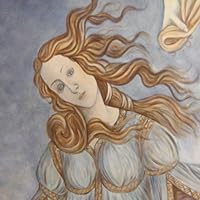
The Metamorphoses is a Latin narrative poem by the Roman poet Ovid, considered his magnum opus. Comprising fifteen books and over 250 myths, the poem chronicles the history of the world from its creation to the deification of Julius Caesar within a loose mythico-historical framework.
Book I – The Creation, the Ages of Mankind, the flood, Deucalion and Pyrrha, Apollo and Daphne, Io, Phaëton. Book II – Phaëton (cont.), Callisto, the raven and the crow, Ocyrhoe, Mercury and Battus, the envy of Aglauros, Jupiter and Europa. Book III – Cadmus, Diana and Actaeon, Semele and the birth of Bacchus, Tiresias, Narcissus and Echo, Pentheus and Bacchus. Book IV – The daughters of Minyas, Pyramus and Thisbe, the Sun in love, Salmacis and Hermaphroditus, the daughters of Minyas transformed, Athamas and Ino, the transformation of Cadmus, Perseus and Andromeda. Book V – Perseus' fight in the palace of Cepheus, Minerva meets the Muses on Helicon, the rape of Proserpina, Arethusa, Triptolemus. Book VI – Arachne; Niobe; the Lycian peasants; Marsyas; Pelops; Tereus, Procne, and Philomela; Boreas and Orithyia. Book VII – Medea and Jason, Medea and Aeson, Medea and Pelias, Theseus, Minos, Aeacus, the plague at Aegina, the Myrmidons, Cephalus and Procris. Book VIII – Scylla and Minos, the Minotaur, Daedalus and Icarus, Perdix, Meleager and the Calydonian Boar, Althaea and Meleager, Achelous and the Nymphs, Philemon and Baucis, Erysichthon and his daughter. (source: wiki)
Publius Ovidius Naso (20 March 43 BC – AD 17/18), known in English as Ovid was a Roman poet who lived during the reign of Augustus. He was a younger contemporary of Virgil and Horatius, with whom he is often ranked as one of the three canonical poets of Latin literature. The Imperial scholar Quintilian considered him the last of the Latin love elegists. Although Ovid enjoyed enormous popularity during his lifetime, the emperor Augustus exiled him to Tomis, the capital of the newly-organised province of Moesia, on the Black Sea, where he remained for the last nine or ten years of his life. Ovid himself attributed his banishment to a "poem and a mistake", but his reluctance to disclose specifics has resulted in much speculation among scholars. Ovid is most famous for the Metamorphoses, a continuous mythological narrative in fifteen books written in dactylic hexameters. He is also known for works in elegiac couplets such as Ars Amatoria ("The Art of Love") and Fasti. His poetry was much imitated during Late Antiquity and the Middle Ages, and greatly influenced Western art and literature. The Metamorphoses remains one of the most important sources of classical mythology today.
Ovid was ignored by classical scholars for a long time as being frivolous and just not serious enough. He has now been rehabilitated and Metamorphoses is recognised as being one of the most complex, sophisticated and problematic poems of the age of Augustus - as well as one of the wittiest and most accessible.
Too often regarded as a compendium of Greek and Roman myths, Metamorphoses should be read as a continuous poem telling the story of the world from the creation to the apotheosis of Julius Caesar - but in Ovid's own inimitable and often funny and scurrilous fashion. Along the way, he takes in almost every story ever told in the ancient world: Narcissus and Echo, Orpheus and Eurydice, Pygmalion, Medea, Venus and Adonis, the Trojan war, the foundation of Rome, Romulus and Remus.
His style is witty, urbane and sophisticated, and he plays games with every genre of literature: love poetry, epic, philosophy, Greek science.
The ostensible theme of the poem that unifies the 12 books is change, but modern scholars recognise that this too is part of the game Ovid is playing with his readers, and the debate continues over what Ovid is 'about'.
More interesting, perhaps, is the way in which he plays with our preconceptions of gender, power, status and authority - but all with the lightest of touches that never reduce the brilliant story-telling to mere polemic.
Writing after Vergil, on one level Metamorphoses is a response to and a dialogue with the Aeneid, and has sometime been read as an antidote to the supposedly pro-Augustan sympathies of Vergil. Certainly Ovid was banished from Rome by the Emperor Augustus just after the poem was published though the true reason cannot be known due to the loss of all sources relating to the the incident. However, many scholars now recognise the other subversive voices within the Aeneid itself, questioning the imperial mission of Rome and Augustus, so maybe Ovid and Vergil are not so far apart at all...
In any case, the Metamorphoses remains one of the most brilliant examples of the pure power of superb story-telling, and has inspired artists from Shakespeare to Bernini to Ted Hughes.
I actually read the Teubner edition. I believe this remains the longest thing that I have read in Latin. I enjoy Ovid, and this is one of the best ways to survey ancient mythology.
“As the yellow wax melts before a gentle heat, as hoar frost melts before the warm morning sun, so does he, wasted with love, pine away, and is slowly consumed by its hidden fire.”
Publius Ovidius Naso, or, Ovid, as he's more generally known, several decades prior to Christ's death, wrote the most inventive, fun, excessive, gory, revolting, heartwrenching poem of all time. A primary sourcebook for Shakespeare, the myths of Ovid have entered into our culture in a thousand different ways. Through Romeo and Juliet, which is just a retelling of Ovid's Pyramus and Thisbe, or through various retellings of the Icarus myth, or the myth of Narcissus. Ovid's predilection for searing irony and excess make him downright postmodern at times. These first 8 books contain the most widely read sections. My personal favorite is the arrival of Bacchus and the Daughters of Minyas. Ultimately, however, reading this in Latin heightens the experience tenfold. I want to refresh my Latin skills so I can go back and enjoy all of the syntactical hijinks of this master poet the way I did in high school.
I find it hilarious that the only version of Ovid’s most famous work available to the masses through the Pima County public library system is in two volumes with side-along Latin text, translated in 1915. Not the most accessible translation by far, although personally I find it more musical than the others I looked at. Raeburn’s translation seems to be the one most commonly assigned for class, judging by number of battered used bookstore copies. Raeburn is definitely clearer than Mr. Miller in many instances, but I still find Raeburn’s version less satisfying as poetry, and the explanatory notes don’t quite satiate my curiosity. I’m still looking for a good English version of this, for the simple reason that...I think I love it.
Look at me, blathering about Ovid translations like some cravat-wearing, independently wealthy gentleman scholar. I would really appreciate some advice on the matter, but the only nice, brief, comprehensive guide is for older translations, by a guy who seems almost embarrassed to have read Metamorphoses three times in a row for The Paris Review (https://www.theparisreview.org/blog/2...). Just own it, man. Nobody does that unless they felt strongly about it. And although I too feel snobbish carrying this book around, we should all loosen up a bit about the things we love and how they rank in cultural cache.
I am loving the tendrils of curiosity that brought me here (most potently, Richard Powers' The Overstory and Ovid's compelling first line as quoted there, "Let me sing to you now, about how people turn into other things"), and the ones that are now branching away in other directions (translation, sacred trees, the Broadway musical Hadestown). But I am only half-way through, and the other volume from the library is here.
Metamorphoses will always be one of my favorite classical Greek texts. The stories are engaging, and the structure forces you to think and remember, utilizing your own knowledge of mythology to make sense of the connections. Although this wasn't the greatest translation, the language is beautiful. I really enjoyed revisiting this and look forward to reading the second half soon.
The classical culture of the Romans, Greeks and Egyptians has always fascinated me, to the point I even took Latin and Ancient Greek in high school. We’ve had discussed many stories and books, but none as interesting as Ovids Metamorphoses. This version is not only the translated story, but also the original Latin text side-by-side.
The translation is quite direct which causes for some difficult readability, however, that’s also the charm. Combined with the fact that the books are basically one continuous flowing story with no definite end and beginning, this was a tough read. However the stories themselves were mostly enjoyable and worth the read.
What I also really appreciate is Ovids change of tone throughout so the stories don’t become to monotonous.
So 5 stars, is there anything bad about this? Well, the book is complicated because of the integrity. This is just a personal choice you will have to make: would you rather have a modernised and easier translation, or a more honest translation. Another issue could be that Ovid sometimes rambles, creating sentences of multiple, unintelligible - the point will either resolve next sentence or not at all - and both short and long sentences. This has of course to do with the lack of basic punctuation in the Latin language.
So, while I do recommend the book, I’d also recommend to familiarise oneself with the Latin language and culture before you just jump in.
Found it to be a bit more on the incoherent and boring side overall.
That said, there was one interesting story in here. There is a girl who is a virgin, who is beautiful, who wants to remain a virgin forever. One guy is totally infatuated with her, and he essentially tries to rape her. During the process, she makes a wish, to take away her beauty, which causes “too much delight” in others, in order to escape the transgression, and she turns into a tree stump. The guy continues to grope and kiss the tree stump, and wants to keep the tree in his backyard, or something along those lines.
What I found interesting was the transformation, and the words and language used in that sequence. It’s powerful and well written, a symbolic representation of feelings that occurring during a sexual assault, such as the desire to escape, or the self-loathing one feels towards one’s body or one’s body.
Outside of that, there wasn’t much I particularly enjoyed. But I probably would not have finished the book, had it not been for that passage pretty early on.
What is there to say? It’s Ovid, it’s Metamorphoses, it’s the chief source of Ancient Greek mythology as told by the Augustan Greco-Roman poet. This volume from Loeb contains the first 8 of 15 books, covering the range of stories from the Creation of the world, the Four Ages, the Flood, Deucalion and Pyrrha; through the stories of Io, Europa, Phaethon, Callisto, Cadmus and the founding of Thebes; followed by Narcissus, Tiresias, Bacchanalian cult and Pentheus, Pyramus and Thisbe (the prototypes of Romeo and Juliet), Hermaphroditus, Perseus and Andromeda, Arachne, Niobe, and others; and to the stories of Medea, Jason and the Argonauts, the war between Minos and Aeacus, the creation of the Myrmidons, the Minotaur and Ariadne, Daedalus and Icarus, and Philemon and Baucis. Volume II continues with Hercules, Orpheus, Midas, the Trojan war, Aeneas and the founding of Rome, Pythagorean teachings and Julius Caesar.
After completing Book III, I abandoned the rest of this translation since I'm reading the Golding Translation and the Mandelbaum at the same time, story by story; I found that this prose version by Miller adds nothing for me other than that it includes the Latin text along with the translation. Not being a serious scholar and having long since lost track of practically all of my High School Latin, the two versions I'm already reading in detail are more than sufficient.
Quite a long read, but if you love Greek mythology go for it. Well it's the Roman retelling of Greek myths involving some sort of transformation to be precise but it's every fun to read. Book X may surprise you with Julius Caesar the God.
Ovid’s Metamorphoses: Books 1-8 is a dazzling masterpiece that weaves a vibrant tapestry of myth, transformation, and human emotion. This epic poem, written in the 1st century AD, is a testament to Ovid’s genius as a storyteller, blending wit, pathos, and profound insight into the human condition. From the creation of the world to the tales of gods and mortals like Apollo, Daphne, Narcissus, and Pyramus and Thisbe, each story pulses with vivid imagery and timeless themes. Ovid’s ability to shift seamlessly between humor and tragedy is remarkable. His lyrical prose (in translation) is both accessible and rich, capturing the fluidity of transformation—whether it’s a nymph turning into a laurel tree or a youth consumed by his own reflection. The interconnected narratives create a sense of cosmic unity, exploring love, hubris, and fate in ways that resonate deeply even today. What sets this work apart is its playful yet poignant tone. Ovid doesn’t just retell myths; he reinvents them with a modern sensibility, poking fun at the gods’ flaws while honoring their power. The pacing is impeccable, with each book offering fresh surprises and emotional depth. Whether you’re a classics enthusiast or a casual reader, Metamorphoses is a captivating journey that leaves you in awe of its scope and artistry. Highly recommended for anyone who loves storytelling at its finest!
Still not a justicia translation out there, which speaks to the genius of this book. Homer, Chaucer, Shakespeare, Ovid. In no particular order. Worth getting all Latinate up just for the experience of reading it. Never mind, put Ovid first.
Classic. Epic. The action movie of it's day, I guess. What more can you say? Shakespeare used it,T.S. Eliot, though it's more likely they took from the original and not a translation. How good a translation this is I have no idea, but it shivered MY timbers- so fuck it, who cares?