An entire piece of Serbian history is missing. And in the middle of the latest Yugoslav war—Europe's worst blood bath since World War II—Serbian politicians, propagandists, and revisionist historians have made a cynical attempt at replacing the missing piece by rewriting the Holocaust record: Serbs were not Nazi collaborators in genocide, but purely victims of the same atrocities that befell the Jews; and Serbian aspirations for a Greater Serbia are not driven by a murderous, nationalistic hatred, but rather are propelled by a victim's desire to lay claim to a safe homeland, a Serbian Promised Land. Thus has the current spilling of blood been justified.
Philip J. Cohen argues that the existence of such a propaganda campaign, emanating from Belgrade, began in the earliest days of the post-World War II era and, since then, has been reflected in the world media, as well as in popular commentary and scholarly analysis. More astonishing is that this campaign has been widely successful, particularly in Israel.
In attempting to not only establish but also explain the Serbian record during the Nazi occupation, Cohen takes his reader back into nineteenth-century Serbia to uncover the foundation of a political and social system that was partly built on ethnic prejudices and the glorification of violence. The rise of Serbian fascism in the 1930s was therefore inevitable—predetermined by the politics of power- and land-grabbing.
Remarkable for its broad portrayal and penetrating examination of the Yugoslav social and political experience, Serbia at War with History draws heavily on documents that have been previously unavailable to the West. Some of the written record has been translated and is published here, in full, for the first time. Destined to be regarded as an important contribution to the field, Cohen's careful study of the Serbian role in the Second World War will dramatically alter how scholars, policy makers, and the general public view the bloodshed in the former Yugoslavia—and how they will come to understand the reasons behind it.
A hack history of the Balkans and one-sided condemnation of Serbia that is just as valid as the Protocols of the Elders of Zion. This book influenced Richard Holbrooke's already muddled perspective of the region. Cohen was trained as a dentist and dermatologist when he indulged in the writing of this mythology. Like all mythologies, this tract has just enough factual touchstones to make it seem as if the entire thesis is sound. Sadly, once a narrative becomes a cultural palimpsest by writing over historical veracity, the veracity is no longer seen and cannot be easily read. Cohen comes off as an excellent propagandist, worthy of Ed Bernays, and his over-writing of history has taken hold in the West, and acts as a major hindrance to actual understanding of the Balkans in general, and the relationship between Serbia and the rest of the world.
Majorly flawed and falsely presented as the work of a knowledgeable academic, Cohen's book should be read with a pound of salt and the knowledge that this serves as an example of how to view a complex and troubled situation with the narrowest possible perspective and a tankful of presuppositional, malformed opinion.
Laura Silber, Mark Thompson, Roger Cohen, Tim Judah, Robert Donia, Peter Andreas, Zlatko Dizdarević, and Misha Glenny have all written excellent books about the Balkans & the break-up of Yugoslavia. Philip J. Cohen's book could be put to excellent use as kindling for a cooking fire should you ever be hungry enough while trapped in a city under siege...
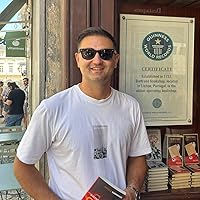
Before jumping into a controversial book, it's always a good idea to do some research on the author. In this case, Philip J. Cohen is a medical doctor (dermatologist) from New Jersey who wrote several books and published articles in journals during the 1990s on the history of Serbia/Yugoslavia. How a random M.D. became interested in this topic and was able to gain access to historical archives that would allow him to write about it is unknown, since information about him online is scarce. In fact, only one picture exists of him (the one on the back of this book) and he has never conducted an interview. What is known about him is that he had close ties to the Croatian regime of the 90s. He also apparently advised the U.N. mission in Bosnia and Herzegovina. Just from the titles of his works, it is clear they were written with an axe to grind - trying to demonstrate the culpability of Serbs and Serbia for the wars of the 1990s, and/or fixing what he sees as inaccuracies regarding Serbian history. Sociologist Jovan Byford from the Open University in the U.K., who was born in Serbia and is a critic of Serbian nationalism, has called this book "quasi-historical" and a "propaganda piece". With the backing of the Croatian government, Cohen was one of the pro-Croatian authors who engaged in a propaganda war with the Serbian side during the 1990s. It is rather interesting that after he wrote many anti-Serbian polemics during that time, he stopped and seemingly disappeared from academia, retreating to his medical office. It is all mysterious and bizarre, but relevant background information when reading and assessing the book itself.
The book contains informative passages. It details the collaboration of some Serbs with the Nazi German occupiers in carrying out the Holocaust. This undoubtedly irks Serbian nationalists who want to portray Serbs as victims like Jews who had no hand in their extermination. The problem with the book however is that it tends to exaggerate, sometimes uses half-truths and omits information in order to convey its theses, which are questionable to begin with given that Cohen is not a trained historian or someone who is seeking balanced scholarship.
The beginning of the book deals with the roots of Serbian fascism. An attempt is made to trace it back to Serbian Prime Minister Ilija Garašanin's Načertanije, a Greater Serbian national program that was never actually implemented and other aspirations. Here the worst is assumed. But the idea of a Greater Serbia, or a Greater Croatia for that matter, is rooted in the unification of the South Slavs. The belief that other Slavic peoples belonged to one nation and they had to be assimilated to that nation was common in the 19th century. This wasn't necessarily about the hatred of others, but more about uniting into a strong secure nation to fend off colonial oppressors, of which there were the Ottomans and later the Austro-Hungarians. For hundreds of years, Serbs were subjugated to the Ottoman empire; subjected to oppression, conversions, murder, rape and pillaging. This doesn't pardon the anti-Muslim rhetoric and actions that later occurred but context is important. And this book forgoes a lot of it.
A lot is made about Dimitrije Ljotić's fascist organization Zbor as well as Milan Nedić, who the Germans appointed to rule Serbia in WWII. However, fascism was marginal in Serbia during the 1930s, something which isn't mentioned. Germanophilia was also practically non-existent. Ljotić and his political party received 0.8% of the vote in the 1935 elections and 0 seats. The Nedić regime was unpopular with most Serbs, who went to fight with the Partisans or the Chetniks who were initially anti-Axis. Whereas the Germans occupied Serbia and instilled a brutal policy of killing 100 Serbs for every German killed, the Independent State of Croatia was largely left to their own in carrying out the Holocaust. Many Croats welcomed German occupation as they saw it liberating them from Yugoslav domination. Croatia's ruling Ustashe regime killed the country's Jews, Roma as well as 300,000 Serbs, many in brutal and sadistic ways. In trying to demonstrate that Anti-Semitism was present in Serbia, Cohen also doesn't consider or weigh the effect of German control over the Nedić media. When all these important details are excluded, a one-sided narrative emerges. To the average reader who has no knowledge about the Balkans, it makes it seem like the Serbian and Croatian regimes on WWII were on par or that the Serbs were possibly worse when that is far from the reality. This isn't surprising though considering the book's aim isn't to be neutral. This book is to be avoided and certainly there are far better works on the history of Yugoslavia and Serbia from serious academics.
An important piece in understanding the dangers of state sponsored historical revisionism. Serbian leadership would deliberately skew established historical facts in order to justify it’s genocidal campaign against non-Serbs throughout the former Yugoslav state.
This book is propagandist attempt to demonize Serbs as pro-Russian ally in Balkan, in times of biggest media demonization of Serbs. Absolute nonsense, having in mind that Serbs were the far biggest victims of Germany SS campaign in ww2 in Balkans.
Excellent and very well researched book. It’s a must read for anyone interested in the region; or anyone interested in deceitful constructions of history sponsored by the state led and created intellectual “elite.”
The challenge when one is researching a subject is to read books you dislike and disagree with as well as those you enjoy. This applies to Serbia’s Secret History, but if you disagree with parts of it, you must reference your arguments so that you provide others with the opportunity to judge for themselves.
I like Serbia and Belgrade. I’ve had two really enjoyable visits, I’ve read four books about them and am about to read a fifth. I have read many books about fascism and World War 2, some of them in languages other than English.
Though YouTube is full of poignant pleas from today’s young Serbs for the world to like Serbia, some of its recent history has been disturbing. It upset me to watch the bombing of Dubrovnik and other port cities during the war of the 1990's. The plight of the Bosnian Muslims shocked us all and it was very hard to hear President Clinton refuse to allow them to arm themselves. To this day, I don’t understand his motivation, but I remember it well at the time.
My mother (1920-2020) grew up in Istria and was warned as a child in the 1920’s to be wary of Germans and Serbs. Germans, yes, but why Serbs? Serbia’s Secret History explains why. My great grandfather (1851-1926), a German merchant seaman, was naturalized Australian in 1915. I never really understood Australia's nervousness about Germans then, but 'First Victory' by Mike Carlton about Germany's ambitions in the Pacific during World War 1 filled the gaps in my knowledge.
You have to read, or you’ll never find out. If you never find out, you’ll repeat the same mistakes.
12/9/21 'Irregular Adventure' by Christie Lawrence helped me to understand what was going on in Serbia in the twelve months following the 1941 invasion. It's a rare book and hard to get, but you can read my review here https://mwalkeristra.blogspot.com/202...
This is the most important book I have ever read! Every man of conscience must read it. And it must be mandatory reading for every Jew, Albanian, Bosnian, Croat and, if such a thing exists, every humane Serb. It unravels Serbia's centuries-long rabid anti-Semitism and its direct role in the Holocaust; its fascist goal of territorial expansion through the genocide and ethnic cleansing of Croats, Bosnians and Albanians for the creation of a Greater Serbia; and its cynical and pernicious historical revisionism to portray itself as a victim while downplaying or deflecting attention away from its horrific atrocities. This book is a scholarly work, roughly forty percent of which is made up of meticulous documentation and evidence of the claims and rejections presented therein. Dr. Cohen has done the world a service by bringing to light the true face of Serbia, which hasn't changed one bit in 2021 at the time of writing this review.
I pity the fool who believes this book which is nothing but blatant pro-Croatian propaganda. Look elsewhere towards actual experts like Rory Yeomans on the subject not hacks/shills. Michael Parenti and Diana Johnstone also provide great insight.
The author is not even a historian let alone an expert on this topic. He received an award by none other than Ustase sympathizing Croatian president Franjo Tudjman who enacted ethnic cleansing against thousands of Serbs which resulted in the largest expulsion of people in Europe since WWII. Tudjman is a known Holocaust revisionist as well. Cohen instantly loses all credibility with anyone who has a shred of understanding about the Balkans (which sadly in the west is not many.)
Serbs are great propagandists and as a Croat I'll give them that. Their lobbyes across the world are very strong and their propaganda machinery is spot on. Many people by default belive Serbian lies how they are greates victims of faschist regimes, accusing Croats as ustasha butchers and at the same they were strong faschist who collaborated with nazis and destroyed jewish population of Serbia. This book is great remminder for everybody that Serbs are notorious liars when they have goals to accomplish. World should be aware of how they operate and be aware of still to this day strong Serbian nationalism and faschism. We Croats defetead them but their scauvisnisn still lives. This book is eye openner and should be read by everybody interested in Balkanian affairs. (Four stars only because weird, out of place Bosnian muslim apology tract at the end of the book, or is it just copy I had in my hands)
Dermatologist by training and later UN official, M.D. Philip J. Cohen, who had links to Croatian pro-fascist Ustashe diaspora in the USA, all of sudden, as the tragic civil war rages in Yugoslavia, starts writing about Serbian "genocidal history". Coincidence? Please don't be fooled, this is well-packed propaganda and a bona fide example of a book packed with hate speech, disguised as academia. It's sad how some people think that they will get quality information from this little dark book, which has a notable publisher (money makes the world go round), but all in all you will not get anything aside from wartime propaganda and disturbing misuse of science and data, all for petty local political purpose.
Real scientist can explain it better than I can:
The sociologist Jovan Byford lists Serbia's Secret War among a "series of propagandist pieces of quasi-historical writing" written by pro-Croatian authors during the 1990s. Byford emphasizes that Cohen belongs to group of authors whose works support Croatian side in propaganda war with Serbia also by intentionally depicting Serbs as genuine "genocidal nation".
In a June 2018 review of a work on a similar topic, the historian Luke Gramith from University of West Virginia referred to Philip Cohen's Serbia's Secret War as a polemical and even anti-Serbian work.
- Cohen’s book exhibits all features of a racist vilification with clear political goals: to discredit and criminalize Serbia’s mod- ern history, to present the Serbian nation- al idea as criminal, to accuse the Serbs of being naturally anti-Semitic and predisposed to fascist and any other totalitarian ideology, and to relativize the crimes of the Independent State of Croatia. hat this book, published in the 1990s, was to serve propaganda and revisionist purposes may be seen from the fact that there soon followed its translated editions in Zagreb and Sarajevo, while the author was awarded a medal for merit by the President of the Republic of Croatia, Franjo Tudjman, known not only as the architect of the ethnic cleansing of Croatia of its Serbian population, but also for markedly anti-Semitic views. - historian Miroslav Svircevic (1971-2014)